When renting a home in Kentucky, having a clear and comprehensive Residential Lease Agreement is essential for both landlords and tenants. This document outlines the terms of the rental arrangement, ensuring that everyone is on the same page regarding key aspects such as the duration of the lease, the amount of rent, and the responsibilities of each party. It typically includes details about security deposits, maintenance obligations, and rules regarding pets or alterations to the property. Additionally, the agreement addresses the process for handling disputes and the conditions under which the lease can be terminated. Understanding these elements can help prevent misunderstandings and protect the rights of both landlords and tenants, making the leasing experience smoother and more transparent.
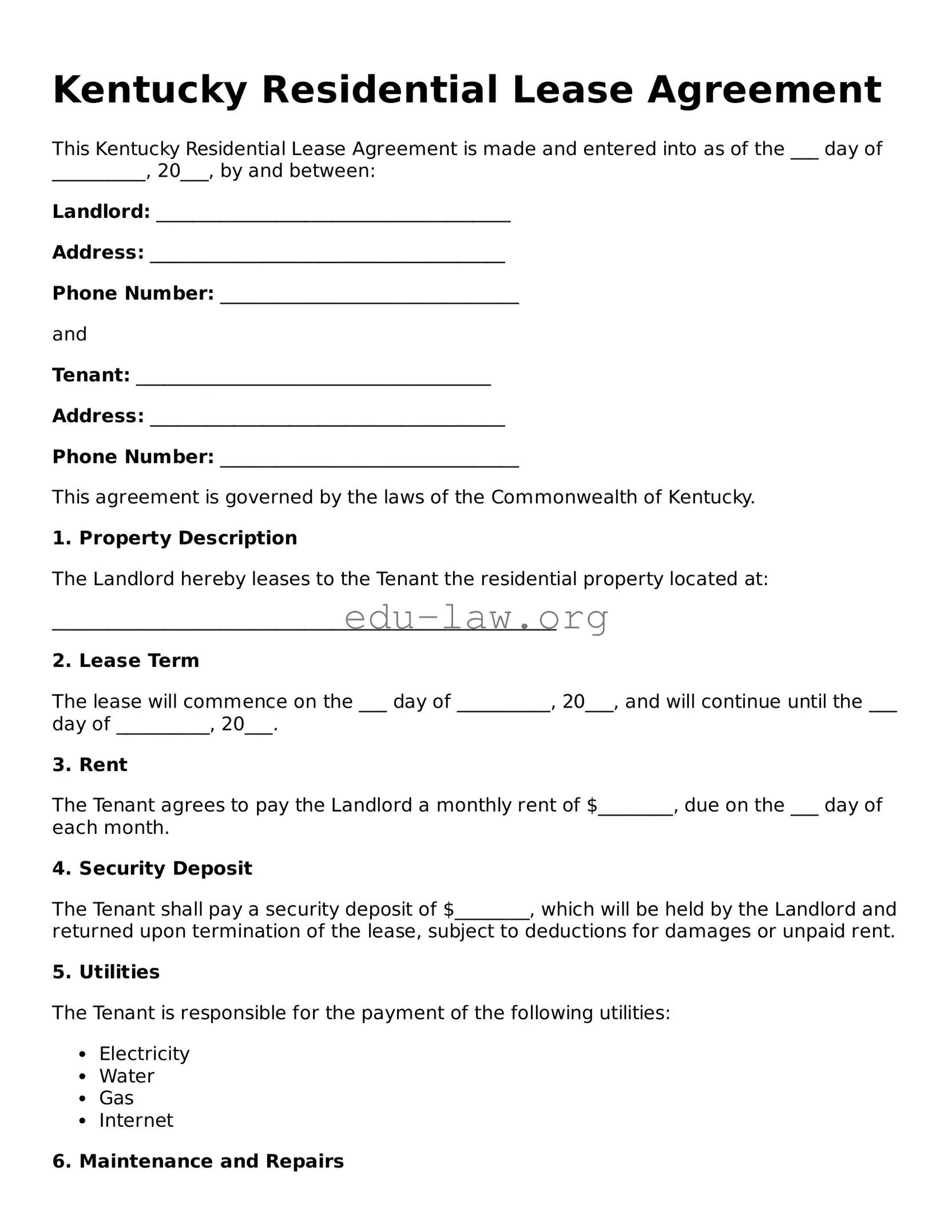
Kentucky Residential Lease Agreement
This Kentucky Residential Lease Agreement is made and entered into as of the ___ day of __________, 20___, by and between:
Landlord: ______________________________________
Address: ______________________________________
Phone Number: ________________________________
and
Tenant: ______________________________________
Address: ______________________________________
Phone Number: ________________________________
This agreement is governed by the laws of the Commonwealth of Kentucky.
1. Property Description
The Landlord hereby leases to the Tenant the residential property located at:
______________________________________________________
2. Lease Term
The lease will commence on the ___ day of __________, 20___, and will continue until the ___ day of __________, 20___.
3. Rent
The Tenant agrees to pay the Landlord a monthly rent of $________, due on the ___ day of each month.
4. Security Deposit
The Tenant shall pay a security deposit of $________, which will be held by the Landlord and returned upon termination of the lease, subject to deductions for damages or unpaid rent.
5. Utilities
The Tenant is responsible for the payment of the following utilities:
6. Maintenance and Repairs
The Tenant agrees to maintain the property in good condition and to notify the Landlord promptly of any necessary repairs.
7. Termination
Either party may terminate this agreement by providing written notice of ___ days prior to the intended termination date.
8. Governing Law
This agreement shall be governed by the laws of the Commonwealth of Kentucky.
9. Signatures
By signing below, both parties agree to the terms outlined in this Residential Lease Agreement.
_____________________________
Landlord Signature
_____________________________
Tenant Signature
Date: ______________________
| Fact Name | Details |
|---|---|
| Purpose | The Kentucky Residential Lease Agreement outlines the terms between a landlord and tenant for renting a residential property. |
| Governing Law | This agreement is governed by Kentucky state laws, particularly KRS Chapter 383. |
| Duration | Leases can be for a fixed term, such as one year, or month-to-month, depending on the agreement between the parties. |
| Security Deposit | Landlords may require a security deposit, typically not exceeding one month's rent, to cover damages or unpaid rent. |
| Notice Requirements | Both parties must provide written notice for lease termination, generally 30 days in advance for month-to-month leases. |
| Repairs and Maintenance | The lease should specify who is responsible for repairs and maintenance of the property. |
| Discrimination Laws | Landlords must comply with federal and state fair housing laws, ensuring no discrimination in renting practices. |
Filling out the Kentucky Residential Lease Agreement form requires attention to detail and accuracy. This document outlines the terms of the rental arrangement between the landlord and tenant. Following the steps below will help ensure that the form is completed correctly.
What is a Kentucky Residential Lease Agreement?
A Kentucky Residential Lease Agreement is a legally binding document that outlines the terms and conditions between a landlord and a tenant for renting a residential property. This agreement typically includes details such as the duration of the lease, rental payment amounts, security deposits, maintenance responsibilities, and rules regarding the use of the property. It serves to protect the rights of both parties and ensures clarity in the rental arrangement.
How long is a typical lease term in Kentucky?
Lease terms in Kentucky can vary widely, but the most common duration is one year. However, landlords and tenants can agree to shorter or longer terms, such as month-to-month leases or multi-year agreements. It’s essential to specify the lease duration clearly in the agreement to avoid any misunderstandings later on.
What should I include in the lease agreement?
When drafting a Kentucky Residential Lease Agreement, it’s important to include several key elements. Start with the names of all tenants and the landlord. Clearly state the rental amount and due date, as well as any late fees. Outline the security deposit requirements, maintenance obligations, and rules regarding pets or smoking. Additionally, include details about how to terminate the lease and any penalties for breaking it early. Clarity in these areas can help prevent disputes down the line.
Can a landlord raise the rent during a lease term?
Generally, a landlord cannot raise the rent during the lease term unless the lease specifically allows for it. Most residential leases in Kentucky are fixed-term agreements, meaning the rent amount is set for the duration of the lease. If the lease is month-to-month, the landlord may increase the rent, but they must provide proper notice, typically 30 days in advance, as required by Kentucky law.
What happens if a tenant wants to break the lease early?
If a tenant needs to break the lease early, they should first review the lease agreement for any specific provisions regarding early termination. Many leases include penalties or require notice before vacating the property. In Kentucky, tenants may also have legal grounds for breaking a lease, such as unsafe living conditions. It’s advisable for tenants to communicate with their landlord and seek a mutual agreement to avoid potential legal issues.
Incomplete Information: One common mistake is failing to provide all required information. This includes names of all tenants, the rental property address, and the lease term. Omitting even one detail can lead to confusion or disputes later on.
Not Reading the Terms: Many people rush through the agreement without fully understanding the terms. It’s essential to read each section carefully, including clauses about security deposits, maintenance responsibilities, and termination conditions. Ignoring these details can result in unexpected obligations.
Forgetting Signatures: A lease agreement is not valid without the necessary signatures. Both the landlord and all tenants must sign the document. Failing to do so can render the agreement unenforceable, leaving both parties without legal protections.
Assuming Standard Terms Apply: Each lease can have unique terms. Some individuals mistakenly believe that standard lease terms automatically apply to their situation. It’s crucial to negotiate and clarify any specific conditions that differ from the norm to avoid misunderstandings.
When entering into a rental agreement in Kentucky, there are several important documents that may accompany the Residential Lease Agreement. Each of these documents serves a specific purpose and helps to clarify the responsibilities and rights of both landlords and tenants. Below is a list of commonly used forms that can enhance the rental process.
Having these documents in place can significantly streamline the rental process and provide clarity for both landlords and tenants. Understanding each form's purpose can lead to a more harmonious rental experience and help avoid potential disputes down the line.
The Kentucky Residential Lease Agreement shares similarities with the Commercial Lease Agreement. While the former typically governs residential properties, the latter is tailored for commercial spaces. Both documents outline the terms of the lease, including duration, rent amount, and responsibilities of the landlord and tenant. Each agreement aims to protect the rights of both parties and ensure a clear understanding of the leasing arrangement. Just as residential leases address issues like maintenance and utilities, commercial leases cover aspects relevant to business operations, such as zoning and permitted uses of the property.
Another document akin to the Kentucky Residential Lease Agreement is the Rental Application. This form is often completed by prospective tenants before entering into a lease. It collects vital information about the applicant, such as employment history, creditworthiness, and references. While the lease agreement formalizes the relationship between landlord and tenant, the rental application serves as a screening tool for landlords. Both documents ultimately work together to ensure that the leasing process is smooth and that the landlord finds a suitable tenant.
The Eviction Notice is another document that relates closely to the Residential Lease Agreement. This notice is issued when a tenant fails to comply with the terms of the lease, such as not paying rent or violating lease conditions. While the lease agreement establishes the rules and expectations for both parties, the eviction notice serves as a formal communication that outlines the reasons for the eviction and the necessary steps the tenant must take. Both documents reflect the legal relationship between landlord and tenant, emphasizing the importance of adhering to agreed-upon terms.
Lastly, the Move-In/Move-Out Checklist bears similarities to the Kentucky Residential Lease Agreement. This checklist is often used to document the condition of the property at the start and end of a tenancy. It helps prevent disputes over security deposits and property damage. While the lease agreement details the terms of occupancy, the checklist provides a tangible record of the property's condition. Both documents are essential in ensuring that expectations are clear and that both parties are held accountable for maintaining the property.
When filling out the Kentucky Residential Lease Agreement form, it's important to pay attention to details. Here’s a list of things you should and shouldn't do:
Following these guidelines will help ensure a smoother leasing process.
Many people have misunderstandings about the Kentucky Residential Lease Agreement form. Here are six common misconceptions:
Some believe the lease agreement is the same for every rental situation. In reality, it should be tailored to fit the specific needs of both the landlord and the tenant.
Many think that a verbal agreement holds the same weight as a written lease. However, a written lease is crucial for clarity and legal protection.
It is a common misconception that only the landlord's signature is necessary. Both parties must sign the lease for it to be valid.
While many terms can be negotiated, some legal requirements must be included in the lease, such as the rental amount and duration of the lease.
Some tenants believe that security deposits can be waived. In Kentucky, landlords often require a security deposit to cover potential damages.
Many assume that once signed, a lease cannot be changed. However, leases can be modified if both parties agree and document the changes properly.
When filling out and using the Kentucky Residential Lease Agreement form, it's essential to keep several key points in mind to ensure a smooth rental experience for both landlords and tenants.
By keeping these takeaways in mind, both landlords and tenants can create a more effective and harmonious rental relationship.