The Kentucky Real Estate Purchase Agreement form serves as a crucial document in the process of buying or selling property in the state. This legally binding contract outlines the terms and conditions agreed upon by the buyer and seller, ensuring that both parties have a clear understanding of their rights and responsibilities. Key components of the agreement include the purchase price, the description of the property, and the closing date. Additionally, it addresses contingencies, such as financing and inspections, which can affect the transaction's success. The form also specifies any earnest money deposits, which demonstrate the buyer's commitment to the purchase. By detailing these elements, the Kentucky Real Estate Purchase Agreement helps facilitate a smooth and transparent real estate transaction, minimizing potential disputes and misunderstandings between the involved parties.
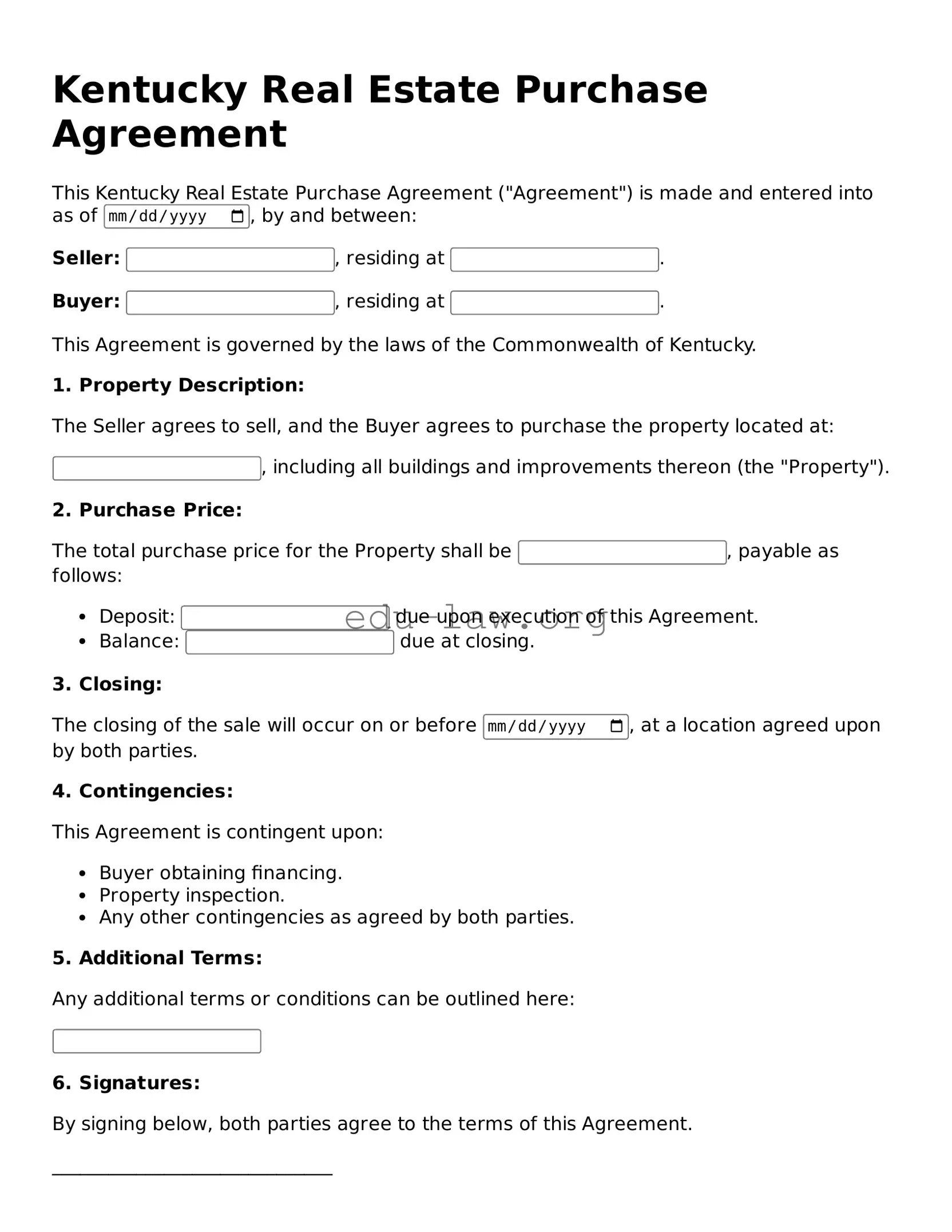
Kentucky Real Estate Purchase Agreement
This Kentucky Real Estate Purchase Agreement ("Agreement") is made and entered into as of , by and between:
Seller: , residing at .
Buyer: , residing at .
This Agreement is governed by the laws of the Commonwealth of Kentucky.
1. Property Description:
The Seller agrees to sell, and the Buyer agrees to purchase the property located at:
, including all buildings and improvements thereon (the "Property").
2. Purchase Price:
The total purchase price for the Property shall be , payable as follows:
3. Closing:
The closing of the sale will occur on or before , at a location agreed upon by both parties.
4. Contingencies:
This Agreement is contingent upon:
5. Additional Terms:
Any additional terms or conditions can be outlined here:
6. Signatures:
By signing below, both parties agree to the terms of this Agreement.
______________________________
Seller Signature: Date:
______________________________
Buyer Signature: Date:
This Agreement is effective upon the date of the last signature.
| Fact Name | Description |
|---|---|
| Governing Law | The Kentucky Real Estate Purchase Agreement is governed by the laws of the Commonwealth of Kentucky. |
| Purpose | This form is used to outline the terms and conditions under which a buyer agrees to purchase real estate from a seller. |
| Parties Involved | The agreement typically involves two parties: the buyer and the seller, both of whom must be identified clearly. |
| Property Description | A detailed description of the property, including its address and legal description, is required to avoid ambiguity. |
| Purchase Price | The agreement must specify the total purchase price, as well as any earnest money deposit required from the buyer. |
| Contingencies | Common contingencies, such as financing and inspection, may be included to protect the buyer's interests. |
| Closing Date | The agreement should specify a closing date, which is the date when the transaction is finalized and ownership is transferred. |
| Disclosure Requirements | Sellers are often required to disclose any known defects or issues with the property to the buyer prior to closing. |
| Signatures | Both parties must sign the agreement to make it legally binding, indicating their acceptance of the terms outlined. |
| Amendments | Any changes to the agreement must be documented in writing and signed by both parties to ensure enforceability. |
Filling out the Kentucky Real Estate Purchase Agreement form is an important step in the home buying process. Once you complete this form, it will serve as a binding contract between the buyer and the seller, outlining the terms of the sale. Here’s how to fill it out effectively.
After completing the form, it’s essential to review everything carefully. Ensure that all parties understand the terms before moving forward with the transaction. Consider consulting a real estate professional or attorney if you have any questions or need assistance.
What is a Kentucky Real Estate Purchase Agreement?
The Kentucky Real Estate Purchase Agreement is a legal document that outlines the terms and conditions under which a buyer agrees to purchase a property from a seller. It serves as a binding contract once both parties have signed it, detailing the specifics of the transaction.
What key elements should be included in the agreement?
Essential elements include the names of the buyer and seller, a description of the property, the purchase price, earnest money details, contingencies, and the closing date. These components ensure clarity and protect the interests of both parties.
Is the agreement legally binding?
Yes, once both parties sign the Kentucky Real Estate Purchase Agreement, it becomes legally binding. This means that both the buyer and seller are obligated to fulfill the terms outlined in the agreement unless they mutually agree to modify or cancel it.
What are contingencies, and why are they important?
Contingencies are conditions that must be met for the sale to proceed. Common contingencies include financing, home inspections, and appraisal requirements. They protect the buyer by allowing them to back out of the deal if certain conditions are not satisfied.
Can the agreement be modified after signing?
Yes, the agreement can be modified, but both parties must agree to any changes. It’s best to document modifications in writing to avoid misunderstandings later. Verbal agreements may not hold up in court.
What happens if either party breaches the agreement?
If either party fails to uphold their obligations, it may be considered a breach of contract. The non-breaching party may have the right to seek remedies, which could include financial compensation or specific performance, where the breaching party is compelled to fulfill their contractual duties.
Do I need a lawyer to complete this agreement?
While it is not legally required to have a lawyer review the Kentucky Real Estate Purchase Agreement, it is highly recommended. A legal professional can help ensure that your interests are protected and that the agreement complies with state laws.
How is earnest money handled in the agreement?
Earnest money is a deposit made by the buyer to demonstrate their serious intent to purchase the property. The agreement should specify the amount and conditions under which it may be forfeited or returned. This money is typically held in escrow until closing.
What is the closing process?
The closing process involves finalizing the sale of the property. This includes signing the necessary documents, transferring funds, and officially transferring ownership. Both parties, along with their agents and possibly legal representatives, typically attend the closing meeting.
Where can I obtain a Kentucky Real Estate Purchase Agreement form?
You can obtain a Kentucky Real Estate Purchase Agreement form from various sources, including real estate agents, legal websites, or local real estate boards. Ensure that you are using the most current version of the form to comply with state regulations.
Not including all necessary parties. Ensure that all buyers and sellers are listed accurately. Missing a name can lead to legal complications.
Failing to specify the purchase price. Clearly state the agreed-upon amount to avoid misunderstandings later.
Omitting important contingencies. Include contingencies such as financing, inspections, or appraisals to protect your interests.
Not providing accurate property descriptions. Use the correct address and legal description to identify the property clearly.
Ignoring deadlines. Be mindful of dates for offers, responses, and contingencies. Missing a deadline can jeopardize the agreement.
Neglecting to include earnest money details. Specify the amount and terms regarding the earnest money deposit to show good faith.
Failing to review the agreement thoroughly. Always read the entire document before signing. Mistakes can be costly.
When engaging in a real estate transaction in Kentucky, several forms and documents accompany the Kentucky Real Estate Purchase Agreement. These documents help clarify terms, protect the interests of both parties, and ensure compliance with state laws. Below are some commonly used forms that you may encounter.
These documents play a crucial role in the real estate process, providing essential information and protections for both buyers and sellers. Understanding each form can help facilitate a smoother transaction and promote a successful real estate experience in Kentucky.
The Kentucky Real Estate Purchase Agreement form shares similarities with the Residential Purchase Agreement, commonly used in various states. Both documents outline the terms of a sale, including the purchase price, contingencies, and closing date. They serve to protect both the buyer and seller by clearly defining their rights and responsibilities during the transaction process. Additionally, both agreements typically require signatures from both parties to become legally binding.
Another document that resembles the Kentucky Real Estate Purchase Agreement is the Commercial Purchase Agreement. While the former is generally used for residential properties, the latter is tailored for commercial real estate transactions. Both agreements detail essential elements like the sale price and any conditions that must be met before closing. However, the Commercial Purchase Agreement may include additional clauses addressing zoning laws and business operations, reflecting the unique aspects of commercial transactions.
The Option to Purchase Agreement is also similar in that it grants a potential buyer the right to purchase a property within a specified timeframe. This document outlines the terms under which the buyer can exercise their option, including the purchase price and duration of the option. Like the Kentucky Real Estate Purchase Agreement, it provides a framework for the transaction but focuses on the buyer's right rather than a firm commitment to purchase.
The Lease with Option to Purchase Agreement combines elements of a lease and a purchase agreement. This document allows tenants to rent a property with the option to buy it later. Both agreements establish terms such as rental payments and purchase conditions, but the Lease with Option to Purchase Agreement includes additional stipulations regarding the tenant's responsibilities during the lease period. This document is beneficial for buyers who need time to secure financing or improve their credit.
The Seller Financing Agreement is another document that bears resemblance to the Kentucky Real Estate Purchase Agreement. In this scenario, the seller acts as the lender, allowing the buyer to make payments directly to them instead of a bank. Both agreements outline the sale terms, but the Seller Financing Agreement includes specific details about the loan terms, interest rates, and repayment schedule, reflecting the unique financing arrangement.
The Real Estate Purchase and Sale Agreement is a broader document that serves a similar purpose to the Kentucky form but may be used in various contexts. This agreement details the sale of real property, including commercial and residential. It typically contains similar sections on price, contingencies, and closing procedures, but may also include additional clauses that cater to different types of transactions, making it versatile across various real estate markets.
The Counteroffer form is a related document that often follows the initial Real Estate Purchase Agreement. When one party disagrees with the terms proposed in the original agreement, they may issue a counteroffer. This document specifies the changes being made, such as price adjustments or modifications to contingencies. Both documents work together to facilitate negotiations and ensure that all parties are in agreement before finalizing the sale.
The Addendum to Purchase Agreement is another document that complements the Kentucky Real Estate Purchase Agreement. An addendum is used to modify or add specific terms to the original agreement without creating a new document. This might include additional contingencies or disclosures that were not initially included. Both documents are essential in ensuring that all relevant information is captured and agreed upon by both parties.
The Real Estate Disclosure Statement is closely related as well, providing important information about the property's condition. While the Kentucky Real Estate Purchase Agreement focuses on the terms of the sale, the Disclosure Statement informs the buyer of any known issues, such as structural problems or environmental hazards. This transparency is crucial for buyers to make informed decisions and is often required by law.
Lastly, the Closing Statement is a document that comes into play at the end of the transaction. It outlines all financial details related to the sale, including the final purchase price, closing costs, and any adjustments. While the Kentucky Real Estate Purchase Agreement lays the groundwork for the sale, the Closing Statement ensures that all financial aspects are clear and accounted for before the transaction is completed.
When filling out the Kentucky Real Estate Purchase Agreement form, attention to detail is crucial. To help ensure a smooth process, here are ten important dos and don'ts to consider.
By following these guidelines, you can help facilitate a smoother transaction and protect your interests throughout the real estate process.
When dealing with real estate transactions in Kentucky, many people encounter the Kentucky Real Estate Purchase Agreement form. However, several misconceptions can create confusion. Here are five common misunderstandings:
Many believe that all real estate purchase agreements are identical. In reality, each agreement can vary significantly based on the specifics of the transaction, including the property type, the parties involved, and local laws.
Some think that once they sign the purchase agreement, the deal is done. However, the agreement is just the beginning. There are still steps to complete, such as inspections, financing, and closing procedures.
Another misconception is that only the buyer's signature is required. Both the buyer and the seller must sign the agreement for it to be legally binding.
While real estate agents play a crucial role in the process, they do not replace the need for legal guidance. Buyers and sellers should consider consulting a legal professional to ensure their interests are protected.
Some believe that after the purchase agreement is submitted, it cannot be modified. In fact, changes can be made, but both parties must agree to the modifications and document them properly.
When filling out and using the Kentucky Real Estate Purchase Agreement form, several key considerations can help ensure a smooth transaction. Here are some important takeaways: