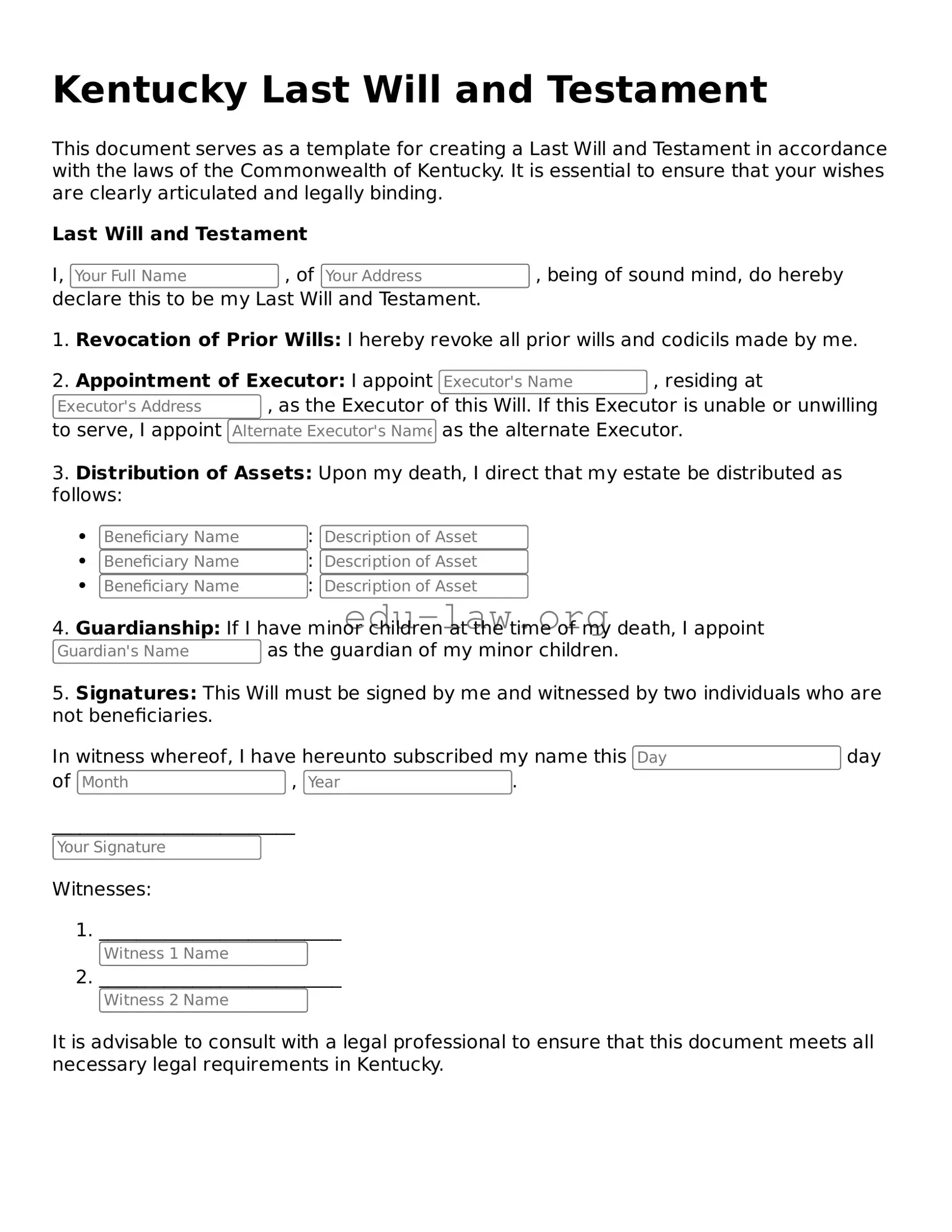
Creating a Last Will and Testament is a crucial step in ensuring that one's wishes regarding the distribution of assets and care of dependents are honored after death. In Kentucky, the Last Will and Testament form serves as a legal document that outlines how an individual wants their property and possessions to be allocated. This form addresses key components such as the appointment of an executor, who will oversee the execution of the will, and guardianship provisions for any minor children. Additionally, it allows for the designation of specific beneficiaries, ensuring that loved ones receive their intended inheritance. The document must be signed and witnessed according to Kentucky law to be considered valid, highlighting the importance of following legal protocols. Understanding these major aspects of the Kentucky Last Will and Testament form is essential for anyone looking to secure their legacy and provide peace of mind for their family and friends.
Kentucky Last Will and Testament
This document serves as a template for creating a Last Will and Testament in accordance with the laws of the Commonwealth of Kentucky. It is essential to ensure that your wishes are clearly articulated and legally binding.
Last Will and Testament
I, , of , being of sound mind, do hereby declare this to be my Last Will and Testament.
1. Revocation of Prior Wills: I hereby revoke all prior wills and codicils made by me.
2. Appointment of Executor: I appoint , residing at , as the Executor of this Will. If this Executor is unable or unwilling to serve, I appoint as the alternate Executor.
3. Distribution of Assets: Upon my death, I direct that my estate be distributed as follows:
4. Guardianship: If I have minor children at the time of my death, I appoint as the guardian of my minor children.
5. Signatures: This Will must be signed by me and witnessed by two individuals who are not beneficiaries.
In witness whereof, I have hereunto subscribed my name this day of , .
__________________________
Witnesses:
It is advisable to consult with a legal professional to ensure that this document meets all necessary legal requirements in Kentucky.
| Fact Name | Description |
|---|---|
| Legal Requirement | In Kentucky, a Last Will and Testament must be in writing and signed by the testator (the person making the will) to be valid. |
| Witnesses | The will must be witnessed by at least two individuals who are present at the same time. They must also sign the will in the presence of the testator. |
| Revocation | A will can be revoked in Kentucky by creating a new will or by physically destroying the original document with the intent to revoke it. |
| Age Requirement | To create a valid will in Kentucky, the testator must be at least 18 years old or an emancipated minor. |
| Governing Law | The Kentucky Last Will and Testament is governed by Kentucky Revised Statutes, Chapter 394. |
Filling out the Kentucky Last Will and Testament form is an important step in ensuring that your wishes regarding the distribution of your assets are clearly documented. After completing the form, it is advisable to have it signed in the presence of witnesses to ensure its validity.
What is a Last Will and Testament in Kentucky?
A Last Will and Testament is a legal document that outlines how a person wishes to distribute their assets after their death. In Kentucky, this document can also appoint guardians for minor children and specify funeral arrangements. It serves as a crucial tool for ensuring that an individual's wishes are honored and can help prevent disputes among surviving family members.
Who can create a Last Will and Testament in Kentucky?
In Kentucky, any individual who is at least 18 years old and of sound mind can create a Last Will and Testament. It is important that the person creating the will understands the implications of the document and is able to make decisions regarding their assets and beneficiaries.
What are the requirements for a valid Last Will and Testament in Kentucky?
To be considered valid in Kentucky, a Last Will and Testament must be in writing, signed by the testator (the person creating the will), and witnessed by at least two individuals who are not beneficiaries. These witnesses must sign the will in the presence of the testator. Additionally, it is advisable to have the will notarized, although this is not a legal requirement in Kentucky.
Can a Last Will and Testament be changed or revoked in Kentucky?
Yes, a Last Will and Testament can be changed or revoked at any time while the testator is alive and of sound mind. This can be done by creating a new will or by making a codicil, which is an amendment to the existing will. It is essential that any changes are made in accordance with Kentucky law to ensure their validity.
What happens if someone dies without a Last Will and Testament in Kentucky?
If an individual dies without a Last Will and Testament, they are considered to have died "intestate." In this case, Kentucky law dictates how their assets will be distributed among surviving relatives. This can lead to outcomes that may not align with the deceased person's wishes, making it crucial to have a will in place.
How can someone ensure their Last Will and Testament is properly executed?
To ensure that a Last Will and Testament is properly executed, it is advisable to seek assistance from a qualified attorney who specializes in estate planning. They can provide guidance on the specific requirements in Kentucky and help ensure that the will is drafted, signed, and witnessed correctly. Additionally, keeping the will in a safe place and informing trusted individuals about its location can facilitate the execution process after death.
Not Naming an Executor: One of the most common mistakes is failing to designate an executor. The executor is responsible for managing the estate and ensuring that the wishes outlined in the will are carried out. Without a named executor, the court may appoint someone who may not align with the deceased's wishes.
Inadequate Witness Signatures: Kentucky law requires that a will be signed in the presence of at least two witnesses. Many individuals overlook this requirement, which can lead to the will being deemed invalid. It is crucial to ensure that the witnesses are not beneficiaries to avoid potential conflicts of interest.
Ambiguous Language: Using vague or unclear language can create confusion about the testator's intentions. This ambiguity can lead to disputes among heirs and beneficiaries. It is essential to be specific when describing assets and the distribution process.
Not Updating the Will: Life changes, such as marriage, divorce, or the birth of a child, necessitate updates to the will. Failing to revise the document can result in outdated provisions that do not reflect current wishes. Regular reviews of the will are important to ensure it remains relevant.
When preparing a Last Will and Testament in Kentucky, there are several other forms and documents that may be helpful. Each of these documents serves a specific purpose and can aid in ensuring that your wishes are carried out according to your intentions. Here is a list of commonly used documents that often accompany a will:
Having these documents in place can provide peace of mind. They ensure that your wishes are clearly communicated and legally recognized. It is always wise to consult with a professional when preparing these important legal documents.
The Kentucky Last Will and Testament form shares similarities with a Living Will. A Living Will is a legal document that outlines an individual's preferences regarding medical treatment in situations where they may be unable to communicate their wishes. Both documents serve to express the individual’s intentions, but while a Last Will and Testament deals with the distribution of assets after death, a Living Will focuses on healthcare decisions during life. Each document requires clear articulation of the individual's desires to ensure that they are honored by family members and healthcare providers.
An Advance Directive is another document that bears resemblance to the Last Will and Testament. Like a Living Will, an Advance Directive provides guidance on medical care preferences, particularly in situations where a person cannot speak for themselves. This document often includes both a Living Will component and a Durable Power of Attorney for Healthcare, which designates someone to make medical decisions on the individual's behalf. In essence, both the Advance Directive and the Last Will and Testament are proactive measures that reflect personal wishes regarding care and asset management.
Filling out a Last Will and Testament form in Kentucky is an important step in ensuring that your wishes are honored after your passing. Here are some key dos and don'ts to keep in mind during the process.
By following these guidelines, you can help ensure that your Last Will and Testament reflects your true wishes and is legally sound.
Understanding the Kentucky Last Will and Testament form is essential for anyone looking to plan their estate. However, there are several misconceptions that can lead to confusion. Here are seven common misunderstandings:
While it's true that individuals can draft their own wills, consulting with a legal professional can ensure that all requirements are met and that the will accurately reflects your wishes.
In Kentucky, verbal wills, also known as nuncupative wills, are generally not recognized unless they meet very specific criteria. Written wills are always the safer choice.
This is not true. A will can be amended or revoked at any time, as long as the person making the will is of sound mind and follows the proper legal procedures.
While it's advisable to list significant assets, not all assets need to be included. Some may pass outside of the will, such as those held in a trust or with designated beneficiaries.
Everyone, regardless of their financial situation, can benefit from having a will. It helps ensure that your wishes are honored and can simplify the process for your loved ones.
Age does not determine the need for a will. Life is unpredictable, and having a will in place can provide peace of mind for individuals of any age.
Wills can be updated as circumstances change, such as marriage, divorce, or the birth of children. Regularly reviewing and updating your will is a good practice.
By dispelling these misconceptions, individuals can make more informed decisions about their estate planning and ensure their wishes are carried out effectively.
Filling out and using the Kentucky Last Will and Testament form is an important step in planning for the future. Here are some key takeaways to keep in mind:
By keeping these points in mind, you can create a will that reflects your wishes and provides peace of mind for you and your loved ones.