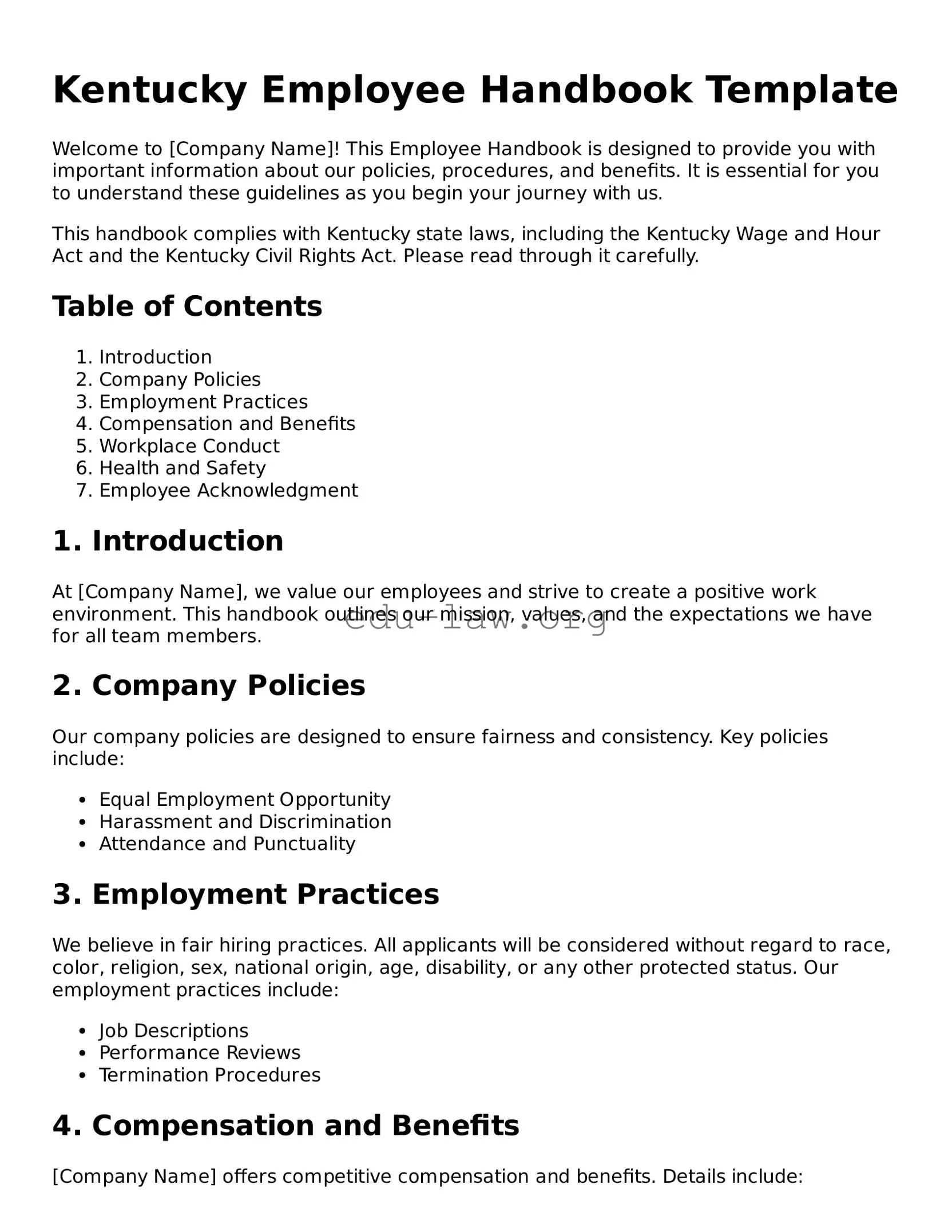
Creating a comprehensive employee handbook is a vital step for any organization in Kentucky, as it serves as a foundational document that outlines the rights and responsibilities of both employers and employees. This handbook not only establishes workplace policies but also communicates the company's culture and expectations. Key components typically included in the Kentucky Employee Handbook form encompass essential policies on equal employment opportunity, anti-discrimination measures, and harassment prevention. Additionally, it addresses employee benefits, workplace safety protocols, and procedures for reporting grievances. By clearly defining the terms of employment and the organization's values, the handbook fosters a transparent work environment, helping to mitigate misunderstandings and conflicts. A well-crafted handbook can also serve as a valuable tool for compliance with state and federal regulations, ensuring that both the employer and employees are aware of their legal rights and obligations.
Kentucky Employee Handbook Template
Welcome to [Company Name]! This Employee Handbook is designed to provide you with important information about our policies, procedures, and benefits. It is essential for you to understand these guidelines as you begin your journey with us.
This handbook complies with Kentucky state laws, including the Kentucky Wage and Hour Act and the Kentucky Civil Rights Act. Please read through it carefully.
Table of Contents
1. Introduction
At [Company Name], we value our employees and strive to create a positive work environment. This handbook outlines our mission, values, and the expectations we have for all team members.
2. Company Policies
Our company policies are designed to ensure fairness and consistency. Key policies include:
3. Employment Practices
We believe in fair hiring practices. All applicants will be considered without regard to race, color, religion, sex, national origin, age, disability, or any other protected status. Our employment practices include:
4. Compensation and Benefits
[Company Name] offers competitive compensation and benefits. Details include:
5. Workplace Conduct
Maintaining a respectful workplace is crucial. All employees are expected to adhere to our conduct policies, which include:
6. Health and Safety
Your safety is our priority. We comply with OSHA regulations and encourage all employees to report unsafe conditions. Key points include:
7. Employee Acknowledgment
Please sign and return the acknowledgment form at the end of this handbook to confirm that you have read and understood the policies outlined herein.
Thank you for being a part of [Company Name]. We look forward to working together to achieve great things!
| Fact Name | Description |
|---|---|
| Purpose | The Kentucky Employee Handbook form serves as a guide for employees, outlining company policies, procedures, and expectations. |
| Governing Laws | This form is governed by Kentucky labor laws, including the Kentucky Revised Statutes (KRS) and federal employment regulations. |
| Mandatory Content | It should include essential topics such as workplace safety, anti-discrimination policies, and employee benefits. |
| Distribution Requirement | Employers are encouraged to provide the handbook to all employees and obtain acknowledgment of receipt to ensure understanding. |
Completing the Kentucky Employee Handbook form is a straightforward process that ensures you have all necessary information on file. Following these steps will help you fill out the form accurately, making it easier for your employer to maintain compliance and provide you with the necessary resources.
What is the Kentucky Employee Handbook form?
The Kentucky Employee Handbook form is a document designed to outline the policies, procedures, and expectations for employees within an organization in Kentucky. It serves as a guide for both employers and employees, ensuring clarity on workplace rules, benefits, and rights. This handbook can help foster a positive work environment and promote compliance with state and federal regulations.
Who should use the Kentucky Employee Handbook form?
This form is intended for employers operating in Kentucky, regardless of the size of their organization. It is beneficial for businesses looking to establish clear guidelines for their employees. Additionally, employees may refer to this handbook to understand their rights and responsibilities within the workplace.
What key topics are typically included in the Employee Handbook?
Common topics covered in the Kentucky Employee Handbook include workplace conduct, attendance policies, anti-discrimination measures, benefits and compensation, health and safety regulations, and procedures for reporting grievances. Each section aims to provide comprehensive information that helps employees navigate their roles effectively.
Is the Kentucky Employee Handbook form legally required?
While there is no specific legal requirement for employers to provide an employee handbook in Kentucky, it is highly recommended. Having a handbook can help protect the organization from potential legal issues by clearly communicating policies and procedures. Additionally, it can enhance employee understanding of workplace expectations.
How often should the Employee Handbook be updated?
Employers should review and update the Employee Handbook regularly, ideally at least once a year. Changes in laws, regulations, or company policies may necessitate updates. Keeping the handbook current ensures that employees have access to the latest information and helps maintain compliance with legal standards.
Can employees provide input on the Employee Handbook?
Yes, employees can and should be encouraged to provide input on the Employee Handbook. Soliciting feedback allows employers to address concerns and improve policies. Involving employees in the process can also foster a sense of ownership and commitment to the organization's values and guidelines.
How can employees access the Kentucky Employee Handbook?
Employers should ensure that the Kentucky Employee Handbook is easily accessible to all employees. This can be done by providing printed copies, making it available on the company intranet, or distributing it via email. Clear communication regarding where and how to access the handbook is essential for ensuring that employees are informed.
Incomplete Information: One common mistake is failing to provide all required details. This can include missing personal information like address or phone number, which can lead to delays in processing your paperwork.
Incorrect Formatting: Some individuals do not follow the specified format for dates or phone numbers. Using inconsistent formats can create confusion and result in errors during data entry.
Neglecting to Read Instructions: Skipping over the instructions can lead to misunderstandings. It’s crucial to carefully read all guidelines provided in the handbook to ensure compliance with company policies.
Omitting Signatures: Forgetting to sign the form is a frequent oversight. A signature is often required to validate the information provided, and without it, the form may be considered invalid.
Failing to Update Information: Some people fill out the form but do not update it when their circumstances change. This could include changes in marital status, dependents, or contact information, which are important for HR records.
The Kentucky Employee Handbook is an essential document that outlines company policies, procedures, and expectations for employees. However, it is often accompanied by various other forms and documents that help clarify employment terms and ensure compliance with state and federal regulations. Below is a list of commonly used documents alongside the Employee Handbook.
These documents work together to create a clear framework for employment within the organization. They help protect both the employer and employee by ensuring that everyone understands their rights and responsibilities. Properly managing these documents can contribute to a positive workplace environment and compliance with legal requirements.
The Kentucky Employee Handbook is similar to the Employee Manual often used by organizations across various states. Both documents serve as a comprehensive guide for employees, outlining company policies, procedures, and expectations. They typically include sections on workplace conduct, benefits, and disciplinary actions. The Employee Manual may also address specific state laws and regulations, ensuring compliance while providing employees with a clear understanding of their rights and responsibilities within the organization.
Another comparable document is the Orientation Guide. This guide is usually provided to new hires during their onboarding process. Like the Employee Handbook, it contains essential information about the company culture, values, and operational procedures. However, the Orientation Guide tends to be more focused on initial training and integration into the company, while the Employee Handbook serves as a long-term reference for ongoing employment matters.
The Policy and Procedure Manual is yet another document that shares similarities with the Kentucky Employee Handbook. This manual provides detailed descriptions of specific policies and operational procedures that employees must follow. While the Employee Handbook offers a broader overview, the Policy and Procedure Manual dives deeper into the mechanics of day-to-day operations, making it a critical resource for ensuring consistency and compliance within the workplace.
Additionally, the Employee Rights Document is closely related to the Employee Handbook. This document emphasizes the rights of employees under federal and state laws, including anti-discrimination policies and workplace safety regulations. While the Employee Handbook may touch on these topics, the Employee Rights Document focuses specifically on legal protections, ensuring that employees are aware of their entitlements and avenues for recourse in case of violations.
The Code of Conduct is another important document that parallels the Kentucky Employee Handbook. This code outlines the ethical standards and behavior expected from employees. It often includes guidelines on conflicts of interest, confidentiality, and professional integrity. While the Employee Handbook provides a broader context for workplace expectations, the Code of Conduct zeroes in on the specific behaviors that uphold the company’s values and reputation.
Lastly, the Benefits Overview document is similar in that it details the various benefits available to employees. This document typically includes information on health insurance, retirement plans, and leave policies. While the Employee Handbook may summarize these benefits, the Benefits Overview offers a more in-depth look, allowing employees to understand their options and make informed decisions regarding their employment benefits.
When filling out the Kentucky Employee Handbook form, it is essential to approach the task with care and attention. Here are four key do's and don'ts to consider:
By following these guidelines, you can help ensure that your submission is complete and accurate, which is crucial for a smooth onboarding experience.
Misconceptions about the Kentucky Employee Handbook form can lead to confusion among employers and employees alike. Here are eight common misconceptions:
This is not true. While it may not be legally required, having an employee handbook is highly recommended. It helps set clear expectations and provides guidelines for workplace behavior.
Many believe that an employee handbook must address every situation that could arise. In reality, it should cover key policies and procedures, but it doesn't need to be exhaustive.
Some think that an employee handbook is a one-time task. However, it should be reviewed and updated regularly to reflect changes in laws, company policies, or organizational structure.
While it is good practice to have employees acknowledge receipt of the handbook, not all employers require a signature. A simple acknowledgment can suffice.
This misconception is misleading. While a well-crafted handbook can help defend against claims, it does not provide absolute protection from all legal issues.
Many assume that only large organizations need handbooks. In reality, even small businesses benefit from having clear policies to guide their employees.
Some believe there is a required format for handbooks. In truth, the format can vary widely. What matters is that the content is clear and accessible.
This is incorrect. Handbooks can and should apply to all types of employees, including part-time and temporary workers, to ensure everyone understands company policies.
Filling out and using the Kentucky Employee Handbook form is an important process for both employers and employees. Here are some key takeaways to keep in mind:
By following these takeaways, both employers and employees can foster a better working relationship and ensure a smoother workplace experience.