In the realm of estate planning, the Kansas Transfer-on-Death Deed (TOD) form stands out as a powerful tool for property owners looking to simplify the transfer of their real estate upon their passing. This legal instrument allows individuals to designate beneficiaries who will inherit their property without the need for probate, streamlining the process and potentially saving loved ones time and money. By completing this form, property owners can maintain control of their assets during their lifetime while ensuring a smooth transition after death. Importantly, the TOD deed must be properly executed and recorded to be effective, requiring signatures from the property owner and a witness. Additionally, it’s crucial to understand that the designated beneficiaries can be changed or revoked at any time before the owner’s death, providing flexibility in estate planning. With its unique advantages, the Kansas Transfer-on-Death Deed form not only offers peace of mind but also empowers individuals to make informed decisions about their legacy.
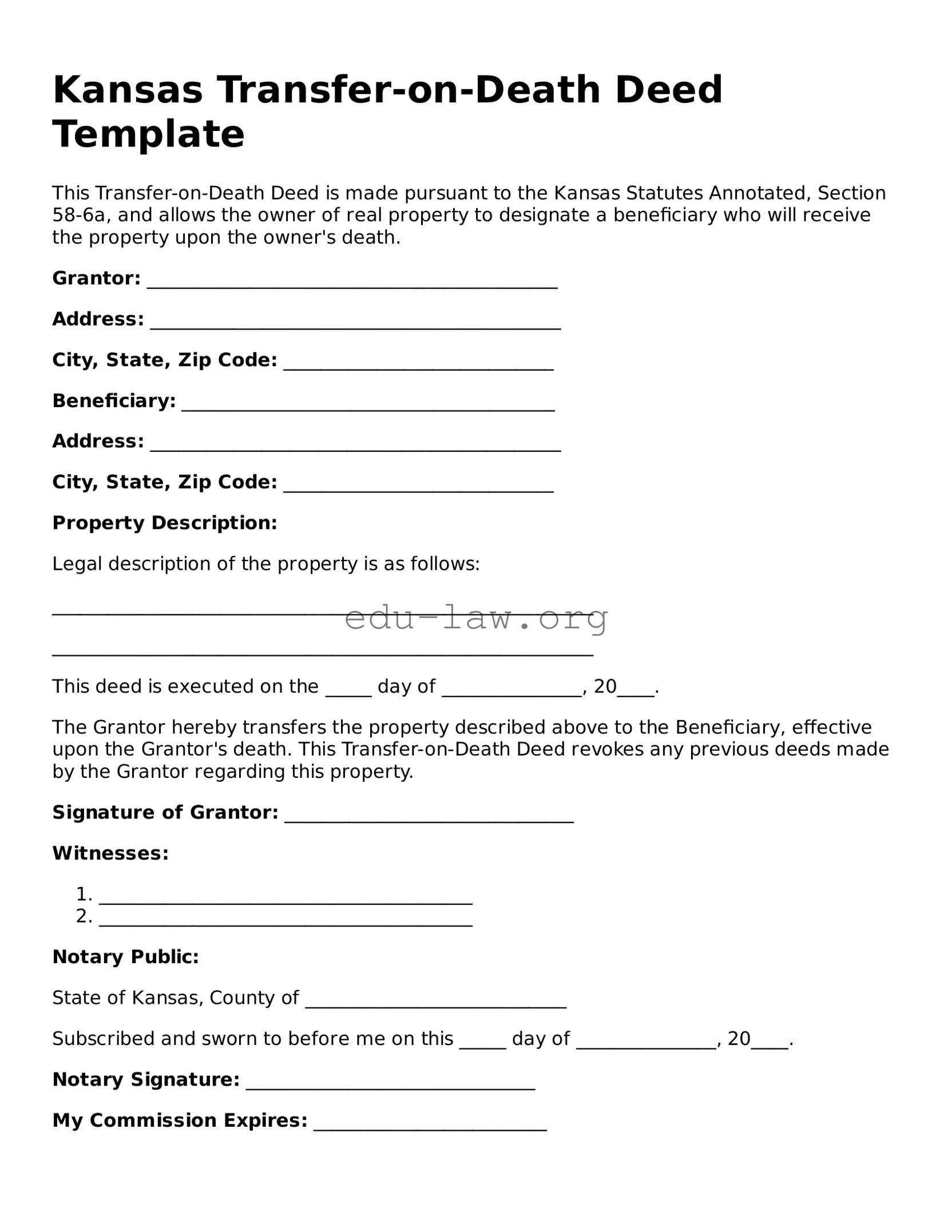
Kansas Transfer-on-Death Deed Template
This Transfer-on-Death Deed is made pursuant to the Kansas Statutes Annotated, Section 58-6a, and allows the owner of real property to designate a beneficiary who will receive the property upon the owner's death.
Grantor: ____________________________________________
Address: ____________________________________________
City, State, Zip Code: _____________________________
Beneficiary: ________________________________________
Address: ____________________________________________
City, State, Zip Code: _____________________________
Property Description:
Legal description of the property is as follows:
__________________________________________________________
__________________________________________________________
This deed is executed on the _____ day of _______________, 20____.
The Grantor hereby transfers the property described above to the Beneficiary, effective upon the Grantor's death. This Transfer-on-Death Deed revokes any previous deeds made by the Grantor regarding this property.
Signature of Grantor: _______________________________
Witnesses:
Notary Public:
State of Kansas, County of ____________________________
Subscribed and sworn to before me on this _____ day of _______________, 20____.
Notary Signature: _______________________________
My Commission Expires: _________________________
| Fact Name | Description |
|---|---|
| Definition | A Kansas Transfer-on-Death Deed allows an individual to transfer real estate to a beneficiary upon the individual's death without going through probate. |
| Governing Law | The Kansas Transfer-on-Death Deed is governed by K.S.A. 58-6a201 et seq. |
| Eligibility | Any individual who owns real estate in Kansas can create a Transfer-on-Death Deed. |
| Beneficiaries | Multiple beneficiaries can be named, and the property can be divided among them. |
| Revocation | The deed can be revoked at any time before the grantor's death, allowing for flexibility in estate planning. |
| Recording Requirement | To be effective, the Transfer-on-Death Deed must be recorded with the county register of deeds in the county where the property is located. |
| No Immediate Effect | The deed does not affect the grantor's ownership rights during their lifetime; the grantor retains full control over the property. |
| Tax Implications | There are generally no tax implications for the grantor when creating the deed, but beneficiaries may need to consider tax consequences upon inheritance. |
| Legal Assistance | While individuals can create a Transfer-on-Death Deed without an attorney, seeking legal advice is recommended to ensure compliance with state laws. |
Filling out the Kansas Transfer-on-Death Deed form is a straightforward process. Once completed, you will need to file the deed with the appropriate county office to ensure it is legally recognized.
What is a Kansas Transfer-on-Death Deed?
A Kansas Transfer-on-Death Deed is a legal document that allows property owners to transfer their real estate to designated beneficiaries upon their death. This deed enables the property owner to retain full control of the property during their lifetime, while ensuring that the property passes directly to the beneficiaries without going through probate after the owner's death.
Who can use a Transfer-on-Death Deed in Kansas?
Any individual who owns real property in Kansas can utilize a Transfer-on-Death Deed. This includes homeowners, landowners, and individuals with interests in real estate. It is important for the property owner to be of sound mind and to understand the implications of transferring property upon death.
How do I create a Transfer-on-Death Deed?
To create a Transfer-on-Death Deed, the property owner must complete the deed form, which includes details about the property, the owner, and the beneficiaries. The deed must be signed by the property owner in the presence of a notary public. After signing, the deed should be recorded with the appropriate county office to ensure it is legally binding and effective.
Can I change the beneficiaries after the Transfer-on-Death Deed is created?
Yes, the property owner has the right to change the beneficiaries at any time before their death. This can be done by creating a new Transfer-on-Death Deed that names different beneficiaries or by revoking the existing deed altogether. It is advisable to follow the proper legal procedures to ensure that any changes are valid.
What happens if a beneficiary predeceases the property owner?
If a beneficiary named in the Transfer-on-Death Deed passes away before the property owner, the property will not automatically transfer to that beneficiary's heirs. Instead, the property will typically pass to the surviving beneficiaries named in the deed. If there are no surviving beneficiaries, the property may become part of the owner's estate and be distributed according to the owner's will or state intestacy laws.
Are there any tax implications associated with a Transfer-on-Death Deed?
Generally, a Transfer-on-Death Deed does not trigger immediate tax consequences for the property owner. However, the beneficiaries may be subject to capital gains taxes when they sell the property after inheriting it. It is advisable to consult with a tax professional to understand any potential tax implications fully.
Is a Transfer-on-Death Deed revocable?
Yes, a Transfer-on-Death Deed is revocable. The property owner can revoke the deed at any time during their lifetime. This can be done by executing a formal revocation document and ensuring it is recorded with the county office where the original deed was filed. The ability to revoke the deed provides flexibility for property owners to adjust their estate plans as needed.
Failing to provide accurate property descriptions. A clear and precise description of the property is essential. Without it, the deed may not be valid.
Not including all required signatures. All owners of the property must sign the deed. Omitting a signature can lead to complications.
Using incorrect names. Ensure that the names of the property owners and beneficiaries are spelled correctly and match their legal documents.
Not having the deed notarized. In Kansas, a Transfer-on-Death Deed must be notarized to be legally binding. Skipping this step can invalidate the deed.
Failing to record the deed. After completing the deed, it must be recorded with the appropriate county office. If this step is overlooked, the deed may not be recognized.
Not understanding the implications of the deed. It’s important to recognize how a Transfer-on-Death Deed affects estate planning and property transfer.
Not updating the deed after changes. If a beneficiary’s information changes or if new beneficiaries need to be added, the deed should be updated accordingly.
Ignoring state-specific requirements. Each state has its own laws regarding Transfer-on-Death Deeds. Familiarity with Kansas laws is crucial.
Overlooking tax implications. Understanding potential tax consequences for beneficiaries is important. Consulting a tax professional may be beneficial.
The Kansas Transfer-on-Death Deed is a useful tool for transferring property upon death without going through probate. However, it often works alongside several other important documents. Below is a list of forms and documents that are commonly used in conjunction with the Transfer-on-Death Deed.
Understanding these documents can help facilitate a smoother transition of property ownership. Each plays a role in ensuring that the wishes of the property owner are honored and that the transfer process is efficient.
The Kansas Transfer-on-Death Deed form shares similarities with a Living Trust. Both documents allow individuals to transfer their property outside of probate. A Living Trust can hold various assets, including real estate, while a Transfer-on-Death Deed specifically pertains to real property. With a Living Trust, the grantor retains control over the assets during their lifetime, whereas the Transfer-on-Death Deed automatically transfers ownership upon the owner's death. This means that both options provide a way to manage assets efficiently, but they differ in complexity and the types of assets they can cover.
An additional document that resembles the Kansas Transfer-on-Death Deed is the Last Will and Testament. Like the Transfer-on-Death Deed, a Last Will directs the distribution of assets after death. However, a Will must go through probate, which can be a lengthy and public process. In contrast, the Transfer-on-Death Deed allows for a more straightforward transfer of property without the need for probate court involvement. Both documents require careful consideration of beneficiaries, but the Transfer-on-Death Deed offers a more streamlined approach for real estate specifically.
When filling out the Kansas Transfer-on-Death Deed form, it’s essential to be meticulous. Below is a list of things you should and shouldn't do to ensure the process goes smoothly.
By following these guidelines, you can help ensure that your Transfer-on-Death Deed is completed correctly and effectively. Taking these steps can prevent future disputes and ensure your wishes are honored.
Many people have misunderstandings about the Kansas Transfer-on-Death Deed form. Here are four common misconceptions:
This is not true. The Transfer-on-Death Deed can be beneficial for anyone who wants to simplify the transfer of property to their beneficiaries without going through probate, regardless of their financial status.
This misconception can cause concern. In reality, the property owner retains full control over the property during their lifetime. They can sell, rent, or make changes to the property as they see fit.
While both documents deal with the transfer of property after death, they serve different purposes. A will goes through probate, while a Transfer-on-Death Deed allows property to pass directly to beneficiaries without probate, making the process quicker and easier.
This is a common misconception. The deed must be properly executed and recorded to be valid. This includes signing the deed in front of a notary and filing it with the appropriate county office.
Filling out and using the Kansas Transfer-on-Death Deed form can be a straightforward process if you keep a few important points in mind. Here are ten key takeaways:
By keeping these key points in mind, you can navigate the process of using the Kansas Transfer-on-Death Deed form more effectively.