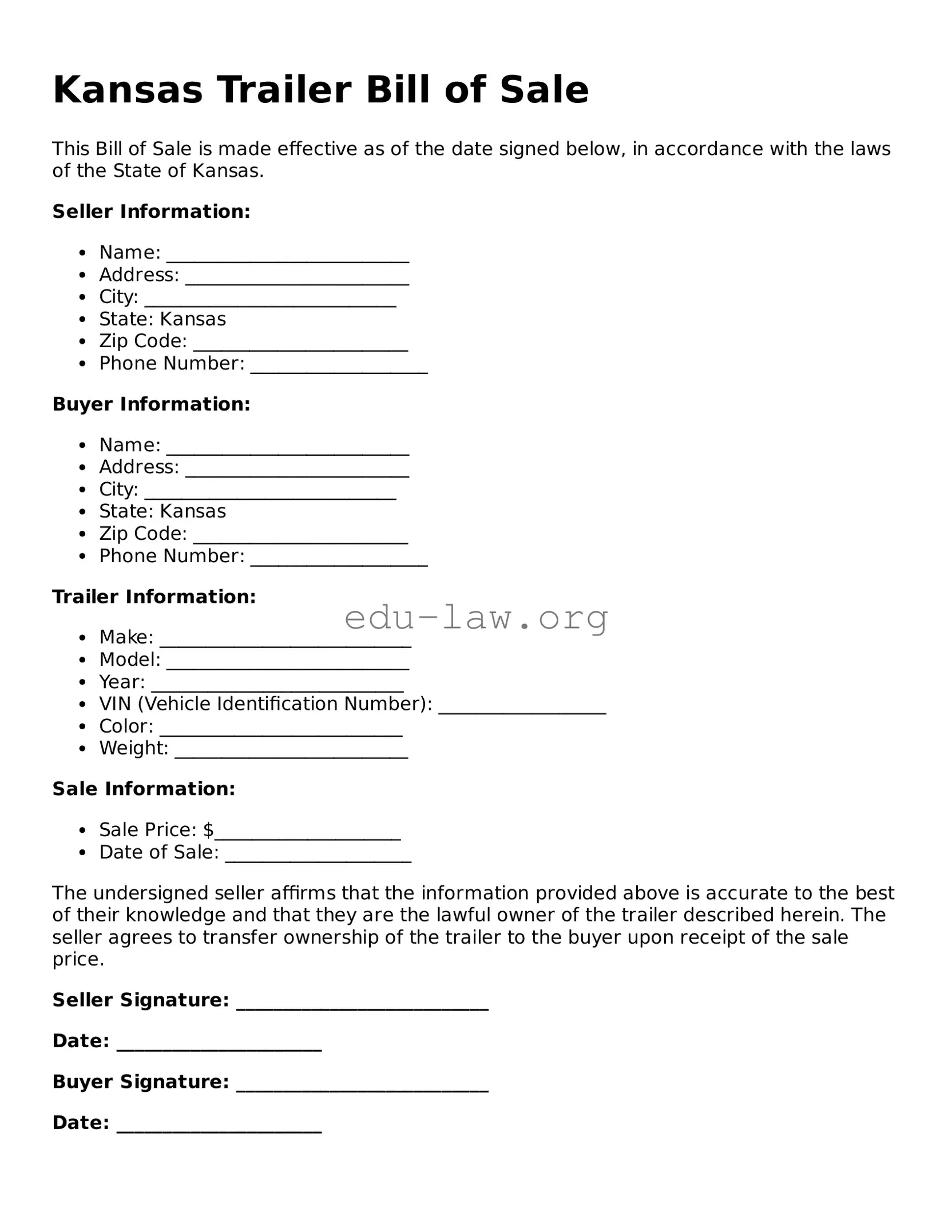
When it comes to buying or selling a trailer in Kansas, a Trailer Bill of Sale form is an essential document that facilitates a smooth transaction. This form serves as proof of the sale and outlines key details such as the names and addresses of both the buyer and seller, the trailer's description, and the purchase price. It also includes important information like the trailer's Vehicle Identification Number (VIN), which helps to establish ownership and prevent fraud. By documenting the transaction, this form protects both parties and provides a clear record should any disputes arise in the future. Additionally, the Trailer Bill of Sale may need to be submitted to the Kansas Department of Revenue for registration purposes, making it a critical component of the buying and selling process. Understanding the elements of this form can help ensure that all necessary information is accurately captured, paving the way for a successful transfer of ownership.
Kansas Trailer Bill of Sale
This Bill of Sale is made effective as of the date signed below, in accordance with the laws of the State of Kansas.
Seller Information:
Buyer Information:
Trailer Information:
Sale Information:
The undersigned seller affirms that the information provided above is accurate to the best of their knowledge and that they are the lawful owner of the trailer described herein. The seller agrees to transfer ownership of the trailer to the buyer upon receipt of the sale price.
Seller Signature: ___________________________
Date: ______________________
Buyer Signature: ___________________________
Date: ______________________
This document serves as a formal record of the sale and should be kept for future reference.
| Fact Name | Description |
|---|---|
| Purpose | The Kansas Trailer Bill of Sale form is used to document the sale and transfer of ownership of a trailer in the state of Kansas. |
| Governing Law | The form is governed by Kansas state laws, specifically K.S.A. 8-135 and K.S.A. 8-143. |
| Parties Involved | The form requires information from both the seller and the buyer, ensuring that both parties are clearly identified. |
| Trailer Description | Details about the trailer, including make, model, year, and Vehicle Identification Number (VIN), must be included for accurate identification. |
| Sale Price | The sale price of the trailer should be stated clearly, as it may be relevant for tax purposes. |
| Signatures Required | Both the seller and the buyer must sign the form to validate the transaction and confirm the transfer of ownership. |
| Notarization | While notarization is not mandatory, having the form notarized can provide additional legal protection for both parties. |
| Record Keeping | It is advisable for both parties to keep a copy of the completed bill of sale for their records. |
| Usage in Registration | The completed form may be required when registering the trailer with the Kansas Department of Revenue. |
Once the Kansas Trailer Bill of Sale form is completed, it serves as a record of the transaction between the seller and the buyer. This document is essential for transferring ownership and should be kept in a safe place for future reference.
What is a Kansas Trailer Bill of Sale?
A Kansas Trailer Bill of Sale is a legal document that serves as a record of the sale and transfer of ownership of a trailer in the state of Kansas. This document includes essential details such as the buyer's and seller's names, addresses, the trailer's identification number, and the sale price. It acts as proof of ownership and is crucial for registering the trailer with the state authorities.
Why is a Bill of Sale necessary for trailers in Kansas?
The Bill of Sale is necessary to establish a clear transfer of ownership from the seller to the buyer. Without this document, the buyer may face difficulties when attempting to register the trailer or prove ownership. Additionally, it protects both parties by documenting the terms of the sale, which can be useful in case of disputes or misunderstandings in the future.
What information is required on the Kansas Trailer Bill of Sale?
Essential information typically includes the names and addresses of both the buyer and seller, the trailer's make, model, year, and Vehicle Identification Number (VIN). The sale price and date of the transaction should also be included. Both parties should sign the document to validate the sale. It may also be helpful to include any relevant details about the trailer's condition or any warranties offered.
Is the Kansas Trailer Bill of Sale required to be notarized?
In Kansas, notarization is not strictly required for a Bill of Sale to be valid. However, having the document notarized can add an extra layer of security and authenticity. This can be particularly useful if there are any disputes regarding the sale in the future. It is always a good practice to check with local authorities or the Department of Revenue for any specific requirements.
Can I create my own Kansas Trailer Bill of Sale?
Yes, you can create your own Kansas Trailer Bill of Sale. However, it is important to ensure that all necessary information is included and that it complies with Kansas state laws. There are templates available online that can guide you in creating a comprehensive document. Alternatively, you may choose to use a professionally prepared form to ensure accuracy and completeness.
What should I do after completing the Bill of Sale?
Once the Bill of Sale is completed and signed by both parties, the buyer should keep a copy for their records. The seller should also retain a copy as proof of the transaction. The buyer will then need to take the Bill of Sale to their local Department of Revenue or motor vehicle office to register the trailer in their name. This step is crucial to legally operate and own the trailer.
What if there are issues with the trailer after the sale?
If issues arise with the trailer after the sale, the Bill of Sale can serve as a reference for the terms of the transaction. If the seller provided any warranties or guarantees, those should be honored. However, if the trailer was sold "as-is," the buyer may have limited recourse. It is advisable for buyers to thoroughly inspect the trailer before completing the sale to avoid potential problems later on.
Incorrect Information: One common mistake is providing inaccurate details about the trailer. This includes the Vehicle Identification Number (VIN), make, model, or year. Always double-check these details to ensure they match the trailer’s registration documents.
Missing Signatures: Failing to obtain the necessary signatures can invalidate the bill of sale. Both the seller and the buyer must sign the document. Make sure to review the form for any required signatures before finalizing the sale.
Not Including Payment Details: Some people forget to include payment information. It's important to specify the sale price and the method of payment. This provides clarity and protects both parties in case of disputes.
Neglecting to Keep Copies: After filling out the form, individuals often overlook the importance of keeping copies. Both the buyer and seller should retain a copy of the bill of sale for their records. This can be crucial for future reference or if any issues arise.
When completing a transaction involving a trailer in Kansas, it is essential to have the right documentation to ensure a smooth process. Along with the Kansas Trailer Bill of Sale form, several other forms and documents may be required or beneficial for both the buyer and seller. Here are some commonly used documents:
Having these documents ready can facilitate a more efficient transaction process. It is advisable to review each form carefully and ensure all information is accurate before proceeding with the sale.
The Kansas Trailer Bill of Sale form shares similarities with the Vehicle Bill of Sale. Both documents serve as proof of transfer of ownership for a vehicle or trailer. They typically include essential details such as the names of the buyer and seller, a description of the vehicle or trailer, the sale price, and the date of the transaction. This ensures that both parties have a clear record of the agreement, which can be useful for future reference or legal purposes.
Another document akin to the Kansas Trailer Bill of Sale is the Boat Bill of Sale. Like the trailer bill, this form is used to document the sale of a watercraft. It includes similar information, such as the identification number of the boat, the names of the parties involved, and the sale amount. This helps to establish legal ownership and can be crucial for registration and insurance purposes.
The Motorcycle Bill of Sale is also comparable to the Kansas Trailer Bill of Sale. This document is specifically designed for the sale of motorcycles and contains information that identifies the bike, including its VIN (Vehicle Identification Number). Just as with the trailer bill, it protects both the buyer and seller by providing a written record of the transaction.
The RV Bill of Sale shares characteristics with the Kansas Trailer Bill of Sale as well. It documents the sale of recreational vehicles, detailing the RV’s specifications, condition, and sale price. This form helps facilitate the transfer of ownership while also serving as a record for future reference, particularly when it comes to registration and titling.
Similarly, the Mobile Home Bill of Sale is another document that functions like the Kansas Trailer Bill of Sale. This form is used to transfer ownership of a mobile home and includes information about the home itself, such as its make, model, and serial number. Just as with trailers, this documentation is vital for legal ownership and can impact property taxes and insurance.
The Snowmobile Bill of Sale is yet another document that resembles the Kansas Trailer Bill of Sale. It serves to record the sale of a snowmobile and includes details about the machine, such as its make, model, and VIN. This form is important for both the buyer and seller, as it formalizes the transaction and aids in registration with the appropriate authorities.
The ATV Bill of Sale is similar as well. This document is used for the sale of all-terrain vehicles and includes pertinent details such as the vehicle's description and sale price. Like the trailer bill, it protects both parties by providing a clear record of the transaction, which can be essential for legal or tax purposes.
Additionally, the Farm Equipment Bill of Sale has similarities with the Kansas Trailer Bill of Sale. This document is used to transfer ownership of farm machinery and equipment. It includes details about the equipment being sold, such as its make and model, and the agreed-upon price. This ensures that both the buyer and seller have a written record of the transaction, which can be crucial in agricultural business dealings.
Lastly, the General Bill of Sale can be compared to the Kansas Trailer Bill of Sale. This versatile document can be used for various types of sales, covering a wide range of personal property. It typically includes the names of the parties, a description of the item, and the sale price. While it may not be specific to trailers, its fundamental purpose of documenting a sale aligns closely with that of the trailer bill.
When filling out the Kansas Trailer Bill of Sale form, it is important to follow certain guidelines to ensure accuracy and compliance. Here are five things you should and shouldn't do:
The Kansas Trailer Bill of Sale form is an important document for anyone buying or selling a trailer in the state. However, several misconceptions often arise regarding its use and requirements. Here are four common misunderstandings:
Many people believe that a bill of sale is optional when buying or selling a trailer. In reality, having a bill of sale is crucial as it serves as a legal record of the transaction. It protects both the buyer and seller by providing proof of ownership and the details of the sale.
Some individuals think that notarization is a requirement for the bill of sale to be valid. While notarization can add an extra layer of authenticity, it is not legally required in Kansas. A simple signed document is sufficient to establish the transaction.
Another common belief is that the bill of sale must be submitted to a state office. In Kansas, this is not necessary. The bill of sale is primarily for the buyer and seller's records, although it may be needed for vehicle registration.
Some people think that only the seller's signature is required on the bill of sale. However, both parties should sign the document to acknowledge the agreement. This mutual consent helps prevent disputes in the future.
When filling out and using the Kansas Trailer Bill of Sale form, it is essential to understand its components and requirements. Here are seven key takeaways to consider: