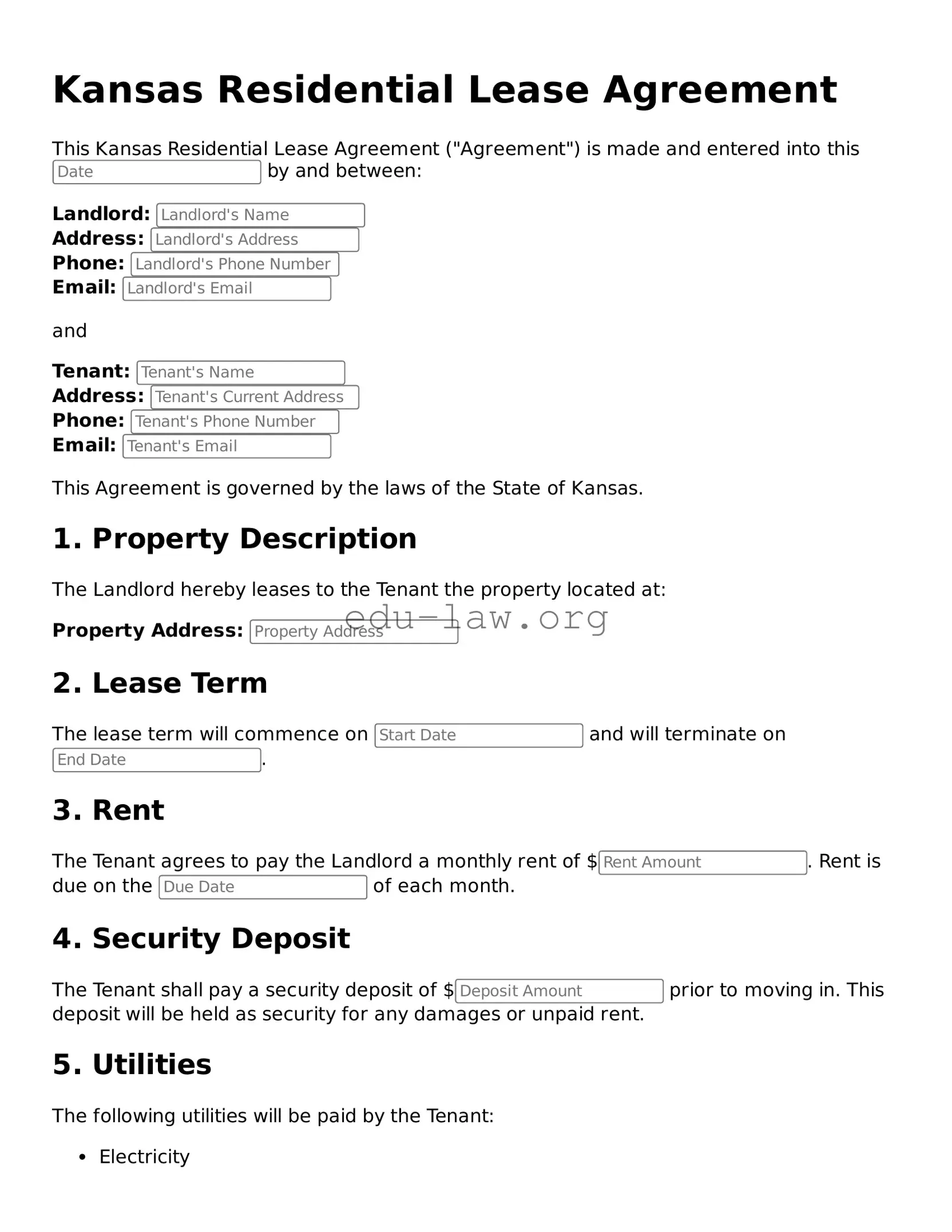
When renting a property in Kansas, understanding the Kansas Residential Lease Agreement form is essential for both landlords and tenants. This document serves as a legally binding contract that outlines the terms and conditions of the rental arrangement. It typically includes critical details such as the duration of the lease, the monthly rent amount, and the security deposit requirements. Additionally, the agreement addresses responsibilities related to maintenance, utilities, and any restrictions on the use of the property. Both parties must be aware of their rights and obligations, as the lease can also cover issues like late fees, pet policies, and procedures for terminating the lease. By clearly defining these aspects, the Kansas Residential Lease Agreement helps prevent misunderstandings and disputes, fostering a smoother rental experience for everyone involved.
Kansas Residential Lease Agreement
This Kansas Residential Lease Agreement ("Agreement") is made and entered into this by and between:
Landlord:
Address:
Phone:
Email:
and
Tenant:
Address:
Phone:
Email:
This Agreement is governed by the laws of the State of Kansas.
1. Property Description
The Landlord hereby leases to the Tenant the property located at:
Property Address:
2. Lease Term
The lease term will commence on and will terminate on .
3. Rent
The Tenant agrees to pay the Landlord a monthly rent of $. Rent is due on the of each month.
4. Security Deposit
The Tenant shall pay a security deposit of $ prior to moving in. This deposit will be held as security for any damages or unpaid rent.
5. Utilities
The following utilities will be paid by the Tenant:
6. Maintenance and Repairs
The Tenant agrees to maintain the property in good condition. The Landlord will be responsible for major repairs unless damage is caused by the Tenant's negligence.
7. Termination
Either party may terminate this Agreement by providing a written notice of days.
8. Governing Law
This Agreement shall be governed by the laws of the State of Kansas.
9. Signatures
By signing below, both parties agree to the terms outlined in this Agreement.
Landlord Signature: ____________________________ Date: ________________
Tenant Signature: ____________________________ Date: ________________
| Fact Name | Description |
|---|---|
| Governing Law | The Kansas Residential Lease Agreement is governed by the Kansas Statutes, specifically K.S.A. 58-2540 et seq. |
| Duration | This lease can be for a fixed term, typically one year, or on a month-to-month basis, providing flexibility for both landlords and tenants. |
| Security Deposit | Landlords may require a security deposit, which cannot exceed one month's rent, to cover potential damages or unpaid rent. |
| Notice Requirements | In Kansas, landlords must provide at least 30 days' notice before terminating a month-to-month lease, ensuring tenants have ample time to prepare. |
Filling out the Kansas Residential Lease Agreement form is an important step in securing a rental property. It lays out the terms and conditions between the landlord and tenant, ensuring both parties understand their rights and responsibilities. Here’s how to complete the form effectively.
Once you have completed the form, make sure to keep a copy for your records. It’s wise to review the agreement with all parties involved to ensure everyone is on the same page before moving forward.
What is a Kansas Residential Lease Agreement?
A Kansas Residential Lease Agreement is a legal document that outlines the terms and conditions between a landlord and a tenant for renting a residential property. This agreement typically includes details such as the rental amount, duration of the lease, security deposit requirements, and the responsibilities of both parties. It serves to protect the rights of both the landlord and the tenant, ensuring that everyone understands their obligations during the rental period.
What should be included in the lease agreement?
Essential elements of a Kansas Residential Lease Agreement include the names of the landlord and tenant, the property address, the rental amount, and the payment due date. It should also specify the lease term, whether it’s month-to-month or for a fixed period. Additionally, clauses regarding maintenance responsibilities, pet policies, and rules about subletting should be included. Clear terms regarding the return of the security deposit at the end of the lease are also important.
How can I terminate a lease agreement in Kansas?
To terminate a lease agreement in Kansas, the landlord or tenant must provide written notice to the other party. For month-to-month leases, a 30-day notice is typically required. For fixed-term leases, termination usually occurs at the end of the lease period unless both parties agree to renew. It's important to check the specific terms outlined in the lease agreement, as they may have additional requirements for termination.
What happens if a tenant violates the lease agreement?
If a tenant violates the lease agreement, the landlord may take several steps. First, the landlord should notify the tenant of the violation and allow time for correction, if applicable. If the issue persists, the landlord may issue a formal notice to vacate or file for eviction. It’s crucial for landlords to follow the legal procedures outlined in Kansas law to ensure that their actions are valid and enforceable.
Incomplete Tenant Information: One common mistake is failing to provide complete and accurate information about all tenants. Each tenant's full name and contact details should be clearly listed. Omitting this information can lead to confusion and potential legal issues.
Incorrect Dates: Many people overlook the importance of accurately filling in the lease start and end dates. These dates must reflect the agreed-upon terms. If they are incorrect, it can create disputes regarding the tenancy duration.
Neglecting Rent Payment Details: Another frequent error involves not specifying the rent amount or the due date. It's crucial to clearly state how much rent is owed and when it must be paid each month. Failure to do so can lead to misunderstandings and missed payments.
Ignoring Security Deposit Terms: Some individuals fail to outline the terms related to the security deposit. The amount, conditions for its return, and any deductions should be explicitly mentioned. This oversight can result in disputes when the lease ends.
Not Including Maintenance Responsibilities: A common mistake is not detailing the responsibilities of both the landlord and tenant regarding property maintenance. Clearly outlining who is responsible for repairs and upkeep can prevent conflicts later on.
Forgetting Signatures: Finally, a simple yet critical mistake is neglecting to sign the agreement. Both the landlord and tenant must sign the lease for it to be legally binding. Without signatures, the document may not hold up in court.
The Kansas Residential Lease Agreement is a key document in establishing the terms between a landlord and tenant. However, several other forms and documents often accompany this agreement to ensure clarity and compliance with state laws. Below is a list of common documents that may be used alongside the lease agreement.
These documents collectively support the leasing process, helping to protect the rights of both landlords and tenants. Utilizing these forms can lead to a smoother rental experience for all parties involved.
The Kansas Residential Lease Agreement shares similarities with the Commercial Lease Agreement. Both documents outline the terms under which a property is leased, but they cater to different types of tenants. A Commercial Lease Agreement is designed for businesses renting space for commercial purposes, while the Residential Lease Agreement is intended for individuals or families renting a home. Each document specifies rent amounts, duration of the lease, and responsibilities for maintenance, ensuring both parties understand their rights and obligations.
Another document that resembles the Kansas Residential Lease Agreement is the Month-to-Month Rental Agreement. This type of agreement allows tenants to rent a property on a flexible basis, typically with a notice period for termination. Like the Residential Lease Agreement, it details rental terms, but it is often less formal and can be terminated with shorter notice. Both agreements aim to protect the interests of landlords and tenants, ensuring clarity in the rental relationship.
The Sublease Agreement is also similar to the Kansas Residential Lease Agreement. When a tenant decides to rent out their leased property to another individual, they enter into a Sublease Agreement. This document outlines the terms under which the subtenant will occupy the space. While the primary lease governs the relationship between the landlord and the original tenant, the sublease must align with the original lease’s terms, ensuring all parties are protected and informed.
The Lease Option Agreement is another document that shares characteristics with the Kansas Residential Lease Agreement. This type of agreement not only allows a tenant to rent a property but also gives them the option to purchase it after a specified period. Both agreements cover rental terms, but the Lease Option Agreement includes additional clauses about the purchase price and conditions under which the tenant can buy the property, blending rental and real estate transaction elements.
The Rental Application is similar in purpose to the Kansas Residential Lease Agreement, although it serves a different function in the rental process. A Rental Application is completed by prospective tenants to provide landlords with information about their background, employment, and rental history. While the Lease Agreement formalizes the rental terms, the application helps landlords assess potential tenants, ensuring they select individuals who meet their criteria for renting the property.
Lastly, the Eviction Notice is a document that, while not a lease agreement, is closely related to the Kansas Residential Lease Agreement. This notice is issued by a landlord when a tenant fails to comply with the lease terms, such as non-payment of rent. Both documents are part of the rental process, as the Eviction Notice serves as a legal step to enforce the terms outlined in the Residential Lease Agreement. Understanding both documents is crucial for both landlords and tenants to navigate their rights and responsibilities effectively.
When completing the Kansas Residential Lease Agreement form, it's important to approach the task with care. Here are some guidelines to follow:
The Kansas Residential Lease Agreement form is often misunderstood. Here are nine common misconceptions about it:
While it is advisable to have a written lease for clarity, verbal agreements can also be valid. However, they may be harder to enforce.
Landlords must provide notice before entering a tenant's home, except in emergencies. Typically, 24 hours' notice is required.
Tenants can only withhold rent under specific circumstances, such as when the property is uninhabitable. Legal advice is recommended in these situations.
Security deposits can be refundable, depending on the lease terms and the condition of the property upon move-out.
Landlords must follow state laws regarding rent increases. Typically, they must provide notice and cannot increase rent during a lease term unless specified.
Whether pets are allowed depends on the lease agreement. Some landlords may have strict no-pet policies.
Each state has its own laws and regulations regarding lease agreements. It's essential to understand Kansas-specific rules.
Any modifications, such as painting or renovations, typically require landlord approval as stated in the lease.
Leases can be modified if both parties agree to the changes in writing. Always document any amendments.
Filling out and utilizing the Kansas Residential Lease Agreement form is an important step for both landlords and tenants. Understanding the nuances of this document can help ensure a smoother rental experience. Here are some key takeaways:
By keeping these points in mind, both landlords and tenants can foster a more respectful and clear rental relationship.