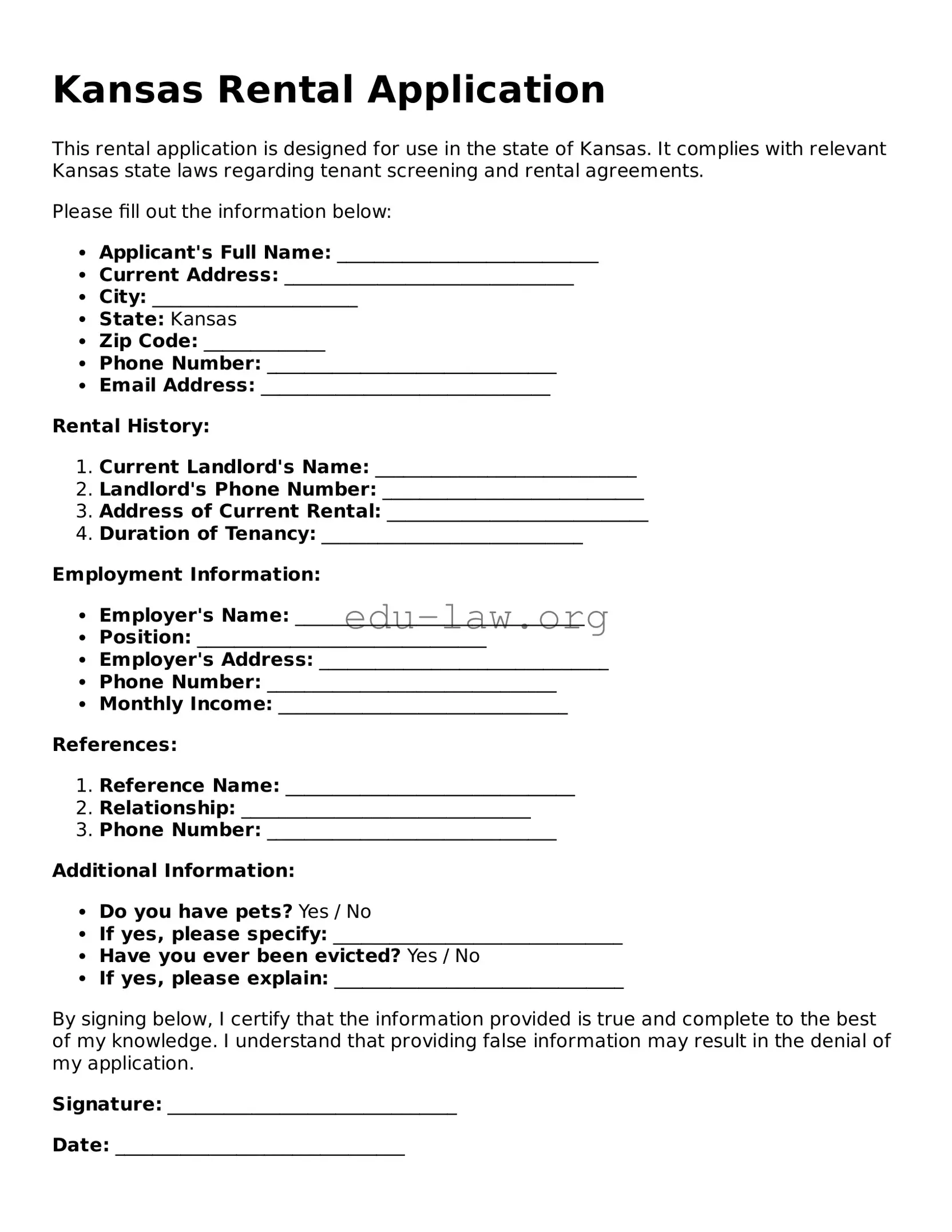
When seeking a rental property in Kansas, understanding the rental application form is crucial for both prospective tenants and landlords. This form serves as a foundational document that helps landlords assess the suitability of applicants. It typically includes essential information such as personal details, rental history, employment verification, and references. Additionally, it may require applicants to disclose their financial background, including income sources and credit history. By providing this information, tenants can demonstrate their reliability and ability to meet rental obligations. Conversely, landlords use this data to make informed decisions, ensuring they select responsible tenants who will uphold the terms of the lease. Completing the Kansas rental application form accurately and thoroughly can significantly enhance a tenant's chances of securing their desired home.
Kansas Rental Application
This rental application is designed for use in the state of Kansas. It complies with relevant Kansas state laws regarding tenant screening and rental agreements.
Please fill out the information below:
Rental History:
Employment Information:
References:
Additional Information:
By signing below, I certify that the information provided is true and complete to the best of my knowledge. I understand that providing false information may result in the denial of my application.
Signature: _______________________________
Date: _______________________________
| Fact Name | Description |
|---|---|
| Purpose | The Kansas Rental Application form is used by landlords to screen potential tenants. |
| Required Information | Applicants must provide personal information, including name, address, and contact details. |
| Employment Details | Applicants need to disclose their current employment status and income. |
| Rental History | Previous rental history is required, including landlord contact information. |
| Credit Check | Landlords may conduct a credit check as part of the application process. |
| Application Fee | Many landlords charge a non-refundable application fee to process the application. |
| Fair Housing Laws | Landlords must comply with federal and state fair housing laws when reviewing applications. |
| Governing Laws | The application process is governed by Kansas landlord-tenant laws, specifically K.S.A. 58-2550. |
| Signature Requirement | Applicants must sign the form, certifying that the information provided is accurate. |
| Processing Time | Landlords typically process applications within a few days, depending on their policies. |
Filling out a rental application is an important step in securing a rental property. Once you complete the form, it will be reviewed by the landlord or property manager, who will assess your suitability as a tenant. Following these steps will help ensure that your application is filled out accurately and completely.
After submitting the application, be prepared for a potential interview or additional questions from the landlord. They may conduct background and credit checks as part of their evaluation process.
What is a Kansas Rental Application form?
The Kansas Rental Application form is a document that potential tenants fill out when they want to rent a property. It collects important information about the applicant, such as their employment history, rental history, and personal references. Landlords use this information to decide if the applicant is a good fit for their rental property.
What information do I need to provide on the application?
You will typically need to provide personal details like your name, contact information, and Social Security number. The form may also ask for your current address, employment details, income, and references. Be prepared to provide information about your rental history, including previous landlords and addresses.
Is there a fee for submitting a rental application?
How long does it take to process a rental application?
What happens if my application is denied?
If your application is denied, the landlord is required to inform you. They should provide a reason for the denial, which could be due to insufficient income, poor credit history, or negative rental references. You have the right to request a copy of the report used in their decision-making process.
Can I apply for multiple rental properties at the same time?
What should I do if my rental application is approved?
Incomplete Information: Many applicants fail to provide all the required information on the form. This can include missing phone numbers, email addresses, or references. Incomplete applications may lead to delays or even rejection.
Inaccurate Employment Details: Applicants often provide incorrect or outdated employment information. This includes job titles, salaries, or employer contact details. Such inaccuracies can raise red flags for landlords and property managers.
Neglecting to Disclose Rental History: Some individuals forget to list their previous rental addresses or provide misleading information about their rental history. Omitting this information can hinder the application process and affect the decision-making of the landlord.
Failure to Sign and Date: A common oversight is not signing or dating the application. Without a signature, the application may be considered invalid. This mistake can result in a lost opportunity to secure a rental property.
When applying for a rental property in Kansas, several documents may accompany the rental application form. These documents help landlords assess the suitability of potential tenants and ensure a smooth rental process. Below is a list of commonly used forms and documents that may be required.
These documents play a vital role in the rental application process. They provide landlords with a comprehensive understanding of the applicant's background and financial situation. Being prepared with these forms can help streamline the application process and facilitate a positive rental experience.
The lease agreement is a crucial document in the rental process. It outlines the terms and conditions of the rental arrangement between the landlord and tenant. Similar to the Kansas Rental Application form, the lease agreement requires personal information from the tenant, including their name, contact details, and rental history. Both documents serve to establish the relationship between the parties involved and set expectations for the duration of the tenancy.
A tenant screening form is often used by landlords to evaluate potential tenants. This document typically collects similar information to the Kansas Rental Application, such as employment history, income details, and references. The purpose of both forms is to help landlords make informed decisions about who to rent to, ensuring they choose tenants who are likely to fulfill their lease obligations.
A background check authorization form is another document that shares similarities with the Kansas Rental Application. This form allows landlords to obtain a tenant's criminal history and credit report. Like the rental application, it requires the tenant's consent and personal information. Both documents aim to provide landlords with a clearer picture of a tenant's reliability and trustworthiness.
The rental history verification form is used to confirm a tenant's previous rental experiences. This document often asks for contact information for past landlords, which is similar to the references section in the Kansas Rental Application. Both forms seek to ensure that the tenant has a positive rental history, which can be a significant factor in the landlord's decision-making process.
An employment verification form is frequently requested by landlords. This document confirms a tenant's employment status and income level. Similar to the Kansas Rental Application, it helps landlords assess whether a tenant can afford the rent. Both documents require details about the tenant's job and income, which are critical for evaluating financial stability.
A pet application form is relevant for tenants with pets. This document gathers information about the pet's breed, size, and vaccination status. Like the Kansas Rental Application, it helps landlords determine if they can accommodate pets in their rental properties. Both forms ensure that the landlord has all necessary information to make decisions regarding pets in the rental unit.
A co-signer application form is used when a tenant requires a guarantor. This document collects information about the co-signer's financial status and creditworthiness. Similar to the Kansas Rental Application, it aims to reassure the landlord that the lease will be honored, even if the primary tenant faces financial difficulties. Both forms provide insight into the financial backing of the tenant.
An income verification form is often requested by landlords to confirm a tenant's earnings. This document may require pay stubs or tax returns, similar to the income details provided in the Kansas Rental Application. Both forms help landlords assess whether a tenant has sufficient income to cover rent, ensuring a stable tenancy.
A move-in checklist is used to document the condition of a rental unit before a tenant moves in. While it serves a different purpose, it shares the goal of ensuring transparency between the landlord and tenant. Both the move-in checklist and the Kansas Rental Application help protect the interests of both parties by clearly outlining expectations and responsibilities.
The rental agreement addendum is a supplementary document that modifies the original lease agreement. It may include specific rules or conditions that were not covered in the initial lease. Like the Kansas Rental Application, it requires the agreement of both parties and helps clarify the terms of the rental arrangement, ensuring all parties are on the same page.
When filling out the Kansas Rental Application form, it’s essential to be thorough and accurate. Here are some important dos and don’ts to keep in mind:
When it comes to renting a property in Kansas, many people encounter the rental application form. However, several misconceptions often arise surrounding this important document. Understanding the truth behind these myths can help potential tenants navigate the rental process more effectively. Here’s a breakdown of nine common misconceptions about the Kansas Rental Application form:
By dispelling these misconceptions, potential renters can approach the Kansas rental application process with greater confidence and clarity. Understanding the true nature of the application can pave the way for a smoother rental experience.
When filling out and using the Kansas Rental Application form, keep these key takeaways in mind: