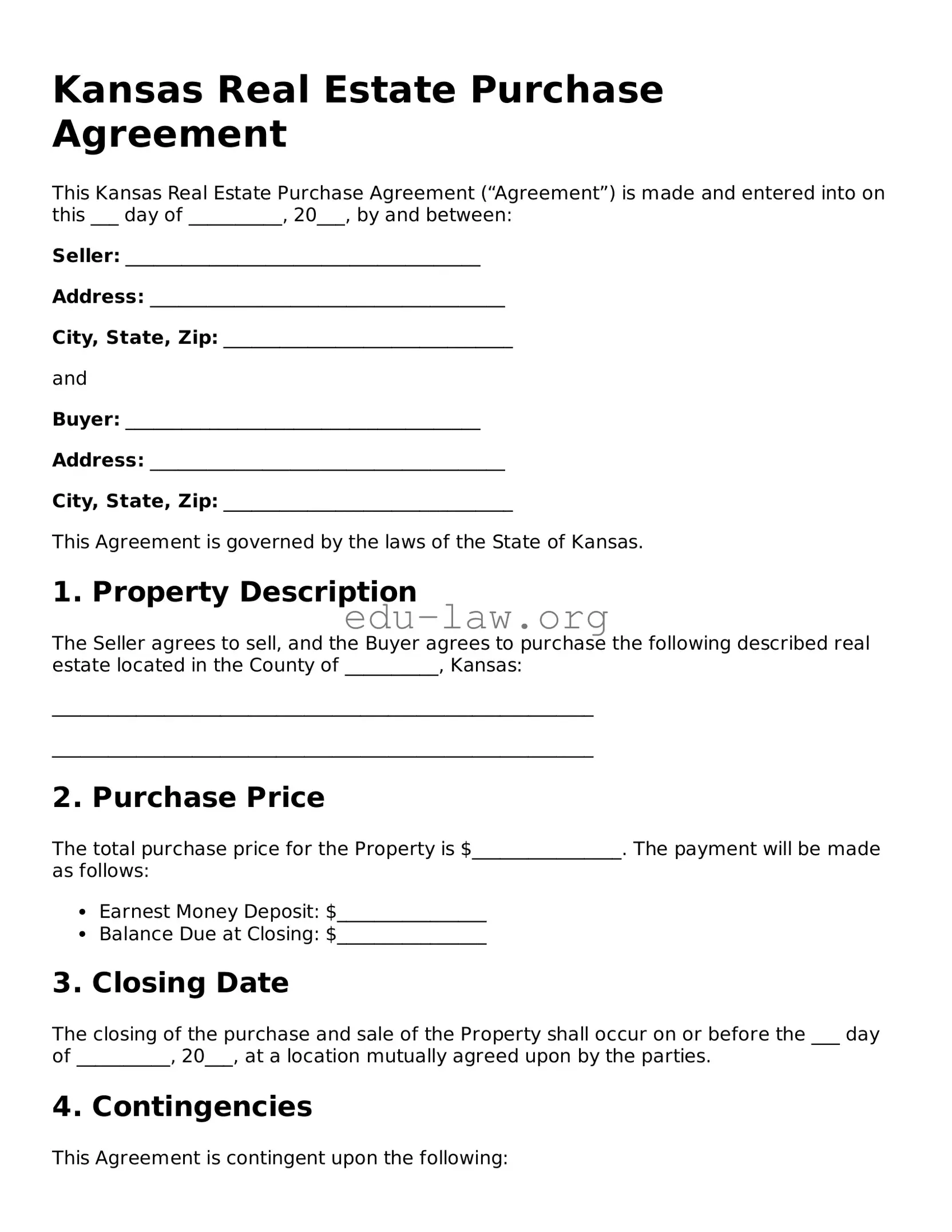
The Kansas Real Estate Purchase Agreement form serves as a critical document in the process of buying or selling property in the state. This form outlines the terms and conditions agreed upon by both the buyer and the seller, ensuring that all parties have a clear understanding of their rights and obligations. Key aspects of the agreement include the purchase price, financing details, and the property description, which collectively establish the framework for the transaction. Additionally, it addresses contingencies, such as inspections and appraisals, which may affect the final sale. The agreement also specifies important timelines, including closing dates and the transfer of ownership. By laying out these essential elements, the Kansas Real Estate Purchase Agreement helps facilitate a smooth and transparent real estate transaction, promoting trust and clarity between buyers and sellers.
Kansas Real Estate Purchase Agreement
This Kansas Real Estate Purchase Agreement (“Agreement”) is made and entered into on this ___ day of __________, 20___, by and between:
Seller: ______________________________________
Address: ______________________________________
City, State, Zip: _______________________________
and
Buyer: ______________________________________
Address: ______________________________________
City, State, Zip: _______________________________
This Agreement is governed by the laws of the State of Kansas.
1. Property Description
The Seller agrees to sell, and the Buyer agrees to purchase the following described real estate located in the County of __________, Kansas:
__________________________________________________________
__________________________________________________________
2. Purchase Price
The total purchase price for the Property is $________________. The payment will be made as follows:
3. Closing Date
The closing of the purchase and sale of the Property shall occur on or before the ___ day of __________, 20___, at a location mutually agreed upon by the parties.
4. Contingencies
This Agreement is contingent upon the following:
5. Disclosures
The Seller agrees to provide the Buyer with all required disclosures as mandated by Kansas law, including but not limited to:
6. Governing Law
This Agreement shall be governed by and construed in accordance with the laws of the State of Kansas.
7. Signatures
IN WITNESS WHEREOF, the parties have executed this Agreement as of the date first above written.
Seller's Signature: ___________________________
Date: ___________________________
Buyer's Signature: ___________________________
Date: ___________________________
| Fact Name | Description |
|---|---|
| Governing Law | The Kansas Real Estate Purchase Agreement is governed by the laws of the State of Kansas. |
| Parties Involved | The agreement typically involves a buyer and a seller, both of whom must be clearly identified. |
| Property Description | A detailed description of the property being sold is required, including its address and legal description. |
| Purchase Price | The agreement must specify the purchase price and any earnest money deposit required from the buyer. |
| Contingencies | Common contingencies, such as financing or inspection, should be included to protect the interests of both parties. |
Filling out the Kansas Real Estate Purchase Agreement form is a crucial step in the home buying process. This document outlines the terms of the sale between the buyer and the seller, ensuring that both parties are on the same page regarding the transaction. After completing the form, it will need to be signed by both parties and may require additional steps, such as involving a real estate agent or legal counsel for review.
What is a Kansas Real Estate Purchase Agreement?
The Kansas Real Estate Purchase Agreement is a legal document that outlines the terms and conditions of a real estate transaction in Kansas. It serves as a contract between the buyer and the seller, detailing the property being sold, the purchase price, and any contingencies that must be met before the sale can be completed.
What key elements should be included in the agreement?
A comprehensive Kansas Real Estate Purchase Agreement typically includes the following elements: the names of the buyer and seller, a description of the property, the purchase price, the earnest money deposit, financing terms, contingencies (such as inspections or appraisals), and the closing date. Additionally, it may outline any included fixtures or personal property.
Is it necessary to have an attorney review the agreement?
What are contingencies, and why are they important?
Contingencies are conditions that must be met for the sale to proceed. Common contingencies include home inspections, financing approval, and appraisal requirements. They are important because they protect the buyer from potential issues that could arise during the transaction, allowing them to back out if certain conditions are not satisfied.
How is earnest money handled in the agreement?
Earnest money is a deposit made by the buyer to demonstrate their serious intent to purchase the property. The agreement should specify the amount of earnest money, how it will be held (usually in an escrow account), and the conditions under which it may be refunded or forfeited. This deposit is typically applied to the purchase price at closing.
What happens if either party wants to back out of the agreement?
If either party wishes to back out of the agreement, they must refer to the terms outlined in the contract. If the buyer withdraws without a valid reason as specified in the contingencies, they may forfeit their earnest money. Conversely, if the seller backs out without cause, the buyer may be entitled to seek damages or specific performance, which could compel the seller to complete the sale.
Can the agreement be modified after it has been signed?
Yes, the Kansas Real Estate Purchase Agreement can be modified after it has been signed, but any changes must be agreed upon by both parties. It is essential to document any modifications in writing to avoid misunderstandings later. This may involve drafting an addendum that outlines the specific changes being made.
What is the typical timeline for closing a real estate transaction in Kansas?
The timeline for closing a real estate transaction can vary, but it generally takes about 30 to 60 days from the time the agreement is signed. Factors that can affect this timeline include the completion of inspections, obtaining financing, and any contingencies that need to be resolved. Clear communication between the buyer, seller, and their respective agents can help ensure a smooth process.
Where can I obtain a Kansas Real Estate Purchase Agreement form?
You can obtain a Kansas Real Estate Purchase Agreement form from various sources, including real estate agents, legal websites, or local real estate associations. It is crucial to ensure that the form you use is up-to-date and compliant with Kansas laws. Consulting a real estate professional can also provide guidance on the best resources for obtaining the correct form.
Not including all parties involved: It’s essential to list all buyers and sellers accurately. Omitting someone can lead to legal complications later.
Incorrect property description: Failing to provide a complete and precise description of the property can create confusion. Always double-check the address and any legal descriptions.
Leaving out important dates: Key dates such as the closing date and inspection deadlines must be clearly stated. Missing these can cause delays or disputes.
Not specifying contingencies: Buyers often forget to include contingencies like financing or inspection clauses. These protect the buyer’s interests and should not be overlooked.
Ignoring earnest money details: It’s crucial to outline the amount of earnest money and the conditions for its return. This ensures both parties understand the stakes involved.
Neglecting to review the terms: Skimming through the terms and conditions can lead to misunderstandings. Take the time to read everything thoroughly before signing.
Not consulting a professional: Attempting to fill out the form without professional guidance can lead to mistakes. Real estate agents or attorneys can provide valuable insights.
Failing to keep copies: After submitting the agreement, always keep a signed copy for your records. This is important for future reference and dispute resolution.
When engaging in a real estate transaction in Kansas, several key documents often accompany the Kansas Real Estate Purchase Agreement. These documents help clarify the terms of the sale and protect the interests of both the buyer and seller. Here’s a list of some important forms and documents you may encounter.
Understanding these documents can significantly ease the process of buying or selling real estate in Kansas. Each plays a vital role in ensuring that both parties are protected and that the transaction proceeds smoothly. Always consider consulting with a real estate professional or attorney to navigate these documents effectively.
The Kansas Real Estate Purchase Agreement form shares similarities with the Purchase and Sale Agreement, which is commonly used in many states. Both documents outline the terms of the sale, including the purchase price, property details, and closing date. They serve as a legally binding contract between the buyer and seller, ensuring both parties are clear on their obligations and rights throughout the transaction.
Another related document is the Residential Purchase Agreement. This form is specifically tailored for residential properties and includes provisions that address unique aspects of home buying, such as contingencies related to inspections and financing. Like the Kansas Real Estate Purchase Agreement, it protects the interests of both the buyer and seller while providing a clear framework for the transaction.
The Commercial Real Estate Purchase Agreement is another similar document, but it is designed for commercial properties. This agreement often includes additional clauses related to zoning, tenant leases, and environmental assessments. While both agreements serve the same fundamental purpose of facilitating a sale, the commercial version addresses the complexities associated with business properties.
A Lease Purchase Agreement also bears similarities to the Kansas Real Estate Purchase Agreement. This document allows a buyer to lease a property with the option to purchase it later. It combines elements of both leasing and purchasing, providing flexibility for buyers who may need time to secure financing while still committing to the property.
The Option to Purchase Agreement is another document that aligns closely with the Kansas Real Estate Purchase Agreement. This agreement grants a potential buyer the exclusive right to purchase a property at a predetermined price within a specified timeframe. It gives buyers the chance to evaluate a property before making a full commitment, similar to the contingencies found in a purchase agreement.
The Seller’s Disclosure Statement is a document that complements the Kansas Real Estate Purchase Agreement. While it does not serve as a contract itself, it provides crucial information about the property's condition and any known issues. This transparency helps buyers make informed decisions and can prevent disputes after the sale, aligning with the spirit of full disclosure in purchase agreements.
Finally, the Escrow Agreement is related to the Kansas Real Estate Purchase Agreement as it outlines the process for handling funds and documents during the transaction. This agreement ensures that the buyer's deposit and other funds are held securely until all conditions of the purchase agreement are met, facilitating a smooth closing process.
When filling out the Kansas Real Estate Purchase Agreement form, it is important to follow specific guidelines to ensure accuracy and compliance. Here are nine things to consider:
Understanding the Kansas Real Estate Purchase Agreement form is crucial for anyone involved in a real estate transaction. However, there are several misconceptions that can lead to confusion. Here are seven common misconceptions explained:
Many believe that the Kansas Real Estate Purchase Agreement is a one-size-fits-all document. In reality, it can be tailored to meet the specific needs of the parties involved.
Some think that only licensed real estate agents are allowed to complete this form. However, buyers and sellers can also fill it out, as long as they understand the terms.
There is a belief that after both parties sign the agreement, it is set in stone. In fact, amendments can be made if both parties agree.
People often assume that signing this agreement guarantees that the sale will go through. However, there are many factors that can affect the closing process.
Some think that the agreement addresses every detail of the sale. While it covers many important aspects, additional agreements may be necessary for specific issues.
There is a misconception that a purchase agreement functions like a lease. In truth, a purchase agreement is for buying property, while a lease pertains to renting.
Many believe they can navigate the agreement without any legal guidance. Seeking advice from a legal professional can help clarify complex terms and protect one’s interests.
By addressing these misconceptions, individuals can approach the Kansas Real Estate Purchase Agreement with greater confidence and understanding.
When filling out and using the Kansas Real Estate Purchase Agreement form, keep these key takeaways in mind:
By following these guidelines, you can navigate the Kansas Real Estate Purchase Agreement more effectively.