In Kansas, the Notice to Quit form serves as an essential document for landlords seeking to terminate a tenancy. This form outlines the reasons for eviction, which can include non-payment of rent, lease violations, or the expiration of a lease agreement. It is important for landlords to provide clear and specific details in the notice, as this helps ensure compliance with state laws and protects their rights. The form typically includes information such as the tenant's name, the property address, and the date by which the tenant must vacate the premises. Additionally, it may specify the consequences of failing to leave, which can lead to further legal action. Understanding the nuances of this form is crucial for both landlords and tenants, as it lays the groundwork for a potential eviction process and ensures that all parties are aware of their rights and responsibilities.
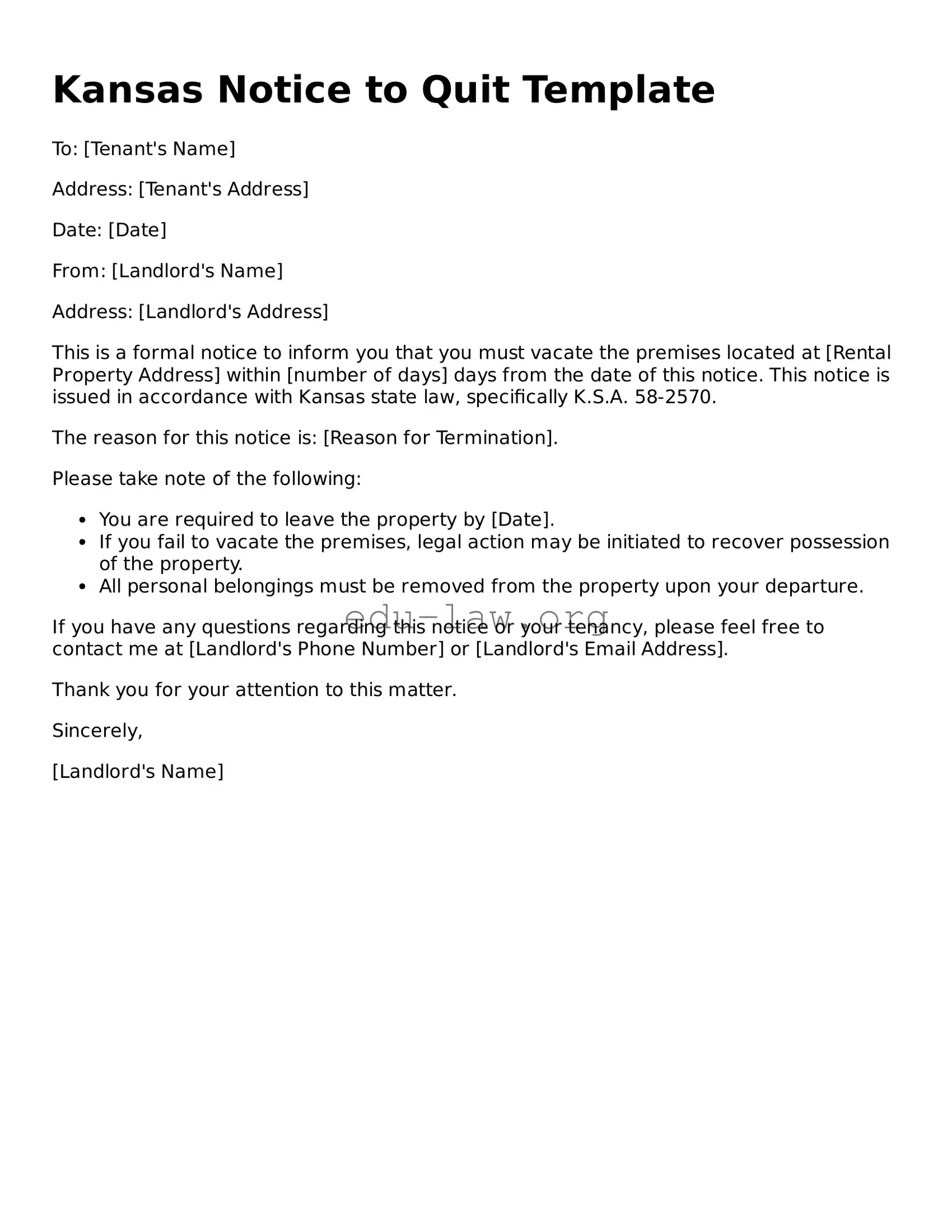
Kansas Notice to Quit Template
To: [Tenant's Name]
Address: [Tenant's Address]
Date: [Date]
From: [Landlord's Name]
Address: [Landlord's Address]
This is a formal notice to inform you that you must vacate the premises located at [Rental Property Address] within [number of days] days from the date of this notice. This notice is issued in accordance with Kansas state law, specifically K.S.A. 58-2570.
The reason for this notice is: [Reason for Termination].
Please take note of the following:
If you have any questions regarding this notice or your tenancy, please feel free to contact me at [Landlord's Phone Number] or [Landlord's Email Address].
Thank you for your attention to this matter.
Sincerely,
[Landlord's Name]
| Fact Name | Description |
|---|---|
| Purpose | The Kansas Notice to Quit form is used by landlords to inform tenants that they must vacate the rental property. |
| Governing Law | This form is governed by Kansas Statutes Annotated, Chapter 58, Article 25, which outlines landlord-tenant relationships. |
| Notice Period | In most cases, landlords must provide a 30-day notice to tenants before they can initiate eviction proceedings. |
| Delivery Methods | The notice can be delivered in person, by certified mail, or by posting it on the property. |
| Contents | The form must clearly state the reason for the notice, the date by which the tenant must vacate, and the landlord's contact information. |
| Tenant Rights | Tenants have the right to contest the eviction in court if they believe the notice was improperly served or lacks justification. |
| Legal Consequences | If a tenant fails to vacate by the specified date, the landlord may file for eviction in court. |
After obtaining the Kansas Notice to Quit form, you will need to complete it accurately to ensure it serves its intended purpose. Follow these steps carefully to fill out the form properly.
Once you have filled out the form, you will need to deliver it to the tenant. Ensure that you follow the proper delivery methods as required by Kansas law. This may include personal delivery, mailing, or posting the notice on the property.
What is a Kansas Notice to Quit form?
The Kansas Notice to Quit form is a legal document that a landlord can use to inform a tenant that they must vacate the rental property. This notice is typically issued when a tenant has violated the terms of their lease or has not paid rent. It serves as a formal request for the tenant to leave the premises within a specified time frame.
When is a Notice to Quit necessary?
A Notice to Quit may be necessary in various situations. Common reasons include non-payment of rent, lease violations, or if the landlord wishes to terminate a month-to-month rental agreement. The specific circumstances will dictate whether a Notice to Quit is appropriate.
How much notice must a landlord give?
The amount of notice required can vary depending on the reason for the eviction. For example, if a tenant has not paid rent, a landlord must typically provide a 14-day notice. For other lease violations, the notice period may also be 14 days. However, for month-to-month leases, a 30-day notice is often required. It's important to check local laws for specific requirements.
Can a tenant contest a Notice to Quit?
Yes, a tenant can contest a Notice to Quit. If a tenant believes the notice is unjust or that they have not violated any lease terms, they may choose to respond. This could involve communicating with the landlord or seeking legal advice. Ultimately, if the matter escalates, it may lead to a court hearing where both parties can present their case.
What happens if a tenant does not leave after receiving a Notice to Quit?
If a tenant does not vacate the property by the deadline specified in the Notice to Quit, the landlord may begin eviction proceedings. This typically involves filing a lawsuit in court to seek formal eviction. The court will then review the case and make a determination based on the evidence presented.
Is a Notice to Quit the same as an eviction notice?
While a Notice to Quit is often a precursor to an eviction notice, they are not the same. A Notice to Quit serves as a warning or request for the tenant to leave, whereas an eviction notice is a legal document that initiates formal eviction proceedings after the tenant has failed to comply with the Notice to Quit.
Can a landlord issue a Notice to Quit without a lease?
Yes, a landlord can issue a Notice to Quit even if there is no written lease in place. In cases of month-to-month tenancies or verbal agreements, the landlord still has the right to terminate the tenancy and request that the tenant vacate the property, following the appropriate notice period.
What should a tenant do upon receiving a Notice to Quit?
Upon receiving a Notice to Quit, a tenant should carefully read the document to understand the reasons for the notice and the timeframe given. It is advisable to communicate with the landlord to clarify any misunderstandings or to negotiate a resolution. Seeking legal advice may also be beneficial to understand rights and options moving forward.
Where can I find a Kansas Notice to Quit form?
A Kansas Notice to Quit form can typically be found online through legal aid websites, local government resources, or by consulting with a legal professional. It's important to ensure that the form complies with state laws and includes all necessary information before use.
Failing to include the correct tenant information. Ensure that you have the full name of the tenant as it appears on the lease.
Not providing the complete address of the rental property. Include the unit number if applicable to avoid confusion.
Leaving out the specific reason for the notice. Clearly state why you are issuing the Notice to Quit to comply with legal requirements.
Using vague language in the notice. Be direct and specific about the issues that led to the notice.
Neglecting to include the date of the notice. This date is crucial for establishing timelines.
Not signing the form. A signature is necessary to validate the notice.
Forgetting to provide contact information. Include a phone number or email for the tenant to reach you.
Failing to keep a copy of the notice for your records. This is important for future reference.
Not delivering the notice properly. Ensure you follow the legal requirements for serving the notice.
Ignoring local laws. Each jurisdiction may have specific rules regarding the Notice to Quit, so be sure to check.
When dealing with rental agreements and tenant issues, the Kansas Notice to Quit form is often just one piece of the puzzle. Several other documents frequently accompany this form to ensure that both landlords and tenants understand their rights and responsibilities. Below is a list of common forms that may be used in conjunction with the Kansas Notice to Quit.
Understanding these documents can empower both landlords and tenants to navigate the complexities of rental agreements more effectively. Each form plays a specific role in the process, ensuring clarity and fairness for all parties involved.
The Kansas Notice to Quit form is similar to the Eviction Notice used in many states. Both documents serve as formal notifications to tenants regarding the termination of their lease agreements. An Eviction Notice typically outlines the reasons for eviction, such as non-payment of rent or lease violations. Like the Notice to Quit, it provides a timeframe within which the tenant must vacate the property. This document is crucial for landlords to initiate the eviction process legally.
Another comparable document is the Lease Termination Letter. This letter is often used by landlords or tenants to formally end a rental agreement. It specifies the intended termination date and can be issued for various reasons, including the end of a lease term or mutual agreement. Similar to the Notice to Quit, it requires clear communication of the termination intent and may include instructions for the tenant regarding moving out and returning keys.
The Three-Day Notice to Pay Rent or Quit is also akin to the Kansas Notice to Quit. This notice is specifically used when a tenant fails to pay rent on time. It provides a short grace period, typically three days, for the tenant to pay the overdue rent or vacate the premises. Both notices aim to inform tenants of their obligations and the potential consequences of non-compliance, emphasizing the importance of timely rent payments.
The Notice of Default is another document that shares similarities with the Kansas Notice to Quit. Often used in mortgage situations, it notifies the borrower that they have defaulted on their loan obligations. While this document pertains to property ownership rather than rental agreements, both serve to alert individuals of serious issues regarding their occupancy or ownership status. The Notice of Default outlines the necessary steps to remedy the situation, just as the Notice to Quit details what a tenant must do to avoid eviction.
Lastly, the Notice to Remedy Breach is similar in its purpose to the Kansas Notice to Quit. This document is issued when a tenant violates specific terms of their lease, such as keeping pets in a no-pet property or causing damage. It provides the tenant with an opportunity to correct the violation within a specified timeframe. Both notices are aimed at addressing issues before escalating to eviction, emphasizing the importance of compliance with lease agreements.
When filling out the Kansas Notice to Quit form, it’s essential to follow specific guidelines to ensure the document is valid and effective. Here’s a list of things you should and shouldn’t do:
By adhering to these guidelines, you can help ensure that your Notice to Quit is properly executed and legally sound.
The Kansas Notice to Quit form is often misunderstood. Below is a list of ten common misconceptions, along with explanations to clarify each point.
The Notice to Quit is a preliminary step that informs a tenant to vacate the premises. An eviction notice follows a legal process and is issued by a court.
While landlords typically issue this notice, tenants may also use it to inform landlords of their intent to terminate a lease.
The Notice to Quit can be delivered via mail or posted on the property, depending on the circumstances and local regulations.
In most cases, landlords must provide a valid reason for issuing a Notice to Quit, such as non-payment of rent or lease violations.
The tenant typically has a specific period to respond or vacate, which is defined by Kansas law.
Ignoring the notice can lead to legal consequences, including eviction proceedings initiated by the landlord.
The Notice to Quit should be a formal document that adheres to specific legal requirements to be valid.
The Notice to Quit can apply to both residential and commercial leases, depending on the terms of the agreement.
The content of the Notice to Quit may vary based on the circumstances and should be tailored to meet specific legal requirements.
Landlords may withdraw the Notice to Quit before taking further legal action, provided they follow the appropriate procedures.
Understanding these misconceptions can help both landlords and tenants navigate the complexities of lease termination in Kansas more effectively.
When dealing with the Kansas Notice to Quit form, it is essential to understand its purpose and proper use. Here are some key takeaways: