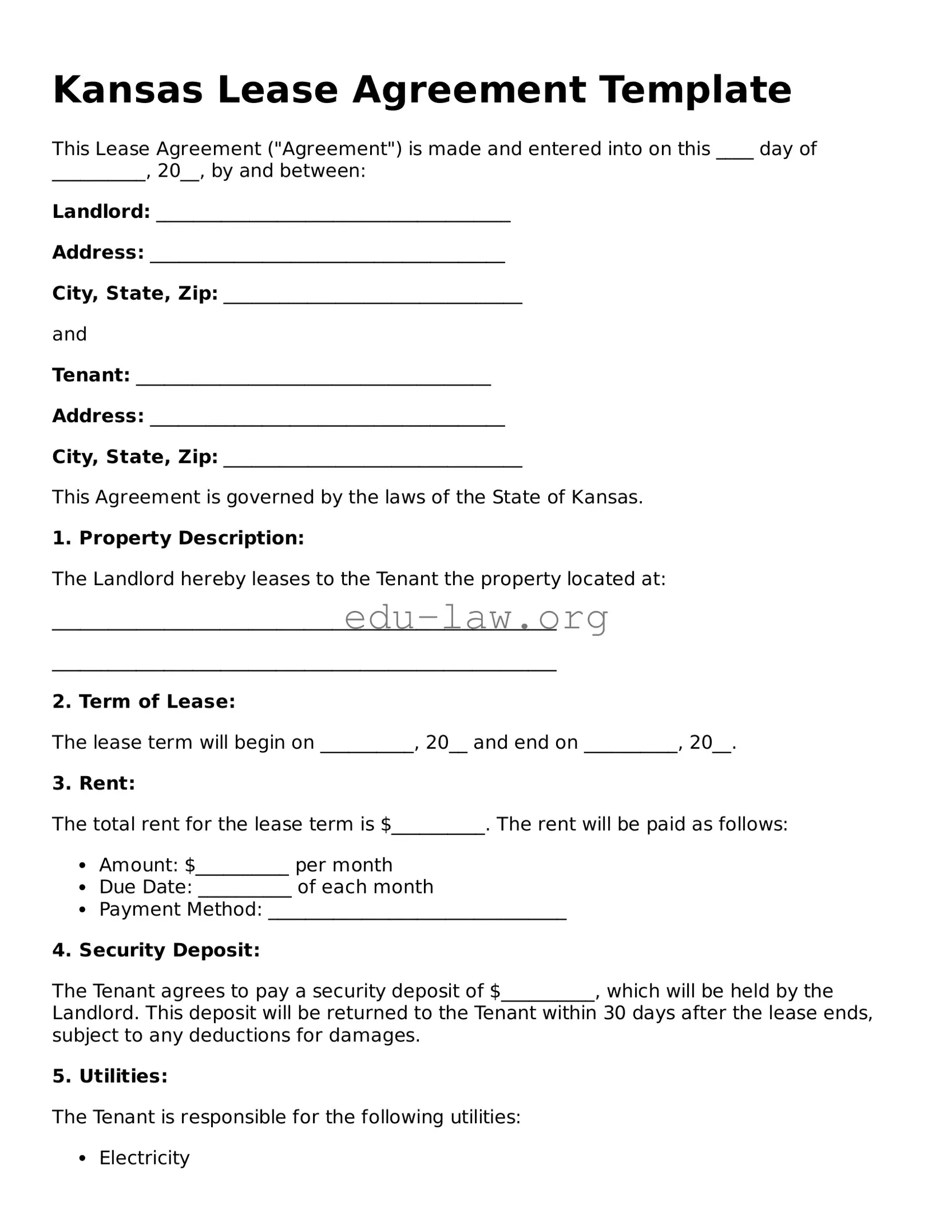
The Kansas Lease Agreement form serves as a crucial document in the realm of landlord-tenant relationships, establishing the terms and conditions under which a rental property is leased. This form outlines essential aspects such as the duration of the lease, the rental amount, and the responsibilities of both parties involved. It typically includes provisions regarding security deposits, maintenance obligations, and rules governing the use of the property. Additionally, the agreement addresses issues related to termination, renewal, and default, ensuring that both landlords and tenants have a clear understanding of their rights and obligations. By providing a structured framework, the Kansas Lease Agreement form aims to protect the interests of both parties while promoting a harmonious rental experience. Understanding the intricacies of this document is vital for anyone engaged in leasing property within the state, as it lays the foundation for a legally binding relationship.
Kansas Lease Agreement Template
This Lease Agreement ("Agreement") is made and entered into on this ____ day of __________, 20__, by and between:
Landlord: ______________________________________
Address: ______________________________________
City, State, Zip: ________________________________
and
Tenant: ______________________________________
Address: ______________________________________
City, State, Zip: ________________________________
This Agreement is governed by the laws of the State of Kansas.
1. Property Description:
The Landlord hereby leases to the Tenant the property located at:
______________________________________________________
______________________________________________________
2. Term of Lease:
The lease term will begin on __________, 20__ and end on __________, 20__.
3. Rent:
The total rent for the lease term is $__________. The rent will be paid as follows:
4. Security Deposit:
The Tenant agrees to pay a security deposit of $__________, which will be held by the Landlord. This deposit will be returned to the Tenant within 30 days after the lease ends, subject to any deductions for damages.
5. Utilities:
The Tenant is responsible for the following utilities:
6. Maintenance and Repairs:
The Tenant agrees to keep the property clean and in good condition. Any repairs needed must be reported to the Landlord promptly.
7. Termination:
Either party may terminate this Agreement with a written notice of at least 30 days before the end of the lease term.
8. Governing Law:
This Agreement shall be governed by and construed in accordance with the laws of the State of Kansas.
IN WITNESS WHEREOF, the parties hereto have executed this Lease Agreement as of the day and year first above written.
Landlord Signature: ___________________________
Date: __________
Tenant Signature: ___________________________
Date: __________
| Fact Name | Description |
|---|---|
| Governing Law | The Kansas Lease Agreement is governed by Kansas state law, specifically the Kansas Statutes Annotated, Chapter 58. |
| Parties Involved | The agreement typically involves a landlord and a tenant, both of whom must sign the document. |
| Property Description | The lease must include a clear description of the rental property, including the address and any specific details. |
| Lease Term | The duration of the lease should be specified, whether it is a fixed-term lease or a month-to-month agreement. |
| Rent Amount | The lease must state the amount of rent due, the payment schedule, and acceptable payment methods. |
| Security Deposit | Kansas law allows landlords to collect a security deposit, which must be detailed in the lease, including the amount and return conditions. |
| Maintenance Responsibilities | The agreement should outline the responsibilities of both the landlord and tenant regarding property maintenance and repairs. |
| Termination Clause | A termination clause should be included, detailing how either party can end the lease and the required notice period. |
| Default and Remedies | The lease should specify what constitutes a default and the remedies available to the landlord in such cases. |
| Additional Provisions | Parties may include additional provisions, such as pet policies, smoking rules, and subleasing options. |
Filling out the Kansas Lease Agreement form is an important step in establishing a rental relationship. Completing this form accurately ensures that both the landlord and tenant are clear on their rights and responsibilities. Here’s how to fill out the form effectively.
Once the form is completed, ensure that both the landlord and tenant keep a signed copy for their records. This will help avoid any misunderstandings in the future.
What is a Kansas Lease Agreement form?
A Kansas Lease Agreement form is a legal document that outlines the terms and conditions under which a landlord agrees to rent property to a tenant. This form specifies the rights and responsibilities of both parties, including rental amount, duration of the lease, and maintenance obligations. It serves as a binding contract once signed by both the landlord and tenant.
What information is typically included in the lease agreement?
Typically, the lease agreement includes the names of the landlord and tenant, the property address, rental amount, payment due dates, security deposit details, lease duration, and any rules regarding pets or smoking. It may also outline procedures for maintenance requests and the process for terminating the lease.
How long is a Kansas lease agreement valid?
The duration of a Kansas lease agreement can vary. It may be a fixed-term lease, lasting for a specific period, such as one year, or it could be a month-to-month agreement. Fixed-term leases automatically expire at the end of the term unless renewed, while month-to-month leases continue until either party provides notice to terminate.
What are the tenant's responsibilities under the lease?
Tenants are generally responsible for paying rent on time, keeping the property in good condition, and adhering to any rules outlined in the lease. This may include maintaining cleanliness, reporting maintenance issues promptly, and respecting neighbors. Failure to meet these responsibilities can lead to penalties or eviction.
Can a lease agreement be modified after it is signed?
Yes, a lease agreement can be modified, but both the landlord and tenant must agree to any changes. Modifications should be documented in writing and signed by both parties to ensure clarity and avoid misunderstandings. Verbal agreements may not hold up in legal situations.
What happens if a tenant wants to break the lease early?
If a tenant wishes to break the lease early, they may face penalties as outlined in the agreement. Often, tenants are required to provide written notice and may need to pay a fee or forfeit their security deposit. In some cases, landlords may allow early termination if the tenant finds a replacement tenant to take over the lease.
Inaccurate Tenant Information: Many individuals fail to provide complete or accurate information about all tenants. This includes names, contact details, and the number of occupants. Ensure that every person who will reside in the property is listed correctly.
Missing Dates: It’s common to overlook important dates, such as the lease start and end dates. These dates are crucial for both parties to understand the duration of the agreement. Always double-check that they are filled in correctly.
Neglecting to Specify Rent Amount: Some people forget to state the rent amount or the payment schedule. Clearly outline how much rent is due, when it is due, and the method of payment. This avoids confusion later on.
Ignoring Maintenance Responsibilities: The lease should clearly define who is responsible for maintenance and repairs. Failing to address this can lead to disputes. Both landlords and tenants should understand their obligations.
Not Reviewing the Terms: Many individuals rush through the lease agreement without reviewing all terms and conditions. Take the time to read through the entire document. This ensures that all parties are aware of their rights and responsibilities.
When entering into a lease agreement in Kansas, it's essential to be aware of other documents that may accompany the lease. These documents help clarify the terms of the rental arrangement and protect the rights of both landlords and tenants. Below is a list of commonly used forms that often accompany a Kansas Lease Agreement.
Understanding these forms can make the leasing process smoother for both landlords and tenants. By being prepared with the right documents, all parties can ensure a clear and fair rental experience.
The Kansas Lease Agreement form is similar to the Residential Lease Agreement, which outlines the terms between a landlord and tenant for renting a residential property. Both documents specify the duration of the lease, rent amount, and responsibilities of each party. They ensure that both landlords and tenants understand their rights and obligations, providing a clear framework for the rental relationship.
Another similar document is the Commercial Lease Agreement. This agreement is used for renting commercial properties, such as office spaces or retail locations. Like the Kansas Lease Agreement, it details the lease term, rent payment, and maintenance responsibilities. However, it often includes additional clauses specific to commercial operations, such as permitted use and modifications to the property.
The Month-to-Month Lease Agreement is also akin to the Kansas Lease Agreement. This type of lease does not have a fixed term and automatically renews each month. It includes similar provisions regarding rent and property use but offers more flexibility for tenants and landlords. Either party can terminate the agreement with proper notice, making it suitable for short-term arrangements.
A Rent-to-Own Agreement shares similarities with the Kansas Lease Agreement, particularly in its dual nature. This document allows tenants to rent a property with the option to purchase it later. Like a standard lease, it outlines rent payments and maintenance duties but also includes terms for the purchase of the property, providing an avenue for tenants to become homeowners.
The Sublease Agreement is another related document. It allows a tenant to lease the property to another party while still holding the original lease with the landlord. Similar to the Kansas Lease Agreement, it includes terms about rent and responsibilities. However, it also requires the original tenant to remain accountable to the landlord, creating a layered relationship among the parties involved.
The Lease Option Agreement is closely related as well. This document gives a tenant the right to purchase the property at a later date while renting it. It shares features with the Kansas Lease Agreement, such as rent payments and maintenance expectations, but emphasizes the tenant's option to buy, often including a portion of the rent that applies toward the purchase price.
The Roommate Agreement is another document that bears resemblance to the Kansas Lease Agreement. While it typically governs the relationship between multiple tenants sharing a rental property, it outlines responsibilities regarding rent, utilities, and shared spaces. It serves to clarify expectations among roommates, similar to how a lease clarifies the landlord-tenant relationship.
The Lease Termination Agreement is also similar, as it outlines the process for ending a lease. This document details the notice period required and any conditions for returning security deposits. Like the Kansas Lease Agreement, it emphasizes clear communication between parties to avoid misunderstandings and ensure a smooth transition at the end of the lease term.
Finally, the Lease Renewal Agreement is akin to the Kansas Lease Agreement in that it formalizes the continuation of a lease. When both parties agree to extend the lease, this document specifies the new terms and conditions. It ensures that both the landlord and tenant are on the same page regarding the rental relationship moving forward, just as the original lease did.
When filling out the Kansas Lease Agreement form, it’s important to be careful and thorough. Here are some things you should and shouldn't do:
Misconceptions about the Kansas Lease Agreement form can lead to confusion for both landlords and tenants. Here are some common misunderstandings:
Understanding these misconceptions can help both landlords and tenants navigate their rights and responsibilities more effectively.
When navigating the Kansas Lease Agreement form, it is essential to understand its components and implications. Here are some key takeaways to keep in mind:
By paying attention to these elements, both landlords and tenants can foster a clear and effective rental relationship. Understanding the lease agreement is crucial for protecting your rights and ensuring a smooth rental experience.