Creating a Last Will and Testament is a crucial step in ensuring that your wishes are honored after your passing. In Kansas, this legal document outlines how your assets will be distributed, who will take care of your minor children, and even how your debts will be settled. It allows you to appoint an executor, someone you trust to manage your estate and carry out your wishes. The Kansas Last Will and Testament form also requires specific elements to be valid, such as being signed in the presence of witnesses. This form can help prevent disputes among family members and provide clarity during a difficult time. Understanding the importance of this document and the process of creating it is vital for anyone looking to secure their legacy and protect their loved ones.
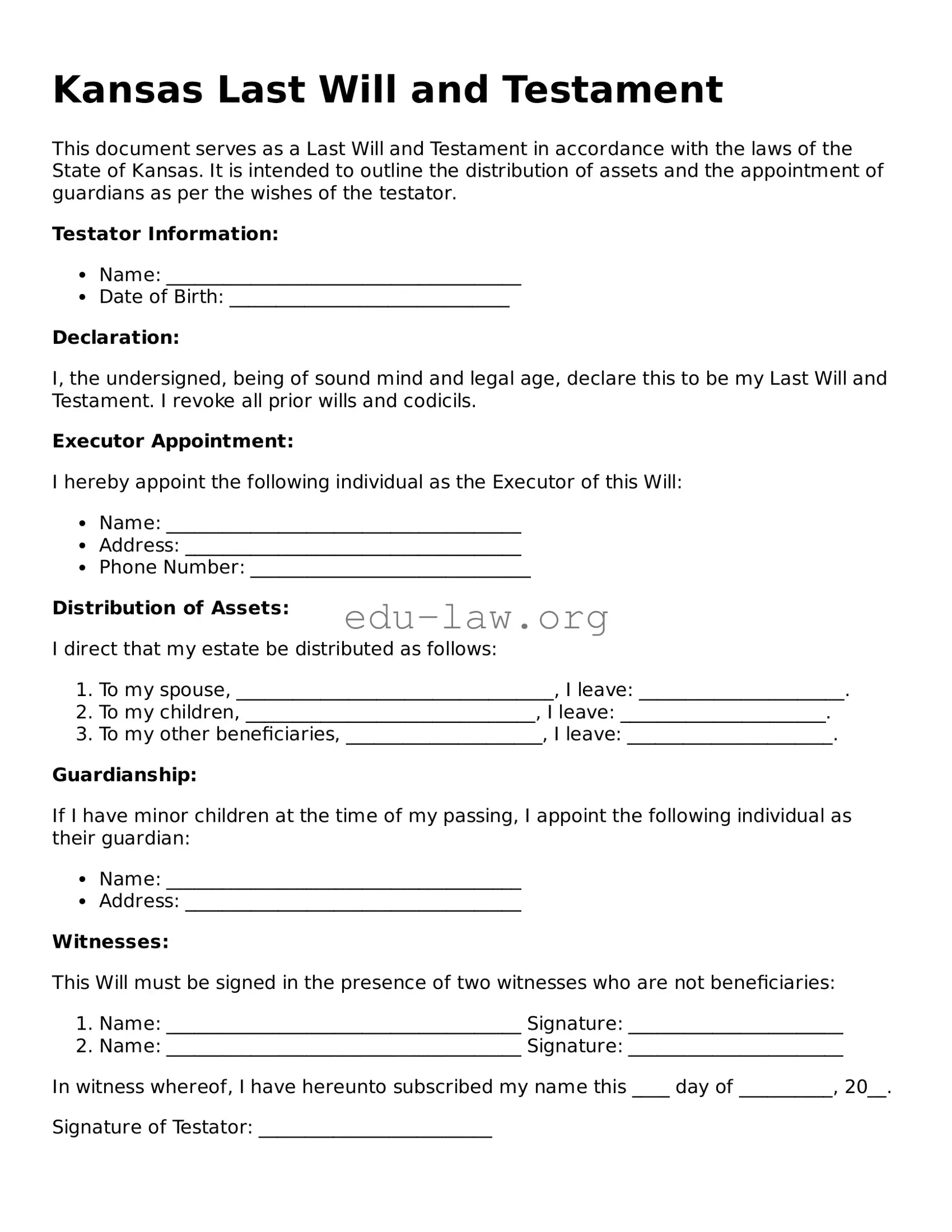
Kansas Last Will and Testament
This document serves as a Last Will and Testament in accordance with the laws of the State of Kansas. It is intended to outline the distribution of assets and the appointment of guardians as per the wishes of the testator.
Testator Information:
Declaration:
I, the undersigned, being of sound mind and legal age, declare this to be my Last Will and Testament. I revoke all prior wills and codicils.
Executor Appointment:
I hereby appoint the following individual as the Executor of this Will:
Distribution of Assets:
I direct that my estate be distributed as follows:
Guardianship:
If I have minor children at the time of my passing, I appoint the following individual as their guardian:
Witnesses:
This Will must be signed in the presence of two witnesses who are not beneficiaries:
In witness whereof, I have hereunto subscribed my name this ____ day of __________, 20__.
Signature of Testator: _________________________
| Fact Name | Details |
|---|---|
| Governing Law | The Kansas Last Will and Testament form is governed by Kansas Statutes Annotated, Chapter 59, Article 6. |
| Requirements | In Kansas, a will must be in writing and signed by the testator or by another person at the testator's direction. |
| Witnesses | The will must be witnessed by at least two individuals who are present at the same time. |
| Revocation | A Kansas will can be revoked by a subsequent will or by physically destroying the document. |
After obtaining the Kansas Last Will and Testament form, you will need to carefully fill it out to ensure your wishes are clearly expressed. This document will guide you through the process of outlining your final wishes regarding your estate, guardianship of minors, and other important matters. Follow these steps to complete the form accurately.
Once you have completed the form, store it in a safe place and inform your executor and loved ones about its location. This will ensure that your wishes are honored and accessible when needed.
What is a Kansas Last Will and Testament?
A Kansas Last Will and Testament is a legal document that outlines how an individual wants their assets distributed after their death. It allows you to specify beneficiaries, appoint guardians for minor children, and name an executor to manage your estate. This document is essential for ensuring that your wishes are honored and can help avoid disputes among family members after your passing.
Do I need to hire a lawyer to create a Last Will and Testament in Kansas?
While it is not legally required to hire a lawyer to draft your will in Kansas, it can be beneficial. A lawyer can help ensure that your will meets all legal requirements and reflects your intentions accurately. If your estate is straightforward, you might choose to use a template or online service. However, if you have complex assets or family dynamics, consulting a professional is advisable.
What are the requirements for a valid will in Kansas?
For a will to be valid in Kansas, it must be in writing and signed by the person making the will (the testator). Additionally, it should be witnessed by at least two individuals who are present at the same time. These witnesses must also sign the will. It's important to note that Kansas does not recognize oral wills, so having a written document is crucial.
Can I change my will after it is created?
Yes, you can change your will at any time while you are still alive. To make changes, you can either create a new will that revokes the previous one or add a codicil, which is an amendment to the existing will. Just remember that any changes must also meet the same legal requirements as the original will to be valid.
What happens if I die without a will in Kansas?
If you pass away without a will, your estate will be distributed according to Kansas intestacy laws. This means that the state will determine how your assets are divided among your relatives, which may not align with your wishes. Dying without a will can lead to complications and disputes among family members, so it's advisable to create one to ensure your preferences are honored.
Failing to properly identify themselves. It's crucial to include your full name and address accurately. This helps to avoid any confusion about your identity.
Not naming an executor. An executor is the person responsible for carrying out the terms of your will. Without this designation, the court may appoint someone, which might not align with your wishes.
Overlooking the need for witnesses. In Kansas, your will must be signed in the presence of at least two witnesses. If this step is skipped, the will may not be valid.
Using vague language. Be specific about your wishes regarding assets and beneficiaries. Ambiguity can lead to disputes among heirs.
Failing to update the will. Life changes such as marriage, divorce, or the birth of a child necessitate updates to your will. An outdated document may not reflect your current intentions.
Not keeping the will in a safe place. After completing your will, ensure it is stored securely and inform trusted individuals of its location. This prevents loss or damage that could render it unusable.
When preparing a Kansas Last Will and Testament, several other documents may be necessary to ensure your estate planning is comprehensive. Each of these documents serves a specific purpose and can help clarify your wishes regarding your assets and care. Below is a list of commonly used forms and documents that complement the Last Will and Testament.
Having these documents in place can provide clarity and peace of mind for you and your loved ones. Each form plays a vital role in ensuring that your wishes are respected and followed, minimizing confusion during difficult times.
The Kansas Living Will is a document that outlines an individual's preferences regarding medical treatment in the event they become incapacitated. Like a Last Will and Testament, it serves to express personal wishes. However, while the Last Will governs the distribution of assets after death, the Living Will specifically addresses healthcare decisions during one's lifetime. Both documents require clear language to ensure that the individual's intentions are understood and respected.
A Durable Power of Attorney is another important legal document. This form allows an individual to designate someone else to make financial or legal decisions on their behalf if they become unable to do so. Similar to a Last Will, it is a proactive measure that ensures a person’s wishes are followed. However, it operates while the individual is still alive, unlike a Last Will, which takes effect after death.
The Kansas Declaration of Guardian is a document where an individual can name a guardian for themselves in case they become incapacitated. This is similar to a Last Will in that it allows for the expression of personal choice regarding who will take care of them. However, it focuses on personal care and living arrangements rather than the distribution of property or assets.
A Trust is a legal arrangement that allows an individual to transfer assets to a trustee for the benefit of beneficiaries. Like a Last Will, it can dictate how assets are managed and distributed. Trusts can take effect during a person's lifetime and can help avoid probate, which is a process that a Last Will typically goes through after death.
The Health Care Proxy is a document that appoints someone to make medical decisions on behalf of another individual if they are unable to do so. This document shares similarities with a Living Will, as both focus on healthcare preferences. However, the Health Care Proxy allows for the appointment of a specific person to make those decisions, whereas a Living Will outlines general wishes regarding treatment.
A Codicil is an amendment or addition to an existing Last Will and Testament. It allows individuals to make changes without creating an entirely new will. This document is similar to a Last Will because it modifies the distribution of assets and can clarify or update the testator's intentions, maintaining the same legal framework as the original will.
The Kansas Bill of Rights for the Elderly is a document that outlines the rights of elderly individuals, including their rights in relation to wills and estates. While it does not serve the same purpose as a Last Will, it is related in that it protects the rights of individuals during estate planning and ensures they are treated fairly in legal matters concerning their assets and wishes.
When filling out the Kansas Last Will and Testament form, it's essential to approach the process with care. Here are some important do's and don'ts to keep in mind:
Following these guidelines can help ensure that your wishes are clearly communicated and legally valid. Take the time to review your will carefully before finalizing it.
When it comes to creating a Last Will and Testament in Kansas, several misconceptions can lead to confusion. Understanding these misconceptions can help ensure that your will is valid and meets your needs.
Creating a Last Will and Testament is an important step in ensuring that your wishes are honored after your passing. When filling out the Kansas Last Will and Testament form, keep these key takeaways in mind:
By understanding these key aspects, you can ensure that your Last Will and Testament reflects your wishes and provides clarity for your loved ones.