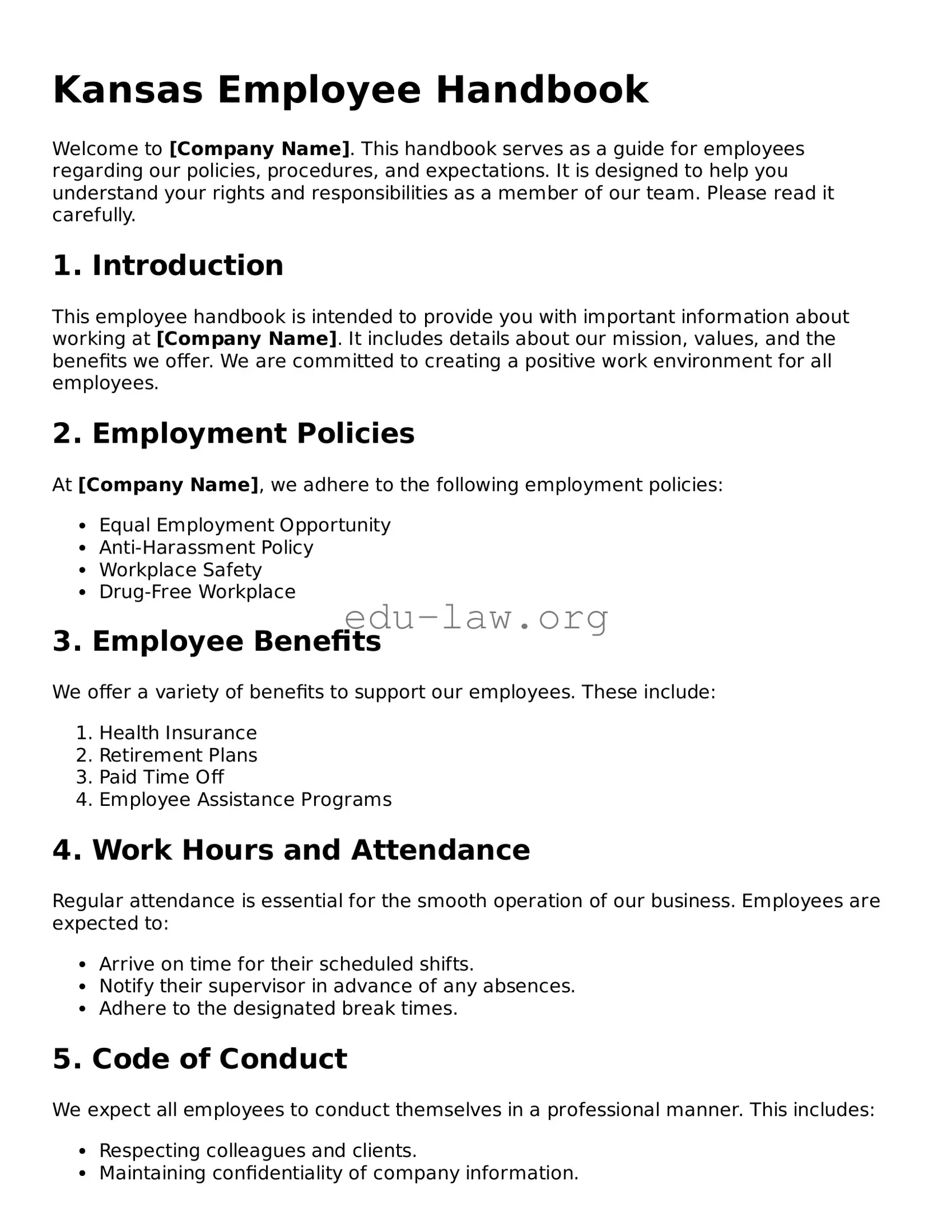
The Kansas Employee Handbook form serves as a vital tool for employers and employees alike, outlining the essential policies, procedures, and expectations within the workplace. This document typically includes sections on workplace conduct, attendance policies, and employee benefits, ensuring that all staff members understand their rights and responsibilities. Furthermore, it addresses issues such as anti-discrimination policies, harassment prevention, and disciplinary actions, fostering a safe and respectful work environment. By providing clear guidelines, the handbook helps prevent misunderstandings and promotes a culture of transparency. Employers in Kansas are encouraged to customize the form to reflect their unique organizational values while adhering to state and federal labor laws. This tailored approach not only aids in compliance but also enhances employee engagement and satisfaction.
Kansas Employee Handbook
Welcome to [Company Name]. This handbook serves as a guide for employees regarding our policies, procedures, and expectations. It is designed to help you understand your rights and responsibilities as a member of our team. Please read it carefully.
1. Introduction
This employee handbook is intended to provide you with important information about working at [Company Name]. It includes details about our mission, values, and the benefits we offer. We are committed to creating a positive work environment for all employees.
2. Employment Policies
At [Company Name], we adhere to the following employment policies:
3. Employee Benefits
We offer a variety of benefits to support our employees. These include:
4. Work Hours and Attendance
Regular attendance is essential for the smooth operation of our business. Employees are expected to:
5. Code of Conduct
We expect all employees to conduct themselves in a professional manner. This includes:
6. Disciplinary Procedures
In cases of policy violations, [Company Name] may take disciplinary action. This can include:
7. Acknowledgment of Receipt
Please sign below to acknowledge that you have received and read the employee handbook:
Employee Name: ________________________
Employee Signature: _____________________
Date: _______________________________
Thank you for being a part of [Company Name]. We look forward to a successful working relationship!
| Fact Name | Description |
|---|---|
| Purpose | The Kansas Employee Handbook form serves to outline company policies, procedures, and employee rights. |
| Governing Law | This form is governed by the Kansas Wage Payment Act and the Kansas Employment Security Law. |
| Mandatory Contents | The handbook should include information on workplace conduct, anti-discrimination policies, and grievance procedures. |
| Employee Acknowledgment | Employees are typically required to sign an acknowledgment form indicating they have received and understood the handbook. |
| Updates | Employers should regularly review and update the handbook to reflect changes in laws or company policies. |
| Accessibility | The handbook must be accessible to all employees, ensuring clarity and understanding of policies. |
| Legal Protection | A well-crafted handbook can provide legal protection for the employer by clearly stating policies and expectations. |
Completing the Kansas Employee Handbook form is an important step for ensuring that all necessary information is accurately recorded. By following these steps, you can ensure that the form is filled out correctly and completely, allowing for a smoother process moving forward.
What is the Kansas Employee Handbook form?
The Kansas Employee Handbook form is a document that outlines the policies, procedures, and expectations of an employer in Kansas. It serves as a guide for employees, detailing everything from workplace behavior to benefits and disciplinary actions.
Why is an Employee Handbook important?
An Employee Handbook is crucial for both employers and employees. It sets clear expectations, reduces misunderstandings, and provides a framework for resolving disputes. It also helps employers comply with state and federal laws.
Who should receive a copy of the Employee Handbook?
All employees should receive a copy of the Employee Handbook. New hires should be given the handbook during orientation, while existing employees should be notified of any updates or changes to the policies.
Can an Employee Handbook be modified?
Yes, an Employee Handbook can be modified. Employers should review and update the handbook regularly to reflect changes in laws, company policies, or workplace culture. Employees should be informed of any changes promptly.
What topics should be included in the Employee Handbook?
Essential topics include company policies, employee rights, workplace conduct, attendance, leave policies, benefits, and procedures for reporting grievances. Including a section on safety and health policies is also important.
Is it necessary to have a lawyer review the Employee Handbook?
While it is not legally required, having a lawyer review the Employee Handbook is highly recommended. A legal expert can ensure that the document complies with current laws and adequately protects the employer from potential liabilities.
How should the Employee Handbook be distributed?
The Employee Handbook can be distributed in various ways. It can be printed and handed out, emailed to employees, or made available on the company’s intranet. Regardless of the method, employees should acknowledge receipt of the handbook.
What if an employee does not follow the policies outlined in the Employee Handbook?
If an employee fails to follow the policies, the employer should address the issue according to the disciplinary procedures outlined in the handbook. Consistent enforcement of policies is vital to maintaining a fair workplace.
Can an Employee Handbook be used as a legal document in court?
An Employee Handbook can serve as a reference in legal matters. However, it is essential that the handbook is clear and consistent. If it contains ambiguous language, it may not hold up in court.
How often should the Employee Handbook be reviewed?
It is advisable to review the Employee Handbook at least once a year. Regular reviews help ensure that the content remains relevant and compliant with any changes in laws or company policies.
Failing to read the entire handbook thoroughly before filling out the form. This can lead to misunderstandings about company policies.
Not providing accurate personal information. Double-checking names, addresses, and contact details is essential.
Overlooking the requirement for a signature. Many people forget to sign the form, which can delay processing.
Neglecting to date the form. A date is important for record-keeping and to establish when the employee acknowledged the handbook.
Not asking questions about unclear sections. If something is confusing, it’s better to seek clarification than to guess.
Using incorrect or outdated forms. Always ensure you have the latest version of the Employee Handbook form.
Providing incomplete information. Ensure that all sections of the form are filled out completely to avoid delays.
Ignoring the company’s policies on confidentiality. Be mindful of what information is shared and how it is handled.
Not keeping a copy of the completed form. Retaining a copy can be helpful for future reference.
Assuming that the handbook is the same across all departments. Policies may vary, so it’s crucial to refer to the correct version.
The Kansas Employee Handbook is an essential document that outlines company policies, procedures, and expectations for employees. Along with this handbook, there are several other forms and documents that organizations often use to ensure clarity and compliance in the workplace. Below is a list of commonly used documents that complement the Employee Handbook.
These documents work together with the Kansas Employee Handbook to create a comprehensive framework for managing employee relations and maintaining a positive work environment. Having these forms readily available helps ensure that both employees and employers are on the same page regarding expectations and procedures.
The Kansas Employee Handbook is similar to the Employee Policy Manual. Both documents serve as a guide for employees, outlining company policies, procedures, and expectations. The Employee Policy Manual typically includes detailed descriptions of workplace rules, disciplinary actions, and employee rights. Like the Kansas Employee Handbook, it aims to create a clear understanding of the workplace environment, ensuring that employees know what is expected of them and what they can expect from their employer.
Another comparable document is the Orientation Guide. This guide is often provided to new hires during their onboarding process. Similar to the Kansas Employee Handbook, it introduces employees to the company culture, mission, and values. The Orientation Guide typically highlights essential policies and procedures, helping new employees acclimate to their roles and understand the resources available to them. Both documents emphasize the importance of a smooth transition into the workplace.
The Code of Conduct is yet another document that shares similarities with the Kansas Employee Handbook. This document outlines the ethical standards and behaviors expected from employees. It addresses issues such as harassment, discrimination, and conflicts of interest. Like the Employee Handbook, the Code of Conduct aims to foster a respectful and productive work environment. Both documents work together to ensure that employees understand the importance of adhering to company values and maintaining professionalism.
The Employee Benefits Guide also aligns closely with the Kansas Employee Handbook. This guide provides detailed information about the benefits offered to employees, such as health insurance, retirement plans, and leave policies. While the Employee Handbook may reference these benefits, the Employee Benefits Guide goes into greater detail. Both documents are crucial for helping employees understand their entitlements and how to access available resources, contributing to overall job satisfaction.
Lastly, the Safety Manual shares key similarities with the Kansas Employee Handbook. This document outlines safety protocols, emergency procedures, and health regulations within the workplace. Both the Safety Manual and the Employee Handbook emphasize the importance of a safe working environment. They provide employees with essential information to ensure their well-being and the well-being of their colleagues, reinforcing the company’s commitment to safety and health standards.
When filling out the Kansas Employee Handbook form, it's important to approach the task with care. Here are some guidelines to help you navigate the process effectively.
Following these steps can help ensure that your submission is complete and correct. Remember, taking the time to fill out the form properly is in your best interest.
Many employers and employees have misunderstandings about the Kansas Employee Handbook form. Below are five common misconceptions along with clarifications.
While having an employee handbook is not legally required in Kansas, it is highly recommended. A well-crafted handbook can help clarify company policies, set expectations, and protect the business from potential legal issues.
Each employee handbook should be tailored to fit the specific needs and culture of the organization. What works for one business may not be appropriate for another, so customization is key.
Employee handbooks should be living documents. As laws change and company policies evolve, it is essential to review and update the handbook regularly to ensure it remains relevant and compliant.
While employees may not be legally obligated to read the handbook, it is in their best interest to do so. Understanding company policies can help prevent misunderstandings and foster a positive workplace environment.
Employers must ensure that the policies included in the handbook comply with federal, state, and local laws. Certain policies may be illegal or unenforceable, so it’s important to consult legal guidance when drafting the handbook.
When filling out and using the Kansas Employee Handbook form, keep these key takeaways in mind:
By following these guidelines, you can effectively manage the Kansas Employee Handbook form and ensure it serves its intended purpose.