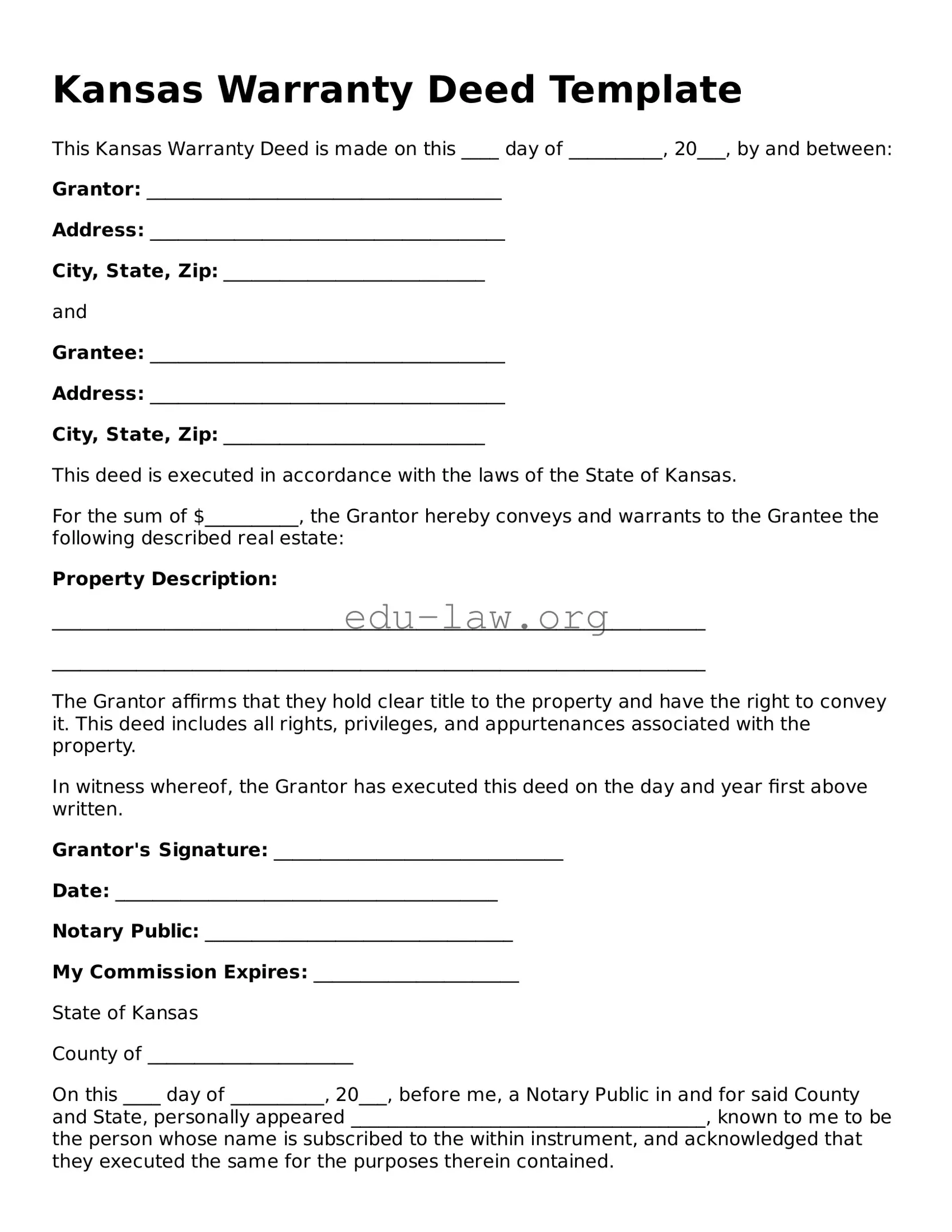
The Kansas Deed form serves as a crucial legal document in the transfer of real property ownership within the state. It outlines the essential details of the transaction, including the names of the parties involved—the grantor, who is the current owner, and the grantee, who is the new owner. Key elements such as the property description, which must be clear and precise, are vital for ensuring that the deed accurately reflects the property being conveyed. Additionally, the form often includes information about any existing encumbrances or liens that may affect the property, thus providing transparency to the grantee. Signatures from both parties, along with notarization, are required to validate the deed, ensuring that the transfer is legally binding. Understanding these components is essential for anyone involved in a property transaction in Kansas, as they help safeguard the rights of both buyers and sellers while facilitating a smooth transfer of ownership.
Kansas Warranty Deed Template
This Kansas Warranty Deed is made on this ____ day of __________, 20___, by and between:
Grantor: ______________________________________
Address: ______________________________________
City, State, Zip: ____________________________
and
Grantee: ______________________________________
Address: ______________________________________
City, State, Zip: ____________________________
This deed is executed in accordance with the laws of the State of Kansas.
For the sum of $__________, the Grantor hereby conveys and warrants to the Grantee the following described real estate:
Property Description:
______________________________________________________________________
______________________________________________________________________
The Grantor affirms that they hold clear title to the property and have the right to convey it. This deed includes all rights, privileges, and appurtenances associated with the property.
In witness whereof, the Grantor has executed this deed on the day and year first above written.
Grantor's Signature: _______________________________
Date: _________________________________________
Notary Public: _________________________________
My Commission Expires: ______________________
State of Kansas
County of ______________________
On this ____ day of __________, 20___, before me, a Notary Public in and for said County and State, personally appeared ______________________________________, known to me to be the person whose name is subscribed to the within instrument, and acknowledged that they executed the same for the purposes therein contained.
Witness my hand and official seal.
____________________________________
Notary Public
| Fact Name | Description |
|---|---|
| Governing Law | The Kansas Deed form is governed by the Kansas Statutes Annotated (K.S.A.) 58-2201 through 58-2211. |
| Types of Deeds | Kansas recognizes several types of deeds, including warranty deeds, quitclaim deeds, and special warranty deeds. |
| Grantor and Grantee | The deed must clearly identify the grantor (seller) and the grantee (buyer) with their full legal names. |
| Property Description | A legal description of the property must be included, detailing its boundaries and location. |
| Consideration | The deed must state the consideration, or payment, exchanged for the property, which can be a specific dollar amount or other valuable consideration. |
| Signatures | The grantor must sign the deed, and it is recommended that the signature be notarized to ensure its validity. |
| Recording | To provide public notice of the property transfer, the deed should be recorded with the county register of deeds. |
| Tax Implications | Transfer taxes may apply when a property is sold, and it is important to check local regulations regarding these taxes. |
| Legal Assistance | While individuals can complete a deed on their own, seeking legal assistance is advisable to avoid mistakes and ensure compliance with state laws. |
After you have gathered the necessary information, it’s time to fill out the Kansas Deed form. This form will require specific details about the property, the parties involved, and the transaction. Completing it accurately is essential for ensuring a smooth transfer of ownership.
What is a Kansas Deed form?
A Kansas Deed form is a legal document used to transfer ownership of real property in the state of Kansas. It serves as proof of the change in ownership and outlines the details of the transaction, including the names of the parties involved, a description of the property, and any conditions or restrictions associated with the transfer. There are various types of deeds, such as warranty deeds and quitclaim deeds, each serving different purposes in real estate transactions.
What types of deeds are available in Kansas?
In Kansas, the most common types of deeds include warranty deeds, quitclaim deeds, and special warranty deeds. A warranty deed provides the highest level of protection to the buyer, as it guarantees that the seller holds clear title to the property and has the right to sell it. A quitclaim deed, on the other hand, transfers whatever interest the seller has in the property without any warranties, making it less secure for the buyer. Special warranty deeds offer a middle ground, providing some assurances about the title but only for the period during which the seller owned the property.
How do I fill out a Kansas Deed form?
Filling out a Kansas Deed form involves several key steps. First, ensure you have the correct form for the type of deed you wish to use. Next, accurately fill in the names of the grantor (the seller) and the grantee (the buyer), along with their addresses. A detailed description of the property being transferred is essential, which typically includes the legal description found in the property's existing deed. After completing the form, both parties must sign it in front of a notary public to make it legally binding. Finally, the deed should be filed with the appropriate county office to ensure public record of the transfer.
Do I need a lawyer to create a Kansas Deed?
While it is not legally required to have a lawyer create a Kansas Deed, consulting with one can be beneficial. A legal professional can help ensure that the deed is filled out correctly and complies with state laws. They can also provide guidance on the implications of different types of deeds and assist in addressing any specific concerns regarding the property or transaction. For those unfamiliar with real estate processes, seeking legal advice can help prevent potential issues down the line.
What happens after I file a Kansas Deed?
Once a Kansas Deed is filed with the county office, it becomes part of the public record. This means that anyone can access the information regarding the property transfer. The new owner, or grantee, should keep a copy of the deed for their records. Additionally, it is advisable to update any relevant records, such as property tax assessments, to reflect the change in ownership. The filing of the deed officially completes the transfer process and grants the new owner legal rights to the property.
Failing to include all required parties. Make sure every owner or party involved in the transaction is listed. Missing a name can lead to legal complications.
Not providing a complete legal description of the property. This should include the lot number, block number, and any relevant subdivision information. An incomplete description can cause issues in property identification.
Using incorrect or outdated forms. Always ensure you are using the latest version of the Kansas Deed form. Using an old form can lead to rejection.
Not signing the deed in front of a notary. A signature without notarization can invalidate the deed. Ensure all parties sign in the presence of a licensed notary public.
Neglecting to date the document. A deed without a date can create confusion about when the transfer of ownership occurred.
Forgetting to include the consideration amount. This is the price paid for the property. Leaving it blank can raise questions about the transaction's legitimacy.
Overlooking the need for witnesses. Some types of deeds require witnesses. Check local regulations to avoid missing this step.
Not filing the deed with the appropriate county office. After completing the deed, it must be filed to be legally effective. Failing to do so can result in ownership disputes.
Using ambiguous language. Be clear and specific in the deed's wording. Ambiguities can lead to misunderstandings and potential legal issues down the road.
When engaging in property transactions in Kansas, the Deed form is essential. However, several other documents often accompany it to ensure a smooth transfer of ownership and to meet legal requirements. Understanding these documents can help you navigate the process more effectively.
Being familiar with these documents can significantly enhance your understanding of the property transfer process in Kansas. Each plays a vital role in ensuring that the transaction is legally sound and that both parties are protected throughout the process.
The Kansas Deed form shares similarities with a Warranty Deed. Both documents are used to transfer property ownership. A Warranty Deed provides a guarantee that the seller holds clear title to the property and has the right to sell it. It also protects the buyer against any future claims on the property. This assurance is a key feature that distinguishes it from other types of deeds, making it a popular choice in real estate transactions.
Another document akin to the Kansas Deed form is the Quitclaim Deed. While both are used to convey property, a Quitclaim Deed offers no warranties about the title. The seller simply transfers whatever interest they may have in the property, if any. This makes it a quicker and less formal option, often used among family members or in situations where the seller cannot guarantee clear title.
The Kansas Deed form is also similar to a Special Purpose Deed, which is often used in specific situations, such as transferring property into a trust or during a divorce. Like the Kansas Deed, a Special Purpose Deed facilitates the transfer of property but is tailored to meet unique circumstances. It may include specific language or conditions that reflect the intent of the parties involved.
Lastly, the Kansas Deed form resembles a Bargain and Sale Deed. This type of deed implies that the seller has the right to sell the property but does not guarantee that the title is free of encumbrances. While it conveys ownership, it does not provide the same level of protection as a Warranty Deed. Buyers should be aware of this distinction when considering their options.
When filling out the Kansas Deed form, it's important to follow some guidelines to ensure accuracy and compliance. Here’s a list of things you should and shouldn't do:
Understanding the Kansas Deed form is essential for anyone involved in real estate transactions in the state. However, several misconceptions can lead to confusion. Here are ten common misunderstandings about the Kansas Deed form:
By addressing these misconceptions, individuals can navigate the process of real estate transactions in Kansas more effectively. Understanding the nuances of the Kansas Deed form can lead to smoother transfers and fewer legal complications.
When filling out and using the Kansas Deed form, consider the following key takeaways: