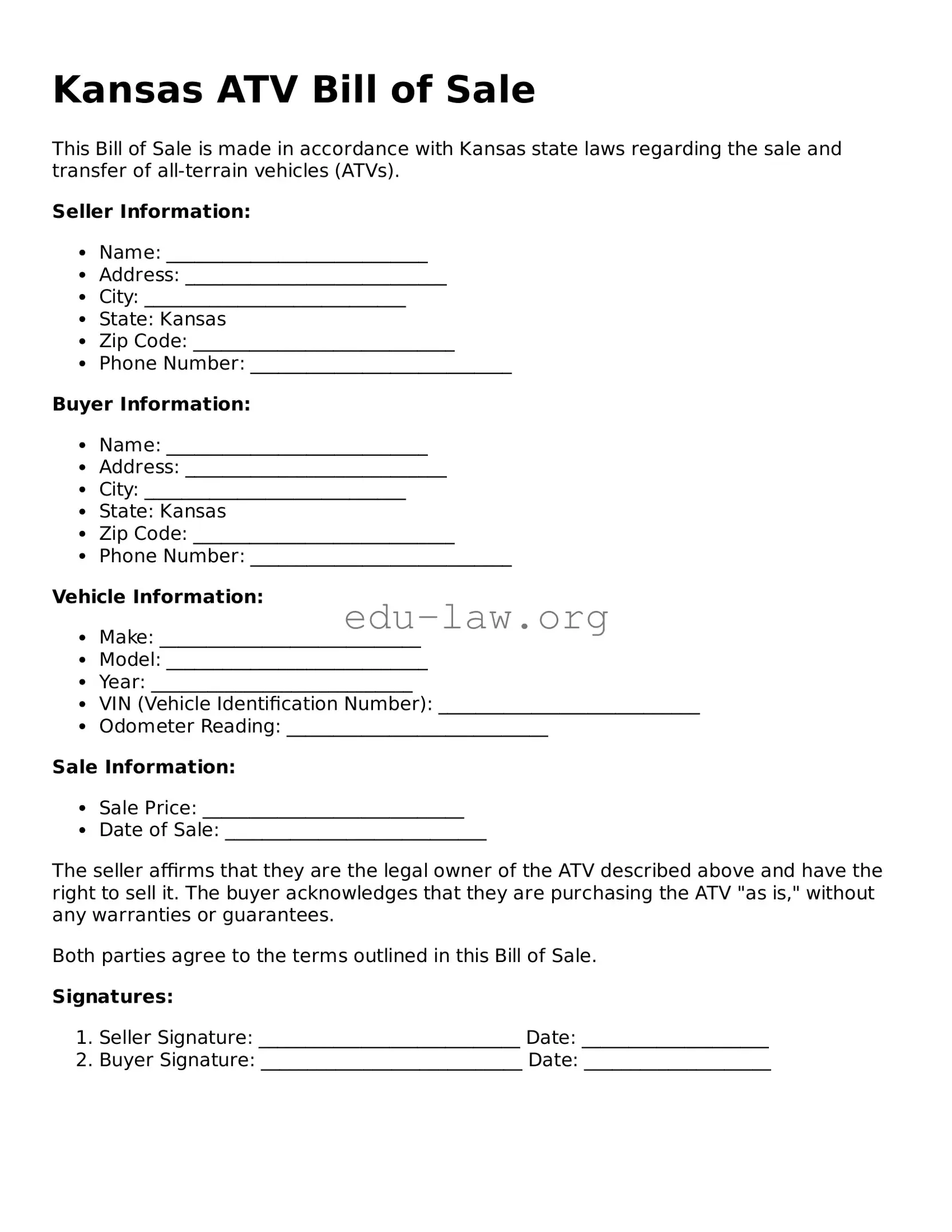
When purchasing or selling an all-terrain vehicle (ATV) in Kansas, having the right documentation is crucial for a smooth transaction. One essential document in this process is the Kansas ATV Bill of Sale form. This form serves multiple purposes: it provides proof of ownership, details the transaction between the buyer and seller, and can help protect both parties in case of future disputes. Key elements of the form include the names and addresses of both the buyer and seller, a description of the ATV, including its make, model, and vehicle identification number (VIN), as well as the sale price. Additionally, the document may require signatures from both parties, ensuring that both agree to the terms of the sale. By utilizing the Kansas ATV Bill of Sale form, individuals can facilitate a legal and transparent transfer of ownership, making the process easier and more secure for everyone involved.
Kansas ATV Bill of Sale
This Bill of Sale is made in accordance with Kansas state laws regarding the sale and transfer of all-terrain vehicles (ATVs).
Seller Information:
Buyer Information:
Vehicle Information:
Sale Information:
The seller affirms that they are the legal owner of the ATV described above and have the right to sell it. The buyer acknowledges that they are purchasing the ATV "as is," without any warranties or guarantees.
Both parties agree to the terms outlined in this Bill of Sale.
Signatures:
| Fact Name | Description |
|---|---|
| Purpose | The Kansas ATV Bill of Sale form serves as a legal document to transfer ownership of an all-terrain vehicle (ATV) between a seller and a buyer. |
| Governing Law | This form is governed by the Kansas Statutes Annotated (K.S.A.) 8-126 and 8-135, which outline the requirements for vehicle sales and transfers. |
| Required Information | The form typically requires details such as the seller's and buyer's names, addresses, the ATV's make, model, year, and Vehicle Identification Number (VIN). |
| Signatures | Both the seller and buyer must sign the form to validate the transfer of ownership, confirming that the information provided is accurate. |
| Notarization | While notarization is not required for the bill of sale in Kansas, it is recommended to add an extra layer of authenticity to the document. |
| Usage | The completed form can be used to register the ATV with the Kansas Department of Revenue, ensuring that the new owner is recognized legally. |
Once you have the Kansas ATV Bill of Sale form in hand, you will be ready to provide essential information regarding the transaction. Completing this form accurately is vital for a smooth transfer of ownership. Below are the steps to guide you through the process of filling out the form.
After completing the form, ensure that both parties retain a copy for their records. This will serve as proof of the transaction and may be needed for future reference.
What is a Kansas ATV Bill of Sale form?
A Kansas ATV Bill of Sale form is a legal document that records the sale or transfer of an all-terrain vehicle (ATV) in the state of Kansas. This form provides essential information about the transaction, including details about the buyer, seller, and the ATV itself. It serves as proof of ownership and can be crucial for registration purposes.
Why do I need a Bill of Sale for my ATV?
Having a Bill of Sale is important for several reasons. It protects both the buyer and the seller by documenting the transaction details. This document can help resolve any disputes that may arise regarding ownership or the condition of the ATV. Additionally, it is often required when registering the ATV with the state.
What information is included in the Kansas ATV Bill of Sale?
The form typically includes the names and addresses of both the buyer and seller, the date of the sale, the purchase price, and a description of the ATV, including its make, model, year, and Vehicle Identification Number (VIN). It may also include any warranties or conditions agreed upon by both parties.
Do I need to have the Bill of Sale notarized?
In Kansas, notarization is not strictly required for an ATV Bill of Sale. However, having the document notarized can add an extra layer of security and credibility. This may be particularly useful if there are any disputes or if the buyer or seller needs to prove the transaction in the future.
Can I create my own Bill of Sale for my ATV?
Yes, you can create your own Bill of Sale as long as it includes all the necessary information. There are templates available online that can guide you in drafting a comprehensive document. However, ensure that the form complies with Kansas laws to avoid any issues later.
Is there a fee associated with the Bill of Sale?
There is no fee specifically for creating a Bill of Sale in Kansas. However, there may be fees associated with registering the ATV with the state or for any other related services. It’s advisable to check with your local DMV for specific costs.
What should I do with the Bill of Sale after the transaction?
After the transaction, both the buyer and seller should keep a copy of the Bill of Sale for their records. The buyer will need it for registering the ATV, while the seller may want it as proof of the sale. Keeping these documents organized is crucial for future reference.
Can I use a Bill of Sale from another state?
While you can use a Bill of Sale from another state, it is recommended to use the Kansas-specific form to ensure compliance with local laws. Each state may have different requirements, and using the appropriate form can help prevent complications during registration or in case of disputes.
What if the ATV has a lien on it?
If the ATV has a lien, it is essential to resolve this before completing the sale. The seller must inform the buyer about the lien, and it should be cleared before the Bill of Sale is signed. This protects the buyer from potential legal issues related to the lien after the purchase.
How can I obtain a Kansas ATV Bill of Sale form?
You can obtain a Kansas ATV Bill of Sale form through various sources. Many online legal document services offer templates that you can fill out. Additionally, local DMV offices may provide printed forms. Ensure that you choose a reliable source to guarantee that the form meets state requirements.
Incorrect Vehicle Information: One common mistake is providing inaccurate details about the ATV. This includes the make, model, year, and VIN (Vehicle Identification Number). Ensure all information matches the vehicle's registration documents.
Missing Signatures: Both the seller and buyer must sign the form. Omitting one or both signatures can render the document invalid. Always check for signatures before submitting the form.
Failure to Date the Document: Not including the date of the sale can lead to confusion regarding the transaction. Make sure to write the date clearly to avoid potential disputes in the future.
Inaccurate Sale Price: Listing an incorrect sale price can create issues with tax assessments and registration. Ensure that the sale price reflects the agreed-upon amount between the parties involved.
Not Providing Necessary Additional Information: Some individuals neglect to include additional details such as the seller's and buyer's contact information. This can hinder communication and future follow-ups.
The Kansas ATV Bill of Sale form is an important document for individuals buying or selling an all-terrain vehicle in the state of Kansas. However, several other forms and documents may be necessary to complete the transaction properly. Below is a list of commonly used forms that can accompany the Kansas ATV Bill of Sale.
Each of these documents plays a vital role in the process of buying or selling an ATV in Kansas. Ensuring that all necessary forms are completed and submitted can help facilitate a smooth transaction while protecting the rights and responsibilities of both parties involved.
The Kansas Vehicle Bill of Sale serves a similar purpose to the ATV Bill of Sale. Both documents are used to transfer ownership of a vehicle, whether it be an all-terrain vehicle or a standard automobile. Each bill of sale includes essential details such as the buyer's and seller's names, the vehicle identification number (VIN), and the sale price. This document provides a legal record of the transaction, helping to protect both parties in case of disputes or future claims regarding ownership.
The Boat Bill of Sale is another document that shares similarities with the ATV Bill of Sale. Like the ATV version, it is used to formally document the sale of a watercraft. Key elements such as the boat's hull identification number, the seller's and buyer's information, and the sale price are included. This document is crucial for ensuring that the transfer of ownership is recognized legally, which can be important for registration and insurance purposes.
The Motorcycle Bill of Sale also parallels the ATV Bill of Sale in its function. Both documents facilitate the transfer of ownership for motorized vehicles. They typically require information about the motorcycle, including its VIN, along with the details of the buyer and seller. By providing a written record of the sale, this document helps clarify ownership and can assist with registration and title transfer processes.
The Trailer Bill of Sale shares common features with the ATV Bill of Sale, as both are used to document the sale of vehicles that are not self-propelled. This document includes information about the trailer's VIN, the sale price, and the identities of the buyer and seller. Having a written bill of sale for a trailer is important for registration and for proving ownership, especially if the trailer is to be used for commercial purposes.
The Farm Equipment Bill of Sale is another document that resembles the ATV Bill of Sale. It is used to transfer ownership of agricultural machinery, which can include ATVs used for farming. This document outlines the details of the equipment being sold, the sale price, and the parties involved. It serves as proof of the transaction and can be important for tax purposes or when applying for financing related to the equipment.
The Personal Watercraft Bill of Sale is similar to the ATV Bill of Sale in that it documents the sale of a recreational vehicle. This document typically includes the watercraft's identification number, the sale price, and the details of both the buyer and seller. Just like the ATV Bill of Sale, it provides a legal record of the transaction that can be used for registration and ownership verification.
Finally, the General Bill of Sale can also be compared to the ATV Bill of Sale. While it is broader in scope and can be used for various types of goods, it still serves the same fundamental purpose of documenting a sale. This document includes the names of the buyer and seller, a description of the item being sold, and the sale price. It provides a legal record that can be important for resolving any potential disputes or claims regarding ownership in the future.
When completing the Kansas ATV Bill of Sale form, it is essential to be thorough and accurate. This document serves as a legal record of the transaction, so attention to detail is crucial. Here are some important do's and don'ts to keep in mind:
By following these guidelines, you can ensure that the ATV Bill of Sale is completed correctly and serves its purpose effectively.
When dealing with the Kansas ATV Bill of Sale form, many people hold misconceptions that can lead to confusion or mistakes. Below are some common misunderstandings and clarifications to help you navigate the process more effectively.
Understanding these misconceptions can help ensure that the sale of an ATV in Kansas goes smoothly and legally. Always consider consulting with a professional if you have questions about the process.
Filling out and using the Kansas ATV Bill of Sale form is a straightforward process, but it’s important to pay attention to detail. Here are some key takeaways to keep in mind:
By following these key points, you can ensure a smooth transaction when buying or selling an ATV in Kansas.