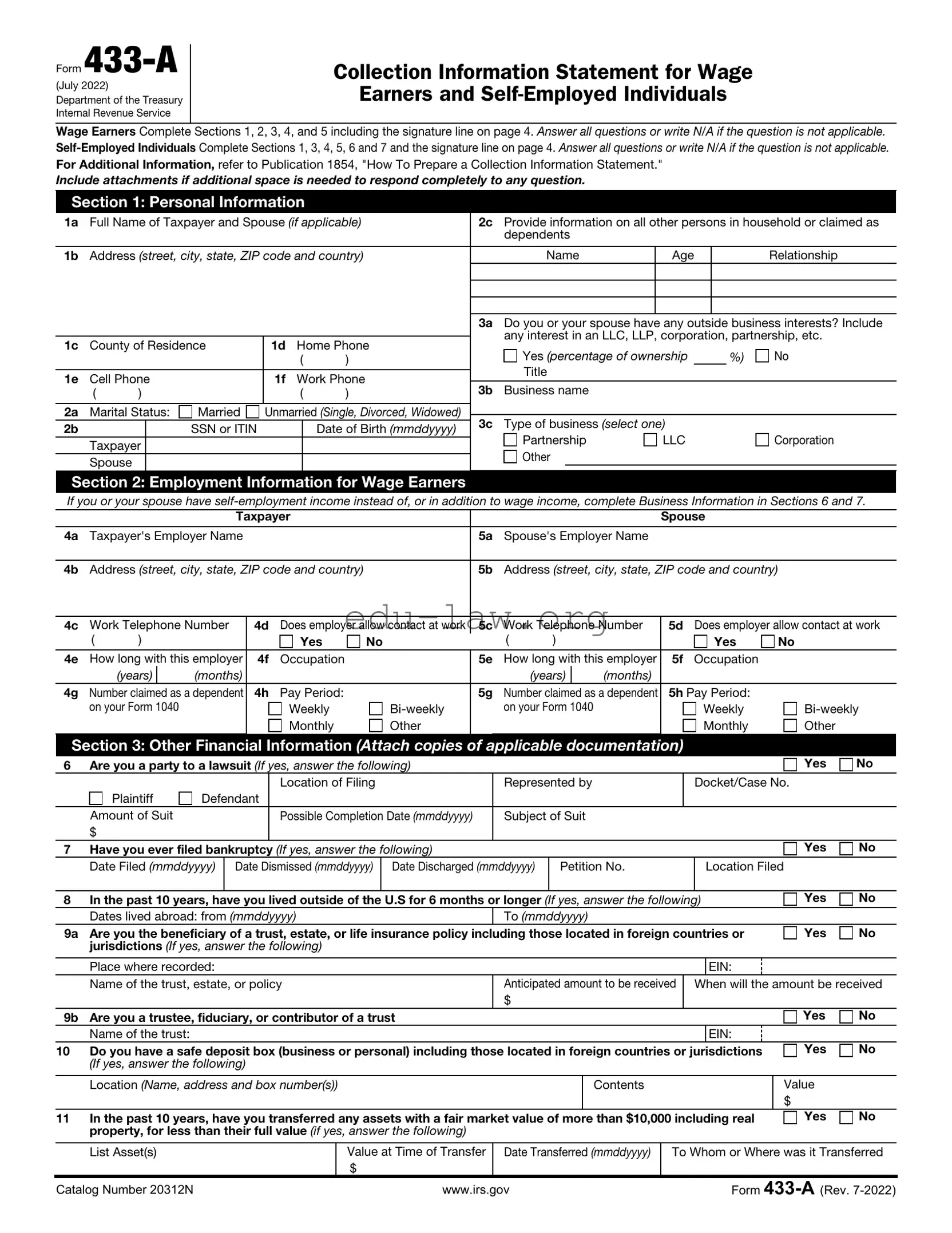
The IRS 433-A form plays a crucial role in the collection process for taxpayers who owe back taxes. This form is primarily used by individuals to provide the Internal Revenue Service with a comprehensive overview of their financial situation. It includes detailed information about income, expenses, assets, and liabilities. By filling out this form, taxpayers can demonstrate their ability to pay or negotiate a payment plan. The IRS may also use this information to determine eligibility for various tax relief options. Completing the IRS 433-A form accurately is essential, as it helps facilitate communication between the taxpayer and the IRS, ensuring that both parties have a clear understanding of the financial circumstances involved.
Form |
Collection Information Statement for Wage |
(July 2022) |
Earners and |
Department of the Treasury |
|
Internal Revenue Service |
|
Wage Earners Complete Sections 1, 2, 3, 4, and 5 including the signature line on page 4. Answer all questions or write N/A if the question is not applicable.
Include attachments if additional space is needed to respond completely to any question.
Section 1: Personal Information
1a |
Full Name of Taxpayer and Spouse (if applicable) |
2c |
Provide information on all other persons in household or claimed as |
||||||||||||
|
|
|
|
|
|
|
|
|
dependents |
|
|
|
|
|
|
|
|
|
|
|
|
|
|
|
|
||||||
1b |
Address (street, city, state, ZIP code and country) |
|
Name |
Age |
|
|
Relationship |
||||||||
|
|
|
|
|
|
|
|
|
|
|
|
|
|
|
|
|
|
|
|
|
|
|
|
|
|
|
|
|
|
|
|
|
|
|
|
|
|
|
|
|
|
|
|
|
|
|
|
|
|
|
|
|
|
|
|
3a |
Do you or your spouse have any outside business interests? Include |
||||||
|
|
|
|
|
|
|
|
|
any interest in an LLC, LLP, corporation, partnership, etc. |
||||||
1c |
County of Residence |
1d |
Home Phone |
|
|||||||||||
|
Yes (percentage of ownership |
|
%) |
No |
|||||||||||
|
|
|
|
|
|
( |
) |
|
|
||||||
|
|
|
|
|
|
|
|
|
Title |
|
|
|
|
|
|
1e |
Cell Phone |
|
1f |
Work Phone |
|
|
|
|
|
|
|||||
|
3b |
Business name |
|
|
|
|
|
||||||||
|
( |
) |
|
|
|
( |
) |
|
|
|
|
|
|||
|
|
|
|
|
|
|
|
|
|
|
|
|
|
||
2a |
Marital Status: |
Married |
Unmarried (Single, Divorced, Widowed) |
|
|
|
|
|
|
|
|
||||
3c |
Type of business (select one) |
|
|
|
|||||||||||
2b |
|
|
|
SSN or ITIN |
|
|
Date of Birth (mmddyyyy) |
|
|
|
|||||
|
|
|
|
|
|
Partnership |
LLC |
|
|
Corporation |
|||||
|
Taxpayer |
|
|
|
|
|
|
|
|
||||||
|
|
|
|
|
|
|
Other |
|
|
|
|
|
|||
|
Spouse |
|
|
|
|
|
|
|
|
|
|
|
|
||
|
|
|
|
|
|
|
|
|
|
|
|
|
|
|
|
Section 2: Employment Information for Wage Earners
If you or your spouse have
|
|
|
|
Taxpayer |
|
|
|
|
|
|
|
Spouse |
|
||
4a |
Taxpayer's Employer Name |
|
|
|
5a |
Spouse's Employer Name |
|
|
|||||||
|
|
|
|
|
|
|
|
|
|||||||
4b |
Address (street, city, state, ZIP code and country) |
|
5b |
Address (street, city, state, ZIP code and country) |
|
||||||||||
|
|
|
|
|
|
|
|
|
|||||||
4c |
Work Telephone Number |
4d |
Does employer allow contact at work |
5c |
Work Telephone Number |
5d Does employer allow contact at work |
|||||||||
|
( |
) |
|
|
|
Yes |
No |
|
|
( |
) |
|
|
Yes |
No |
4e |
How long with this employer |
4f |
Occupation |
|
5e |
How long with this employer |
5f Occupation |
|
|||||||
|
|
(years) |
|
(months) |
|
|
|
|
|
|
(years) |
|
(months) |
|
|
4g |
Number claimed as a dependent |
4h |
Pay Period: |
|
5g |
Number claimed as a dependent |
5h Pay Period: |
|
|||||||
|
on your Form 1040 |
|
|
Weekly |
|
|
on your Form 1040 |
|
Weekly |
||||||
|
|
|
|
|
|
Monthly |
Other |
|
|
|
|
|
|
Monthly |
Other |
Section 3: Other Financial Information (Attach copies of applicable documentation)
6 |
Are you a party to a lawsuit (If yes, answer the following) |
|
|
|
|
Yes |
No |
||||
|
|
|
|
Location of Filing |
Represented by |
|
Docket/Case No. |
|
|
||
|
Plaintiff |
Defendant |
|
|
|
|
|
|
|
|
|
|
Amount of Suit |
|
|
Possible Completion Date (mmddyyyy) |
Subject of Suit |
|
|
|
|
||
|
$ |
|
|
|
|
|
|
|
|
|
|
7 |
Have you ever filed bankruptcy (If yes, answer the following) |
|
|
|
|
Yes |
No |
||||
|
Date Filed (mmddyyyy) |
Date Dismissed (mmddyyyy) |
Date Discharged (mmddyyyy) |
Petition No. |
|
Location Filed |
|
|
|||
|
|
|
|
|
|
|
|
||||
8 |
In the past 10 years, have you lived outside of the U.S for 6 months or longer (If yes, answer the following) |
Yes |
No |
||||||||
Dates lived abroad: from (mmddyyyy)
To (mmddyyyy)
9a Are you the beneficiary of a trust, estate, or life insurance policy including those located in foreign countries or jurisdictions (If yes, answer the following)
Yes No
|
Place where recorded: |
|
|
|
|
|
EIN: |
|
|
|
|
Name of the trust, estate, or policy |
|
Anticipated amount to be received |
When will the amount be received |
||||||
|
|
|
|
$ |
|
|
|
|
|
|
9b |
Are you a trustee, fiduciary, or contributor of a trust |
|
|
|
|
|
Yes |
No |
||
|
Name of the trust: |
|
|
|
|
|
EIN: |
|
|
|
10 |
Do you have a safe deposit box (business or personal) including those located in foreign countries or jurisdictions |
Yes |
No |
|||||||
|
(If yes, answer the following) |
|
|
|
|
|
|
|
|
|
|
|
|
|
|
|
|
|
|
|
|
|
Location (Name, address and box number(s)) |
|
|
Contents |
|
|
Value |
|
||
|
|
|
|
|
|
|
|
|
$ |
|
11 |
In the past 10 years, have you transferred any assets with a fair market value of more than $10,000 including real |
Yes |
No |
|||||||
|
property, for less than their full value (if yes, answer the following) |
|
|
|
|
|
|
|
||
|
|
|
|
|
||||||
|
List Asset(s) |
|
Value at Time of Transfer |
Date Transferred (mmddyyyy) |
To Whom or Where was it Transferred |
|||||
|
|
|
$ |
|
|
|
|
|
|
|
Catalog Number 20312N |
www.irs.gov |
|
Form |
|||||||

Form |
Page 2 |
Section 4: Personal Asset Information for all Individuals (Foreign and Domestic). Include assets located in foreign countries or jurisdictions and add attachment(s) if additional space is needed to respond
12 CASH ON HAND Include cash that is not in a bank |
Total Cash on Hand |
$
PERSONAL BANK ACCOUNTS Include all checking, online and mobile (e.g., PayPal etc.) accounts, money market accounts, savings accounts, and stored value cards (e.g., payroll cards, government benefit cards, etc.).
|
|
Full Name & Address (Street, City, State, ZIP code and |
|
Account Balance |
||
|
Type of Account |
Country) of Bank, Savings & Loan, Credit Union, or |
Account Number |
As of |
||
|
|
Financial Institution |
|
|
|
|
|
|
|
|
mmddyyyy |
||
13a |
|
|
|
$ |
|
|
13b |
|
|
|
$ |
|
|
13c |
Total Cash (Add lines 13a, 13b, and amounts from any attachments) |
|
$ |
|
|
|
INVESTMENTS Include stocks, bonds, mutual funds, stock options, certificates of deposit, and retirement assets such as IRAs, Keogh, 401(k) plans and commodities (e.g., gold, silver, copper, etc.). Include all corporations, partnerships, limited liability companies, or other business entities in which you are an officer, director, owner, member, or otherwise have a financial interest.
Type of Investment |
Full Name & Address |
|
Loan Balance (if applicable) |
Equity |
|||
Current Value |
As of |
||||||
or Financial Interest |
(Street, City, State, ZIP code and Country) of Company |
Value minus Loan |
|||||
|
|
|
|
||||
|
|
|
|
mmddyyyy |
|
|
|
|
|
|
|
|
|
|
|
14a |
|
|
|
|
|
|
|
|
Phone |
$ |
$ |
|
|
$ |
|
14b |
|
|
|
|
|
|
|
Phone
$
$
$
DIGITAL ASSETS List all digital assets such as virtual currency (cryptocurrency),
14c List the name(s) of individuals who have access to the private key(s) and/or digital wallets
|
Name of Digital Asset such as |
Email Address Used to |
|
Digital Asset Amount |
|
|
Location(s) of Digital Assets |
and Value in US |
|||
Type of Digital Asset |
Virtual Currency Wallet, Exchange |
With the Digital Assets such as |
|||
(Mobile Wallet, Online, and/or |
dollars as of today |
||||
or Digital Currency Exchange |
Virtual Currency Exchange or |
||||
|
External Hardware storage) |
(e.g., 1 Bitcoins |
|||
|
(DCE) |
DCE |
|||
|
|
$38,000.00 USD) |
|||
|
|
|
|
||
|
|
|
|
|
|
14d |
|
|
|
|
|
|
|
|
|
$ |
|
14e |
|
|
|
|
|
|
|
|
|
$ |
|
14f Total Equity (Add lines 14a, 14b, 14d and 14e. Also include any amounts from any attachments to your total equity) |
$ |
||||
AVAILABLE CREDIT Include all lines of credit and bank issued credit cards.
|
|
|
Full Name & Address |
|
|
|
|
Amount Owed |
|
Available Credit |
||||
|
|
|
|
|
|
Credit Limit |
As of |
|
|
As of |
||||
|
(Street, City, State, ZIP code and Country) of Credit Institution |
|
|
|
||||||||||
|
|
|
|
|
|
|
|
|
||||||
|
|
|
mmddyyyy |
|
|
mmddyyyy |
||||||||
|
|
|
|
|
|
|
|
|
|
|
|
|||
|
|
|
|
|
|
|
|
|
|
|
|
|
|
|
15a |
|
|
|
|
|
|
|
|
|
|
|
|
|
|
|
Acct. No |
|
|
|
|
|
|
$ |
$ |
|
|
$ |
|
|
15b |
|
|
|
|
|
|
|
|
|
|
|
|
|
|
|
Acct. No |
|
|
|
|
|
|
$ |
$ |
|
|
$ |
|
|
15c |
Total Available Credit (Add lines 15a, 15b and amounts from any attachments) |
|
|
|
|
$ |
|
|
||||||
16a |
LIFE INSURANCE Do you own or have any interest in any life insurance policies with cash value |
|
|
|
|
|
|
|||||||
|
Yes |
No |
If yes, complete blocks 16b through 16f for each policy. |
|
|
|
|
|
|
|||||
16b |
Name and Address of Insurance |
|
|
|
|
|
|
|
|
|
|
|
||
|
Company(ies): |
|
|
|
|
|
|
|
|
|
|
|
|
|
|
|
|
|
|
|
|
|
|
|
|
|
|
|
|
16c |
Policy Number(s) |
|
|
|
|
|
|
|
|
|
|
|
|
|
16d |
Owner of Policy |
|
|
|
|
|
|
|
|
|
|
|
|
|
16e |
Current Cash Value |
|
|
$ |
|
$ |
|
|
|
$ |
|
|
|
|
16f |
Outstanding Loan Balance |
|
$ |
|
$ |
|
|
|
$ |
|
|
|
|
|
16g |
Total Available Cash (Subtract amounts on line 16f from line 16e and include amounts from any attachments) |
|
|
$ |
|
|
||||||||
Catalog Number 20312N |
|
|
|
www.irs.gov |
|
|
Form |
|||||||

Form |
Page 3 |
Section 4: Personal Asset Information for all Individuals (Foreign and Domestic) (Continued)
REAL PROPERTY Include all real property owned or being purchased
|
|
|
Purchase Date |
|
Current Fair |
Current Loan |
Amount of |
Date of Final |
Equity |
||
|
|
|
|
Market Value |
Payment |
||||||
|
|
|
(mmddyyyy) |
|
Balance |
Monthly Payment |
FMV Minus Loan |
||||
|
|
|
|
(FMV) |
(mmddyyyy) |
||||||
|
|
|
|
|
|
|
|
||||
|
|
|
|
|
|
|
|
|
|
|
|
17a |
Property Description |
|
|
|
|
|
|
|
|
|
|
|
|
|
|
$ |
|
|
$ |
$ |
|
|
$ |
|
Location (street, city, state, ZIP code, county and country) |
|
Lender/Contract Holder Name, Address (street, city, state, ZIP code), and Phone |
||||||||
|
|
|
|
|
|
|
|
Phone |
|
|
|
17b |
Property Description |
|
|
|
|
|
|
|
|
|
|
|
|
|
|
$ |
|
|
$ |
$ |
|
|
$ |
|
Location (street, city, state, ZIP code, county and country) |
|
Lender/Contract Holder Name, Address (street, city, state, ZIP code), and Phone |
||||||||
|
|
|
|
|
|
|
|
Phone |
|
|
|
17c Total Equity (Add lines 17a, 17b and amounts from any attachments) |
|
|
|
$ |
|
||||||
PERSONAL VEHICLES LEASED AND PURCHASED Include boats, RVs, motorcycles, |
|||||||||||
|
|
|
|
|
|
|
|
|
|||
Description (Year, Mileage, Make/Model, |
Purchase/ |
|
Current Fair |
Current Loan |
Amount of |
Date of Final |
Equity |
||||
Lease Date |
|
Market Value |
Payment |
||||||||
Tag Number, Vehicle Identification Number) |
|
Balance |
Monthly Payment |
FMV Minus Loan |
|||||||
(mmddyyyy) |
|
(FMV) |
(mmddyyyy) |
||||||||
|
|
|
|
|
|
|
|||||
|
|
|
|
|
|
|
|
|
|
|
|
18a Year |
Make/Model |
|
|
|
|
|
|
|
|
|
|
|
|
|
|
$ |
|
|
$ |
$ |
|
|
$ |
|
Mileage |
License/Tag Number |
Lender/Lessor Name, Address (street, city, state, ZIP code and country), and Phone |
|
|||||||
|
|
|
|
|
|
|
|
|
|
|
|
|
Vehicle Identification Number |
|
|
|
|
|
|
|
|
|
|
|
|
|
|
|
|
|
|
Phone |
|
|
|
18b Year |
Make/Model |
|
|
|
|
|
|
|
|
|
|
|
|
|
|
$ |
|
|
$ |
$ |
|
|
$ |
|
Mileage |
License/Tag Number |
Lender/Lessor Name, Address (street, city, state, ZIP code and country), and Phone |
|
|||||||
|
|
|
|
|
|
|
|
|
|
|
|
|
Vehicle Identification Number |
|
|
|
|
|
|
|
|
|
|
|
|
|
|
|
|
|
|
Phone |
|
|
|
18c Total Equity (Add lines 18a, 18b and amounts from any attachments)
$
PERSONAL ASSETS Include all furniture, personal effects, artwork, jewelry, collections (coins, guns, etc.), antiques or other assets. Include intangible assets such as licenses, domain names, patents, copyrights, mining claims, etc.
|
Purchase/ |
|
Current Fair |
Current Loan |
Amount of |
Date of Final |
Equity |
|||
|
Lease Date |
|
Market Value |
Payment |
||||||
|
|
Balance |
Monthly Payment |
FMV Minus Loan |
||||||
|
(mmddyyyy) |
|
(FMV) |
(mmddyyyy) |
||||||
|
|
|
|
|
|
|
|
|
|
|
19a Property Description |
|
|
|
|
|
|
|
|
|
|
|
|
|
$ |
|
|
$ |
$ |
|
|
$ |
Location (street, city, state, ZIP code, county and country) |
|
Lender/Lessor Name, Address (street, city, state, ZIP code), and Phone |
||||||||
|
|
|
|
|
|
|
Phone |
|
|
|
19b Property Description |
|
|
|
|
|
|
|
|
|
|
|
|
|
$ |
|
|
$ |
$ |
|
|
$ |
Location (street, city, state, ZIP code, county and country) |
|
Lender/Lessor Name, Address (street, city, state, ZIP code), and Phone |
||||||||
|
|
|
|
|
|
|
Phone |
|
|
|
19c Total Equity (Add lines 19a, 19b and amounts from any attachments) |
|
|
|
$ |
|
|||||
Catalog Number 20312N |
www.irs.gov |
Form |

Form |
Page 4 |
|
|
|
If you are |
Section 5: Monthly Income and Expenses (Foreign and Domestic)
Monthly Income/Expense Statement (For additional information, refer to Publication 1854.)
|
Total Income (Amounts reported in U.S. dollars) |
|
Total Living Expenses (Amounts reported in U.S. dollars) |
IRS USE ONLY |
||
|
Source |
Gross Monthly |
|
Expense Items 6 |
Actual Monthly |
Allowable Expenses |
20 |
Wages (Taxpayer) 1 |
$ |
35 |
Food, Clothing and Misc. 7 |
$ |
|
21 |
Wages (Spouse) 1 |
$ |
36 |
Housing and Utilities 8 |
$ |
|
22 |
Interest - Dividends |
$ |
37 |
Vehicle Ownership Costs 9 |
$ |
|
23 |
Net Business Income 2 |
$ |
38 |
Vehicle Operating Costs 10 |
$ |
|
24 |
Net Rental Income 3 |
$ |
39 |
Public Transportation 11 |
$ |
|
25 |
Distributions |
$ |
40 |
Health Insurance |
$ |
|
26 |
Pension (Taxpayer) |
$ |
41 |
Out of Pocket Health Care Costs 12 |
$ |
|
27 |
Pension (Spouse) |
$ |
42 |
Court Ordered Payments |
$ |
|
28 |
Social Security (Taxpayer) |
$ |
43 |
Child/Dependent Care |
$ |
|
29 |
Social Security (Spouse) |
$ |
44 |
Life Insurance |
$ |
|
30 |
Child Support |
$ |
45 |
Current year taxes (Income/FICA) 13 |
$ |
|
31 |
Alimony |
$ |
46 |
Secured Debts (Attach list) |
$ |
|
|
Other Income (Specify below) 5 |
|
47 |
Delinquent State or Local Taxes |
$ |
|
32 |
|
$ |
48 |
Other Expenses (Attach list) |
$ |
|
33 |
|
$ |
49 Total Living Expenses (add lines |
$ |
|
|
34 |
Total Income (add lines |
$ |
50 |
Net difference (Line 34 minus 49) |
$ |
|
1Wages, salaries, pensions, and social security: Enter gross monthly wages and/or salaries. Do not deduct tax withholding or allotments taken out of pay, such as insurance payments, credit union deductions, car payments, etc. To calculate the gross monthly wages and/or salaries:
If paid weekly - multiply weekly gross wages by 4.3. Example: $425.89 x 4.3 = $1,831.33
If paid biweekly (every 2 weeks) - multiply biweekly gross wages by 2.17. Example: $972.45 x 2.17 = $2,110.22
If paid semimonthly (twice each month) - multiply semimonthly gross wages by 2. Example: $856.23 x 2 = $1,712.46
2Net Income from Business: Enter monthly net business income. This is the amount earned after ordinary and necessary monthly business expenses are paid. This figure is the amount from page 6, line 89. If the net business income is a loss, enter “0”. Do not enter a negative number. If this amount is more or less than previous years, attach an explanation.
3Net Rental Income: Enter monthly net rental income. This is the amount earned after ordinary and necessary monthly rental expenses are paid. Do not include deductions for depreciation or depletion. If the net rental income is a loss, enter “0.” Do not enter a negative number.
4Distributions: Enter the total distributions from partnerships and subchapter S corporations reported on Schedule
5Other Income: Include agricultural subsidies, unemployment compensation, gambling income, oil credits, rent subsidies, sharing economy income from providing
6Expenses not generally allowed: We generally do not allow tuition for private schools, public or private college expenses, charitable contributions, voluntary retirement contributions or payments on unsecured debts. However, we may allow the expenses if proven that they are necessary for the health and welfare of the individual or family or the production of income. See Publication 1854 for exceptions.
7Food, Clothing and Miscellaneous: Total of food, clothing, housekeeping supplies, and personal care products for one month. The miscellaneous allowance is for expenses incurred that are not included in any other allowable living expense items. Examples are credit card payments, bank fees and charges, reading material, and school supplies.
8Housing and Utilities: For principal residence: Total of rent or mortgage payment. Add the average monthly expenses for the following: property taxes, homeowner’s or renter’s insurance, maintenance, dues, fees, and utilities. Utilities include gas, electricity, water, fuel, oil, other fuels, trash collection, telephone, cell phone, cable television and internet services.
9Vehicle Ownership Costs: Total of monthly lease or purchase/loan payments.
10Vehicle Operating Costs: Total of maintenance, repairs, insurance, fuel, registrations, licenses, inspections, parking, and tolls for one month.
11Public Transportation: Total of monthly fares for mass transit (e.g., bus, train, ferry, taxi, etc.)
12Out of Pocket Health Care Costs: Monthly total of medical services, prescription drugs and medical supplies (e.g., eyeglasses, hearing aids, etc.)
13Current Year Taxes: Include state and Federal taxes withheld from salary or wages, or paid as estimated taxes.
Certification: Under penalties of perjury, I declare that to the best of my knowledge and belief this statement of assets, liabilities, and other information is true, correct, and complete.
Taxpayer's Signature
Spouse's signature
Date
After we review the completed Form
IRS USE ONLY (Notes)
Catalog Number 20312N |
www.irs.gov |
Form |
| Fact Name | Description |
|---|---|
| Purpose | The IRS Form 433-A is used to provide detailed financial information to the IRS when applying for a payment plan or settling tax debts. |
| Who Should Use It | Individuals who owe taxes and wish to enter into an installment agreement or an offer in compromise should complete this form. |
| Required Information | The form requires information about income, expenses, assets, and liabilities to assess the taxpayer's financial situation. |
| Filing Method | Form 433-A can be submitted to the IRS either by mail or electronically, depending on the specific circumstances. |
| State-Specific Forms | Some states may have their own versions of financial disclosure forms, governed by state tax laws. Check with your state’s tax authority for details. |
Filling out the IRS 433-A form is a straightforward process that requires accurate information about your financial situation. Once completed, this form can help the IRS understand your ability to pay taxes owed. Here’s how to fill it out step-by-step.
What is the IRS 433-A form?
The IRS 433-A form, also known as the Collection Information Statement for Wage Earners and Self-Employed Individuals, is a document used by the Internal Revenue Service (IRS) to gather detailed financial information from individuals who owe taxes. This form helps the IRS assess a taxpayer's ability to pay their tax liabilities. It requires information about income, expenses, assets, and liabilities. Completing this form accurately is crucial for individuals seeking to negotiate payment arrangements or settle their tax debts.
Who needs to fill out the IRS 433-A form?
Individuals who owe taxes and are unable to pay in full may need to complete the IRS 433-A form. This includes wage earners and self-employed individuals who are seeking to establish an installment agreement or offer in compromise with the IRS. If a taxpayer's financial situation is complex, or if they have significant assets or income, the IRS may require this form to evaluate their case thoroughly.
How do I complete the IRS 433-A form?
To complete the IRS 433-A form, you will need to provide detailed information about your financial situation. Start by gathering documents that reflect your income, such as pay stubs or profit and loss statements if you are self-employed. Next, list your monthly expenses, including housing costs, utilities, food, and transportation. Additionally, include information about your assets, such as bank accounts, retirement accounts, real estate, and vehicles. Finally, disclose any liabilities you may have, such as loans or credit card debt. Ensure that all information is accurate and up-to-date before submitting the form to the IRS.
What happens after I submit the IRS 433-A form?
After submitting the IRS 433-A form, the IRS will review the information provided to assess your financial situation. This review process may take some time, depending on the complexity of your case and the IRS's current workload. The IRS may reach out for additional information or clarification if needed. Once the review is complete, they will inform you of your options for resolving your tax debt, which may include setting up an installment agreement or accepting an offer in compromise. It is essential to respond promptly to any IRS communications during this process to avoid further complications.
Not providing complete information. Many individuals forget to fill out all sections of the form, which can lead to delays in processing.
Underestimating income. Some people misreport their income, either intentionally or unintentionally, which can affect their payment plans.
Overlooking expenses. Failing to list all necessary living expenses can result in unrealistic financial representations.
Incorrectly calculating assets. Individuals sometimes misstate the value of their assets, leading to potential issues with the IRS.
Not signing the form. Forgetting to sign can render the submission invalid, causing further complications.
Using outdated information. Submitting a form with old financial data can lead to inaccurate assessments and decisions.
Failing to provide supporting documentation. Many neglect to attach necessary documents, which can hinder the review process.
The IRS 433-A form is a crucial document used for financial disclosure when negotiating with the IRS regarding tax liabilities. However, it often accompanies several other forms and documents that help provide a complete picture of an individual's financial situation. Below is a list of related forms that may be necessary or beneficial when dealing with the IRS.
Understanding these forms and documents can facilitate smoother interactions with the IRS. Having the right paperwork ready can lead to more favorable outcomes in tax negotiations and help taxpayers manage their obligations effectively.
The IRS 433-A form is similar to the IRS 433-B form, which is used for businesses. While the 433-A focuses on individual taxpayers, the 433-B collects financial information from businesses. Both forms aim to provide the IRS with a clear picture of the taxpayer's financial situation, including income, expenses, and assets. This helps the IRS determine the appropriate tax liability or payment plan for the taxpayer.
Another document akin to the IRS 433-A is the IRS Form 656, Offer in Compromise. This form allows taxpayers to settle their tax debt for less than the full amount owed. Like the 433-A, the Form 656 requires detailed financial information. Taxpayers must provide proof of income, expenses, and assets to support their offer. Both forms serve to negotiate with the IRS regarding a taxpayer’s financial obligations.
The IRS 4506-T form, which requests a transcript of tax return information, shares similarities with the 433-A in that both are used to gather essential financial data. While the 433-A focuses on current financial status, the 4506-T provides historical tax information. Taxpayers may need to submit both forms during tax negotiations or when applying for financial relief, as they complement each other in establishing a complete financial picture.
The IRS Form 8821, Tax Information Authorization, is also comparable. This form allows a third party to receive a taxpayer's financial information from the IRS. While the 433-A collects personal financial details, the 8821 enables a tax professional or representative to act on behalf of the taxpayer. Both forms facilitate communication with the IRS, ensuring that the taxpayer's financial matters are handled appropriately.
The IRS Form 1040, the individual income tax return, is another document that relates to the 433-A. Both forms require detailed financial disclosures from the taxpayer. The 1040 captures annual income, deductions, and credits, while the 433-A provides a snapshot of current financial health. Taxpayers often use information from their 1040 to complete the 433-A, as it reflects their overall financial situation.
Similar to the 433-A is the IRS Form 9465, Installment Agreement Request. This form is used by taxpayers who wish to set up a payment plan for their tax liabilities. Like the 433-A, it requires financial information to determine the taxpayer’s ability to pay. Both forms help the IRS assess whether the taxpayer qualifies for a payment plan based on their current financial situation.
Lastly, the IRS Form 8822, Change of Address, can be seen as related, although it serves a different purpose. While the 433-A focuses on financial data, the 8822 ensures that the IRS has the correct address for the taxpayer. Accurate contact information is crucial for effective communication, especially when financial matters are involved. Both forms help maintain the integrity of the taxpayer's records with the IRS.
When filling out the IRS 433-A form, it is crucial to approach the task with care. This form is used to provide the IRS with a comprehensive overview of your financial situation. Here are ten important guidelines to consider:
When it comes to tax forms, the IRS 433-A form often raises questions and misconceptions. Understanding the truth behind these misunderstandings is crucial for anyone dealing with tax issues. Here are six common misconceptions about the IRS 433-A form:
Addressing these misconceptions can empower taxpayers to navigate their tax obligations more effectively. Understanding the IRS 433-A form is a vital step in managing tax debt and seeking resolution.
Filling out the IRS 433-A form is an important step for individuals seeking to resolve tax liabilities. Here are some key takeaways to consider:
By keeping these points in mind, individuals can navigate the process of filling out the IRS 433-A form more effectively.