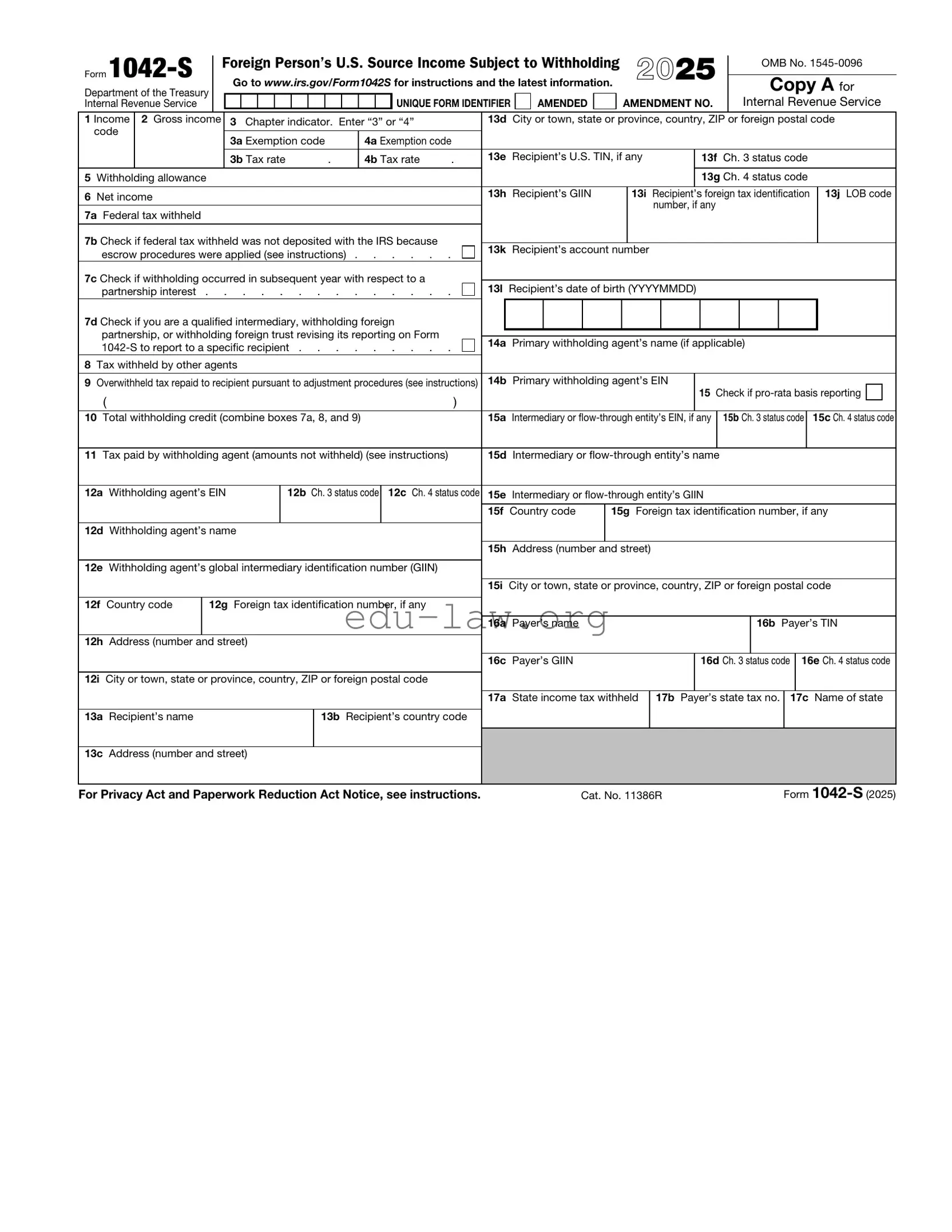
The IRS 1042-S form plays a crucial role in the reporting of income paid to foreign individuals and entities. This form is primarily used by U.S. withholding agents to report amounts paid to non-resident aliens, foreign partnerships, foreign corporations, and other foreign entities. It covers various types of income, including interest, dividends, royalties, and certain other payments subject to U.S. tax withholding. The information reported on the 1042-S helps the IRS ensure that the correct amount of tax is withheld from payments made to foreign recipients. Additionally, the form provides essential details about the recipient, such as their name, address, and taxpayer identification number, as well as the amount paid and the amount withheld. Understanding the intricacies of the 1042-S form is vital for both payers and recipients, as it ensures compliance with U.S. tax laws and helps avoid potential penalties. Proper completion and timely submission of this form are key responsibilities for U.S. entities making payments to foreign individuals or businesses.

|
|
|
Foreign Person’s U.S. Source Income Subject to Withholding |
2025 |
|
|
OMB No. |
|||||||||||||||||||||||||||
|
|
|
|
|
||||||||||||||||||||||||||||||
Department of the Treasury |
|
|
|
|
|
|
|
|
|
|
|
|
|
|
|
|
|
|
|
|
|
|
|
|
|
|
|
|||||||
|
|
|
|
|
|
|
|
|
|
|
|
|
|
|
|
|
|
|
|
|
|
|
|
Copy A for |
||||||||||
Form |
|
|
Go to www.irs.gov/Form1042S for instructions and the latest information. |
|
|
|
|
|
||||||||||||||||||||||||||
Internal Revenue Service |
|
|
|
|
|
|
|
|
|
|
|
|
UNIQUE FORM IDENTIFIER |
AMENDED |
|
|
AMENDMENT NO. |
|
|
Internal Revenue Service |
||||||||||||||
|
|
|
|
|
|
|
|
|
|
|
|
|
|
|
|
|||||||||||||||||||
|
|
|
|
|
|
|
|
|
|
|
|
|
|
|
|
|
|
|
|
|
|
|
|
|
|
|
|
|
|
|
|
|
|
|
1 Income |
2 Gross income |
|
|
3 Chapter indicator. Enter “3” or “4” |
|
|
13d City or town, state or province, country, ZIP or foreign postal code |
|||||||||||||||||||||||||||
code |
|
|
|
|
|
|
|
|
|
|
|
|
|
|
|
|
|
|
|
|
|
|
|
|
|
|
|
|
|
|
|
|
|
|
|
|
|
3a Exemption code |
|
|
4a Exemption code |
|
|
|
|
|
|
|
|
|
|
|
|
|
|
|
|
|
|
||||||||||
|
|
|
|
|
|
|
|
|
|
|
|
|
|
|
|
|
|
|
|
|
|
|
|
|||||||||||
|
|
|
|
|
|
|
|
|
|
|
|
|
|
|
|
|
|
|
|
|
|
|
|
|
|
|
|
|
|
|
||||
|
|
|
|
3b Tax rate |
. |
|
4b Tax rate |
. |
|
13e Recipient’s U.S. TIN, if any |
|
|
|
13f |
Ch. 3 status code |
|||||||||||||||||||
|
|
|
|
|
|
|
|
|
|
|
|
|
|
|
|
|
|
|
|
|
|
|
|
|
|
|
|
|
|
|
|
|||
5 Withholding allowance |
|
|
|
|
|
|
|
|
|
|
|
|
|
|
|
|
|
|
|
|
|
|
|
|
|
|
13g Ch. 4 status code |
|||||||
|
|
|
|
|
|
|
|
|
|
|
|
|
|
|
|
|
|
|
|
|
|
|
|
|
|
|
|
|
||||||
6 Net income |
|
|
|
|
|
|
|
|
|
|
|
|
|
|
13h |
Recipient’s GIIN |
|
13i |
Recipient’s foreign tax identification |
13j LOB code |
||||||||||||||
|
|
|
|
|
|
|
|
|
|
|
|
|
|
|
|
|
|
|
|
|
|
|
|
|
|
number, if any |
|
|
|
|
|
|||
7a Federal tax withheld |
|
|
|
|
|
|
|
|
|
|
|
|
|
|
|
|
|
|
|
|
|
|
|
|
|
|
|
|
||||||
|
|
|
|
|
|
|
|
|
|
|
|
|
|
|
|
|
|
|
|
|
|
|
|
|
|
|
|
|
|
|
|
|||
|
|
|
|
|
|
|
|
|
|
|
|
|
|
|
|
|
|
|
|
|
|
|
|
|
|
|
|
|
|
|
|
|||
7b Check if federal tax withheld was not deposited with the IRS because |
|
|
|
|
|
|
|
|
|
|
|
|
|
|
|
|
|
|
|
|
||||||||||||||
|
|
13k Recipient’s account number |
|
|
|
|
|
|
|
|
|
|||||||||||||||||||||||
escrow procedures were applied (see instructions) |
|
|
|
|
|
|
|
|
|
|
|
|||||||||||||||||||||||
|
|
|
|
|
|
|
|
|
|
|
|
|
|
|
|
|
|
|
|
|||||||||||||||
7c Check if withholding occurred in subsequent year with respect to a |
|
|
|
|
|
|
|
|
|
|
|
|
|
|
|
|
|
|
|
|
||||||||||||||
|
|
13l Recipient’s date of birth (YYYYMMDD) |
|
|
|
|
|
|||||||||||||||||||||||||||
partnership interest . |
. . . . . . . . . . . . . |
|
|
|
|
|
|
|
||||||||||||||||||||||||||
7d Check if you are a qualified intermediary, withholding foreign |
|
|
|
|
|
|
|
|
|
|
|
|
|
|
|
|
|
|
|
|
||||||||||||||
partnership, or withholding foreign trust revising its reporting on Form |
|
|
|
|
|
|
|
|
|
|
|
|
|
|
|
|
|
|
|
|
||||||||||||||
|
|
14a Primary withholding agent’s name (if applicable) |
||||||||||||||||||||||||||||||||
|
|
|||||||||||||||||||||||||||||||||
|
|
|
|
|
|
|
|
|
|
|
|
|
|
|
|
|
|
|
|
|||||||||||||||
8Tax withheld by other agents
9 Overwithheld tax repaid to recipient pursuant to adjustment procedures (see instructions) |
14b |
Primary withholding agent’s EIN |
15 Check if |
|
|
|||||||
|
( |
|
) |
|
|
|
|
|
|
|||
|
|
|
|
|
|
|
|
|
|
|
||
10 |
Total withholding credit (combine boxes 7a, 8, and 9) |
|
|
15a |
Intermediary or |
15b Ch. 3 status code |
15c Ch. 4 status code |
|||||
|
|
|
|
|
|
|
|
|||||
11 |
Tax paid by withholding agent (amounts not withheld) (see instructions) |
15d |
Intermediary or |
|||||||||
|
|
|
|
|
|
|
|
|
|
|
|
|
12a Withholding agent’s EIN |
12b Ch. 3 status code |
12c Ch. 4 status code |
15e |
Intermediary or |
||||||||
|
|
|
|
|
|
|
||||||
|
|
|
|
|
15f Country code |
15g Foreign tax identification number, if any |
||||||
|
|
|
|
|
|
|
|
|
|
|
|
|
12d Withholding agent’s name |
|
|
|
|
|
|
|
|
|
|
|
|
|
|
|
|
|
|
|
|
|||||
|
|
|
|
|
15h |
Address (number and street) |
||||||
12e Withholding agent’s global intermediary identification number (GIIN)
|
|
|
|
|
15i |
City or town, state or province, country, ZIP or foreign postal code |
||||||
|
|
|
|
|
|
|
|
|
|
|
|
|
12f Country code |
12g Foreign tax identification number, if any |
|
|
|
|
|
|
|
|
|||
|
|
|
|
|
|
|
|
|
|
|
||
|
|
|
|
|
16a Payer’s name |
|
16b Payer’s TIN |
|||||
|
|
|
|
|
|
|
|
|
|
|
|
|
12h |
Address (number and street) |
|
|
|
|
|
|
|
||||
|
|
|
|
|
|
|
|
|
|
|
|
|
|
|
|
|
|
16c Payer’s GIIN |
16d Ch. 3 status code |
|
16e Ch. 4 status code |
||||
|
|
|
|
|
|
|
|
|
|
|
|
|
12i |
City or town, state or province, country, ZIP or foreign postal code |
|
|
|
|
|
|
|
||||
|
|
|
|
|
|
|
|
|
|
|
||
|
|
|
|
|
17a State income tax withheld |
17b Payer’s state tax no. |
|
17c Name of state |
||||
|
|
|
|
|
|
|
|
|
|
|
|
|
13a |
Recipient’s name |
|
13b Recipient’s country code |
|
|
|
|
|
|
|
|
|
|
|
|
|
|
|
|
|
|
|
|
|
|
|
|
|
|
|
|
|
|
|
|
|
|
|
13c |
Address (number and street) |
|
|
|
|
|
|
|
|
|||
|
|
|
|
|
|
|||||||
For Privacy Act and Paperwork Reduction Act Notice, see instructions. |
Cat. No. 11386R |
|
|
Form |
||||||||

Form |
|
Foreign Person’s U.S. Source Income Subject to Withholding |
2025 |
|
|
OMB No. |
||||||||||||||||||||||||||||||
|
|
|
||||||||||||||||||||||||||||||||||
|
|
|
|
|
|
|
|
|
|
|
|
|
|
|
|
|
|
|
|
|
|
|||||||||||||||
|
|
Go to www.irs.gov/Form1042S for instructions and the latest information. |
|
|
|
Copy B |
||||||||||||||||||||||||||||||
Department of the Treasury |
|
|
|
|
|
|
|
|
|
|
|
|
|
|
|
|
|
|
|
|
|
|
|
|
|
|
|
|
|
|
|
|
|
|||
Internal Revenue Service |
|
|
|
|
|
|
|
|
|
|
|
|
UNIQUE FORM IDENTIFIER |
|
|
AMENDED |
|
|
AMENDMENT NO. |
|
|
for Recipient |
||||||||||||||
|
|
|
|
|
|
|
|
|
|
|
|
|
|
|
|
|
|
|
|
|
|
|
|
|
|
|
|
|
|
|||||||
1 Income |
2 Gross income |
|
|
3 Chapter indicator. Enter “3” or “4” |
|
|
13d City or town, state or province, country, ZIP or foreign postal code |
|||||||||||||||||||||||||||||
code |
|
|
|
|
|
|
|
|
|
|
|
|
|
|
|
|
|
|
|
|
|
|
|
|
|
|
|
|
|
|
|
|
|
|
|
|
|
|
|
3a Exemption code |
|
|
4a Exemption code |
|
|
|
|
|
|
|
|
|
|
|
|
|
|
|
|
|
|
|
|
||||||||||
|
|
|
|
|
|
|
|
|
|
|
|
|
|
|
|
|
|
|
|
|
|
|
|
|
|
|||||||||||
|
|
|
|
|
|
|
|
|
|
|
|
|
|
|
|
|
|
|
|
|
|
|
|
|
|
|
|
|
|
|
||||||
|
|
|
|
3b Tax rate |
. |
|
4b Tax rate |
. |
|
13e Recipient’s U.S. TIN, if any |
|
|
|
13f |
Ch. 3 status code |
|||||||||||||||||||||
|
|
|
|
|
|
|
|
|
|
|
|
|
|
|
|
|
|
|
|
|
|
|
|
|
|
|
|
|
|
|
|
|
|
|||
5 Withholding allowance |
|
|
|
|
|
|
|
|
|
|
|
|
|
|
|
|
|
|
|
|
|
|
|
|
|
|
|
|
13g Ch. 4 status code |
|||||||
|
|
|
|
|
|
|
|
|
|
|
|
|
|
|
|
|
|
|
|
|
|
|
|
|
|
|
|
|
||||||||
6 Net income |
|
|
|
|
|
|
|
|
|
|
|
|
|
|
13h |
Recipient’s GIIN |
|
13i |
Recipient’s foreign tax identification |
13j LOB code |
||||||||||||||||
|
|
|
|
|
|
|
|
|
|
|
|
|
|
|
|
|
|
|
|
|
|
|
|
|
|
|
|
number, if any |
|
|
|
|
|
|||
7a Federal tax withheld |
|
|
|
|
|
|
|
|
|
|
|
|
|
|
|
|
|
|
|
|
|
|
|
|
|
|
|
|
|
|
||||||
|
|
|
|
|
|
|
|
|
|
|
|
|
|
|
|
|
|
|
|
|
|
|
|
|
|
|
|
|
|
|
|
|
|
|||
|
|
|
|
|
|
|
|
|
|
|
|
|
|
|
|
|
|
|
|
|
|
|
|
|
|
|
|
|
|
|
|
|
|
|||
7b Check if federal tax withheld was not deposited with the IRS because |
|
|
|
|
|
|
|
|
|
|
|
|
|
|
|
|
|
|
|
|
|
|
||||||||||||||
|
|
13k Recipient’s account number |
|
|
|
|
|
|
|
|
|
|||||||||||||||||||||||||
escrow procedures were applied (see instructions) |
|
|
|
|
|
|
|
|
|
|
|
|||||||||||||||||||||||||
|
|
|
|
|
|
|
|
|
|
|
|
|
|
|
|
|
|
|
|
|
|
|||||||||||||||
7c Check if withholding occurred in subsequent year with respect to a |
|
|
|
|
|
|
|
|
|
|
|
|
|
|
|
|
|
|
|
|
|
|
||||||||||||||
|
|
13l Recipient’s date of birth (YYYYMMDD) |
|
|
|
|
|
|||||||||||||||||||||||||||||
partnership interest . |
. . . . . . . . . . . . . |
|
|
|
|
|
|
|
||||||||||||||||||||||||||||
7d Check if you are a qualified intermediary, withholding foreign |
|
|
|
|
|
|
|
|
|
|
|
|
|
|
|
|
|
|
|
|
|
|
||||||||||||||
partnership, or withholding foreign trust revising its reporting on Form |
|
|
|
|
|
|
|
|
|
|
|
|
|
|
|
|
|
|
|
|
|
|
||||||||||||||
|
|
14a Primary withholding agent’s name (if applicable) |
||||||||||||||||||||||||||||||||||
|
|
|||||||||||||||||||||||||||||||||||
|
|
|
|
|
|
|
|
|
|
|
|
|
|
|
|
|
|
|
|
|
|
|||||||||||||||
8Tax withheld by other agents
9 Overwithheld tax repaid to recipient pursuant to adjustment procedures (see instructions) |
14b |
Primary withholding agent’s EIN |
15 Check if |
|
|
|||||||
|
( |
|
) |
|
|
|
|
|
|
|||
|
|
|
|
|
|
|
|
|
|
|
||
10 |
Total withholding credit (combine boxes 7a, 8, and 9) |
|
|
15a |
Intermediary or |
15b Ch. 3 status code |
15c Ch. 4 status code |
|||||
|
|
|
|
|
|
|
|
|||||
11 |
Tax paid by withholding agent (amounts not withheld) (see instructions) |
15d |
Intermediary or |
|||||||||
|
|
|
|
|
|
|
|
|
|
|
|
|
12a Withholding agent’s EIN |
12b Ch. 3 status code |
12c Ch. 4 status code |
15e |
Intermediary or |
||||||||
|
|
|
|
|
|
|
||||||
|
|
|
|
|
15f Country code |
15g Foreign tax identification number, if any |
||||||
|
|
|
|
|
|
|
|
|
|
|
|
|
12d Withholding agent’s name |
|
|
|
|
|
|
|
|
|
|
|
|
|
|
|
|
|
|
|
|
|||||
|
|
|
|
|
15h |
Address (number and street) |
||||||
12e Withholding agent’s global intermediary identification number (GIIN)
|
|
|
|
|
|
15i City or town, state or province, country, ZIP or foreign postal code |
||||||
|
|
|
|
|
|
|
|
|
|
|
|
|
12f Country code |
|
12g Foreign tax identification number, if any |
|
|
|
|
|
|
|
|||
|
|
|
|
|
|
|
|
|
|
|
|
|
|
|
|
|
|
|
16a Payer’s name |
|
|
16b Payer’s TIN |
|||
|
|
|
|
|
|
|
|
|
|
|
|
|
12h |
Address (number and street) |
|
|
|
|
|
|
|||||
|
|
|
|
|
|
|
|
|
|
|
|
|
|
|
|
|
|
|
16c Payer’s GIIN |
|
16d Ch. 3 status code |
|
16e Ch. 4 status code |
||
|
|
|
|
|
|
|
|
|
|
|
||
12i |
City or town, state or province, country, ZIP or foreign postal code |
|
|
|
|
|
|
|||||
|
|
|
|
|
|
|
|
|
|
|
|
|
|
|
|
|
|
|
17a State income tax withheld |
17b Payer’s state tax no. |
|
17c Name of state |
|||
|
|
|
|
|
|
|
|
|
|
|
|
|
13a |
Recipient’s name |
|
13b Recipient’s country code |
|
|
|
|
|
|
|
||
|
|
|
|
|
|
|
|
|
|
|
||
|
|
|
|
|
|
|
|
|
|
|
|
|
13c |
Address (number and street) |
|
|
|
|
|
|
|
||||
|
|
|
|
|
|
|
|
|
||||
(keep for your records) |
|
|
|
|
|
|
|
Form |
||||

U.S. Income Tax Filing Requirements
Generally, every nonresident alien individual, nonresident alien fiduciary, and foreign corporation with U.S. income, including income that is effectively connected with the conduct of a trade or business in the United States, must file a U.S. income tax return. However, a return is generally not required to be filed by a nonresident alien individual, nonresident alien fiduciary, or foreign corporation if such person was not engaged in a trade or business in the United States at any time during the tax year and if the tax liability of such person was fully satisfied by the withholding of U.S. tax at the source. See the instructions for Forms
En règle générale, toute personne physique étrangère non résidente, tout fiduciaire étranger non résident et toute société étrangère ayant des revenus américains, y compris des revenus effectivement liés à la conduite d’un commerce ou d’une entreprise aux
Explanation of Codes
Box 1. Income Code.
Code
01Interest paid by U.S.
02Interest paid on real property mortgages
03Interest paid to controlling foreign corporations
04Interest paid by foreign corporations
05Interest on
|
22 |
Interest paid on deposit with a foreign branch of a domestic |
|
Interest |
30 |
corporation or partnership |
|
Original issue discount (OID) |
|||
|
29 |
Deposit interest |
|
|
31 |
||
|
33 |
Substitute |
|
|
51 |
Interest paid on certain actively traded or publicly offered |
|
|
|
securities1 |
|
|
54 |
Substitute |
|
|
|
or publicly offered securities1 |
|
Dividend |
06 |
Dividends paid by U.S. |
|
07 |
Dividends qualifying for direct dividend rate |
||
|
|||
|
08 |
Dividends paid by foreign corporations |
Por lo general, toda persona que es un extranjero no residente, todo fiduciario extranjero no residente, y toda sociedad anónima extranjera que perciba ingresos estadounidenses, inclusive de los ingresos que son efectivamente conectados con la operación de un comercio o negocio ubicado en los Estados Unidos, debe presentar una declaración del impuesto estadounidense sobre los ingresos. Sin embargo, por lo general no se requiere que un individuo extranjero no residente, una sociedad anónima extranjera u organismo fideicomisario extranjero no residente presenten una declaración si dicha persona no participaba en ningún comercio o negocio ubicado en los Estados Unidos en ningún momento durante el año tributario, y la responsabilidad tributaria de dicha persona fuera liquidada completamente mediante la retención del impuesto estadounidense en la fuente del ingreso. Consulte las instrucciones de los Formularios 1120F y
Grundsätzlich muss jede natürliche Person ohne Wohnsitz im Land, jeder Treuhänder ohne Wohnsitz im Land und jede ausländische Gesellschaft mit Einkünften in den USA, einschließlich Einkünften, die tatsächlich mit der Ausübung einer gewerblichen oder geschäftlichen Tätigkeit in den Vereinigten Staaten in Zusammenhang stehen, eine
|
34 |
Substitute |
|
40 |
Other dividend equivalents under IRC section 871(m) |
Dividend |
52 |
Dividends paid on certain actively traded or publicly offered |
|
securities1 |
|
|
|
|
|
53 |
Substitute |
|
|
or publicly offered securities1 |
|
56 |
Dividend equivalents under IRC section 871(m) as a result of |
|
|
applying the combined transaction rules |
|
|
|
|
09 |
Capital gains |
|
10 |
Industrial royalties |
|
11 |
Motion picture or television copyright royalties |
|
12 |
Other royalties (for example, copyright, software, |
|
|
broadcasting, endorsement payments) |
Other |
13 |
Royalties paid on certain publicly offered securities1 |
14 |
Real property income and natural resources royalties |
|
|
15 |
Pensions, annuities, alimony, and/or insurance premiums |
|
16 |
Scholarship or fellowship grants |
|
17 |
Compensation for independent personal services2 |
|
18 |
Compensation for dependent personal services2 |
|
19 |
Compensation for teaching2 |
See back of Copy C for additional codes
1This code should only be used if the income paid is described in Regulations section
2If compensation that would otherwise be covered under Income Codes 17 through 20 is directly attributable to the recipient’s occupation as an artist or athlete, use Income Code 42 or 43 instead.
| Fact Name | Description |
|---|---|
| Purpose | The IRS 1042-S form is used to report income paid to foreign persons, including non-resident aliens and foreign entities, that is subject to withholding. |
| Who Files | U.S. withholding agents, including employers and financial institutions, must file this form when they make payments to foreign individuals or entities. |
| Filing Deadline | The form must be filed with the IRS by March 15 of the year following the payment, and copies must be provided to the recipients by the same date. |
| Governing Law | IRS regulations govern the filing of the 1042-S form, specifically under the Internal Revenue Code (IRC) Sections 1441 and 1461. |
Completing the IRS 1042-S form requires careful attention to detail. This form is typically used for reporting income paid to foreign persons, including non-resident aliens and foreign entities. After filling out the form, it will need to be submitted to the IRS and provided to the recipients of the income.
What is the IRS 1042-S form?
The IRS 1042-S form is used to report income that is subject to withholding for non-resident aliens and foreign entities. This form is particularly important for individuals and organizations that receive income from U.S. sources, such as interest, dividends, or royalties. The form helps ensure that the correct amount of tax is withheld and reported to the IRS.
Who needs to file the 1042-S form?
Generally, U.S. withholding agents, such as employers or financial institutions, must file the 1042-S form if they make payments to non-resident aliens or foreign entities. This includes payments for services, rents, and other types of income. If you are a foreign individual or entity receiving U.S. income, you should expect to receive this form from the withholding agent.
What types of income are reported on the 1042-S form?
The 1042-S form reports various types of income, including but not limited to interest, dividends, royalties, and compensation for services. Each type of income is categorized, and the form specifies the amount of income paid and the amount of tax withheld. This ensures transparency and compliance with U.S. tax laws.
When is the 1042-S form due?
The 1042-S form is typically due on March 15 of the year following the calendar year in which the income was paid. If the due date falls on a weekend or holiday, the deadline may be extended to the next business day. It’s essential for withholding agents to meet this deadline to avoid penalties.
How do I receive my 1042-S form?
If you are a non-resident alien or foreign entity, you should receive your 1042-S form directly from the withholding agent that made the payment to you. This could be an employer, bank, or other financial institution. The form may be sent by mail or electronically, depending on the practices of the withholding agent.
What should I do if I don’t receive my 1042-S form?
If you expect to receive a 1042-S form but have not received it by the deadline, it is advisable to contact the withholding agent. They can provide information on whether the form was issued and if there are any issues that need to be resolved. Keeping a record of your income and any correspondence can be helpful in these situations.
Can I amend a 1042-S form?
Yes, if there are errors on a previously filed 1042-S form, it can be amended. The withholding agent must file a corrected form with the IRS and provide a copy to the recipient. It is important to make amendments as soon as errors are discovered to ensure accurate reporting and compliance with tax obligations.
How does the 1042-S form affect my tax return?
The information reported on the 1042-S form is crucial for non-resident aliens when filing their U.S. tax returns. It provides details about income earned and taxes withheld, which can help determine if additional tax is owed or if a refund is due. Accurate reporting is essential to avoid issues with the IRS.
What if I believe the withholding amount on my 1042-S form is incorrect?
If you believe the withholding amount reported on your 1042-S form is incorrect, you should first discuss the issue with the withholding agent. They can review the details and make corrections if necessary. If the issue remains unresolved, you may need to consult a tax professional for further guidance on how to proceed.
Where can I find more information about the 1042-S form?
For more information about the 1042-S form, you can visit the IRS website. The site offers resources, instructions, and additional details about filing requirements. Consulting a tax professional can also provide personalized assistance tailored to your specific situation.
Incorrect Recipient Information: One common mistake is providing the wrong name or address for the recipient. This can lead to delays or issues with tax reporting.
Wrong Tax Identification Number (TIN): Failing to enter the correct TIN can cause significant problems. Make sure to double-check this information.
Improper Use of Codes: Each box on the form has specific codes that must be used correctly. Misusing these codes can lead to confusion and errors in tax reporting.
Missing Income Amounts: Leaving out income amounts can lead to incomplete reporting. Ensure that all income figures are accurately filled in.
Not Signing the Form: A common oversight is forgetting to sign the form. Without a signature, the form may be considered invalid.
Filing Late: Submitting the form after the deadline can result in penalties. It's crucial to be aware of filing dates and submit on time.
Incorrect Currency Reporting: Make sure to report amounts in the correct currency. This is especially important for foreign payments.
Not Keeping Copies: Failing to retain copies of the submitted forms can create issues in the future. Always keep a record for your files.
Ignoring Instructions: Each year, the IRS may update its guidelines. Ignoring the latest instructions can lead to mistakes. Always refer to the most current information.
The IRS 1042-S form is essential for reporting income that is subject to withholding for non-resident aliens. When dealing with this form, you may also need to consider other related documents that facilitate accurate reporting and compliance with tax regulations. Below is a list of commonly used forms and documents that often accompany the IRS 1042-S.
Understanding these forms and their purposes is crucial for ensuring compliance with tax regulations. Each document plays a significant role in accurately reporting income and withholding taxes for non-resident aliens. Make sure to gather and prepare these documents as needed to avoid any potential issues with the IRS.
The IRS 1099 form is one of the most commonly recognized tax documents in the United States. Like the 1042-S, it is used to report income other than wages, salaries, and tips. The 1099 form encompasses a variety of types, such as 1099-MISC for miscellaneous income and 1099-INT for interest income. Both forms serve the purpose of informing the IRS about income received by individuals and entities, ensuring that all income is reported for tax purposes. However, while the 1042-S is specifically designed for reporting income paid to foreign persons, the 1099 is typically used for domestic transactions. This distinction is crucial for understanding the tax obligations of different parties involved.
The IRS W-2 form is another important document that shares similarities with the 1042-S. The W-2 is used by employers to report wages, tips, and other compensation paid to employees, along with the taxes withheld from those earnings. Both the W-2 and the 1042-S provide essential information to the IRS about income and tax withholding, but they apply to different groups. The W-2 is intended for U.S. citizens and residents, while the 1042-S focuses on non-resident aliens and foreign entities. This highlights the different tax treatment and reporting requirements for domestic versus foreign income recipients.
The IRS 1098 form also has a connection to the 1042-S, though it serves a different purpose. The 1098 is primarily used to report mortgage interest payments made by individuals, which can be deducted from taxable income. While the 1042-S reports income paid to foreign persons, the 1098 provides a record of interest payments that may benefit U.S. taxpayers. Both forms contribute to the overall tax reporting landscape, ensuring that the IRS receives accurate information about financial transactions, but they cater to different aspects of income reporting.
The IRS 1040 form is a fundamental document for individual income tax filing in the United States. Although it is not a direct counterpart to the 1042-S, it is relevant in the broader context of tax reporting. The 1040 is used by U.S. citizens and residents to report their annual income and calculate their tax liability. In cases where a foreign person is required to file a 1040, they may also receive a 1042-S if they have income subject to withholding. This interrelationship underscores the complexity of tax obligations for individuals with international ties.
Finally, the IRS 3921 form is similar in that it relates to the reporting of income, but it specifically addresses the exercise of incentive stock options. This form is used to report the transfer of stock to an employee who exercises an option to buy shares at a predetermined price. Both the 3921 and the 1042-S are focused on reporting specific types of income, but they differ in their application. The 3921 is geared towards employees receiving stock options, while the 1042-S is aimed at foreign individuals receiving various types of income, highlighting the diverse nature of income reporting in the tax system.
When filling out the IRS 1042-S form, it's important to follow specific guidelines to ensure accuracy and compliance. Here are four key dos and don'ts:
The IRS 1042-S form can be confusing for many. Here are eight common misconceptions about this form, along with explanations to clarify them.
This is not entirely true. While the form is primarily for reporting payments made to non-resident aliens, certain entities may also need to file it if they receive payments subject to withholding.
Some people think this form is limited to U.S. income. However, it can also report foreign income if it is subject to U.S. tax withholding.
This is a misconception. Some payments may be exempt from taxation based on tax treaties between the U.S. and other countries.
Actually, there are specific deadlines for filing the 1042-S. Generally, it must be filed by March 15 of the year following the payment.
Not necessarily. The form simply reports income and withholding. Whether you owe taxes depends on your overall tax situation.
These forms serve different purposes. The W-2 is for U.S. employees, while the 1042-S is for non-resident aliens and foreign entities.
This is a mistake. It’s important to keep your copy for your records, as it may be needed for tax filing or verification purposes.
While the payer is responsible for filing, the recipient may also need to report the income on their tax return, depending on their situation.
Understanding these misconceptions can help ensure compliance and avoid unnecessary confusion when dealing with the IRS 1042-S form.
The IRS 1042-S form is essential for reporting income that is subject to withholding for non-resident aliens and foreign entities. Understanding how to properly fill out and utilize this form is crucial for compliance with U.S. tax laws. Here are five key takeaways:
Proper completion and submission of the IRS 1042-S form can help avoid complications and ensure compliance with tax obligations for both payers and recipients.