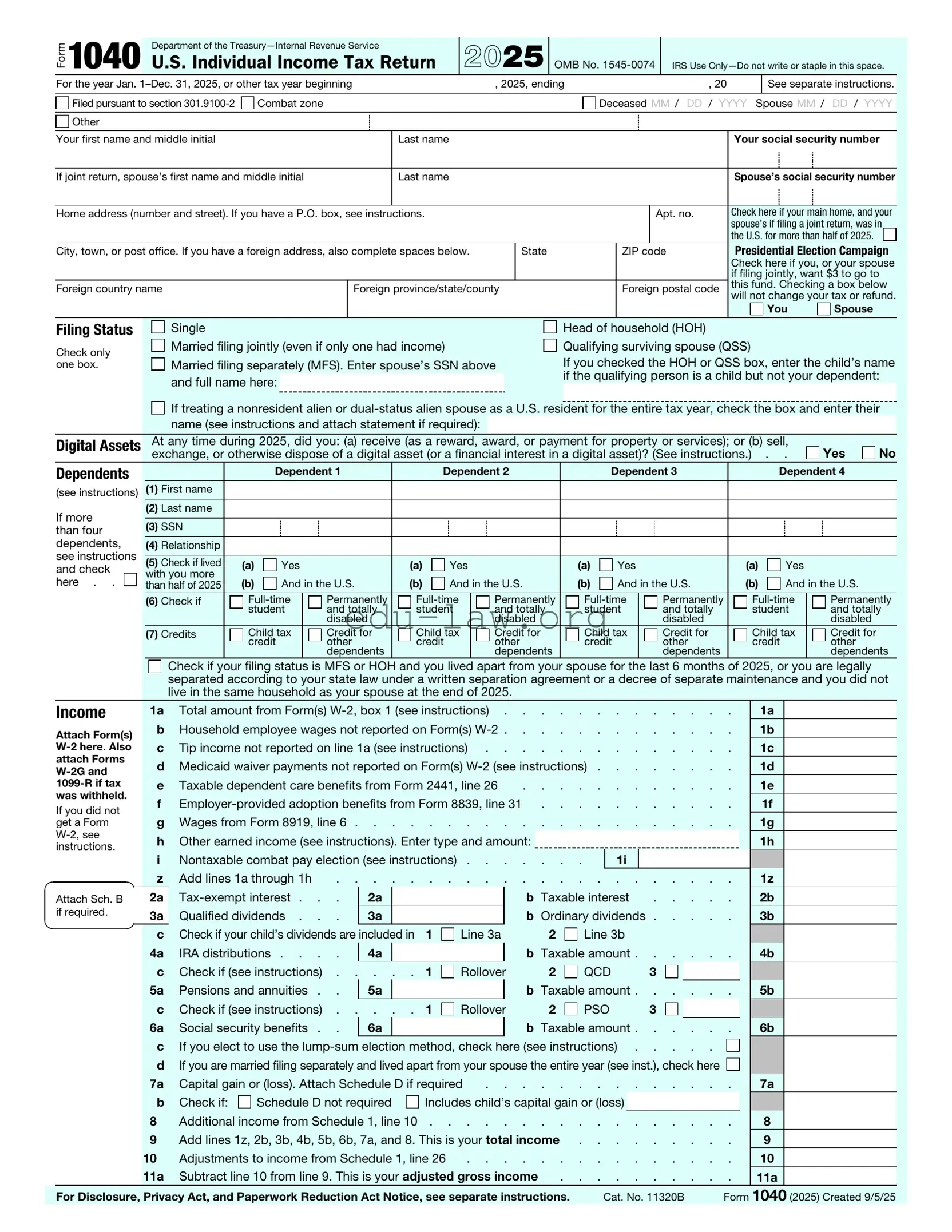
The IRS 1040 form serves as a crucial document for individual taxpayers in the United States, playing a significant role in the annual tax filing process. This form allows individuals to report their income, claim deductions, and determine their tax liability or refund. It accommodates various income types, including wages, dividends, and capital gains. Additionally, the 1040 form offers taxpayers the opportunity to take advantage of credits that can reduce their tax burden, such as the Earned Income Tax Credit and the Child Tax Credit. As taxpayers navigate through the form, they will encounter sections dedicated to adjustments to income, standard or itemized deductions, and the calculation of tax owed. Understanding the nuances of the 1040 form is essential for ensuring compliance with tax laws and maximizing potential refunds. Given the complexities of tax regulations, timely and accurate completion of this form can significantly impact an individual’s financial standing. Therefore, familiarity with the 1040 form is not only beneficial but necessary for effective tax management.

Form1040 |
Department of the |
2025 |
|
|
|
|
|
|
|
|
|
|
|
|
|
|
|
|||||||||||
U.S. Individual Income Tax Return |
OMB No. |
IRS Use |
||||||||||||||||||||||||||
|
For the year Jan. |
|
|
, 2025, ending |
, 20 |
|
|
|
See separate instructions. |
|
||||||||||||||||||
|
|
|
|
|
|
|
|
|
|
|
|
|
|
|
|
|
|
|
|
|
|
|
|
|
|
|
||
|
Filed pursuant to section |
Combat zone |
|
|
|
|
|
|
|
|
Deceased |
MM / DD |
/ YYYY |
|
Spouse |
MM / |
DD / YYYY |
|
||||||||||
|
|
|
|
|
|
|
|
|
|
|
|
|
|
|
|
|
|
|
|
|
|
|
|
|
|
|
|
|
|
Other |
|
|
|
|
|
|
|
|
|
|
|
|
|
|
|
|
|
|
|
|
|
|
|
|
|
|
|
|
Your first name and middle initial |
|
|
|
|
Last name |
|
|
|
|
|
|
|
|
|
|
Your social security number |
|
||||||||||
|
|
|
|
|
|
|
|
|
|
|
|
|
|
|
|
|
|
|
|
|
|
|||||||
|
If joint return, spouse’s first name and middle initial |
|
Last name |
|
|
|
|
|
|
|
|
|
|
Spouse’s social security number |
|
|||||||||||||
|
|
|
|
|
|
|
|
|
|
|
|
|
|
|
|
|
|
|
|
|||||||||
|
Home address (number and street). If you have a P.O. box, see instructions. |
|
|
|
|
|
|
|
Apt. no. |
|
Check here if your main home, and your |
|||||||||||||||||
|
|
|
|
|
|
|
|
|
|
|
|
|
|
|
|
|
|
|
|
spouse’s if filing a joint return, was in |
||||||||
|
|
|
|
|
|
|
|
|
|
|
|
|
|
|
|
|
|
|
|
the U.S. for more than half of 2025. |
|
|
||||||
|
|
|
|
|
|
|
|
|
|
|
|
|
|
|
|
|
|
|
|
|
|
|
|
|
|
|
|
|
|
City, town, or post office. If you have a foreign address, also complete spaces below. |
State |
|
|
ZIP code |
|
Presidential Election Campaign |
|
||||||||||||||||||||
|
|
|
|
|
|
|
|
|
|
|
|
|
|
|
|
|
|
|
|
Check here if you, or your spouse |
||||||||
|
|
|
|
|
|
|
|
|
|
|
|
|
|
|
|
|
|
|
|
if filing jointly, want $3 to go to |
||||||||
|
Foreign country name |
|
|
|
Foreign province/state/county |
|
|
|
|
Foreign postal code |
this fund. Checking a box below |
|||||||||||||||||
|
|
|
|
|
|
|
|
will not change your tax or refund. |
||||||||||||||||||||
|
|
|
|
|
|
|
|
|
|
|
|
|
|
|
|
|
|
|
|
|||||||||
|
|
|
|
|
|
|
|
|
|
|
|
|
|
|
|
|
|
|
|
|
|
|
You |
|
Spouse |
|||
|
|
|
|
|
|
|
|
|
|
|
|
|
|
|
|
|
|
|
|
|
|
|
|
|
|
|
|
|
|
Filing Status |
|
Single |
|
|
|
|
|
|
|
|
|
|
Head of household (HOH) |
|
|
|
|
|
|
|
|
|
|
||||
|
|
|
|
|
|
|
|
|
|
|
|
|
|
|
|
|
|
|
|
|
|
|||||||
|
|
|
|
|
|
|
|
|
|
|
|
|
|
|
|
|
|
|
|
|
|
|||||||
|
Check only |
|
Married filing jointly (even if only one had income) |
|
|
|
|
|
Qualifying surviving spouse (QSS) |
|
|
|
|
|
|
|
||||||||||||
|
|
|
|
|
|
|
|
|
|
|
|
|
If you checked the HOH or QSS box, enter the child’s name |
|||||||||||||||
|
one box. |
|
Married filing separately (MFS). Enter spouse’s SSN above |
|
|
|
||||||||||||||||||||||
|
|
|
|
and full name here: |
|
|
|
|
|
|
|
|
|
if the qualifying person is a child but not your dependent: |
||||||||||||||
|
|
|
|
|
|
|
|
|
|
|
|
|||||||||||||||||
|
|
|
|
|
|
|
|
|
|
|
|
|
|
|
|
|
|
|
|
|
|
|
|
|
|
|||
|
|
|
|
|
|
|
|
|
|
|
|
|
|
|
|
|
|
|
|
|
|
|
|
|
|
|
|
|
If treating a nonresident alien or
Digital Assets |
At any time during 2025, did you: (a) receive (as a reward, award, or payment for property or services); or (b) sell, |
|
Yes |
|
No |
|
|
||||
|
exchange, or otherwise dispose of a digital asset (or a financial interest in a digital asset)? (See instructions.) . . |
|
|
Dependents
(see instructions)
If more than four dependents, see instructions and check here . .
Dependent 1 |
Dependent 2 |
Dependent 3 |
Dependent 4 |
(1)First name
(2)Last name
(3) SSN
(4)Relationship
(5) |
Check if lived |
|
|
|
|
|
|
|
|
|
|
|
|
|
|
|
|
|
|
|
|
|
|
|
|
|
|
|
|
(a) |
|
Yes |
|
|
(a) |
|
Yes |
|
|
(a) |
|
Yes |
|
|
(a) |
|
Yes |
|
|
||||||||||
with you more |
(b) |
|
And in the U.S. |
(b) |
|
And in the U.S. |
(b) |
|
And in the U.S. |
(b) |
|
And in the U.S. |
|||||||||||||||||
than half of 2025 |
|
|
|
|
|||||||||||||||||||||||||
|
|
|
|
|
|
|
|
|
|
|
|
|
|
|
|
|
|
|
|
|
|
||||||||
(6) |
Check if |
|
|
|
Permanently |
|
|
|
Permanently |
|
|
|
Permanently |
|
|
|
Permanently |
||||||||||||
|
|
|
|
|
|
|
|
||||||||||||||||||||||
|
|
|
student |
|
|
and totally |
|
student |
|
|
and totally |
|
student |
|
|
and totally |
|
student |
|
|
and totally |
||||||||
|
|
|
|
|
|
|
|
|
|
||||||||||||||||||||
|
|
|
|
|
|
|
|
disabled |
|
|
|
|
|
|
disabled |
|
|
|
|
|
|
disabled |
|
|
|
|
|
|
disabled |
(7) |
Credits |
|
Child tax |
|
|
Credit for |
|
Child tax |
|
|
Credit for |
|
Child tax |
|
|
Credit for |
|
Child tax |
|
|
Credit for |
||||||||
|
|
|
|
|
|
|
|
||||||||||||||||||||||
|
|
|
credit |
|
|
|
other |
|
credit |
|
|
|
other |
|
credit |
|
|
|
other |
|
credit |
|
|
|
other |
||||
|
|
|
|
|
|
|
|
|
|
|
|
|
|
|
|
|
|
||||||||||||
|
|
|
|
|
|
|
|
dependents |
|
|
|
|
|
|
dependents |
|
|
|
|
|
|
dependents |
|
|
|
|
|
|
dependents |
Check if your filing status is MFS or HOH and you lived apart from your spouse for the last 6 months of 2025, or you are legally separated according to your state law under a written separation agreement or a decree of separate maintenance and you did not live in the same household as your spouse at the end of 2025.
|
|
Income |
1a |
Total amount from Form(s) |
. . . . |
. |
|
1a |
|
|
|||||||||||||||||||||||||||||
|
|
Attach Form(s) |
b |
Household employee wages not reported on Form(s) |
. . . . |
. |
|
1b |
|
|
|||||||||||||||||||||||||||||
|
|
c |
|
|
|
|
|
|
|
|
|
|
|
|
|
|
|
|
|
|
|
|
|
|
|
|
|
|
|
|
|
|
|
1c |
|
|
|||
|
|
Tip income not reported on line 1a (see instructions) |
. . . . |
. |
|
|
|
||||||||||||||||||||||||||||||||
|
|
attach Forms |
|
|
|
|
|
|
|
|
|
|
|
|
|
|
|
|
|
|
|
|
|
|
|
|
|
|
|
|
|
|
|
|
|
|
|
||
|
|
d |
Medicaid waiver payments not reported on Form(s) |
. . . . |
. |
|
1d |
|
|
||||||||||||||||||||||||||||||
|
|
|
|
|
|||||||||||||||||||||||||||||||||||
|
|
e |
Taxable dependent care benefits from Form 2441, line 26 |
. . . . . . . |
|
. . . . |
. |
|
1e |
|
|
||||||||||||||||||||||||||||
|
|
was withheld. |
|
|
|
|
|
|
|
|
|
|
|
|
|
|
|
|
|
|
|
|
|
|
|
|
|
|
|
|
|
|
|
|
|
|
|
||
|
|
f |
. . . . |
. |
|
1f |
|
|
|||||||||||||||||||||||||||||||
|
|
If you did not |
|
|
|
||||||||||||||||||||||||||||||||||
|
|
g |
Wages from Form 8919, line 6 |
. . . . |
. |
|
1g |
|
|
||||||||||||||||||||||||||||||
|
|
get a Form |
|
|
|
||||||||||||||||||||||||||||||||||
|
|
|
|
|
|
|
|
|
|
|
|
|
|
|
|
|
|
|
|
|
|
|
|
|
|
|
|
|
|
|
|
|
|
|
|
|
|||
|
|
h |
Other earned income (see instructions). Enter type and amount: |
|
|
|
|
|
|
|
|
|
|
|
|
|
|
|
|
|
1h |
|
|
||||||||||||||||
|
|
instructions. |
|
|
|
|
|
|
|
|
|
|
|
|
|
|
|
|
|
|
|
||||||||||||||||||
|
|
i |
Nontaxable combat pay election (see instructions) . . . |
. . . . |
|
1i |
|
|
|
|
|
|
|
|
|
|
|
|
|||||||||||||||||||||
|
|
|
|
|
|
|
|
|
|
|
|
|
|
|
|
|
|
||||||||||||||||||||||
|
|
|
|
|
z |
Add lines 1a through 1h |
. . . . . . . . . . . . . . . . . |
|
. . . . |
. |
|
1z |
|
|
|||||||||||||||||||||||||
|
|
|
|
|
|
|
|
|
|||||||||||||||||||||||||||||||
|
|
Attach Sch. B |
|
2a |
. |
|
2a |
|
|
|
|
|
|
|
b Taxable interest |
. . . . |
. |
|
2b |
|
|
||||||||||||||||||
|
|
if required. |
3a |
Qualified dividends . . |
. |
|
3a |
|
|
|
|
|
|
|
b Ordinary dividends |
. . . . |
. |
|
3b |
|
|
||||||||||||||||||
|
|
|
|
|
|
|
|
|
|
|
|
|
|
|
|
|
|
|
|
|
|
|
|
|
|
|
|
|
|
|
|
|
|
||||||
|
|
|
|
|
c |
Check if your child’s dividends are included in |
1 |
|
Line 3a |
|
|
2 |
|
|
Line 3b |
|
|
|
|
|
|
|
|
|
|
|
|||||||||||||
|
|
|
|
|
|
|
|
|
|
|
|
|
|
|
|
|
|
|
|
|
|
|
|
|
|
|
|
|
|
|
|||||||||
|
|
|
|
|
4a |
IRA distributions . . . |
. |
|
4a |
|
|
|
|
|
|
|
b Taxable amount . |
. . . . |
. |
|
4b |
|
|
||||||||||||||||
|
|
|
|
|
|
|
|
|
|
|
|
|
|
|
|
|
|
|
|
|
|
|
|
|
|
|
|
|
|
|
|
|
|
|
|
|
|
|
|
|
|
|
|
|
c |
Check if (see instructions) |
. |
. . . . |
1 |
|
Rollover |
|
|
2 |
|
|
QCD |
3 |
|
|
|
|
|
|
|
|
|
|
|||||||||||
|
|
|
|
|
|
|
|
|
|
|
|
|
|
|
|
|
|
|
|
|
|
|
|
|
|
|
|
|
|
||||||||||
|
|
|
|
|
5a |
Pensions and annuities . |
. |
|
5a |
|
|
|
|
|
|
|
b Taxable amount . |
. . . . |
. |
|
5b |
|
|
||||||||||||||||
|
|
|
|
|
|
|
|
|
|
|
|
|
|
|
|
|
|
|
|
|
|
|
|
|
|
|
|
|
|
|
|
|
|
|
|
|
|
|
|
|
|
|
|
|
c |
Check if (see instructions) |
. |
. . . . |
1 |
|
Rollover |
|
|
2 |
|
|
PSO |
3 |
|
|
|
|
|
|
|
|
|
|
|||||||||||
|
|
|
|
|
|
|
|
|
|
|
|
|
|
|
|
|
|
|
|
|
|
|
|
|
|
|
|
|
|
||||||||||
|
|
|
|
|
6a |
Social security benefits . |
. |
|
6a |
|
|
|
|
|
|
|
b Taxable amount . |
. . . . |
. |
|
6b |
|
|
||||||||||||||||
|
|
|
|
|
c |
If you elect to use the |
|
|
|
|
|
|
|||||||||||||||||||||||||||
|
|
|
|
|
d |
If you are married filing separately and lived apart from your spouse the entire year (see inst.), check here |
|
|
|
|
|
|
|||||||||||||||||||||||||||
|
|
|
|
|
|
|
|
|
|
|
|||||||||||||||||||||||||||||
|
|
|
|
|
7a |
Capital gain or (loss). Attach Schedule D if required |
. . . . . . . . . |
|
. . . . |
. |
|
7a |
|
|
|||||||||||||||||||||||||
|
|
|
|
|
b |
Check if: |
|
Schedule D not required |
|
Includes child’s capital gain or (loss) |
|
|
|
|
|
|
|
|
|
|
|
|
|||||||||||||||||
|
|
|
|
|
|
|
|
|
|
|
|
|
|
|
|
|
|
||||||||||||||||||||||
|
|
|
|
|
|
|
|
|
|
|
|
|
|
|
|||||||||||||||||||||||||
|
|
|
|
|
8 |
Additional income from Schedule 1, line 10 |
. . . . |
. |
|
8 |
|
|
|||||||||||||||||||||||||||
|
|
|
|
|
9 |
Add lines 1z, 2b, 3b, 4b, 5b, 6b, 7a, and 8. This is your total income . . . . |
. . . . |
. |
|
9 |
|
|
|||||||||||||||||||||||||||
|
|
|
|
|
10 |
Adjustments to income from Schedule 1, line 26 |
. . . . |
. |
|
10 |
|
|
|||||||||||||||||||||||||||
|
|
|
|
|
11a |
Subtract line 10 from line 9. This is your adjusted gross income |
. . . . . |
|
. . . . |
. |
|
11a |
|
|
|||||||||||||||||||||||||
|
|
For Disclosure, Privacy Act, and Paperwork Reduction Act Notice, see separate instructions. |
Cat. No. 11320B |
Form |
1040 |
(2025) Created 9/5/25 |
|
||||||||||||||||||||||||||||||||
| Fact Name | Description |
|---|---|
| Purpose | The IRS 1040 form is used by individuals to file their annual income tax returns. |
| Filing Requirement | Individuals must file Form 1040 if their gross income exceeds a certain threshold, which varies by filing status and age. |
| Filing Deadline | The standard deadline for submitting Form 1040 is April 15 of each year, unless it falls on a weekend or holiday. |
| State-Specific Forms | Many states have their own income tax forms, such as California's Form 540, governed by the California Revenue and Taxation Code. |
| Tax Credits | Form 1040 allows taxpayers to claim various tax credits, which can reduce their overall tax liability. |
| Filing Options | Taxpayers can file Form 1040 electronically or by mailing a paper copy to the IRS. |
| Schedule Attachments | Additional schedules may need to be attached to Form 1040 for reporting specific types of income or deductions. |
| Changes Over Time | The IRS periodically updates Form 1040, including changes to tax laws and filing requirements. |
Completing the IRS 1040 form is an essential step in filing your federal income tax return. Following these instructions will help ensure that you fill out the form correctly and accurately. After completing the form, you will submit it to the IRS, which will process your tax return and determine any tax obligations or refunds.
Once the form is completed, review it carefully to ensure all information is accurate. A well-prepared return can help prevent delays in processing and ensure that you receive any refund promptly.
What is the IRS 1040 form?
The IRS 1040 form is the standard individual income tax return form used by U.S. taxpayers to report their annual income, claim tax deductions, and calculate their tax liability. It is essential for filing federal income taxes and is typically due on April 15 each year.
Who needs to file a 1040 form?
Most U.S. citizens and residents who earn income must file a 1040 form. This includes individuals who are self-employed, have wages, or receive other forms of income. There are specific income thresholds that determine if you must file, which can vary based on your filing status, age, and type of income.
What are the different versions of the 1040 form?
There are several versions of the 1040 form: the standard 1040, the 1040-SR for seniors, and the 1040-NR for non-resident aliens. Each version caters to different taxpayer situations. The 1040-SR is designed for individuals aged 65 and older, providing larger print and a simpler layout.
What information do I need to complete the 1040 form?
To complete the 1040 form, gather your personal information, including your Social Security number, filing status, and dependent information. You will also need documentation of your income, such as W-2s and 1099 forms, as well as records of any deductions or credits you plan to claim.
How do I file the 1040 form?
You can file the 1040 form electronically using tax software or through a tax professional. Alternatively, you can print the form and mail it to the IRS. Ensure that you follow the instructions carefully and include any required schedules or attachments.
What are the deadlines for filing the 1040 form?
The deadline for filing the 1040 form is typically April 15. If this date falls on a weekend or holiday, the deadline may be extended. You can also request an extension to file, but any taxes owed must still be paid by the original deadline to avoid penalties.
What happens if I make a mistake on my 1040 form?
If you discover an error after filing, you can file an amended return using Form 1040-X. This form allows you to correct mistakes or change your filing status, income, or deductions. Be sure to follow the instructions carefully to avoid further issues.
Where can I find help with my 1040 form?
For assistance, you can visit the IRS website, which offers resources and guidance for completing the 1040 form. Additionally, consider consulting a tax professional or using tax preparation software for personalized help. Many community organizations also provide free tax assistance during tax season.
Failing to double-check personal information. Mistakes in your name, Social Security number, or address can delay processing.
Omitting income sources. Ensure all income, including freelance work or side jobs, is reported. Missing income can lead to penalties.
Incorrectly claiming deductions or credits. Review eligibility requirements. Claiming ineligible deductions can trigger audits.
Not signing and dating the form. Both signatures are necessary for processing. A missing signature will result in delays.
Using the wrong filing status. Choose the status that accurately reflects your situation. An incorrect status can affect your tax rate and deductions.
Neglecting to include all necessary forms. Attach all relevant schedules and forms to avoid processing issues.
Filing late without an extension. If you miss the deadline, you may face penalties and interest on any taxes owed.
When filing your taxes, the IRS 1040 form is a crucial document, but it is often accompanied by several other forms and documents that provide additional information or support your claims. Below is a list of some commonly used forms that you may need to consider when preparing your tax return.
Understanding these forms and documents can significantly ease the tax filing process. Each one serves a specific purpose, ensuring that your tax return is complete and accurate. Taking the time to gather the necessary paperwork will help prevent delays and potential issues with the IRS.
The IRS Form 1040 is similar to the IRS Form 1040A, which is a simplified version of the standard 1040 form. Both forms serve the purpose of reporting individual income to the IRS, but the 1040A is designed for taxpayers with straightforward financial situations. For instance, it allows for fewer deductions and credits, making it easier to fill out. Taxpayers who qualify for the 1040A typically have income from wages, salaries, and pensions, and do not itemize deductions.
Another document similar to the IRS Form 1040 is the IRS Form 1040EZ. This form was created for individuals with very simple tax situations, such as single filers or married couples without dependents. Like the 1040 and 1040A, it is used to report income, but it has even fewer lines and options, making it the easiest form to complete. However, it does not allow for itemized deductions or certain credits, which limits its use for many taxpayers.
The IRS Form 1040X is an amendment form that allows taxpayers to correct errors on their previously filed 1040, 1040A, or 1040EZ. This document is crucial for ensuring that any mistakes in income reporting, deductions, or credits can be rectified. It requires taxpayers to provide information about the original filing and the changes being made, thus helping maintain accurate tax records.
Form 1040NR is used by non-resident aliens to report their income. Similar to the standard 1040, it captures various types of income, but it is tailored specifically for individuals who do not meet the criteria for residency in the United States. Non-residents must adhere to different tax rules, making this form essential for compliance with U.S. tax laws.
The IRS Form 4868 is an application for an automatic extension of time to file a tax return. While it does not serve the same purpose as the 1040, it is related in that it allows taxpayers to extend their filing deadline. This form must be filed by the original due date of the return, providing additional time to gather necessary information without incurring penalties for late filing.
Form 1040-ES is used for estimating and paying quarterly taxes for self-employed individuals or those with significant non-wage income. Similar to the 1040, it helps taxpayers report their income, but it focuses on estimated tax payments throughout the year. This is particularly important for individuals who do not have taxes withheld from their income, as it helps avoid underpayment penalties.
The IRS Form W-2 is a wage and tax statement provided by employers to their employees. While it is not a tax return, it plays a critical role in the 1040 process. The information reported on the W-2, including wages earned and taxes withheld, is necessary for completing the 1040 accurately. Without this document, taxpayers would struggle to report their income correctly.
Form 1099 is another document related to the IRS Form 1040. It reports various types of income other than wages, such as freelance earnings, interest, and dividends. Taxpayers who receive a 1099 must include this income on their 1040, making it essential for accurately reporting total earnings. The 1099 comes in various types, each serving a specific purpose in income reporting.
The IRS Form 8889 is used by individuals with Health Savings Accounts (HSAs) to report contributions and distributions. While it addresses a specific aspect of tax reporting, it is similar to the 1040 in that it impacts the overall tax situation. Taxpayers must include information from Form 8889 when completing their 1040 to ensure they receive any applicable tax benefits related to their HSAs.
Lastly, the IRS Form Schedule C is used by sole proprietors to report income or loss from a business. It is attached to the 1040 form and allows taxpayers to detail their business earnings and expenses. This document is essential for self-employed individuals, as it helps them calculate their net profit or loss, which directly affects their overall tax liability on the 1040.
Filling out the IRS 1040 form can be a daunting task, but following some essential guidelines can help ensure accuracy and compliance. Here’s a list of things you should and shouldn’t do when completing this important tax document.
Things You Should Do:
Things You Shouldn’t Do:
By adhering to these guidelines, you can make the process smoother and ensure that your IRS 1040 form is completed correctly. Remember, accuracy is key to avoiding future issues with your taxes.
The IRS 1040 form is a crucial document for filing your annual income tax return. However, many people hold misconceptions about it. Here are eight common misunderstandings:
Not everyone needs to file a 1040. Some individuals may qualify to use simpler forms, like the 1040A or 1040EZ, depending on their income and tax situation.
The 1040 form is for anyone who needs to report income, regardless of how much they earn. Even those with low income may need to file to receive credits or refunds.
Many people can file their 1040 electronically. E-filing is often faster and can lead to quicker refunds.
While most income must be reported, some types, like certain gifts or inheritances, do not need to be included on your tax return.
While it's true that late filings can incur penalties, if you file for an extension, you can avoid these penalties as long as you pay any taxes owed by the original deadline.
You can amend your 1040 form if you discover an error. The IRS allows you to file a Form 1040-X to correct any mistakes.
Deductions can vary based on individual circumstances. Factors like marital status, dependents, and specific expenses can affect which deductions you qualify for.
Filing a 1040 does not guarantee a refund. Your tax situation, including income and deductions, will determine whether you owe money or receive a refund.
Filling out the IRS 1040 form can be a straightforward process if you keep a few key points in mind. Here are some important takeaways to help you navigate the form efficiently.
By following these takeaways, you can simplify the process of completing your IRS 1040 form and ensure that you meet your tax obligations effectively.