In Iowa, the Transfer-on-Death Deed (TODD) serves as a valuable tool for property owners looking to streamline the transfer of real estate upon their passing. This form allows individuals to designate beneficiaries who will automatically receive ownership of the property without the need for probate, simplifying the process for loved ones during a difficult time. By completing and filing a TODD, property owners maintain full control over their assets while alive, ensuring that their wishes are honored after death. The form requires specific information, including the names of the beneficiaries and a legal description of the property, and must be signed and recorded with the county recorder's office to be valid. Understanding the nuances of the TODD can help individuals make informed decisions about their estate planning, providing peace of mind that their property will be transferred smoothly and according to their wishes.
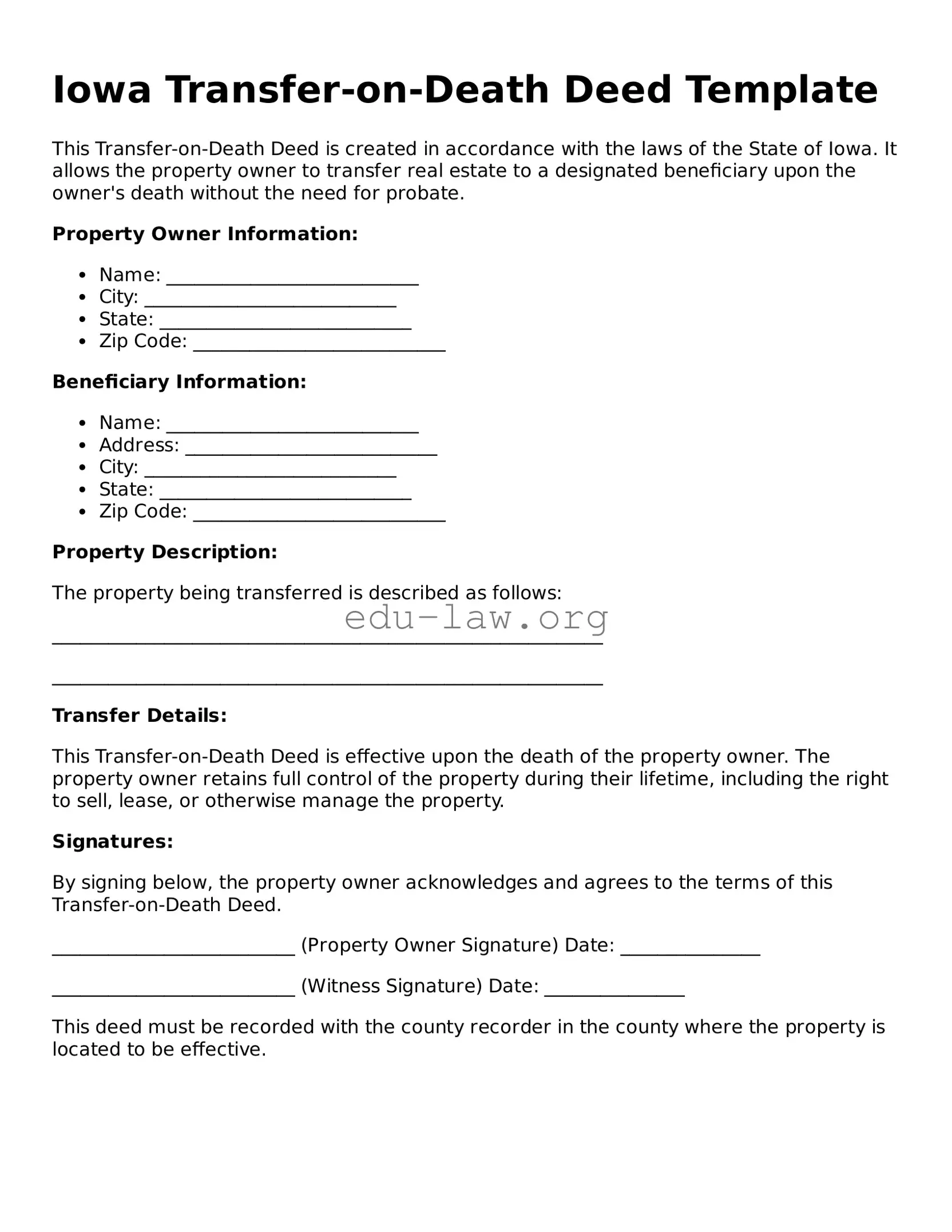
Iowa Transfer-on-Death Deed Template
This Transfer-on-Death Deed is created in accordance with the laws of the State of Iowa. It allows the property owner to transfer real estate to a designated beneficiary upon the owner's death without the need for probate.
Property Owner Information:
Beneficiary Information:
Property Description:
The property being transferred is described as follows:
___________________________________________________________
___________________________________________________________
Transfer Details:
This Transfer-on-Death Deed is effective upon the death of the property owner. The property owner retains full control of the property during their lifetime, including the right to sell, lease, or otherwise manage the property.
Signatures:
By signing below, the property owner acknowledges and agrees to the terms of this Transfer-on-Death Deed.
__________________________ (Property Owner Signature) Date: _______________
__________________________ (Witness Signature) Date: _______________
This deed must be recorded with the county recorder in the county where the property is located to be effective.
| Fact Name | Details |
|---|---|
| Purpose | The Iowa Transfer-on-Death Deed allows property owners to transfer real estate to a designated beneficiary upon their death without going through probate. |
| Governing Law | This deed is governed by Iowa Code § 614.28, which outlines the requirements and procedures for creating and executing the deed. |
| Eligibility | Any individual who owns real property in Iowa can create a Transfer-on-Death Deed to designate a beneficiary. |
| Revocation | The deed can be revoked at any time by the property owner, as long as the revocation is executed in accordance with Iowa law. |
| Execution Requirements | The deed must be signed by the property owner and notarized. It should then be recorded in the county where the property is located. |
Filling out the Iowa Transfer-on-Death Deed form is an important step in ensuring that your property is transferred according to your wishes after your passing. Once you have completed the form, it will need to be signed and filed with the appropriate county recorder's office to take effect.
What is a Transfer-on-Death Deed in Iowa?
A Transfer-on-Death Deed (TODD) in Iowa allows property owners to designate beneficiaries who will automatically receive the property upon the owner's death. This deed does not transfer ownership during the owner's lifetime, meaning the owner retains full control of the property until death. It can simplify the transfer process and avoid probate, making it easier for beneficiaries to inherit the property.
Who can use a Transfer-on-Death Deed in Iowa?
Any individual who owns real property in Iowa can utilize a Transfer-on-Death Deed. This includes homeowners, landowners, and individuals holding property in their name. However, the property must be solely owned by the individual, as joint ownership may require different considerations.
How do I complete a Transfer-on-Death Deed?
To complete a Transfer-on-Death Deed, the property owner must fill out the required form, which includes information such as the property description and the names of the beneficiaries. It is essential to sign the deed in the presence of a notary public. Once completed, the deed must be filed with the county recorder's office where the property is located to be legally effective.
Can I change or revoke a Transfer-on-Death Deed?
Yes, a Transfer-on-Death Deed can be changed or revoked at any time before the owner's death. To do this, the owner must create a new deed that either designates different beneficiaries or explicitly revokes the previous deed. The new deed must also be properly signed, notarized, and recorded to take effect.
What happens if a beneficiary predeceases the property owner?
If a beneficiary named in the Transfer-on-Death Deed passes away before the property owner, the interest typically does not pass to that beneficiary's heirs unless the deed specifies otherwise. It is advisable to include alternate beneficiaries to ensure the property transfers smoothly in such cases.
Are there any tax implications associated with a Transfer-on-Death Deed?
Generally, a Transfer-on-Death Deed does not trigger immediate tax consequences for the property owner. However, the beneficiaries may be responsible for property taxes once the property is transferred. It is recommended to consult a tax professional for specific guidance regarding potential tax implications.
Is legal assistance required to create a Transfer-on-Death Deed?
Failing to include the correct legal description of the property. This is crucial, as an inaccurate description can lead to complications in transferring ownership.
Not signing the deed in the presence of a notary public. A valid signature is essential for the deed to be legally recognized.
Omitting the name of the beneficiary or providing incorrect information. This can result in the property not being transferred as intended.
Not understanding the implications of a Transfer-on-Death Deed. Some individuals may not realize that this deed does not avoid probate for other assets.
Using outdated forms or templates. Laws and requirements can change, so it’s important to use the most current version of the form.
Neglecting to inform the beneficiary about the deed. It’s vital that the person intended to inherit the property is aware of their future ownership.
Not recording the deed with the appropriate county office. A deed must be filed to be effective; otherwise, it may not be recognized.
Failing to consult with a legal professional. Many people overlook the benefits of seeking advice, which can prevent mistakes and ensure the deed is completed correctly.
The Iowa Transfer-on-Death Deed form allows property owners to designate beneficiaries who will receive their property upon their death, avoiding the probate process. When utilizing this form, several other documents may also be necessary to ensure a smooth transfer of property and to address any related legal matters. Below is a list of commonly used forms and documents that often accompany the Transfer-on-Death Deed.
Understanding these documents can help ensure that the property transfer process is efficient and aligned with the property owner's wishes. It's essential to consult with a legal professional to ensure all necessary forms are completed correctly and filed appropriately.
The Iowa Transfer-on-Death Deed is similar to a will. Both documents allow individuals to express their wishes regarding the distribution of their property after they pass away. A will goes into effect upon death and must go through probate, while a Transfer-on-Death Deed allows for the direct transfer of property without the need for probate. This can simplify the process for heirs and may help avoid delays in transferring ownership.
When filling out the Iowa Transfer-on-Death Deed form, it's crucial to follow specific guidelines to ensure the process goes smoothly. Here are six important do's and don'ts:
Following these guidelines will help ensure that your Transfer-on-Death Deed is valid and effective. It is essential to pay attention to detail and act promptly.
Understanding the Iowa Transfer-on-Death Deed form can be tricky. Here are eight common misconceptions that people often have about this important legal document:
Many believe that the deed automatically transfers property as soon as the owner passes away. In reality, the transfer only occurs after the owner’s death and when all conditions of the deed are met.
Some think that property transferred via a Transfer-on-Death Deed must go through probate. However, this deed allows for a direct transfer to beneficiaries, avoiding the probate process entirely.
Not all properties qualify. The Transfer-on-Death Deed can only be used for real estate, not personal property like vehicles or bank accounts.
This is not true. The owner can revoke or change the deed at any time before their death, as long as they follow the proper legal procedures.
While it’s important to communicate with beneficiaries, their agreement is not required for the transfer to take effect upon the owner’s death.
Although a Transfer-on-Death Deed can simplify the transfer of specific property, it does not replace the need for a comprehensive will to address other assets and wishes.
This misconception overlooks the fact that anyone with real estate can benefit from a Transfer-on-Death Deed, regardless of their overall wealth.
While there are legal considerations, the process of creating and filing a Transfer-on-Death Deed can be straightforward with the right guidance.
Being informed about these misconceptions can help individuals make better decisions regarding their estate planning. It’s essential to consult with a legal professional to ensure all aspects are understood and properly handled.
Filling out and using the Iowa Transfer-on-Death Deed form is an important step for property owners who want to ensure their assets are passed on to their beneficiaries without going through probate. Here are some key takeaways to keep in mind: