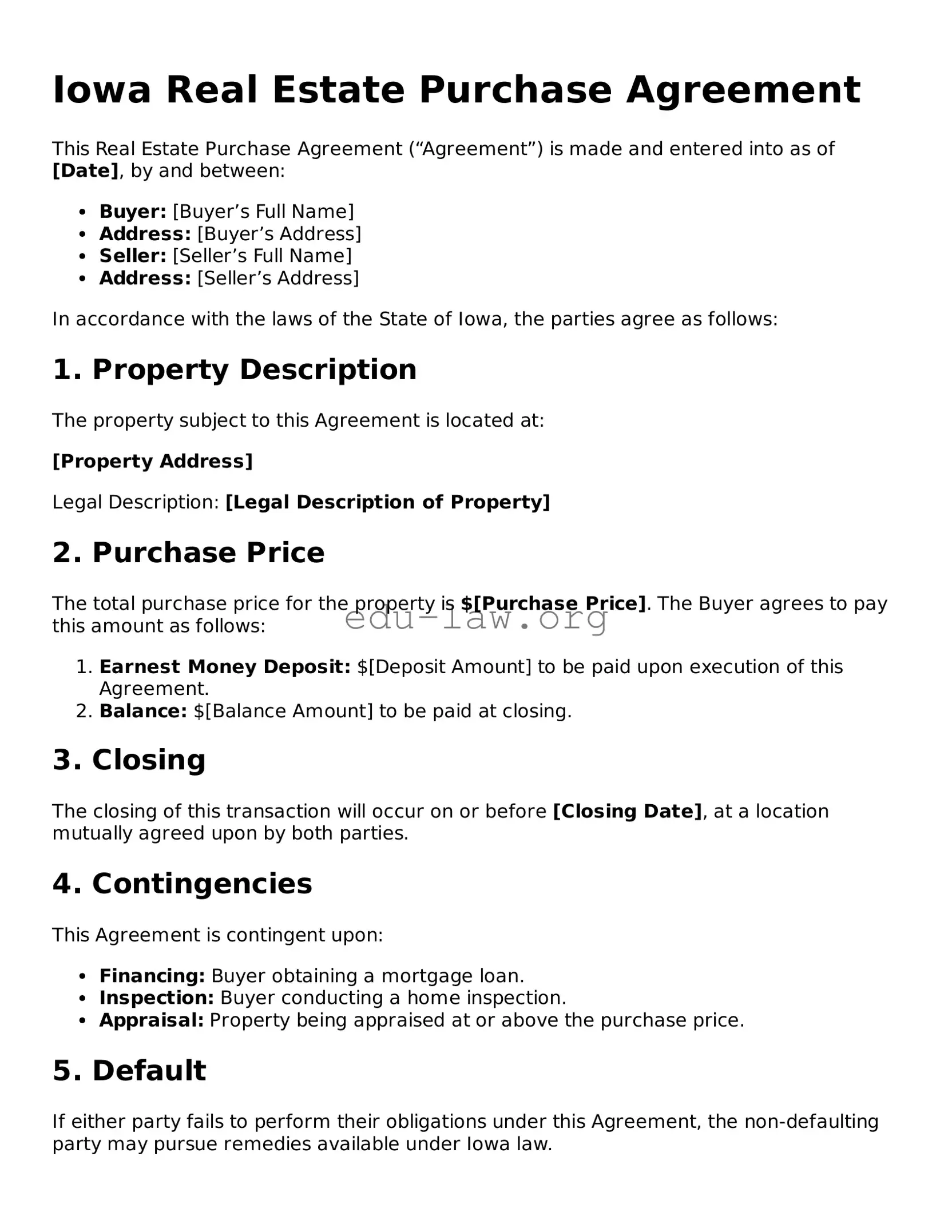
The Iowa Real Estate Purchase Agreement form is a crucial document for anyone looking to buy or sell property in the state. This form outlines the terms and conditions of the sale, ensuring that both parties understand their rights and obligations. Key aspects of the agreement include the purchase price, the description of the property, and the closing date. Additionally, it addresses contingencies, such as financing and inspections, which protect the interests of both buyers and sellers. The form also specifies any earnest money deposits, which show the buyer's commitment to the purchase. By clearly detailing these elements, the Iowa Real Estate Purchase Agreement helps facilitate a smoother transaction and minimizes potential disputes. Understanding this form is essential for anyone navigating the real estate market in Iowa.
Iowa Real Estate Purchase Agreement
This Real Estate Purchase Agreement (“Agreement”) is made and entered into as of [Date], by and between:
In accordance with the laws of the State of Iowa, the parties agree as follows:
1. Property Description
The property subject to this Agreement is located at:
[Property Address]
Legal Description: [Legal Description of Property]
2. Purchase Price
The total purchase price for the property is $[Purchase Price]. The Buyer agrees to pay this amount as follows:
3. Closing
The closing of this transaction will occur on or before [Closing Date], at a location mutually agreed upon by both parties.
4. Contingencies
This Agreement is contingent upon:
5. Default
If either party fails to perform their obligations under this Agreement, the non-defaulting party may pursue remedies available under Iowa law.
6. Governing Law
This Agreement shall be governed by the laws of the State of Iowa.
7. Signatures
By signing below, both parties acknowledge that they have read and understood this Agreement and agree to its terms.
__________________________
Buyer’s Signature
Date: [Date]
__________________________
Seller’s Signature
Date: [Date]
| Fact Name | Description |
|---|---|
| Governing Law | The Iowa Real Estate Purchase Agreement is governed by the laws of the State of Iowa. |
| Purpose | This form is used to outline the terms and conditions of a real estate transaction between a buyer and seller. |
| Parties Involved | The agreement typically includes the names and contact information of the buyer(s) and seller(s). |
| Property Description | A detailed description of the property being sold is required, including the address and legal description. |
| Purchase Price | The form specifies the purchase price and any deposit amount required to secure the agreement. |
| Contingencies | Buyers may include contingencies, such as financing, inspections, or sale of another property, which must be met for the sale to proceed. |
| Signatures | Both parties must sign the agreement to make it legally binding. Dates of signatures are also important. |
Once you have the Iowa Real Estate Purchase Agreement form in front of you, it’s essential to fill it out accurately to ensure a smooth transaction. This document outlines the terms of the sale between the buyer and the seller, and completing it correctly will help facilitate the next steps in the real estate process.
After completing the form, it is advisable to review all information for accuracy before submitting it to the appropriate parties. This will help ensure that the transaction proceeds without unnecessary delays.
What is the Iowa Real Estate Purchase Agreement form?
The Iowa Real Estate Purchase Agreement is a legal document used to outline the terms and conditions under which a buyer agrees to purchase real estate from a seller. This form helps ensure that both parties understand their rights and responsibilities throughout the transaction process.
Who should use the Iowa Real Estate Purchase Agreement?
This form is typically used by individuals or entities looking to buy or sell residential or commercial property in Iowa. Both buyers and sellers benefit from having a clear, written agreement that details the sale terms.
What key elements are included in the agreement?
The agreement generally includes important details such as the purchase price, property description, closing date, contingencies, and any disclosures required by law. It may also outline the responsibilities of both parties in the transaction.
Is the Iowa Real Estate Purchase Agreement legally binding?
Yes, once both parties sign the agreement, it becomes a legally binding contract. This means that both the buyer and seller are obligated to fulfill their respective duties as outlined in the document, provided that all legal requirements are met.
Can the agreement be modified after it is signed?
Yes, modifications can be made to the agreement, but both parties must agree to the changes. Any amendments should be documented in writing and signed by both the buyer and seller to ensure clarity and enforceability.
What happens if one party does not fulfill their obligations?
If either party fails to meet their obligations as stated in the agreement, the other party may have legal grounds to pursue remedies. This could include seeking damages or enforcing the contract through legal action, depending on the specific circumstances.
Are there any contingencies that can be included?
Yes, contingencies are often included in the agreement. Common contingencies may involve financing, home inspections, or the sale of the buyer's current home. These conditions must be met for the sale to proceed.
Is it necessary to have a lawyer review the agreement?
While it is not legally required to have a lawyer review the agreement, it is highly advisable. A legal expert can help ensure that the terms are fair, that all necessary provisions are included, and that your interests are protected throughout the transaction.
How can I obtain the Iowa Real Estate Purchase Agreement form?
The Iowa Real Estate Purchase Agreement form can typically be obtained from real estate agents, legal professionals, or online legal resources. It's important to use the most current version of the form to ensure compliance with state laws.
What should I do if I have questions about the agreement?
If you have questions about the Iowa Real Estate Purchase Agreement, consider consulting with a real estate agent or a lawyer. They can provide you with guidance tailored to your specific situation and help clarify any terms or conditions you may not understand.
Failing to provide accurate property descriptions. Buyers and sellers often overlook the importance of including the correct legal description of the property, which can lead to disputes later.
Not specifying the purchase price clearly. Ambiguities regarding the amount can create confusion and potential legal issues.
Omitting important contingencies. Buyers should include contingencies for financing, inspections, and other critical factors to protect their interests.
Neglecting to include deadlines. Missing deadlines for inspections, financing, or closing can jeopardize the transaction.
Using incorrect or outdated forms. It is essential to use the most current version of the Iowa Real Estate Purchase Agreement to ensure compliance with state laws.
Not reviewing the terms of the agreement thoroughly. Both parties should read the entire document to understand their rights and obligations.
Ignoring the need for signatures. All parties involved must sign the agreement for it to be legally binding.
Failing to disclose known issues with the property. Sellers have a legal obligation to disclose material defects, and failure to do so can lead to legal repercussions.
Overlooking the importance of legal counsel. Many individuals do not seek advice from a qualified attorney, which can result in costly mistakes.
When engaging in a real estate transaction in Iowa, several documents accompany the Real Estate Purchase Agreement to ensure a smooth process. Each document serves a specific purpose and provides essential information to both buyers and sellers.
Understanding these documents is crucial for anyone involved in a real estate transaction in Iowa. Each plays a vital role in protecting the interests of both buyers and sellers, ensuring clarity and compliance throughout the process.
The Iowa Real Estate Purchase Agreement is similar to the Purchase and Sale Agreement used in many states. Both documents outline the terms of a real estate transaction, including the purchase price, financing details, and closing date. They serve as a legally binding contract between the buyer and seller, ensuring that both parties understand their rights and obligations throughout the transaction process.
Another document that shares similarities is the Residential Purchase Agreement. This form is specifically tailored for residential properties and includes details such as contingencies for inspections and financing. Like the Iowa Real Estate Purchase Agreement, it protects the interests of both the buyer and seller while providing a clear framework for the sale.
The Commercial Purchase Agreement is also comparable. While it focuses on commercial properties, the structure and purpose remain the same. It outlines the sale terms, including price, due diligence periods, and any specific conditions related to the commercial property, ensuring both parties are on the same page.
The Listing Agreement, although slightly different in purpose, is related. This document is used by sellers to hire real estate agents to market their property. It includes terms of the agent's commission and the duration of the agreement, setting the stage for the eventual sale that the Purchase Agreement will finalize.
The Offer to Purchase is another similar document. It is often the initial proposal made by a buyer to a seller, outlining the terms they are willing to accept. Once both parties agree, this document can lead to the creation of a more detailed Purchase Agreement, similar to the Iowa form.
The Counteroffer is closely related as well. When a seller does not accept the original Offer to Purchase, they may respond with a Counteroffer. This document modifies the terms and can lead to further negotiations, eventually resulting in a Purchase Agreement that reflects the agreed-upon terms.
The Lease Purchase Agreement is another document with similarities. This agreement allows a tenant to rent a property with the option to buy it later. It combines elements of leasing and purchasing, much like the Iowa Real Estate Purchase Agreement, which focuses on the sale of the property.
The Seller Disclosure Statement is also relevant. While it does not serve as a contract, it is often used alongside the Purchase Agreement. This document requires sellers to disclose any known issues with the property, ensuring buyers are informed before finalizing their purchase.
Lastly, the Title Report is a crucial document in the real estate process. It outlines the legal ownership of the property and any claims against it. While it is not a contract like the Iowa Real Estate Purchase Agreement, it provides essential information that impacts the sale and protects the buyer's investment.
When filling out the Iowa Real Estate Purchase Agreement form, it’s important to keep a few key points in mind. Here’s a list of things you should and shouldn’t do:
Following these guidelines will help make the process smoother and more efficient.
The Iowa Real Estate Purchase Agreement form is a crucial document in real estate transactions, but several misconceptions surround its use and purpose. Below are six common misconceptions:
This is incorrect. The Iowa Real Estate Purchase Agreement is required for all real estate transactions, regardless of the property's value. This ensures that all parties are protected and that the terms are clearly outlined.
While the agreement is binding once signed, it can be amended if both parties agree to the changes. It is essential to document any modifications in writing to avoid disputes later.
Signing the purchase agreement does not guarantee that the sale will be completed. Contingencies, such as financing or inspections, can affect the transaction's outcome.
This is a misconception. Buyers and sellers can complete the form themselves, although it is often beneficial to seek professional assistance to ensure all necessary details are included.
The Iowa Real Estate Purchase Agreement can vary depending on the type of property being sold, such as residential, commercial, or agricultural. Each type may have specific clauses that need to be addressed.
This is not necessarily true. Buyers can withdraw from the agreement if certain contingencies are not met, such as failing to secure financing or unsatisfactory inspection results.
When filling out and using the Iowa Real Estate Purchase Agreement form, keep these key takeaways in mind:
By following these guidelines, you can navigate the Iowa Real Estate Purchase Agreement form more effectively and ensure a smoother transaction process.