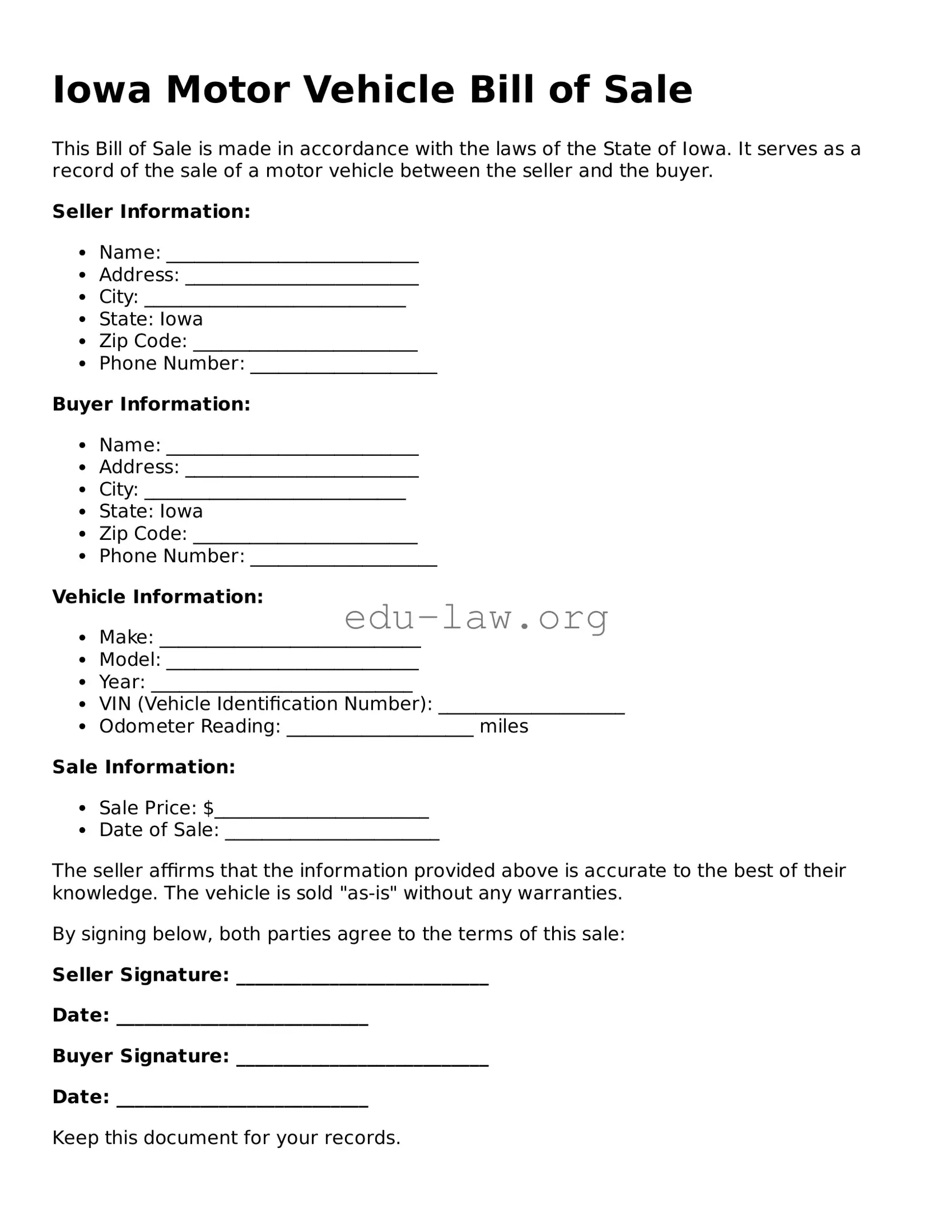
When buying or selling a vehicle in Iowa, having the right paperwork is essential to ensure a smooth transaction. One of the key documents involved in this process is the Iowa Motor Vehicle Bill of Sale form. This form serves as a legal record of the sale, capturing important details such as the vehicle's make, model, year, and Vehicle Identification Number (VIN). It also includes information about the buyer and seller, ensuring both parties are clearly identified. The Bill of Sale not only protects the interests of both the buyer and seller but also provides proof of ownership transfer, which is crucial for vehicle registration. Additionally, the form may outline any conditions of the sale, such as whether the vehicle is sold "as is" or if there are warranties involved. Understanding this document can help you navigate the buying or selling process with confidence, making it easier to complete the transaction legally and efficiently.
Iowa Motor Vehicle Bill of Sale
This Bill of Sale is made in accordance with the laws of the State of Iowa. It serves as a record of the sale of a motor vehicle between the seller and the buyer.
Seller Information:
Buyer Information:
Vehicle Information:
Sale Information:
The seller affirms that the information provided above is accurate to the best of their knowledge. The vehicle is sold "as-is" without any warranties.
By signing below, both parties agree to the terms of this sale:
Seller Signature: ___________________________
Date: ___________________________
Buyer Signature: ___________________________
Date: ___________________________
Keep this document for your records.
| Fact Name | Description |
|---|---|
| Purpose | The Iowa Motor Vehicle Bill of Sale form serves as a legal document that records the sale of a vehicle between a buyer and a seller. |
| Requirements | This form must include details such as the vehicle's make, model, year, VIN (Vehicle Identification Number), and the sale price. |
| Governing Law | The form is governed by Iowa Code § 321.71, which outlines the requirements for the sale and transfer of motor vehicles in the state. |
| Signatures | Both the buyer and seller must sign the form to validate the transaction and ensure that both parties agree to the terms of the sale. |
Once you have the Iowa Motor Vehicle Bill of Sale form in hand, you will need to complete it accurately to ensure a smooth transfer of ownership. After filling out the form, both the seller and buyer should keep a copy for their records.
What is a Motor Vehicle Bill of Sale in Iowa?
A Motor Vehicle Bill of Sale is a legal document that serves as proof of the sale and transfer of ownership of a vehicle. In Iowa, this form is essential for both the buyer and the seller. It includes important details such as the vehicle's make, model, year, Vehicle Identification Number (VIN), and the sale price. This document protects both parties by providing a record of the transaction, which can be useful for future reference or in case of disputes.
Do I need a Bill of Sale to sell a vehicle in Iowa?
While a Bill of Sale is not legally required to sell a vehicle in Iowa, it is highly recommended. Having this document can simplify the transfer process and provide proof of the transaction. It can also help clarify any potential misunderstandings regarding the sale. If the buyer needs to register the vehicle, they may require a Bill of Sale to complete the registration process with the Iowa Department of Transportation.
What information should be included in the Iowa Bill of Sale?
The Iowa Bill of Sale should include several key pieces of information. First, it should identify the seller and buyer, including their names and addresses. Next, it should detail the vehicle being sold, including the make, model, year, and VIN. The sale price must also be documented. Additionally, both parties should sign and date the form to validate the transaction. Including any additional terms or conditions of the sale can also be beneficial.
Where can I obtain an Iowa Motor Vehicle Bill of Sale form?
You can obtain an Iowa Motor Vehicle Bill of Sale form from various sources. Many local county treasurer's offices provide the form, and it may also be available online through the Iowa Department of Transportation's website. If you prefer, you can create a custom Bill of Sale using templates available online. Just ensure that all necessary information is included to make the document valid and effective for your transaction.
Failing to include the date of sale. It is crucial to document when the transaction took place, as this can affect the registration and title transfer process.
Not providing accurate vehicle information. Essential details such as the Vehicle Identification Number (VIN), make, model, and year must be correct to avoid future complications.
Omitting the purchase price. This figure is necessary for both the buyer and seller to establish the value of the transaction for tax purposes.
Neglecting to include the names and addresses of both the buyer and seller. Complete contact information helps ensure that both parties can be reached if needed.
Not signing the document. Both parties must sign the Bill of Sale to validate the transaction. A lack of signatures can lead to disputes later on.
Using incorrect or outdated forms. Always ensure that the most recent version of the Iowa Motor Vehicle Bill of Sale form is being used to avoid issues with the DMV.
Failing to provide a notarization if required. While not always necessary, certain transactions may need notarized signatures to be legally binding.
Not keeping a copy of the Bill of Sale. Both the buyer and seller should retain a copy for their records, as this document serves as proof of the transaction.
Ignoring state-specific requirements. Different states may have additional stipulations or forms that must be completed alongside the Bill of Sale.
When completing a vehicle transaction in Iowa, several documents may accompany the Motor Vehicle Bill of Sale. Each of these forms serves a specific purpose to ensure a smooth transfer of ownership. Below is a list of commonly used documents.
Having these documents ready can streamline the buying or selling process. Ensure all necessary paperwork is completed accurately to avoid any complications down the line.
The Iowa Motor Vehicle Bill of Sale form shares similarities with the Vehicle Title Transfer form. Both documents serve as proof of ownership transfer when a vehicle changes hands. The Vehicle Title Transfer form is typically required to officially register the vehicle in the new owner's name. Like the Bill of Sale, it includes essential information such as the vehicle identification number (VIN), make, model, and details about the buyer and seller. Both documents ensure that the transaction is documented, providing legal protection for both parties involved.
Another document akin to the Iowa Motor Vehicle Bill of Sale is the Odometer Disclosure Statement. This statement is often required during the sale of a vehicle to disclose the mileage at the time of sale. It helps prevent odometer fraud and provides transparency to the buyer. Similar to the Bill of Sale, it includes information about the buyer, seller, and vehicle. This document is crucial for establishing trust in the transaction and ensuring that both parties are aware of the vehicle's condition at the time of sale.
The Affidavit of Ownership is another document that resembles the Iowa Motor Vehicle Bill of Sale. This affidavit is often used when a vehicle is sold without a title, allowing the seller to declare ownership and facilitate the transfer. Like the Bill of Sale, it requires details about the vehicle and both parties involved. This document serves as a legal declaration of ownership, providing a means for buyers to obtain a title even when the original title is missing.
Lastly, the Purchase Agreement for a vehicle is similar in nature to the Iowa Motor Vehicle Bill of Sale. This agreement outlines the terms of the sale, including the purchase price, payment method, and any conditions agreed upon by the buyer and seller. While the Bill of Sale serves as proof of the transaction, the Purchase Agreement details the expectations and responsibilities of both parties. Together, they create a comprehensive record of the sale, safeguarding the interests of everyone involved.
When filling out the Iowa Motor Vehicle Bill of Sale form, it's important to pay attention to details. Here are some things to do and avoid.
Misconception 1: The Bill of Sale is not necessary for vehicle transactions.
Many individuals believe that a Bill of Sale is optional when buying or selling a vehicle. In reality, this document serves as a crucial record of the transaction. It provides proof of ownership transfer and can be important for tax purposes and future disputes.
Misconception 2: The Bill of Sale must be notarized to be valid.
Some people think that notarization is required for the Bill of Sale to be legally binding. However, in Iowa, notarization is not a mandatory step. While having a notary can add an extra layer of authenticity, the document is still valid without it.
Misconception 3: Only the seller needs to sign the Bill of Sale.
It is a common belief that only the seller's signature is necessary on the Bill of Sale. In fact, both the buyer and seller should sign the document. This ensures that both parties acknowledge the terms of the sale and helps prevent future disputes.
Misconception 4: The Bill of Sale is the same as the title transfer.
Some individuals confuse the Bill of Sale with the vehicle title. While both documents are important, they serve different purposes. The Bill of Sale records the transaction, whereas the title is the official document that proves ownership. Both must be completed to ensure a smooth transfer of ownership.
Here are some key takeaways about filling out and using the Iowa Motor Vehicle Bill of Sale form: