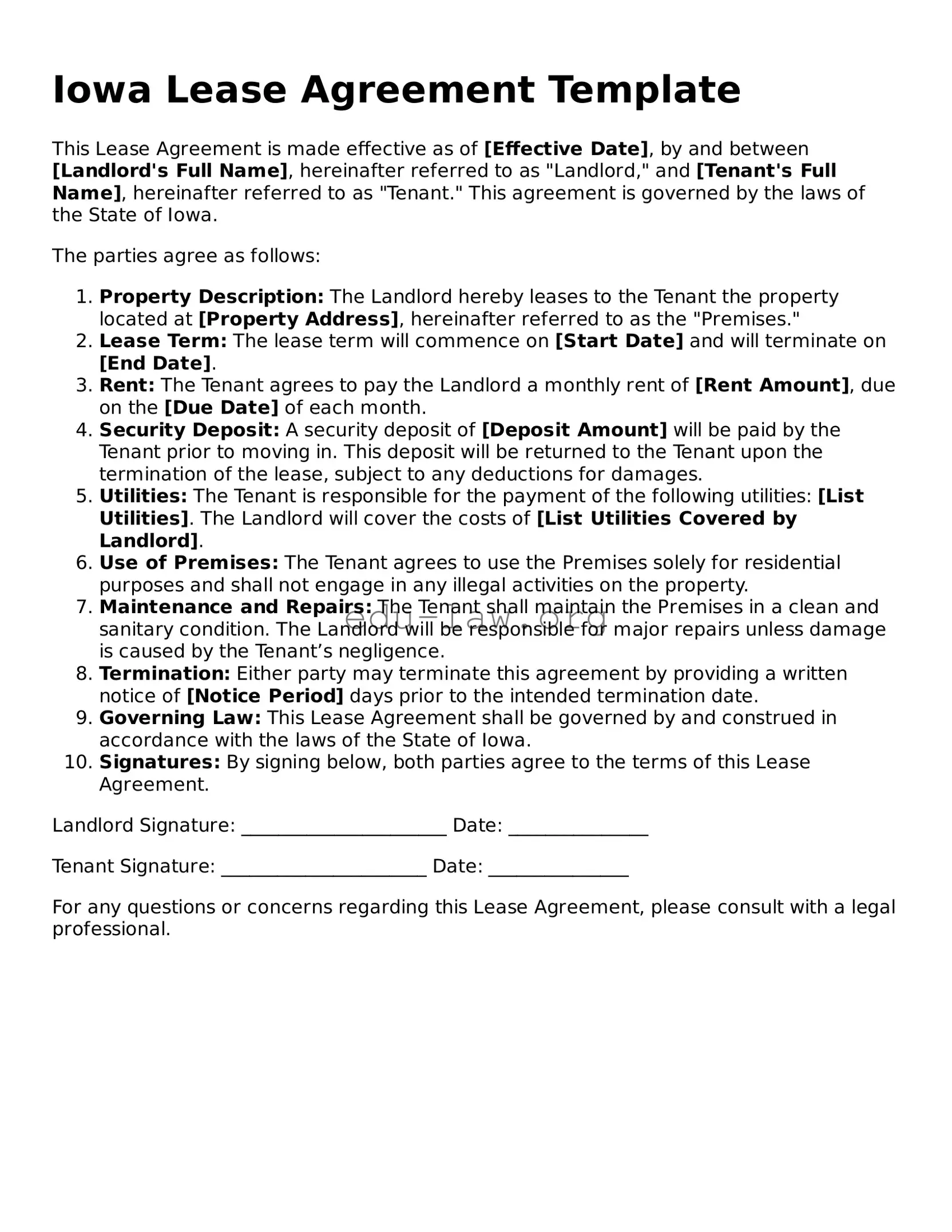
The Iowa Lease Agreement form serves as a crucial document in the landlord-tenant relationship, outlining the rights and responsibilities of both parties involved in a rental arrangement. This form typically includes essential details such as the names of the landlord and tenant, the property address, the duration of the lease, and the amount of rent due. In addition, it often specifies payment terms, including due dates and acceptable payment methods. Provisions related to security deposits, maintenance responsibilities, and rules regarding pets or alterations to the property are also commonly included. Importantly, the form may address termination procedures and the consequences of lease violations, ensuring clarity and legal protection for both parties. By establishing these terms in writing, the Iowa Lease Agreement helps to prevent misunderstandings and provides a framework for resolving disputes should they arise.
Iowa Lease Agreement Template
This Lease Agreement is made effective as of [Effective Date], by and between [Landlord's Full Name], hereinafter referred to as "Landlord," and [Tenant's Full Name], hereinafter referred to as "Tenant." This agreement is governed by the laws of the State of Iowa.
The parties agree as follows:
Landlord Signature: ______________________ Date: _______________
Tenant Signature: ______________________ Date: _______________
For any questions or concerns regarding this Lease Agreement, please consult with a legal professional.
| Fact Name | Detail |
|---|---|
| Purpose | The Iowa Lease Agreement form is used to outline the terms and conditions between a landlord and tenant for renting residential or commercial property. |
| Governing Law | This agreement is governed by the Iowa Code, specifically Chapter 562A for residential leases and Chapter 562B for commercial leases. |
| Duration | The lease can be for a fixed term or month-to-month, depending on the agreement between the parties involved. |
| Security Deposit | Iowa law allows landlords to collect a security deposit, which cannot exceed two months' rent for residential leases. |
Filling out the Iowa Lease Agreement form is an important step in establishing a rental relationship. Once you have completed the form, both parties will have a clear understanding of their rights and responsibilities. Below are the steps to guide you through the process of filling out the form accurately.
What is an Iowa Lease Agreement form?
The Iowa Lease Agreement form is a legal document that outlines the terms and conditions under which a landlord rents property to a tenant. This agreement includes essential details such as the rental amount, duration of the lease, and responsibilities of both parties. It serves to protect the rights of both the landlord and the tenant, ensuring clarity and preventing disputes.
What key elements should be included in the lease agreement?
A comprehensive Iowa Lease Agreement should include several critical components. These typically consist of the names of the landlord and tenant, the property address, the rental amount and due date, the lease term (whether it’s month-to-month or for a fixed period), security deposit details, maintenance responsibilities, and any rules regarding pets or smoking. Including these elements helps set clear expectations for everyone involved.
How long is a typical lease term in Iowa?
In Iowa, lease terms can vary widely. Many leases are for a fixed term of one year, but month-to-month agreements are also common. The choice between these options often depends on the preferences of both the landlord and tenant. A longer lease term can provide stability, while a month-to-month lease offers flexibility for tenants who may need to move sooner.
Can a lease be terminated early in Iowa?
Yes, a lease can be terminated early, but specific conditions must be met. Both parties must agree to the termination, or there must be a valid reason as outlined in the lease agreement, such as a breach of contract. If a tenant needs to break a lease due to unforeseen circumstances, such as a job relocation or health issues, it’s essential to communicate with the landlord and review the lease terms for any applicable penalties or procedures.
What is a security deposit, and how is it handled in Iowa?
A security deposit is a sum of money that a tenant pays to the landlord before moving in. This deposit serves as protection for the landlord against potential damages or unpaid rent. In Iowa, landlords can charge up to two months' rent as a security deposit. After the lease ends, landlords must return the deposit within 30 days, minus any deductions for repairs or unpaid rent, along with an itemized list of those deductions.
Are there any specific laws regarding rental increases in Iowa?
Iowa does not have statewide rent control laws, meaning landlords can generally increase rent as they see fit. However, any increase must comply with the terms outlined in the lease agreement. If the lease is for a fixed term, the rent cannot be increased until the lease expires unless both parties agree to amend the lease. For month-to-month leases, landlords typically must provide written notice before implementing any rent increase.
What happens if a tenant fails to pay rent?
If a tenant fails to pay rent, the landlord has the right to initiate eviction proceedings after providing a notice to pay or quit. This notice gives the tenant a specific timeframe to pay the overdue rent or vacate the property. It’s crucial for both parties to understand their rights and responsibilities in these situations, as there are legal processes that must be followed to ensure fairness.
Can a landlord enter the rental property without notice?
In Iowa, landlords must provide reasonable notice before entering a rental property, typically 24 hours. This notice is essential unless there is an emergency, such as a fire or water leak. Respecting a tenant's right to privacy is important, and landlords should communicate clearly about their intentions to enter the property.
Incomplete Information: Many individuals fail to provide all required details. Missing names, addresses, or signatures can lead to confusion and potential disputes.
Incorrect Dates: Entering the wrong lease start or end dates can create significant issues. It is crucial to double-check these dates to avoid misunderstandings about the lease term.
Neglecting to Read Terms: Some people overlook the lease terms and conditions. Understanding responsibilities regarding maintenance, repairs, and payment schedules is essential for a smooth tenancy.
Failing to Initial Changes: When modifications are made to the standard lease agreement, not initialing those changes can lead to disputes later. Always initial any alterations to ensure clarity and agreement.
When entering into a rental agreement in Iowa, several additional forms and documents may be necessary to ensure a smooth leasing process. These documents help clarify the terms of the lease, protect the rights of both parties, and provide essential information regarding the rental property.
Having these documents prepared and organized can facilitate a more effective rental experience. Each form plays a vital role in ensuring that both landlords and tenants understand their rights and responsibilities throughout the lease term.
The Iowa Lease Agreement form shares similarities with a Rental Agreement. Both documents outline the terms under which a landlord allows a tenant to occupy a property. They specify the duration of the tenancy, the amount of rent due, and the responsibilities of both parties. While a lease typically covers a longer period, often a year or more, a rental agreement can be more flexible, sometimes spanning just a month. Regardless of the length, both documents aim to protect the rights of landlords and tenants, ensuring clarity in the rental relationship.
Another document that resembles the Iowa Lease Agreement is the Commercial Lease Agreement. This type of lease is specifically tailored for business properties, such as retail spaces or offices. Like a residential lease, it details the rental terms, payment schedules, and maintenance responsibilities. However, commercial leases often include clauses unique to businesses, such as provisions for property modifications or specific use of the space. Both agreements serve to establish a clear understanding between the property owner and the tenant, safeguarding their interests.
The Iowa Lease Agreement is also similar to a Sublease Agreement. A sublease occurs when a tenant rents out their leased property to another individual, with the original landlord's permission. This document outlines the terms under which the subtenant will occupy the property, including rent and duration. Just like the primary lease, a sublease must adhere to the original lease's terms and conditions. This ensures that both the landlord's and original tenant's rights are maintained, while also providing clarity for the new occupant.
Lastly, the Iowa Lease Agreement can be compared to a Month-to-Month Rental Agreement. This type of agreement allows tenants to rent a property on a monthly basis without a long-term commitment. Similar to a standard lease, it outlines the rent amount and responsibilities of both parties. However, the month-to-month nature offers flexibility, allowing either party to terminate the agreement with proper notice. This adaptability can be beneficial for those who may not want to commit to a lengthy lease, while still providing a structured framework for the rental arrangement.
When filling out the Iowa Lease Agreement form, it's important to be thorough and accurate. Here are some key do's and don'ts to keep in mind:
There are several misconceptions surrounding the Iowa Lease Agreement form that can lead to confusion for both landlords and tenants. Here are four common misunderstandings:
When filling out and using the Iowa Lease Agreement form, it is essential to keep several key points in mind:
By paying attention to these key takeaways, both landlords and tenants can create a clear and effective lease agreement that serves their interests.