In the realm of real estate transactions, understanding the Iowa Deed form is essential for anyone looking to transfer property ownership within the state. This legal document serves as a vital tool, providing a clear record of the transfer from one party to another. It outlines key details such as the names of the grantor and grantee, a description of the property being transferred, and the terms of the conveyance. The Iowa Deed can take various forms, including warranty deeds, quitclaim deeds, and special warranty deeds, each serving different purposes and offering varying levels of protection for the parties involved. Completing this form accurately is crucial, as it not only facilitates the legal transfer of property but also ensures that all parties are aware of their rights and obligations. Furthermore, the deed must be properly executed and recorded with the appropriate county office to be legally binding, making attention to detail and compliance with state regulations paramount. Understanding these aspects can help individuals navigate the often complex world of real estate transactions with confidence.
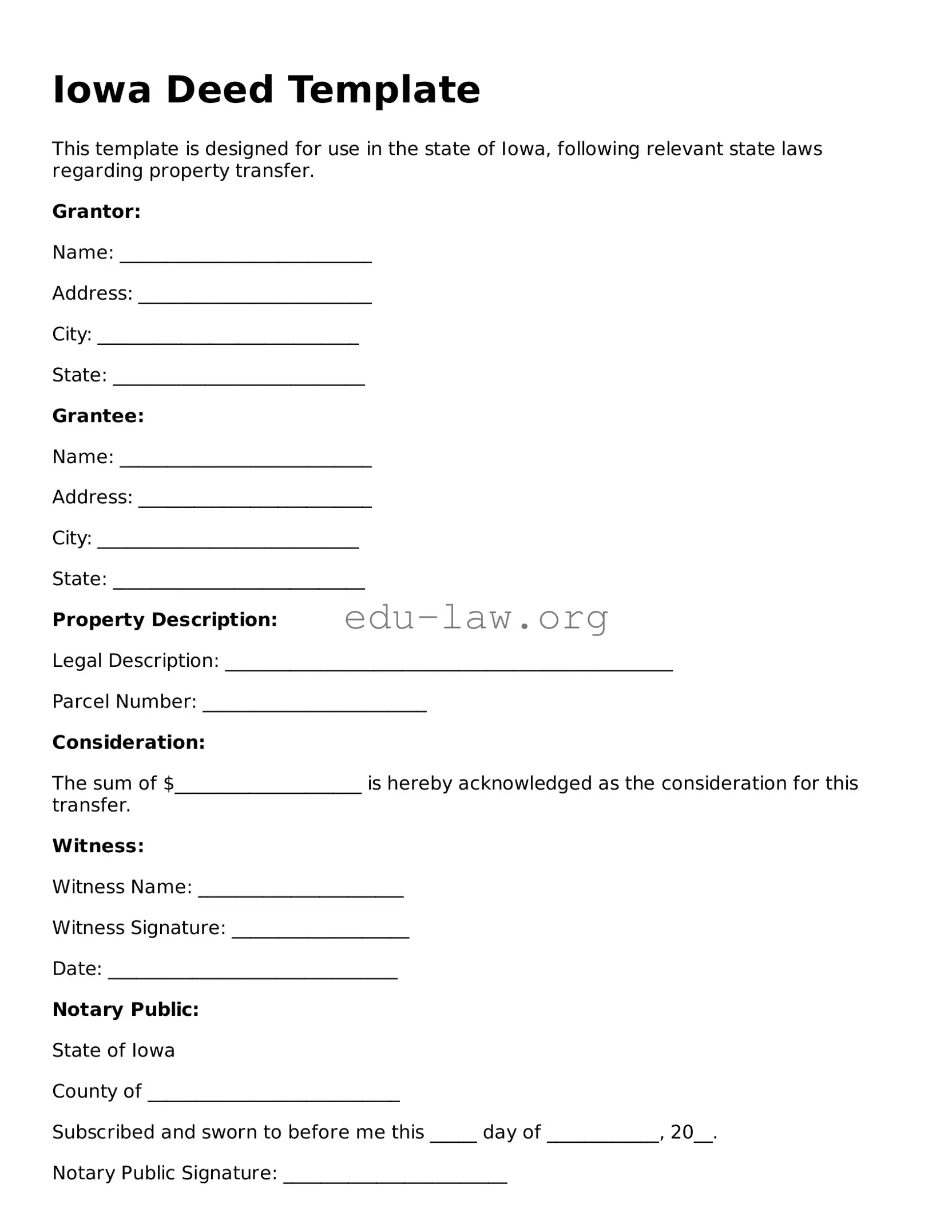
Iowa Deed Template
This template is designed for use in the state of Iowa, following relevant state laws regarding property transfer.
Grantor:
Name: ___________________________
Address: _________________________
City: ____________________________
State: ___________________________
Grantee:
Name: ___________________________
Address: _________________________
City: ____________________________
State: ___________________________
Property Description:
Legal Description: ________________________________________________
Parcel Number: ________________________
Consideration:
The sum of $____________________ is hereby acknowledged as the consideration for this transfer.
Witness:
Witness Name: ______________________
Witness Signature: ___________________
Date: _______________________________
Notary Public:
State of Iowa
County of ___________________________
Subscribed and sworn to before me this _____ day of ____________, 20__.
Notary Public Signature: ________________________
My Commission Expires: ________________________
By signing this deed, the Grantor affirms that they have the authority to transfer the property described above to the Grantee.
| Fact Name | Description |
|---|---|
| Purpose | The Iowa Deed form is used to legally transfer ownership of real property from one party to another. |
| Types of Deeds | Iowa recognizes several types of deeds, including Warranty Deeds, Quitclaim Deeds, and Special Warranty Deeds, each serving different purposes in property transfer. |
| Governing Laws | The Iowa Deed form is governed by Iowa Code Chapter 557, which outlines the requirements for property conveyances. |
| Recording Requirements | To ensure legal protection, the completed Iowa Deed must be recorded with the county recorder's office where the property is located. |
After completing the Iowa Deed form, you will need to file it with the appropriate county recorder’s office. This step is essential for ensuring that the transfer of property ownership is officially recognized.
What is an Iowa Deed form?
An Iowa Deed form is a legal document used to transfer ownership of real estate in the state of Iowa. It provides a record of the transaction and outlines the details of the property being transferred, including the names of the parties involved and a description of the property.
What types of deeds are available in Iowa?
Iowa recognizes several types of deeds, including warranty deeds, quitclaim deeds, and special warranty deeds. A warranty deed guarantees that the seller has clear title to the property and will defend against any claims. A quitclaim deed transfers whatever interest the seller has without any guarantees. A special warranty deed provides some assurances but is limited to the seller’s ownership period.
Do I need to have the deed notarized?
Yes, in Iowa, a deed must be notarized to be legally effective. The signatures of the parties involved should be witnessed by a notary public. This step helps ensure the authenticity of the document and the identities of the signers.
How do I file the Iowa Deed form?
To file the Iowa Deed form, you must take the completed and notarized document to the county recorder’s office where the property is located. There may be a filing fee, so check with the office for specific requirements and costs.
Is there a specific format for the Iowa Deed form?
While there is no single format mandated by the state, the deed should include essential elements such as the names of the grantor and grantee, a legal description of the property, and the date of the transfer. It is advisable to use a format that meets all legal requirements to avoid complications.
What happens after I file the deed?
Once the deed is filed with the county recorder’s office, it becomes a public record. This means that anyone can access it. The transfer of ownership is effective immediately upon filing, and the new owner should keep a copy of the deed for their records.
Can I create my own Iowa Deed form?
Yes, you can create your own Iowa Deed form as long as it includes all necessary information and complies with state laws. However, it is often recommended to use a template or consult with a legal professional to ensure accuracy and completeness.
Incorrect Names: Individuals often misspell their names or use nicknames instead of their legal names. This can lead to complications in the future.
Improper Property Description: Failing to provide a complete and accurate description of the property can create issues with ownership verification.
Missing Signatures: All required parties must sign the deed. Omitting a signature can invalidate the document.
Not Including a Notary: Many people forget to have the deed notarized. A notary's signature is often necessary for the document to be legally binding.
Incorrect Date: Some individuals neglect to date the document or use the wrong date. This can cause confusion regarding the timeline of the transaction.
Failure to Understand the Type of Deed: There are different types of deeds, such as warranty deeds and quitclaim deeds. Using the wrong type can affect the rights of the parties involved.
Not Checking Local Requirements: Each county may have specific requirements for deed submissions. Ignoring these can lead to delays or rejections.
When transferring property in Iowa, the deed form is just one component of the process. Several other documents often accompany the deed to ensure a smooth transaction and provide necessary information for both parties involved. Below is a list of commonly used forms and documents in conjunction with the Iowa Deed form.
These documents, along with the Iowa Deed form, play crucial roles in the property transfer process. Each serves a specific purpose, contributing to a clearer understanding of the transaction and protecting the interests of both buyers and sellers.
The Iowa Deed form shares similarities with the Warranty Deed. A Warranty Deed provides a guarantee from the seller to the buyer that the seller holds clear title to the property and has the right to sell it. This document also protects the buyer against any future claims on the property. Like the Iowa Deed, it must be signed, notarized, and recorded to be legally effective. Both documents serve to transfer ownership, but the Warranty Deed offers additional assurances regarding the property's title status.
Another document that resembles the Iowa Deed is the Quitclaim Deed. This type of deed transfers whatever interest the seller has in the property without any guarantees. Unlike the Iowa Deed, which often implies a warranty of title, the Quitclaim Deed simply conveys the property rights as they currently exist. It is commonly used in situations where the parties know each other, such as transferring property between family members. Both documents require proper execution and recording to be enforceable.
The Special Warranty Deed is also akin to the Iowa Deed. This document offers a limited warranty, ensuring that the seller has not encumbered the property during their ownership. It protects the buyer from claims arising only from the seller's actions, unlike a full Warranty Deed. The Iowa Deed, while not specifically a Special Warranty Deed, may share similar attributes in terms of ownership transfer and the necessity for notarization and recording.
Lastly, the Bargain and Sale Deed bears resemblance to the Iowa Deed as well. This type of deed implies that the seller has the right to sell the property but does not provide any warranties regarding the title. The buyer accepts the property "as is," which can be a riskier proposition. Both the Bargain and Sale Deed and the Iowa Deed facilitate the transfer of ownership, but the absence of warranties in the former can lead to potential complications for the buyer.
Filling out the Iowa Deed form requires attention to detail. Here are some essential do's and don'ts to keep in mind:
Taking these steps will help ensure that your deed is valid and properly recorded.
Understanding the Iowa Deed form is crucial for property transactions, yet several misconceptions can lead to confusion. Here are ten common misunderstandings about this important document:
Being informed about these misconceptions can help individuals navigate the complexities of property ownership and ensure a smoother transaction process in Iowa.
When filling out and using the Iowa Deed form, several important points should be kept in mind. Below are key takeaways to consider:
By following these guidelines, individuals can navigate the Iowa Deed form more effectively and ensure a smoother property transfer process.