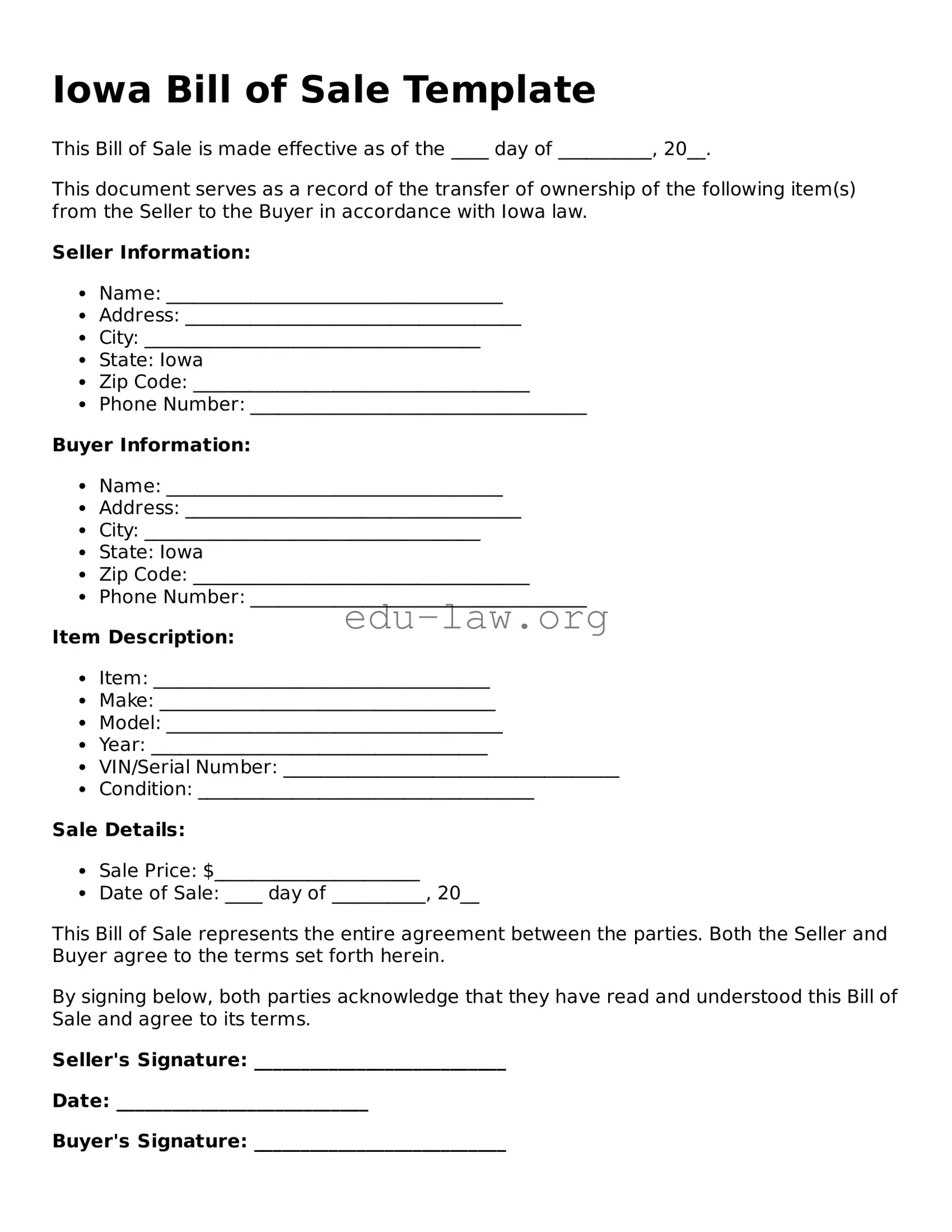
The Iowa Bill of Sale form is an essential document for anyone involved in the sale or transfer of personal property within the state. This form serves as a written record of the transaction, detailing the items being sold, the purchase price, and the identities of both the buyer and seller. It is particularly important for transactions involving vehicles, boats, or other significant assets, as it provides proof of ownership and can help protect both parties in case of disputes. The form typically includes sections for the date of sale, a description of the item, and any warranties or disclaimers that may apply. Additionally, it may require signatures from both parties to validate the agreement. Understanding the components of the Iowa Bill of Sale is crucial for ensuring a smooth transaction and safeguarding the interests of everyone involved.
Iowa Bill of Sale Template
This Bill of Sale is made effective as of the ____ day of __________, 20__.
This document serves as a record of the transfer of ownership of the following item(s) from the Seller to the Buyer in accordance with Iowa law.
Seller Information:
Buyer Information:
Item Description:
Sale Details:
This Bill of Sale represents the entire agreement between the parties. Both the Seller and Buyer agree to the terms set forth herein.
By signing below, both parties acknowledge that they have read and understood this Bill of Sale and agree to its terms.
Seller's Signature: ___________________________
Date: ___________________________
Buyer's Signature: ___________________________
Date: ___________________________
This document is governed by the laws of the State of Iowa.
| Fact Name | Description |
|---|---|
| Purpose | The Iowa Bill of Sale form serves as a legal document that records the transfer of ownership of personal property from one party to another. |
| Types of Property | This form can be used for various types of personal property, including vehicles, boats, and equipment. |
| Governing Law | The Iowa Bill of Sale is governed by the Iowa Code, specifically sections related to the sale of personal property. |
| Notarization | While notarization is not always required, it is recommended for added legal protection and to verify the identities of the parties involved. |
| Buyer and Seller Information | The form requires the full names and addresses of both the buyer and seller to ensure clarity in the transaction. |
| Property Description | A detailed description of the property being sold must be included, such as make, model, year, and VIN for vehicles. |
| Purchase Price | The agreed-upon purchase price must be clearly stated to document the financial terms of the sale. |
| As-Is Clause | Many Bill of Sale forms include an "as-is" clause, indicating that the buyer accepts the property in its current condition without warranties. |
| Record Keeping | Both parties should keep a copy of the completed Bill of Sale for their records, as it serves as proof of the transaction. |
| Legal Implications | Failure to use a Bill of Sale may lead to disputes regarding ownership, so it is essential for both parties to complete this document properly. |
Once you have the Iowa Bill of Sale form in front of you, it's important to fill it out accurately. This document serves as a record of the transaction between the buyer and the seller. Careful attention to detail will help ensure that both parties are protected and that the transfer of ownership is clear.
What is an Iowa Bill of Sale?
An Iowa Bill of Sale is a legal document that records the transfer of ownership of personal property from one person to another. It serves as proof of the transaction and includes important details about the buyer, seller, and the item being sold.
When do I need a Bill of Sale in Iowa?
You typically need a Bill of Sale when selling or buying items such as vehicles, boats, trailers, or other valuable personal property. It is especially important for items that require registration or titling, like cars and motorcycles.
What information should be included in an Iowa Bill of Sale?
An Iowa Bill of Sale should include the names and addresses of both the buyer and seller, a description of the item being sold (including any identification numbers), the sale price, and the date of the transaction. It’s also helpful to include any warranties or conditions of the sale.
Is a Bill of Sale required by law in Iowa?
Do I need to have the Bill of Sale notarized?
In Iowa, notarization is not required for a Bill of Sale. However, having it notarized can add an extra layer of authenticity and may be requested by some buyers or sellers for their records.
Can I create my own Bill of Sale?
Yes, you can create your own Bill of Sale in Iowa. There are many templates available online that you can customize. Just make sure to include all the necessary information to ensure it is valid and enforceable.
How does a Bill of Sale protect me?
A Bill of Sale protects both the buyer and seller by providing a clear record of the transaction. It can help resolve disputes over ownership or payment and can serve as evidence in legal matters if they arise.
What should I do with the Bill of Sale after the transaction?
After the transaction, both the buyer and seller should keep a copy of the Bill of Sale for their records. This document can be important for future reference, especially if there are any questions about the sale later on.
Where can I find a Bill of Sale form for Iowa?
You can find Bill of Sale forms for Iowa online through various legal websites, or you can create one using a template. Ensure that the form you choose meets all the requirements for your specific transaction.
Incomplete Information: Failing to provide all required details, such as names, addresses, and the description of the item being sold, can lead to issues.
Incorrect Item Description: Not accurately describing the item, including its make, model, and condition, can cause disputes later.
Missing Signatures: Both the seller and buyer must sign the form. Omitting one or both signatures invalidates the document.
Not Dating the Document: Failing to include the date of the transaction can lead to confusion about when the sale took place.
Incorrect Purchase Price: Listing an incorrect amount can create misunderstandings and affect tax obligations.
Not Keeping Copies: Not making copies of the completed Bill of Sale for both parties can lead to issues if disputes arise later.
Ignoring State Requirements: Not being aware of specific Iowa requirements for a Bill of Sale can result in an invalid document.
Failing to Notarize: Some transactions may require notarization. Not doing so when needed can complicate the sale.
When engaging in a transaction involving the sale of personal property in Iowa, the Bill of Sale form is a crucial document. However, there are several other forms and documents that can complement this transaction, ensuring that both parties are protected and that the process is smooth. Below is a list of commonly used documents that may accompany the Iowa Bill of Sale.
By utilizing these documents alongside the Iowa Bill of Sale, both buyers and sellers can navigate their transactions with confidence. Proper documentation not only protects individual rights but also fosters trust between parties, making for a more positive experience in the exchange of property.
The Iowa Bill of Sale form shares similarities with the Vehicle Bill of Sale. Both documents serve as proof of transfer of ownership for a vehicle. They include essential details such as the buyer's and seller's names, vehicle identification numbers, and the sale price. This document is particularly important for registering the vehicle with the state and ensuring that the seller is no longer liable for any future issues related to the vehicle.
Another related document is the Personal Property Bill of Sale. This form is used for the sale of personal items, such as furniture or electronics. Like the Iowa Bill of Sale, it outlines the transaction details, including a description of the item, the sale price, and the parties involved. This document provides legal protection for both the buyer and seller, confirming that the item has been sold and ownership has been transferred.
The Equipment Bill of Sale is also similar, especially in transactions involving heavy machinery or tools. This document details the specific equipment being sold, including make, model, and serial numbers. It serves the same purpose as the Iowa Bill of Sale by documenting the sale and protecting both parties. It ensures that the buyer receives the equipment in the agreed-upon condition and that the seller is released from any future claims regarding the equipment.
The Firearm Bill of Sale is another document that parallels the Iowa Bill of Sale. This form is specifically used for the transfer of firearms between private parties. It includes information about the firearm, such as make, model, and serial number, along with the buyer's and seller's details. This document is crucial for compliance with state and federal laws regarding firearm ownership and transfer.
The Boat Bill of Sale is similar in that it documents the sale of a boat or watercraft. It includes information about the vessel, such as hull identification number and registration details. Like the Iowa Bill of Sale, this document serves as proof of ownership transfer and is often required for registration with state authorities.
The Livestock Bill of Sale is another relevant document, particularly in agricultural transactions. This form is used to record the sale of livestock, detailing the type and number of animals sold. It provides necessary information for both parties and serves as a legal record of the transaction, similar to the Iowa Bill of Sale.
Lastly, the Mobile Home Bill of Sale is akin to the Iowa Bill of Sale in that it documents the sale of a mobile or manufactured home. This document includes details such as the home's identification number and any relevant permits. It ensures that the transfer of ownership is legally recognized and protects both the buyer and seller in the transaction.
When filling out the Iowa Bill of Sale form, it's important to follow certain guidelines to ensure the document is completed accurately. Here’s a list of things to do and avoid:
Following these tips can help ensure that your Bill of Sale is valid and clear, protecting both parties involved in the transaction.
The Iowa Bill of Sale form is a crucial document for anyone involved in buying or selling personal property. However, several misconceptions surround its use and requirements. Here are six common misconceptions that need clarification:
This is not true. While many people associate a Bill of Sale primarily with vehicles, it is also essential for other personal property transactions, such as boats, trailers, and even valuable items like art or jewelry.
In Iowa, notarization is not required for a Bill of Sale to be valid. However, having it notarized can provide an additional layer of security and verification for both parties involved.
While both documents are important in a transaction, they serve different purposes. A Bill of Sale proves the sale occurred, while a title transfer officially changes ownership of a vehicle or property.
Relying on a verbal agreement can lead to disputes down the line. A Bill of Sale provides written proof of the transaction, which is vital for legal protection.
While some elements may be similar, it’s best to use a Bill of Sale tailored to the specific type of property being sold. This ensures that all necessary details are included and legally compliant.
Although it’s best to have all details correct before signing, amendments can be made if both parties agree. It’s advisable to document any changes in writing to avoid future misunderstandings.
Understanding these misconceptions can help ensure that your transactions are smooth and legally sound. Always consider consulting with a legal expert when in doubt about the requirements for your specific situation.
When filling out and using the Iowa Bill of Sale form, it's important to keep several key points in mind:
Following these guidelines can help ensure a smooth transaction and provide peace of mind for both the buyer and seller.