When navigating the complexities of real estate transactions, understanding the nuances of various forms is essential for both buyers and sellers. One such critical document is the Inspection Contingency Addendum. This form serves as a safeguard for buyers, allowing them to conduct thorough inspections of a property before finalizing the purchase. It outlines the specific conditions under which buyers can request repairs, negotiate price adjustments, or even withdraw from the sale if significant issues are discovered. Moreover, the addendum typically specifies timelines for inspections and the process for notifying sellers of any concerns. By including this addendum in the purchase agreement, buyers can protect themselves from unforeseen expenses and ensure that they are making a sound investment. Sellers, on the other hand, benefit from transparency, as they are made aware of potential issues early in the process, allowing them to address concerns proactively. Understanding the importance of this addendum can make a substantial difference in the outcome of a real estate deal.
Inspection Contingency Addendum
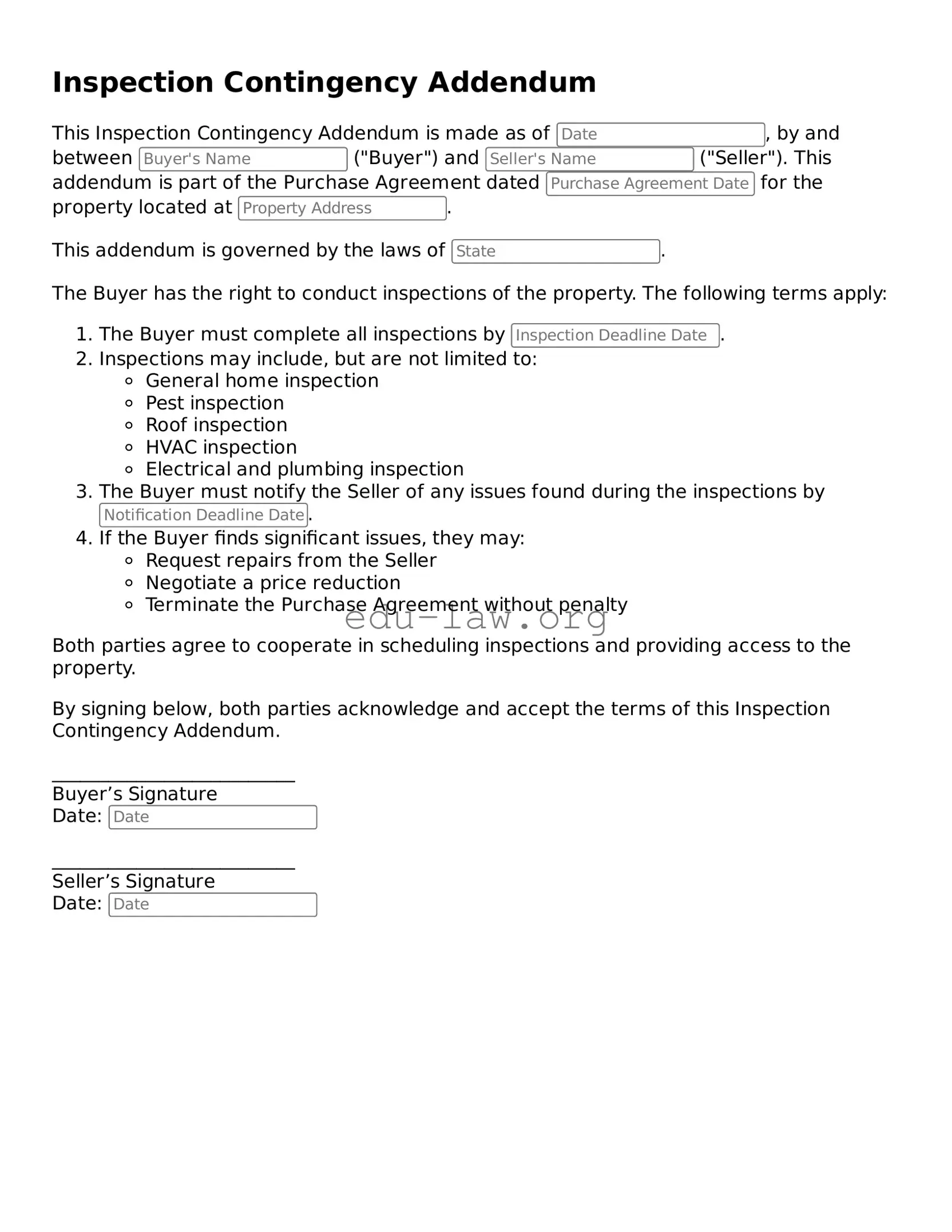
This Inspection Contingency Addendum is made as of , by and between ("Buyer") and ("Seller"). This addendum is part of the Purchase Agreement dated for the property located at .
This addendum is governed by the laws of .
The Buyer has the right to conduct inspections of the property. The following terms apply:
Both parties agree to cooperate in scheduling inspections and providing access to the property.
By signing below, both parties acknowledge and accept the terms of this Inspection Contingency Addendum.
__________________________
Buyer’s Signature
Date:
__________________________
Seller’s Signature
Date:
| Fact Name | Description |
|---|---|
| Purpose | The Inspection Contingency Addendum allows buyers to request inspections of a property before finalizing a purchase. |
| Timing | This addendum typically specifies a time frame within which the buyer must complete inspections. |
| Negotiation | After inspections, buyers can negotiate repairs or credits based on the findings. |
| State-Specific Forms | Many states have their own versions of the form, reflecting local laws and practices. |
| Governing Law | In California, for example, the form is governed by the California Civil Code. |
| Buyer’s Rights | The addendum protects buyers by allowing them to back out of a deal if serious issues arise during inspections. |
| Disclosure Requirements | Sellers may be required to disclose known issues, which can influence inspection outcomes. |
| Professional Inspections | Buyers often hire licensed inspectors to conduct thorough evaluations of the property. |
Filling out the Inspection Contingency Addendum form is an important step in the home-buying process. This form allows you to outline your rights regarding property inspections and any potential negotiations that may arise from the findings. Here’s how to complete it effectively.
Once you have completed the form, review it for accuracy. After ensuring everything is correct, you can submit it as part of your purchase agreement. This will help protect your interests as you move forward in the home-buying process.
What is an Inspection Contingency Addendum?
An Inspection Contingency Addendum is a document that allows buyers to have a property inspected before finalizing the purchase. This addendum outlines the conditions under which the buyer can request repairs or even withdraw from the sale if significant issues are found during the inspection process. It serves as a safeguard for buyers, ensuring they are making a well-informed decision.
Why is an Inspection Contingency important?
This addendum is crucial because it protects the buyer's interests. It provides an opportunity to identify any potential problems with the property, such as structural issues, plumbing problems, or electrical hazards. If the inspection reveals significant concerns, the buyer can negotiate repairs or reconsider their purchase decision without financial penalties.
How long does the inspection period typically last?
The inspection period usually lasts between 7 to 14 days, but this can vary based on the agreement between the buyer and seller. It’s essential to specify this timeframe in the addendum to ensure both parties are clear on the deadlines. Buyers should act promptly to schedule inspections within this period.
What happens if the inspection reveals issues?
If the inspection uncovers issues, the buyer has several options. They can request that the seller make repairs, negotiate a reduction in the purchase price, or ask for credits at closing to cover repair costs. If the parties cannot reach an agreement, the buyer may choose to withdraw from the sale without penalty, provided the addendum is properly executed.
Can a seller refuse to make repairs?
Yes, a seller can refuse to make repairs. However, this can lead to negotiations. If the seller is unwilling to address the issues found during the inspection, the buyer may need to decide whether to proceed with the purchase, renegotiate terms, or walk away. Open communication is key in these situations.
Are there any costs associated with the inspection?
Yes, the buyer typically bears the cost of the inspection. Prices can vary depending on the property size and location, but it’s generally a small investment compared to the overall cost of purchasing a home. Buyers should budget for this expense and choose a qualified inspector to ensure a thorough assessment.
Is an Inspection Contingency Addendum negotiable?
Absolutely. The terms of the Inspection Contingency Addendum can be negotiated between the buyer and seller. This includes the length of the inspection period, the types of inspections to be conducted, and the specific conditions under which the buyer can withdraw from the sale. Flexibility can help both parties feel more comfortable with the agreement.
What should buyers do after receiving the inspection report?
After receiving the inspection report, buyers should carefully review the findings. It’s advisable to consult with their real estate agent to discuss the results and determine the best course of action. Whether it involves negotiating repairs, seeking credits, or deciding to move forward with the purchase, informed decisions are essential at this stage.
Not specifying the inspection period clearly. Buyers should indicate a specific timeframe for the inspection to avoid confusion.
Forgetting to include all necessary parties. Ensure that all relevant individuals, such as agents or inspectors, are mentioned in the form.
Neglecting to outline the scope of the inspection. Clearly define what aspects of the property will be inspected, such as structural integrity, plumbing, and electrical systems.
Overlooking the requirement for written notice. Buyers must provide written notice of any issues discovered during the inspection to the seller within the specified timeframe.
Failing to check local regulations. Different areas may have specific requirements regarding inspections, which should be considered before filling out the form.
Not including contingencies for specific repairs. If buyers expect certain repairs to be made, they should list these explicitly in the addendum.
Inadequate communication with the inspector. Buyers should ensure that the inspector understands their concerns and expectations prior to the inspection.
Using vague language. Clear and precise wording helps prevent misunderstandings and ensures all parties are on the same page.
Ignoring deadlines. Pay attention to any deadlines specified in the purchase agreement and make sure they align with the inspection timeline.
Not retaining a copy of the signed addendum. Keep a copy for personal records and to refer back to during the transaction process.
The Inspection Contingency Addendum is a critical document in real estate transactions, allowing buyers to negotiate repairs or reconsider their offer based on the results of a property inspection. However, several other forms and documents are commonly used alongside this addendum to ensure a smooth transaction process. Below is a list of these documents, each serving a specific purpose.
Understanding these documents and their purposes is essential for anyone involved in a real estate transaction. Each plays a vital role in protecting the interests of buyers and sellers alike, ensuring a transparent and fair process.
The Inspection Contingency Addendum is similar to the Purchase Agreement, which outlines the terms of the sale between the buyer and seller. Both documents serve to protect the interests of the buyer, ensuring that they have the opportunity to assess the property before finalizing the purchase. The Purchase Agreement typically includes a clause about inspections, and the Inspection Contingency Addendum expands on this by detailing the specific conditions under which the buyer can request repairs or even back out of the deal based on inspection results.
Another document that shares similarities with the Inspection Contingency Addendum is the Repair Addendum. This document comes into play after an inspection reveals issues that need addressing. While the Inspection Contingency Addendum allows buyers to request repairs or negotiate terms based on findings, the Repair Addendum formalizes those requests. It specifies what repairs will be made, who is responsible for them, and often includes timelines for completion, making it a crucial follow-up document in the negotiation process.
The Disclosure Statement is also akin to the Inspection Contingency Addendum. This document is provided by the seller and outlines known issues or defects with the property. While the Inspection Contingency Addendum allows buyers to conduct their own inspections, the Disclosure Statement offers transparency upfront. It helps buyers understand what to expect and can influence their decision on whether to proceed with the inspection or the purchase itself.
Lastly, the Escalation Clause can be compared to the Inspection Contingency Addendum in terms of protecting the buyer's interests. While the Inspection Contingency focuses on property condition, the Escalation Clause addresses pricing in competitive markets. Both documents empower buyers—one by ensuring they can back out or negotiate based on inspection findings, and the other by allowing them to increase their offer if competing bids arise. Together, they help buyers navigate the complexities of real estate transactions effectively.
When filling out the Inspection Contingency Addendum form, it is essential to follow certain guidelines to ensure accuracy and clarity. Below are seven important dos and don'ts to consider.
By adhering to these guidelines, you can help ensure that the Inspection Contingency Addendum is completed effectively and meets all necessary requirements.
Understanding the Inspection Contingency Addendum is crucial for both buyers and sellers in a real estate transaction. However, several misconceptions often arise regarding this form. Here are nine common misunderstandings:
Being informed about these misconceptions can help both buyers and sellers navigate the inspection process more effectively. Understanding the nuances of the Inspection Contingency Addendum can lead to smoother transactions and better outcomes for all parties involved.
When filling out and using the Inspection Contingency Addendum form, there are several important points to keep in mind. These takeaways can help ensure a smooth process during real estate transactions.