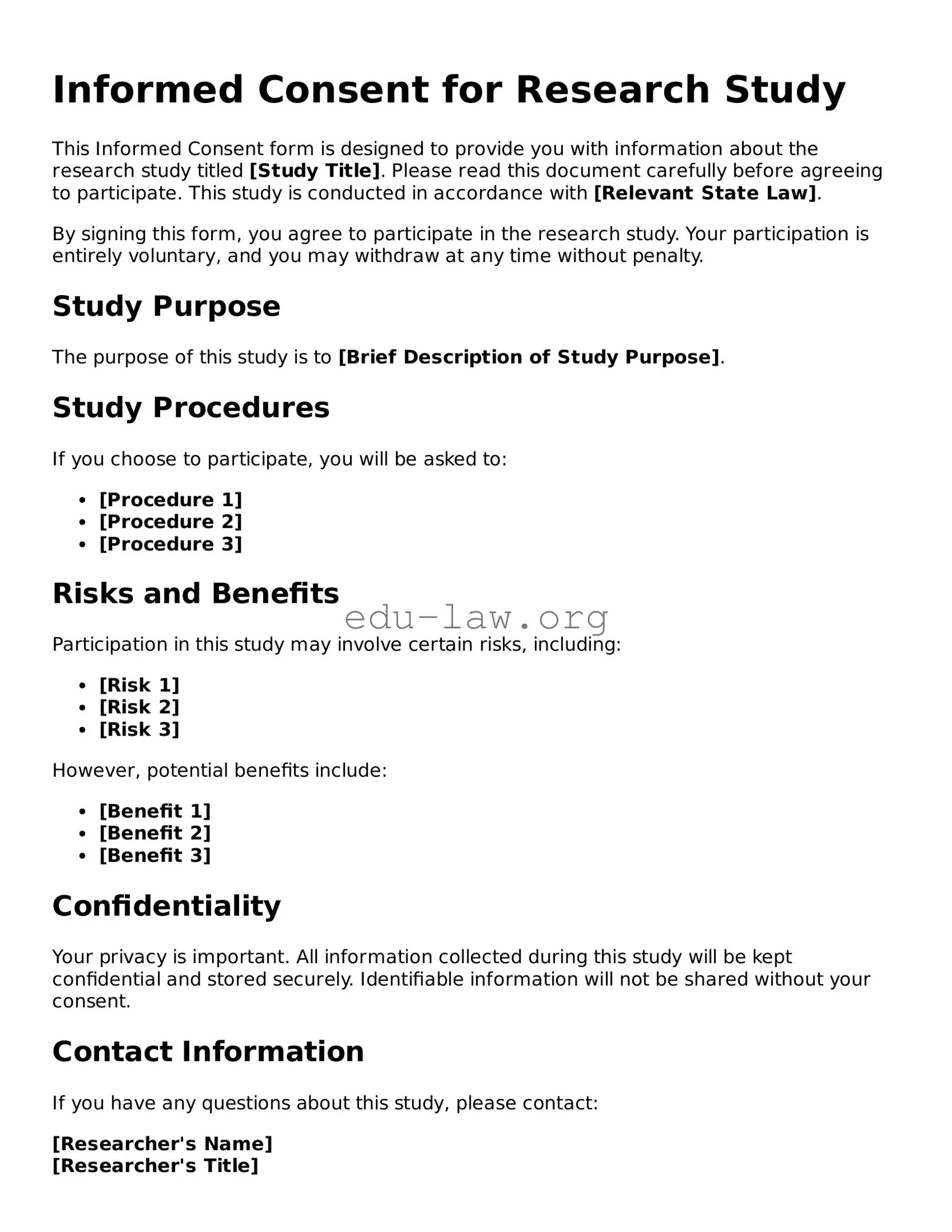
Participating in research studies can offer valuable insights and advancements in various fields, but it is crucial for potential participants to understand what they are agreeing to. The Informed Consent for Research Study form serves as a key document in this process, outlining essential information about the study. It details the purpose of the research, the procedures involved, and any potential risks or benefits. Participants are informed about their rights, including the ability to withdraw from the study at any time without penalty. The form also explains how confidentiality will be maintained and how the data will be used. By ensuring that individuals have a clear understanding of these aspects, the form fosters transparency and promotes ethical standards in research. This article will explore the significance of the Informed Consent form, its components, and why it is essential for both researchers and participants alike.
Informed Consent for Research Study
This Informed Consent form is designed to provide you with information about the research study titled [Study Title]. Please read this document carefully before agreeing to participate. This study is conducted in accordance with [Relevant State Law].
By signing this form, you agree to participate in the research study. Your participation is entirely voluntary, and you may withdraw at any time without penalty.
Study Purpose
The purpose of this study is to [Brief Description of Study Purpose].
Study Procedures
If you choose to participate, you will be asked to:
Risks and Benefits
Participation in this study may involve certain risks, including:
However, potential benefits include:
Confidentiality
Your privacy is important. All information collected during this study will be kept confidential and stored securely. Identifiable information will not be shared without your consent.
Contact Information
If you have any questions about this study, please contact:
[Researcher's Name]
[Researcher's Title]
[Institution Name]
[Contact Information]
Consent Statement
I have read and understood the information provided above. I have had the opportunity to ask questions and have received satisfactory answers. I voluntarily agree to participate in this research study.
Participant Name: [Participant Name]
Participant Signature: [Participant Signature]
Date: [Date]
Researcher Signature: [Researcher Signature]
Date: [Date]
| Fact Name | Description |
|---|---|
| Purpose of Informed Consent | The Informed Consent form ensures that participants understand the research study, including its purpose, procedures, risks, and benefits before agreeing to participate. |
| Voluntary Participation | Participation in research studies is entirely voluntary. Participants can withdraw their consent at any time without any penalty or loss of benefits. |
| Confidentiality Assurance | Researchers must protect the confidentiality of participants. Personal information should be kept secure and disclosed only with consent or as required by law. |
| State-Specific Regulations | Different states may have specific laws governing informed consent. For example, California requires compliance with the California Health and Safety Code. |
| Risks and Benefits Disclosure | Researchers are obligated to inform participants about any potential risks involved in the study, as well as any anticipated benefits. |
| Contact Information | The form should provide contact details for the research team. This allows participants to ask questions or voice concerns before and during the study. |
Completing the Informed Consent for Research Study form is an important step in participating in research. Once you have the form in front of you, take your time to read through it carefully. This ensures that you understand what is being asked and the commitments involved. Follow the steps below to fill out the form correctly.
What is the purpose of the Informed Consent for Research Study form?
The Informed Consent for Research Study form serves to provide potential participants with essential information about a research study. It outlines the study's purpose, procedures, risks, benefits, and the rights of participants. This ensures that individuals can make informed decisions about their involvement in the research, understanding what participation entails before agreeing to take part.
Who needs to sign the Informed Consent form?
All individuals who wish to participate in a research study must sign the Informed Consent form. This includes adults and, in some cases, minors. For minors, a parent or legal guardian typically signs the form on their behalf, ensuring that the rights and welfare of the child are protected.
What information is included in the Informed Consent form?
The Informed Consent form includes several key components. It provides details about the study's purpose, the procedures involved, potential risks and benefits, confidentiality assurances, and the voluntary nature of participation. Additionally, it outlines who to contact for questions or concerns, ensuring participants have access to support throughout the study.
Can participants withdraw from the study after signing the Informed Consent form?
Yes, participants have the right to withdraw from the study at any time, even after signing the Informed Consent form. This decision can be made without any penalty or loss of benefits to which the participant is otherwise entitled. It is essential that participants feel comfortable and secure in their choice to participate.
What happens if a participant does not understand the Informed Consent form?
If a participant does not understand any part of the Informed Consent form, they should seek clarification before signing. Researchers and study coordinators are available to explain the details and answer any questions. Ensuring comprehension is vital for informed consent, and participants should never feel pressured to sign if they are uncertain.
Is the information provided in the Informed Consent form confidential?
Yes, the information provided in the Informed Consent form is treated with strict confidentiality. Researchers are obligated to protect participants' privacy and handle their data securely. Personal information will not be disclosed without consent, and any published results will be presented in a way that does not identify individual participants.
Not reading the entire form carefully. Participants often skim through the document, missing important details about the study.
Failing to ask questions. If something is unclear, it is important to seek clarification before signing. Many people hesitate to voice their concerns.
Overlooking the explanation of risks. Participants may not fully understand potential risks involved in the study, which can lead to unexpected outcomes.
Ignoring the benefits of participation. Some individuals do not pay attention to how their involvement could contribute to research or benefit society.
Not understanding withdrawal rights. Participants might not realize they can withdraw from the study at any time without penalty.
Misunderstanding confidentiality terms. People often do not grasp how their personal information will be protected and used.
Assuming consent is permanent. Some may think that signing the form means they are committed for life, not realizing they can change their mind.
Neglecting to check for contact information. Participants should ensure they know who to reach out to with questions or concerns about the study.
Rushing through the process. Time pressure can lead to mistakes. Taking time to review the form thoroughly is crucial.
Informed consent is a crucial part of any research study involving human participants. Alongside the Informed Consent for Research Study form, several other documents may be required to ensure that participants are fully informed and protected. Each of these documents serves a specific purpose in the research process, helping to clarify the rights and responsibilities of all parties involved.
These documents, when used in conjunction with the Informed Consent for Research Study form, help create a comprehensive framework that safeguards the rights of participants and enhances the integrity of the research process. Together, they contribute to a respectful and ethical approach to conducting research with human subjects.
The Informed Consent for Research Study form shares similarities with the Patient Consent Form used in medical settings. Both documents aim to ensure that individuals understand the risks and benefits associated with a particular procedure or study. They require clear communication about what participation entails, including any potential side effects or discomforts. Just as in research, patients must be informed about their rights and the voluntary nature of their consent, allowing them to make educated decisions about their health care.
Another document akin to the Informed Consent form is the Authorization for Release of Medical Records. This form allows patients to grant permission for healthcare providers to share their medical information with other parties. Like the Informed Consent, it emphasizes the importance of understanding what information is being shared and with whom. Both documents require clear language and a signature to confirm that the individual has given informed permission for their data to be used.
The Institutional Review Board (IRB) Approval Letter also bears similarities to the Informed Consent form. While the consent form is directed at participants, the IRB Approval Letter is intended for researchers. It signifies that a research study has met ethical standards and that participant safety is a priority. Both documents reflect a commitment to ethical practices in research and the protection of individuals involved.
The Release of Liability Waiver is another document that aligns with the Informed Consent form. This waiver is often used in activities that carry a risk of injury, such as sports or adventure programs. It informs participants about the risks involved and requires their acknowledgment of those risks. Like the Informed Consent form, it emphasizes that participation is voluntary and that individuals should understand what they are agreeing to before signing.
Similarly, the Confidentiality Agreement is related to the Informed Consent form in that it outlines how personal information will be handled. Participants in research studies must be assured that their data will be kept confidential. Both documents address the importance of privacy and the ethical obligation to protect participants’ information from unauthorized access.
The Medical Power of Attorney (POA) document is also similar to the Informed Consent form. A POA allows individuals to designate someone to make medical decisions on their behalf if they become unable to do so. Both documents require clear understanding and agreement regarding the authority granted. They emphasize the importance of informed decision-making in health-related matters, ensuring that individuals are aware of who will be making choices for them.
Lastly, the Assent Form for Minors is akin to the Informed Consent form but is tailored for children or individuals unable to give full consent. This form seeks to ensure that minors understand the study in a manner appropriate for their age. Just like the Informed Consent, it aims to respect the rights of participants and ensure they are comfortable with their involvement, while also requiring parental or guardian consent.
When participating in a research study, filling out the Informed Consent form is a crucial step. It ensures that you understand what the study involves and what is expected of you. Here are some important guidelines to follow:
Conversely, there are also things you should avoid when filling out the form:
Following these guidelines can help ensure that your experience in the research study is both safe and informed. Your participation is valuable, and understanding the process is key to making the best decisions for yourself.
Many people have misunderstandings about the Informed Consent for Research Study form. Here are some common misconceptions explained:
Informed consent is about giving you the choice. You can decide whether to participate or not, and you can change your mind at any time.
Signing the form does not mean you lose your rights. You still have rights as a participant, including the right to withdraw from the study.
Not all studies pose risks. Many studies are safe and aim to improve health or knowledge without causing harm.
While risks are important, informed consent also includes information about the study's purpose, procedures, and potential benefits.
You can ask questions at any time, even after signing the form. It's important to understand everything before participating.
Researchers aim to make the form clear and understandable. Don’t hesitate to ask for clarification if something is confusing.
Informed consent is necessary for various types of research, not just medical studies. It applies to social science, educational, and other fields as well.
While some studies may not offer direct benefits, they can contribute to knowledge that helps others in the future.
Researchers take privacy seriously. Your personal information is kept confidential and used only for the study.
Filling out and using the Informed Consent for Research Study form is a crucial step in the research process. Here are some key takeaways to keep in mind:
By keeping these points in mind, researchers can foster trust and transparency with participants, which is essential for ethical research practices.