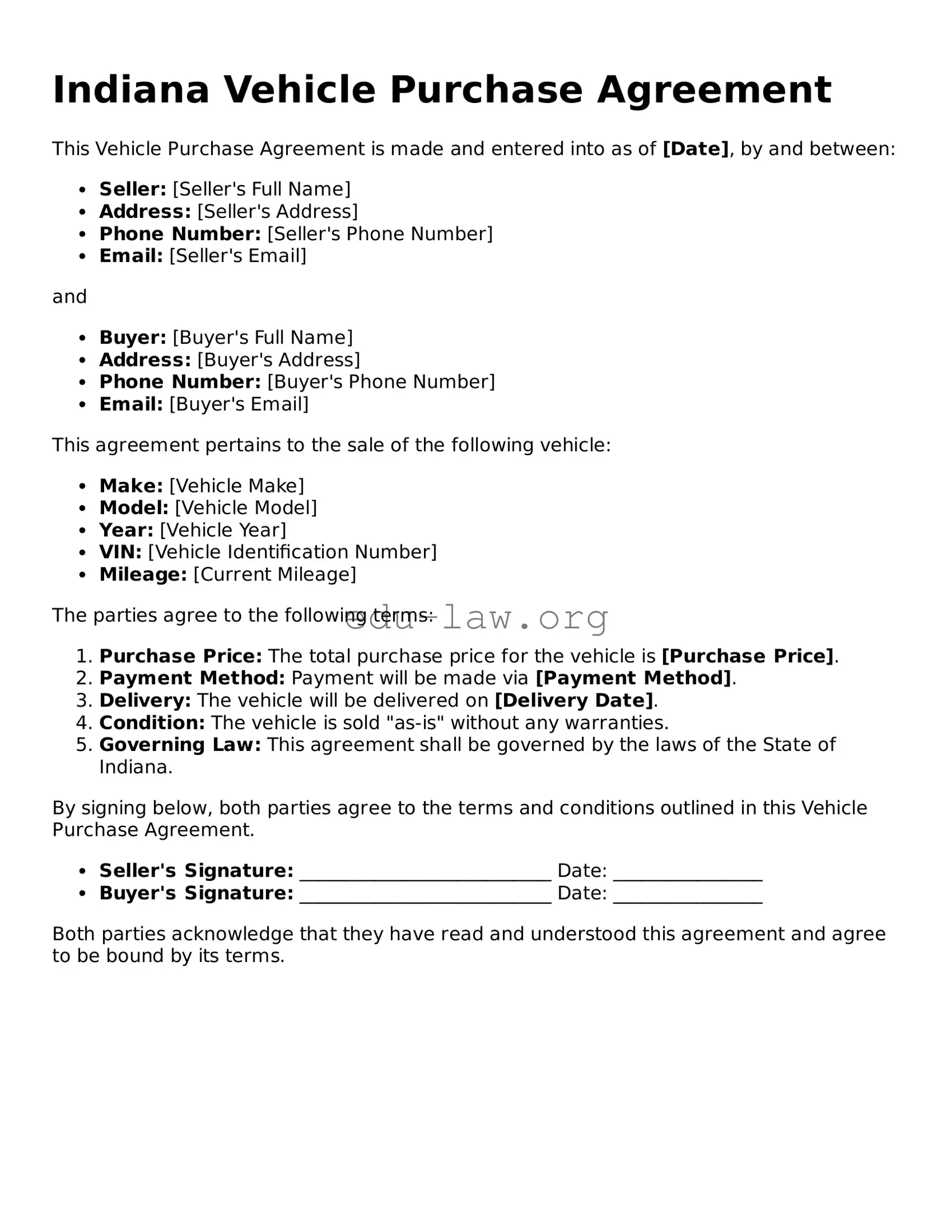
The Indiana Vehicle Purchase Agreement form plays a crucial role in the process of buying and selling vehicles within the state. This document serves as a binding contract between the buyer and the seller, detailing essential information about the transaction. It typically includes the vehicle's make, model, year, and identification number, ensuring both parties have a clear understanding of what is being sold. Additionally, the form outlines the purchase price, payment terms, and any warranties or guarantees related to the vehicle. It also addresses the responsibilities of both parties, such as the transfer of title and registration. By providing a structured format for the transaction, the Indiana Vehicle Purchase Agreement helps to protect the rights of both buyers and sellers, reducing the likelihood of disputes and misunderstandings. Whether you are a seasoned dealer or a first-time buyer, understanding this form is vital to ensuring a smooth and legally sound vehicle purchase experience.
Indiana Vehicle Purchase Agreement
This Vehicle Purchase Agreement is made and entered into as of [Date], by and between:
and
This agreement pertains to the sale of the following vehicle:
The parties agree to the following terms:
By signing below, both parties agree to the terms and conditions outlined in this Vehicle Purchase Agreement.
Both parties acknowledge that they have read and understood this agreement and agree to be bound by its terms.
| Fact Name | Description |
|---|---|
| Purpose | The Indiana Vehicle Purchase Agreement form is used to document the sale of a vehicle between a buyer and a seller. |
| Parties Involved | The agreement must include the names and addresses of both the buyer and the seller. |
| Vehicle Information | Details about the vehicle, such as make, model, year, and VIN, must be included in the form. |
| Purchase Price | The total purchase price of the vehicle should be clearly stated in the agreement. |
| Governing Law | This agreement is governed by the laws of the State of Indiana. |
| Signatures | Both parties must sign the agreement to make it legally binding. |
| Additional Terms | Any additional terms or conditions related to the sale can be included in the agreement. |
Filling out the Indiana Vehicle Purchase Agreement form is a crucial step in the vehicle buying process. Once completed, this document will serve as a record of the transaction between the buyer and the seller. It’s important to ensure that all information is accurate to avoid any complications later on.
Once you have completed the form, both parties should keep a copy for their records. This will help ensure that everyone is on the same page regarding the terms of the sale.
What is the Indiana Vehicle Purchase Agreement form?
The Indiana Vehicle Purchase Agreement form is a legal document used when buying or selling a vehicle in Indiana. It outlines the terms of the sale, including the purchase price, vehicle details, and any warranties or conditions agreed upon by both the buyer and the seller. This form helps protect both parties by clearly defining their rights and responsibilities in the transaction.
Who needs to use the Vehicle Purchase Agreement?
Both buyers and sellers of vehicles in Indiana should use the Vehicle Purchase Agreement. It is especially important for private sales, where there may not be a dealership involved. Having a written agreement helps ensure that both parties understand the terms of the sale and can refer back to the document if any disputes arise.
What information is typically included in the form?
The form usually includes essential details such as the names and addresses of the buyer and seller, the vehicle identification number (VIN), make and model of the vehicle, purchase price, and any additional terms or conditions. It may also cover payment methods and any warranties or guarantees provided by the seller.
Is the Vehicle Purchase Agreement legally binding?
Yes, the Vehicle Purchase Agreement is a legally binding document once both parties sign it. This means that the terms outlined in the agreement must be followed. If either party fails to comply with the agreement, the other party may have legal recourse to enforce the terms.
Do I need to have the agreement notarized?
Notarization is not typically required for a Vehicle Purchase Agreement in Indiana. However, having the document notarized can add an extra layer of authenticity and may be beneficial in case of any disputes. It’s always a good idea to check with local regulations or legal advice if you have concerns.
Can I modify the Vehicle Purchase Agreement?
Yes, you can modify the Vehicle Purchase Agreement to suit your needs, as long as both parties agree to the changes. It’s essential to make any modifications in writing and have both parties initial the changes to avoid confusion later on.
What should I do if the seller does not provide a Vehicle Purchase Agreement?
If the seller does not provide a Vehicle Purchase Agreement, it is advisable to request one. If they refuse, you can create your own using templates available online or seek assistance from a legal professional. It is crucial to have a written record of the sale to protect your interests.
What happens after the Vehicle Purchase Agreement is signed?
After the agreement is signed, the buyer typically pays the agreed-upon purchase price, and the seller transfers the vehicle title to the buyer. The buyer should ensure that the title is properly signed over and that they receive any necessary documents, such as a bill of sale. It’s also wise to register the vehicle with the Indiana Bureau of Motor Vehicles (BMV) as soon as possible.
Are there any fees associated with the Vehicle Purchase Agreement?
Generally, there are no fees specifically associated with creating a Vehicle Purchase Agreement. However, there may be fees related to title transfer, registration, and taxes when you register the vehicle with the BMV. It’s important to budget for these costs when purchasing a vehicle.
Where can I find a template for the Vehicle Purchase Agreement?
Templates for the Indiana Vehicle Purchase Agreement can be found online through various legal websites or state resources. Many templates are free to download and can be customized to fit your specific transaction. Always ensure that the template complies with Indiana laws before use.
Failing to provide accurate vehicle information. This includes the VIN (Vehicle Identification Number), make, model, and year. Inaccuracies can lead to complications during registration.
Not including the correct purchase price. Ensure that the total amount agreed upon is clearly stated to avoid disputes later.
Omitting the buyer's and seller's information. Both parties must include their full names, addresses, and contact details.
Neglecting to sign the agreement. Both the buyer and seller must sign the document to make it legally binding.
Not specifying the payment method. Clearly state whether the payment is made in cash, check, or financing to avoid misunderstandings.
Forgetting to include any additional terms. If there are warranties, conditions, or agreements, they should be documented in the form.
Leaving out the date of the transaction. This is crucial for record-keeping and legal purposes.
Using incorrect or unclear language. Ambiguities can lead to misinterpretations, so clarity is essential.
Not retaining a copy of the signed agreement. Both parties should keep a copy for their records to ensure they have proof of the transaction.
The Indiana Vehicle Purchase Agreement form is a crucial document in the process of buying or selling a vehicle in Indiana. Along with this form, several other documents are often necessary to ensure a smooth transaction. Here are some commonly used forms and documents that accompany the Vehicle Purchase Agreement.
Having these documents prepared and completed can facilitate a seamless vehicle transaction. It is important to ensure that all paperwork is accurate and up-to-date to avoid any complications during the sale or transfer process.
The Bill of Sale is a document that serves as proof of the transfer of ownership from the seller to the buyer. Like the Indiana Vehicle Purchase Agreement, it includes essential details such as the names of both parties, a description of the vehicle, and the sale price. Both documents are important for legal purposes, ensuring that the transaction is documented and can be referred to in the future if any disputes arise.
The Purchase Agreement is a broader document that can apply to various types of property, not just vehicles. Similar to the Indiana Vehicle Purchase Agreement, it outlines the terms and conditions of the sale, including payment details and contingencies. This agreement provides clarity and protection for both the buyer and the seller, ensuring that all parties understand their rights and obligations.
The Title Transfer Form is a crucial document in the vehicle sales process. It is used to officially change the ownership of the vehicle from the seller to the buyer. This form, like the Indiana Vehicle Purchase Agreement, requires details about the vehicle and the parties involved. Completing this form is essential for the buyer to register the vehicle in their name legally.
The Odometer Disclosure Statement is often required during the sale of a vehicle. This document verifies the mileage on the vehicle at the time of sale. Similar to the Indiana Vehicle Purchase Agreement, it helps protect the buyer from potential fraud by ensuring that the seller discloses accurate information about the vehicle's history.
The Vehicle Registration Application is necessary for the buyer to register the vehicle in their name after purchase. This document includes information about the vehicle and the new owner. Like the Indiana Vehicle Purchase Agreement, it is a step in the process that formalizes the change in ownership and ensures that the vehicle is legally recognized by the state.
The Financing Agreement is relevant when the buyer is borrowing money to purchase the vehicle. This document outlines the terms of the loan, including the interest rate and repayment schedule. Similar to the Indiana Vehicle Purchase Agreement, it protects both the lender and the buyer by clearly stating the terms of the financial arrangement.
The Warranty Deed is used in real estate transactions but shares similarities with the Indiana Vehicle Purchase Agreement in that it serves to transfer ownership. Both documents ensure that the new owner has clear title to the property, whether it be a vehicle or real estate. They both provide a legal record of the transaction and help prevent future disputes over ownership.
The Lease Agreement is used when a vehicle is rented rather than purchased. While it serves a different purpose, it shares key elements with the Indiana Vehicle Purchase Agreement, such as outlining the terms of use, payment, and responsibilities of both parties. Both documents are important for defining the relationship between the owner and the user of the vehicle.
The Insurance Policy is essential for protecting the buyer after the vehicle purchase. While it is not a direct sales document, it relates to the transaction by ensuring that the vehicle is covered in case of accidents or damages. Like the Indiana Vehicle Purchase Agreement, it provides peace of mind and security for the buyer, ensuring they are protected after the purchase is finalized.
When filling out the Indiana Vehicle Purchase Agreement form, it's essential to approach the task with care. Here are some key dos and don'ts to keep in mind:
By following these guidelines, you can help ensure that your Vehicle Purchase Agreement is completed correctly and efficiently.
When it comes to the Indiana Vehicle Purchase Agreement form, several misconceptions can lead to confusion. Here are ten common misunderstandings:
Understanding these misconceptions can help individuals navigate the vehicle purchase process more effectively.
Filling out and using the Indiana Vehicle Purchase Agreement form is a crucial step in the vehicle buying process. Here are some key takeaways to consider:
By keeping these points in mind, individuals can navigate the vehicle purchase process more effectively and minimize potential complications.