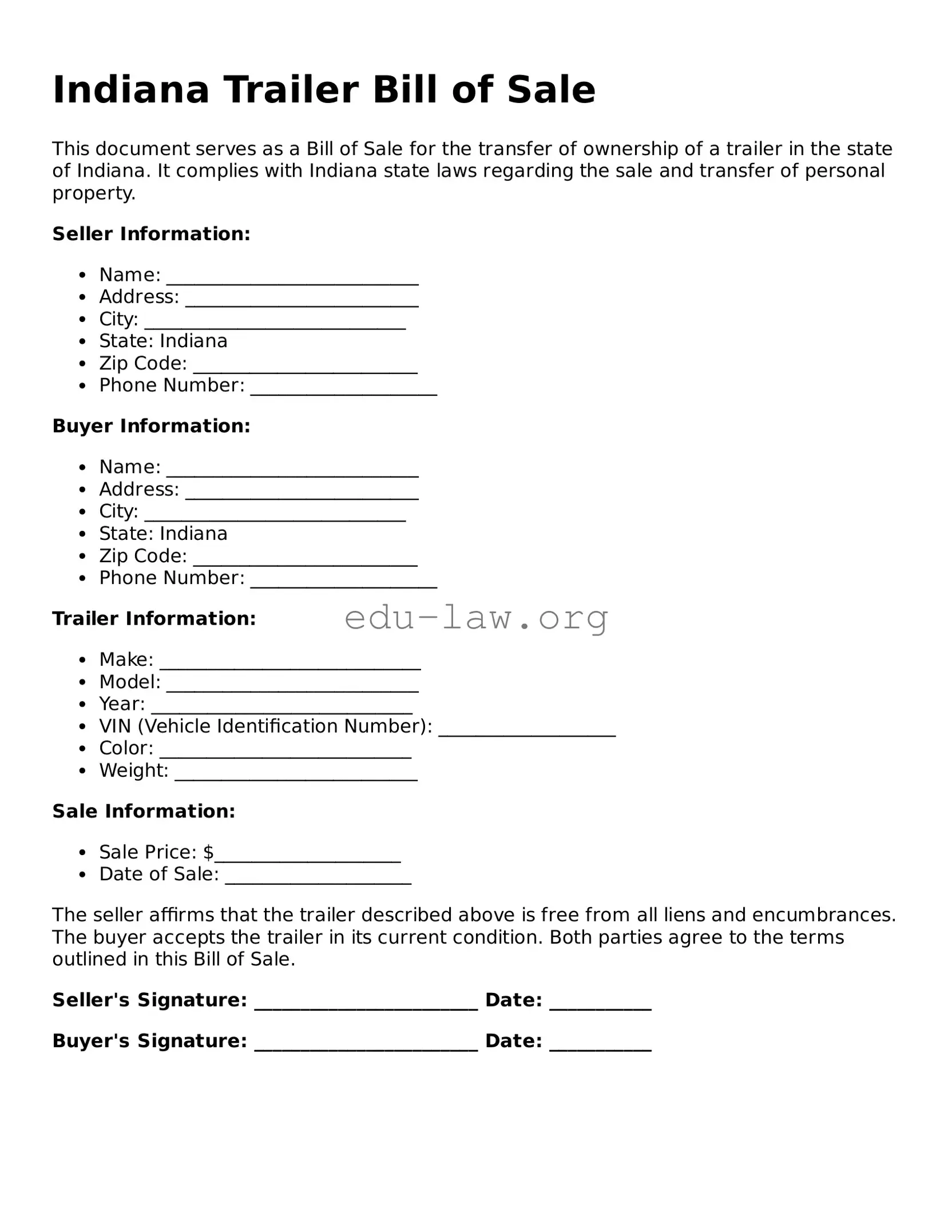
The Indiana Trailer Bill of Sale form is a crucial document for anyone involved in the buying or selling of a trailer in the state of Indiana. This form serves as a legal record of the transaction, providing essential details such as the buyer's and seller's names, addresses, and contact information. It also includes vital information about the trailer itself, including its make, model, year, Vehicle Identification Number (VIN), and any relevant features or specifications. By documenting the sale, this form helps protect both parties in the transaction, ensuring that ownership is clearly transferred and that any potential disputes can be resolved more easily. Additionally, the Trailer Bill of Sale may be required for registration purposes with the Indiana Bureau of Motor Vehicles (BMV), making it an important step in the process of trailer ownership. Whether you are a first-time buyer or an experienced seller, understanding the importance and requirements of this form can facilitate a smooth and legally sound transaction.
Indiana Trailer Bill of Sale
This document serves as a Bill of Sale for the transfer of ownership of a trailer in the state of Indiana. It complies with Indiana state laws regarding the sale and transfer of personal property.
Seller Information:
Buyer Information:
Trailer Information:
Sale Information:
The seller affirms that the trailer described above is free from all liens and encumbrances. The buyer accepts the trailer in its current condition. Both parties agree to the terms outlined in this Bill of Sale.
Seller's Signature: ________________________ Date: ___________
Buyer's Signature: ________________________ Date: ___________
| Fact Name | Details |
|---|---|
| Purpose | The Indiana Trailer Bill of Sale form is used to document the sale or transfer of ownership of a trailer in the state of Indiana. |
| Governing Law | This form is governed by Indiana Code Title 9, Article 17, which outlines the regulations regarding vehicle titles and registration. |
| Required Information | The form typically requires details such as the seller's and buyer's names, addresses, trailer identification number (VIN), and sale price. |
| Signatures | Both the seller and buyer must sign the form to validate the transaction and acknowledge the transfer of ownership. |
| Usage | This form is essential for buyers to register the trailer with the Indiana Bureau of Motor Vehicles (BMV) after the purchase. |
Once you have the Indiana Trailer Bill of Sale form in hand, you will need to complete it carefully to ensure all necessary information is accurately captured. This form will help facilitate the transfer of ownership for the trailer. Follow the steps outlined below to fill out the form correctly.
After completing the form, ensure that both parties retain a copy for their records. This documentation may be necessary for future reference or registration purposes.
What is a Trailer Bill of Sale in Indiana?
A Trailer Bill of Sale is a legal document that records the sale of a trailer from one person to another in the state of Indiana. It serves as proof of the transaction and includes important details such as the names of the buyer and seller, the trailer's identification number, and the sale price. This document is essential for both parties to protect their rights and interests in the sale.
Why do I need a Bill of Sale for my trailer?
A Bill of Sale is crucial for several reasons. It provides legal evidence that the transaction occurred, which can be important if disputes arise in the future. Additionally, it helps establish the buyer's ownership of the trailer, making it easier to register the trailer with the state and obtain a title. Without this document, proving ownership may become complicated.
What information is required on the Indiana Trailer Bill of Sale?
The Indiana Trailer Bill of Sale typically requires specific information to be valid. This includes the full names and addresses of both the seller and the buyer, the trailer's Vehicle Identification Number (VIN), the make, model, and year of the trailer, the sale price, and the date of the transaction. Both parties should also sign the document to confirm their agreement.
Is the Bill of Sale required to register a trailer in Indiana?
Yes, in Indiana, a Bill of Sale is often required when registering a trailer. The Indiana Bureau of Motor Vehicles (BMV) may request this document to verify the sale and ownership transfer. It is advisable to keep a copy of the Bill of Sale for your records, as it may be needed for future reference or when selling the trailer again.
Can I create my own Bill of Sale for a trailer?
Absolutely, you can create your own Bill of Sale for a trailer. However, it is essential to include all necessary information to ensure it is legally binding. Many templates are available online, which can help guide you in drafting a comprehensive document. Just make sure that it meets Indiana's requirements and includes all relevant details.
Do I need a notary for the Trailer Bill of Sale?
While it is not mandatory to have a Bill of Sale notarized in Indiana, doing so can add an extra layer of authenticity to the document. A notary public can verify the identities of both parties and witness the signing, which may be beneficial if any disputes arise later. It can also provide peace of mind to both the buyer and seller.
What if the trailer has a lien on it?
If the trailer has a lien, it is crucial to address this before completing the sale. The seller must pay off the lien to ensure that the buyer receives clear title to the trailer. The Bill of Sale should reflect this situation, and it may be wise to include a statement confirming that the lien has been satisfied or that the sale is contingent upon the lien being cleared.
How do I obtain a copy of the Trailer Bill of Sale?
After completing the sale, both the buyer and seller should keep a signed copy of the Bill of Sale for their records. If you used a template or online service to create the document, you should have access to a digital copy. If you need a new copy, you can recreate it using the same information or consult with a legal professional for assistance.
What should I do if I lose the Bill of Sale?
If you lose the Bill of Sale, it is advisable to recreate the document as soon as possible. You can use the same information that was originally included. Both parties should sign the new document to reaffirm the sale. In cases where the original seller cannot be reached, it may be necessary to consult with a legal professional for guidance on proving ownership and resolving any potential issues.
Failing to include accurate vehicle identification numbers (VIN). This number is crucial for identifying the trailer and ensuring it is registered correctly.
Not providing the correct sale price. The sale price must reflect the actual transaction to avoid complications with taxes and future registrations.
Omitting the seller's and buyer's signatures. Both parties must sign the document to validate the sale. Without signatures, the bill of sale is incomplete.
Leaving out the date of sale. This date is important for record-keeping and can affect the timing of registration and taxes.
Not providing accurate contact information for both the seller and buyer. This information is essential for any future communication regarding the sale.
Using unclear or vague descriptions of the trailer. Specific details about the make, model, year, and condition should be included to avoid disputes.
Failing to keep a copy of the completed bill of sale. Both parties should retain a copy for their records, as it serves as proof of the transaction.
When completing the sale or purchase of a trailer in Indiana, several additional documents may be necessary to ensure a smooth transaction. These documents help clarify ownership, registration, and compliance with state laws. Below is a list of commonly used forms that accompany the Indiana Trailer Bill of Sale.
Having these documents prepared and organized can facilitate a seamless transfer of ownership. Proper documentation not only protects both parties involved in the transaction but also ensures compliance with Indiana state regulations.
The Indiana Trailer Bill of Sale form serves as a crucial document for the transfer of ownership of a trailer. Similarly, a Vehicle Bill of Sale is used for the sale of automobiles. Both documents provide essential details, including the buyer's and seller's information, a description of the vehicle or trailer, and the sale price. Each serves as proof of the transaction, helping to protect the interests of both parties involved. When properly completed, these forms can also assist in future registration processes with the state.
Another document comparable to the Trailer Bill of Sale is the Motorcycle Bill of Sale. This form shares many similarities, such as detailing the motorcycle's make, model, and Vehicle Identification Number (VIN). Like the trailer bill, it ensures that ownership is officially transferred from the seller to the buyer. Both documents are essential for registering the vehicle with the Department of Motor Vehicles (DMV) and can serve as a legal record in case of disputes.
The Boat Bill of Sale also parallels the Trailer Bill of Sale in function and purpose. It captures the essential details about the boat, including the seller's and buyer's information, the boat's specifications, and the agreed sale price. This document is crucial for the transfer of ownership and is often required for registration purposes. Just as with trailers, proper documentation helps prevent future legal issues regarding ownership disputes.
Similarly, the RV Bill of Sale is another document that shares characteristics with the Trailer Bill of Sale. It documents the sale of a recreational vehicle, providing necessary details such as the RV's identification number and specifications. Both forms serve to protect both the buyer and seller by clearly outlining the terms of the sale and establishing proof of ownership transfer. This clarity can be invaluable in future transactions or registrations.
The Equipment Bill of Sale is another related document that serves a similar purpose. While it is often used for heavy machinery or tools, it operates on the same principles as the Trailer Bill of Sale. Both documents record the transaction details, including the condition of the equipment or trailer, which can be crucial for both parties. This form also helps in establishing ownership and can be useful for tax purposes or future sales.
In addition, the Mobile Home Bill of Sale is akin to the Trailer Bill of Sale, as it facilitates the transfer of ownership for a mobile home. Both documents require specific information about the property being sold, including its identification number and any pertinent details about the condition. They serve as legal proof of the transaction and are often required for registration with local authorities.
Lastly, the Personal Property Bill of Sale can be seen as a broader document that encompasses various types of personal property, including trailers. This form captures the sale details of any personal item, ensuring that both the buyer and seller have a clear understanding of the transaction. While it may not be specific to trailers, its function in documenting ownership transfer is very much in line with that of the Trailer Bill of Sale.
When filling out the Indiana Trailer Bill of Sale form, it's important to ensure accuracy and clarity. Here are some essential dos and don'ts to keep in mind:
The Indiana Trailer Bill of Sale form is often misunderstood. Here are eight common misconceptions:
Filling out and using the Indiana Trailer Bill of Sale form is an important step in the buying and selling process of a trailer. Here are some key takeaways to keep in mind:
By following these guidelines, individuals can navigate the process of buying or selling a trailer more confidently and securely.