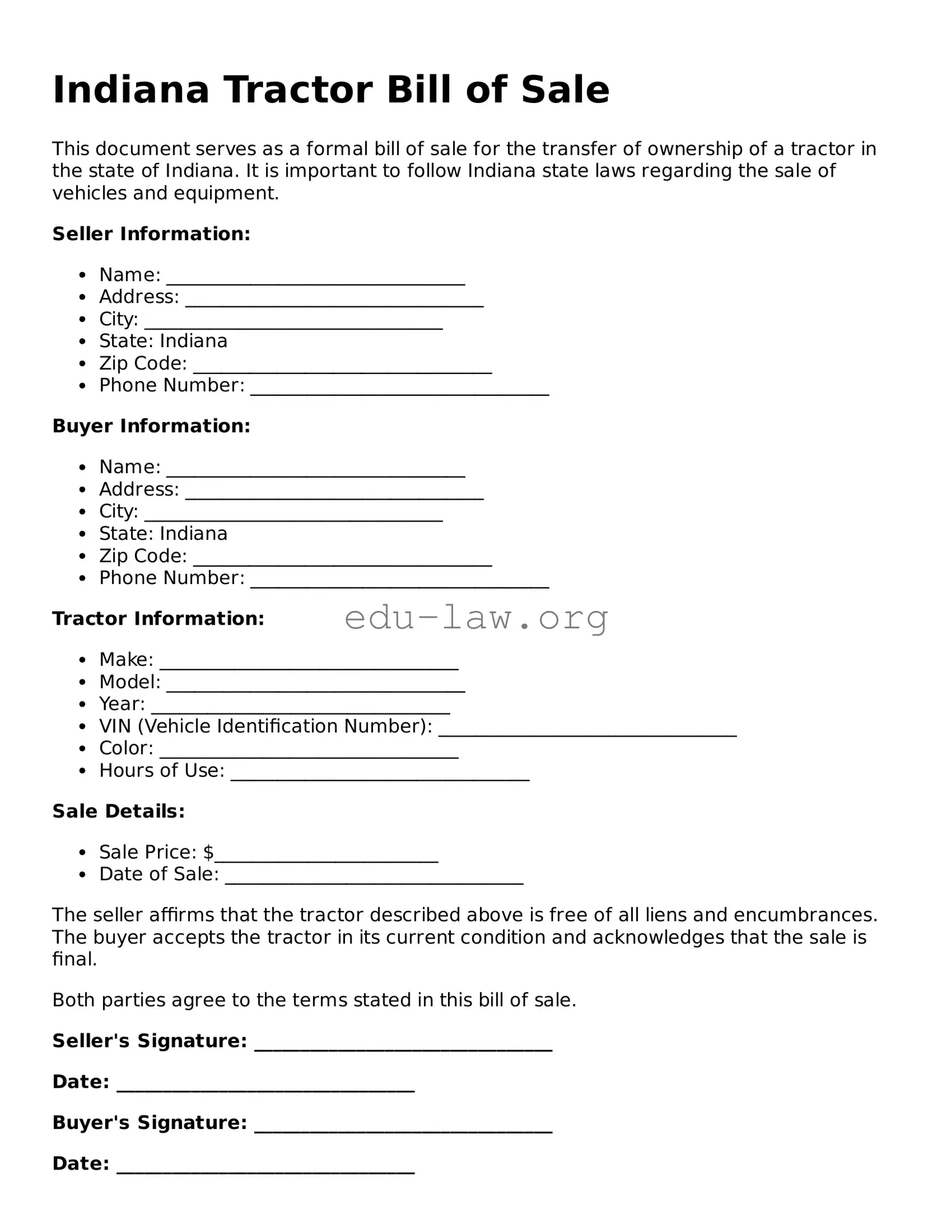
When it comes to buying or selling a tractor in Indiana, having the right documentation is crucial. The Indiana Tractor Bill of Sale form serves as a vital record of the transaction between the buyer and the seller. This form not only outlines essential details such as the names and addresses of both parties but also includes information about the tractor itself, including its make, model, year, and Vehicle Identification Number (VIN). Additionally, the form captures the sale price and the date of the transaction, ensuring that both parties have a clear understanding of the agreement. By utilizing this form, individuals can protect their interests and provide proof of ownership, which is especially important for future registrations or potential disputes. Understanding how to fill out and use the Indiana Tractor Bill of Sale form can simplify the process and provide peace of mind for everyone involved.
Indiana Tractor Bill of Sale
This document serves as a formal bill of sale for the transfer of ownership of a tractor in the state of Indiana. It is important to follow Indiana state laws regarding the sale of vehicles and equipment.
Seller Information:
Buyer Information:
Tractor Information:
Sale Details:
The seller affirms that the tractor described above is free of all liens and encumbrances. The buyer accepts the tractor in its current condition and acknowledges that the sale is final.
Both parties agree to the terms stated in this bill of sale.
Seller's Signature: ________________________________
Date: ________________________________
Buyer's Signature: ________________________________
Date: ________________________________
| Fact Name | Description |
|---|---|
| Purpose | The Indiana Tractor Bill of Sale form is used to document the sale of a tractor between a buyer and a seller. |
| Governing Law | This form is governed by Indiana Code Title 9, Article 17, which pertains to the regulation of motor vehicles and equipment. |
| Required Information | The form requires details such as the buyer's and seller's names, addresses, and signatures, as well as the tractor's make, model, year, and VIN. |
| Notarization | While notarization is not mandatory, it is recommended to enhance the document's authenticity. |
| Transfer of Ownership | The completion of the Bill of Sale serves as proof of the transfer of ownership from the seller to the buyer. |
| Record Keeping | Both parties should retain a copy of the completed form for their records, as it may be needed for future reference. |
| Usage in Registration | The Bill of Sale may be required when registering the tractor with the Indiana Bureau of Motor Vehicles (BMV). |
Completing the Indiana Tractor Bill of Sale form is an important step in transferring ownership of a tractor. This document serves as a record of the transaction and provides essential details about the buyer, seller, and the tractor itself. After filling out the form, both parties should retain a copy for their records.
What is a Tractor Bill of Sale in Indiana?
A Tractor Bill of Sale is a legal document that records the sale of a tractor from one party to another in Indiana. It serves as proof of the transaction and includes details about the tractor, the buyer, and the seller. This document is important for both parties to ensure that ownership is transferred properly.
Why do I need a Tractor Bill of Sale?
You need a Tractor Bill of Sale to establish a clear record of the sale. It protects both the buyer and seller by documenting the transaction. This can help prevent disputes about ownership or the condition of the tractor in the future. Additionally, it may be required for registration purposes.
What information should be included in the Tractor Bill of Sale?
The Tractor Bill of Sale should include the following information: the names and addresses of both the buyer and seller, a detailed description of the tractor (including make, model, year, and VIN), the sale price, and the date of the transaction. Both parties should sign the document to make it valid.
Do I need to have the Tractor Bill of Sale notarized?
In Indiana, notarization is not typically required for a Tractor Bill of Sale. However, having it notarized can add an extra layer of authenticity and may be beneficial if you plan to register the tractor or if there are any future disputes.
Can I use a generic Bill of Sale template for my tractor sale?
While you can use a generic Bill of Sale template, it is best to use a specific Tractor Bill of Sale form. This ensures that all relevant details specific to tractors are included, which can help avoid any confusion or issues during the sale process.
Is there a fee for filing the Tractor Bill of Sale in Indiana?
There is no fee for simply creating or signing a Tractor Bill of Sale. However, if you need to register the tractor with the Indiana Bureau of Motor Vehicles (BMV), there may be fees associated with that process. Check with the BMV for specific registration fees.
What if the tractor has a loan or lien on it?
If there is a loan or lien on the tractor, you should disclose this information to the buyer. The sale may require the lender's approval to transfer ownership. It's important to resolve any outstanding loans or liens before completing the sale to avoid complications.
How do I complete the Tractor Bill of Sale?
To complete the Tractor Bill of Sale, fill out the form with all required information, including details about the tractor and the parties involved. Both the buyer and seller should review the document for accuracy before signing. Keep copies for your records after the sale is finalized.
What should I do after completing the Tractor Bill of Sale?
After completing the Tractor Bill of Sale, both parties should retain a copy for their records. The buyer may need to take this document to the BMV for registration purposes. Ensure that the tractor is properly transferred and that all necessary paperwork is in order.
Incomplete Information: One of the most common mistakes is failing to provide all required details. This includes not only the names and addresses of both the buyer and seller but also the complete description of the tractor, including its make, model, and year.
Incorrect Identification Numbers: People often overlook the importance of including the correct Vehicle Identification Number (VIN) or serial number. Errors in these numbers can lead to complications in registration and ownership verification.
Missing Signatures: A bill of sale is not valid without the appropriate signatures. Both parties must sign the document, and sometimes, witnesses may also be required. Neglecting this step can render the document ineffective.
Failure to Date the Document: It may seem trivial, but forgetting to include the date can create issues. The date establishes when the transaction occurred, which is essential for legal and tax purposes.
Not Keeping Copies: After filling out the form, some individuals fail to make copies for their records. Retaining a copy is crucial for both the buyer and seller, as it serves as proof of the transaction.
Neglecting to Include Payment Details: It’s important to specify the payment method and amount. Without this information, disputes may arise regarding the terms of the sale.
When purchasing or selling a tractor in Indiana, the Tractor Bill of Sale form is a crucial document that helps facilitate the transaction. However, it is often accompanied by several other forms and documents to ensure that the sale is conducted smoothly and legally. Below is a list of additional documents that may be required or beneficial in conjunction with the Tractor Bill of Sale.
In summary, while the Indiana Tractor Bill of Sale form is a vital component of the transaction, it is essential to consider these additional documents. Each one serves a specific purpose, contributing to a seamless and lawful sale process. Being well-prepared with the necessary paperwork can help both buyers and sellers navigate the complexities of tractor ownership transfer with confidence.
The Indiana Vehicle Bill of Sale is quite similar to the Tractor Bill of Sale. Both documents serve the same fundamental purpose: to provide a legal record of the transfer of ownership from a seller to a buyer. They include essential details such as the names and addresses of both parties, a description of the vehicle or tractor, and the sale price. This document is crucial for registering the vehicle with the state and protecting both parties in case of disputes.
The Indiana Motorcycle Bill of Sale also shares similarities with the Tractor Bill of Sale. Like the tractor form, it captures the transaction details, including the buyer and seller's information, the motorcycle's make, model, and Vehicle Identification Number (VIN). This document is essential for ensuring the legal transfer of ownership and can be used to register the motorcycle with the state authorities.
Another comparable document is the Indiana Boat Bill of Sale. This form functions similarly by documenting the sale of a boat, including pertinent information such as the boat's make, model, and hull identification number. Just like the Tractor Bill of Sale, it protects both the buyer and seller, ensuring a clear record of the transaction and facilitating registration with state agencies.
The Indiana RV Bill of Sale is also akin to the Tractor Bill of Sale. It serves to officially record the sale of a recreational vehicle, detailing the buyer and seller's information, the RV's specifications, and the sale price. This document is vital for registering the RV and provides legal protection for both parties involved in the transaction.
The Indiana Trailer Bill of Sale bears similarities as well. This document is used for the sale of trailers, capturing essential details like the trailer's description and the sale price. It acts as proof of ownership transfer, just like the Tractor Bill of Sale, ensuring both parties have a record of the transaction for future reference.
The Indiana Snowmobile Bill of Sale is another document that aligns with the Tractor Bill of Sale. It documents the sale of a snowmobile, including the names of the buyer and seller, the snowmobile's details, and the sale price. This form is essential for establishing ownership and can be used for registration purposes, much like the Tractor Bill of Sale.
The Indiana Off-Road Vehicle Bill of Sale is also relevant. This document serves to document the sale of off-road vehicles, capturing the same types of information as the Tractor Bill of Sale. It ensures that ownership is legally transferred and provides both parties with a record of the transaction, which is necessary for registration and potential future sales.
Lastly, the Indiana Mobile Home Bill of Sale is comparable in its function. This document records the sale of a mobile home, detailing the buyer and seller's information, the mobile home's specifications, and the sale price. Like the Tractor Bill of Sale, it protects both parties by providing a legal record of the transaction and is often required for title transfer and registration purposes.
When filling out the Indiana Tractor Bill of Sale form, it is important to follow certain guidelines to ensure the document is valid and effective. Below is a list of things you should and shouldn't do.
By adhering to these guidelines, you can ensure a smoother transaction and avoid potential legal complications.
When dealing with the Indiana Tractor Bill of Sale form, several misconceptions can lead to confusion. It’s important to clarify these points to ensure a smooth transaction. Here are six common misconceptions:
Understanding these misconceptions can help ensure that all parties involved in the transaction are adequately protected and informed. Taking the time to complete the Indiana Tractor Bill of Sale form correctly can prevent future issues and provide peace of mind.
When filling out and using the Indiana Tractor Bill of Sale form, it’s important to keep several key points in mind. This document serves as a crucial record of the transaction between the buyer and seller. Here are the essential takeaways:
Being thorough and diligent when completing the Indiana Tractor Bill of Sale form will help ensure a smooth transaction. Take these steps seriously to protect both parties involved.