In Indiana, the Snowmobile Bill of Sale form serves as a crucial document for individuals engaged in the buying and selling of snowmobiles. This form not only provides a record of the transaction but also includes essential details such as the names and addresses of both the buyer and seller, the vehicle identification number (VIN), and the make and model of the snowmobile. It is vital for ensuring that the transaction is legally recognized and that both parties have a clear understanding of the terms involved. Additionally, the form may outline the sale price and any warranties or representations made by the seller, which can protect both parties in case of disputes. Completing this form accurately helps to facilitate a smooth transfer of ownership and can be instrumental in registering the snowmobile with the state. Understanding the components and significance of the Snowmobile Bill of Sale is essential for anyone looking to navigate the complexities of snowmobile ownership in Indiana.
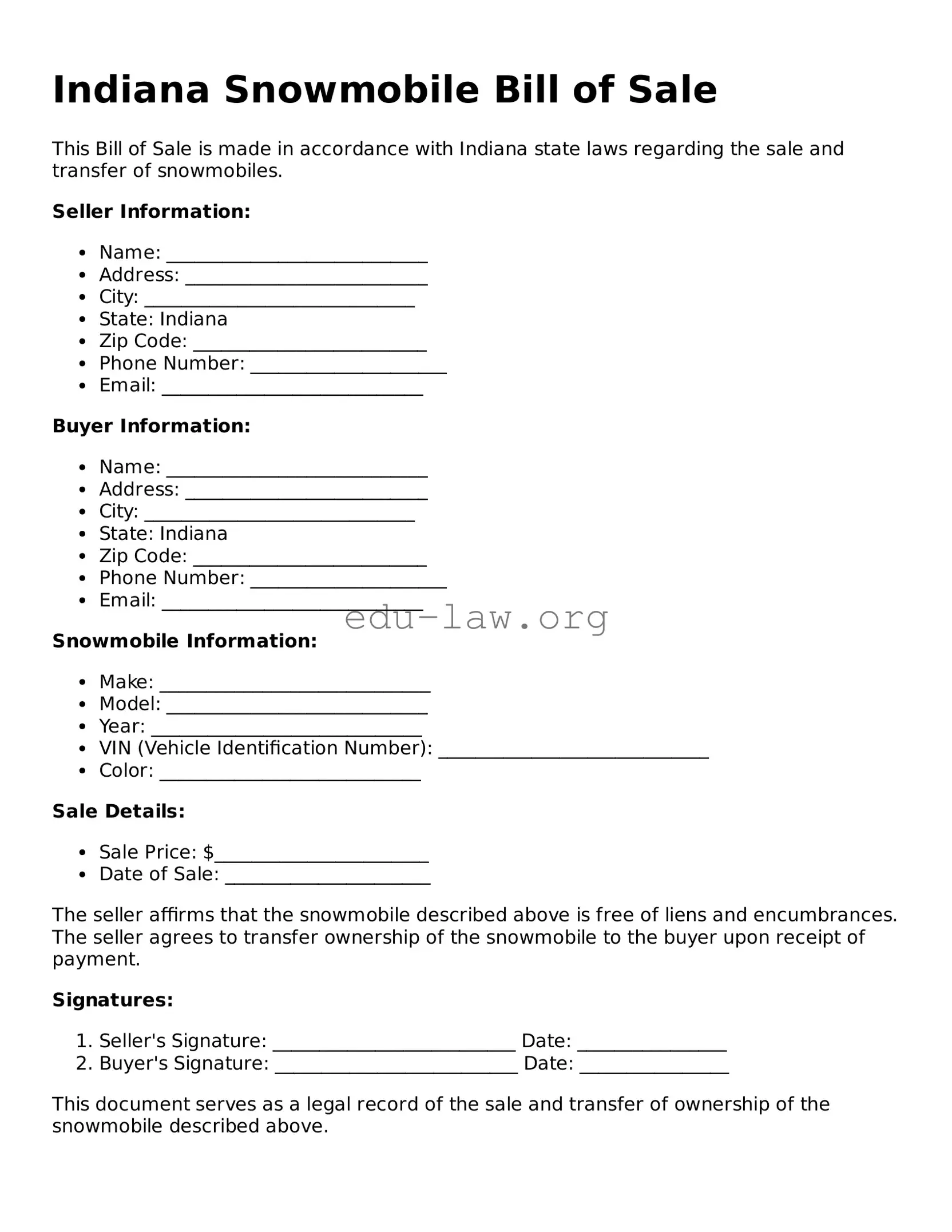
Indiana Snowmobile Bill of Sale
This Bill of Sale is made in accordance with Indiana state laws regarding the sale and transfer of snowmobiles.
Seller Information:
Buyer Information:
Snowmobile Information:
Sale Details:
The seller affirms that the snowmobile described above is free of liens and encumbrances. The seller agrees to transfer ownership of the snowmobile to the buyer upon receipt of payment.
Signatures:
This document serves as a legal record of the sale and transfer of ownership of the snowmobile described above.
| Fact Name | Details |
|---|---|
| Purpose | The Indiana Snowmobile Bill of Sale form is used to document the sale and transfer of ownership of a snowmobile. |
| Governing Law | This form is governed by Indiana Code Title 9, Article 32, which pertains to snowmobiles and all-terrain vehicles. |
| Required Information | Buyers and sellers must provide their names, addresses, and signatures on the form. |
| Vehicle Details | The form requires specific information about the snowmobile, including make, model, year, and Vehicle Identification Number (VIN). |
| Purchase Price | The sale price of the snowmobile must be clearly stated in the bill of sale. |
| As-Is Clause | Typically, the form includes an "as-is" clause, indicating the buyer accepts the snowmobile in its current condition. |
| Notarization | While notarization is not always required, it can provide additional legal protection for both parties. |
| Record Keeping | Both the buyer and seller should keep a copy of the completed bill of sale for their records. |
| Transfer of Title | The bill of sale is often used in conjunction with the transfer of the snowmobile title to complete the ownership transfer. |
| Legal Protection | A properly completed bill of sale can protect both the buyer and seller in case of disputes regarding the sale. |
Once you have the Indiana Snowmobile Bill of Sale form, it's time to fill it out. This document is important for transferring ownership of a snowmobile. Make sure you have all the necessary information ready before you start.
After completing the form, make sure to keep a copy for your records. This document serves as proof of the transaction and may be needed for registration purposes.
What is an Indiana Snowmobile Bill of Sale form?
The Indiana Snowmobile Bill of Sale form is a legal document used to record the sale of a snowmobile in the state of Indiana. This form serves as proof of the transaction between the seller and the buyer, detailing important information such as the snowmobile's make, model, year, and Vehicle Identification Number (VIN). It also includes the sale price and the names and addresses of both parties involved. Having this document can help protect both the buyer and the seller in case of disputes or future ownership verification.
Do I need a Bill of Sale for a snowmobile purchase in Indiana?
While a Bill of Sale is not legally required in Indiana for every snowmobile transaction, it is highly recommended. This document provides essential proof of ownership transfer and can be crucial for registration purposes with the Indiana Department of Natural Resources. Additionally, having a Bill of Sale can help resolve any disputes regarding ownership or the condition of the snowmobile after the sale.
What information should be included in the Snowmobile Bill of Sale?
A complete Indiana Snowmobile Bill of Sale should include several key pieces of information. First, it should list the full names and addresses of both the buyer and the seller. Next, the snowmobile's details—such as the make, model, year, and VIN—should be clearly stated. The sale price must be included, along with the date of the transaction. Lastly, both parties should sign the document to validate the sale. Including all this information helps ensure clarity and can prevent misunderstandings later on.
Can I create my own Bill of Sale for a snowmobile?
Yes, you can create your own Bill of Sale for a snowmobile, as long as it includes all the necessary information. However, using a standard form can simplify the process and ensure that you don’t miss any important details. Many online resources provide templates specifically for Indiana snowmobile transactions. Just make sure to customize the template with the correct information and ensure both parties sign it to make it legally binding.
What should I do after completing the Snowmobile Bill of Sale?
After completing the Snowmobile Bill of Sale, both the buyer and the seller should retain a copy for their records. The buyer will need this document when registering the snowmobile with the Indiana Department of Natural Resources. It’s also a good idea for the seller to keep a copy as proof of the sale. If there are any issues in the future regarding ownership or the condition of the snowmobile, having this document can be invaluable.
Failing to include complete information about the buyer and seller. It's essential to provide full names, addresses, and contact details to ensure clarity in the transaction.
Not specifying the make, model, and year of the snowmobile. This information is crucial for identifying the vehicle and preventing any disputes later on.
Omitting the Vehicle Identification Number (VIN). The VIN serves as a unique identifier for the snowmobile and must be accurately recorded.
Neglecting to state the purchase price. Clearly indicating the sale amount helps establish the value of the transaction and can be important for tax purposes.
Not including the date of sale. This date is vital for record-keeping and can affect the transfer of ownership.
Forgetting to sign the document. Both the buyer and seller must provide their signatures to validate the sale.
Using incorrect or illegible handwriting. Clear and legible writing is necessary to avoid misunderstandings or misinterpretations.
Failing to make copies of the completed form. Keeping a copy for both parties can help resolve any future disputes.
Not checking for additional requirements specific to Indiana. Some counties may have unique regulations that need to be adhered to when completing the bill of sale.
Assuming that the bill of sale is the only document needed. In some cases, additional paperwork may be required for registration or titling.
When purchasing or selling a snowmobile in Indiana, several additional forms and documents may be necessary to ensure a smooth transaction. These documents help establish ownership, provide proof of sale, and facilitate registration with the state. Below is a list of common forms that are often used alongside the Indiana Snowmobile Bill of Sale.
Having these documents prepared and organized can make the buying or selling process more efficient and help avoid potential issues later on. Always ensure that all paperwork is completed accurately and retained for your records.
The Indiana Boat Bill of Sale is a document that serves a similar purpose to the Snowmobile Bill of Sale. Like the snowmobile form, it is used to transfer ownership of a boat from one party to another. Both documents require the seller's and buyer's information, including names and addresses, and details about the vessel or snowmobile being sold, such as make, model, and year. This ensures that both parties have a clear record of the transaction, which is crucial for registration and legal purposes.
The Indiana Vehicle Bill of Sale is another document closely related to the Snowmobile Bill of Sale. This form is used for the sale of motor vehicles, including cars and trucks. Similar to the snowmobile form, it includes essential information about the buyer and seller, as well as the vehicle's specifications. Both documents provide a legal record of the sale, which can protect both parties in case of disputes and is often required for registering the vehicle or snowmobile with the state.
The Indiana Motorcycle Bill of Sale shares similarities with the Snowmobile Bill of Sale as well. Both documents facilitate the transfer of ownership for recreational vehicles. They require similar information, such as the buyer's and seller's details and specifics about the motorcycle or snowmobile being sold. This ensures that both parties are protected and have a clear understanding of the terms of the sale, making it easier to navigate registration and potential legal issues down the line.
Lastly, the Indiana ATV Bill of Sale is akin to the Snowmobile Bill of Sale in that it pertains to the sale of all-terrain vehicles. Both forms require the same fundamental information, such as the identities of the buyer and seller, as well as the details of the ATV or snowmobile. This consistency helps streamline the buying and selling process for recreational vehicles, ensuring that all necessary information is documented, which can be crucial for registration and legal ownership verification.
When filling out the Indiana Snowmobile Bill of Sale form, it's important to ensure accuracy and clarity. Here are five things you should and shouldn't do:
When dealing with the Indiana Snowmobile Bill of Sale form, several misconceptions can lead to confusion. It is important to clarify these misunderstandings to ensure a smooth transaction.
Understanding these points can help ensure that the process of buying or selling a snowmobile in Indiana goes smoothly and legally.
When filling out and using the Indiana Snowmobile Bill of Sale form, keep these key points in mind:
By following these guidelines, you can ensure a smooth and legally sound transaction.