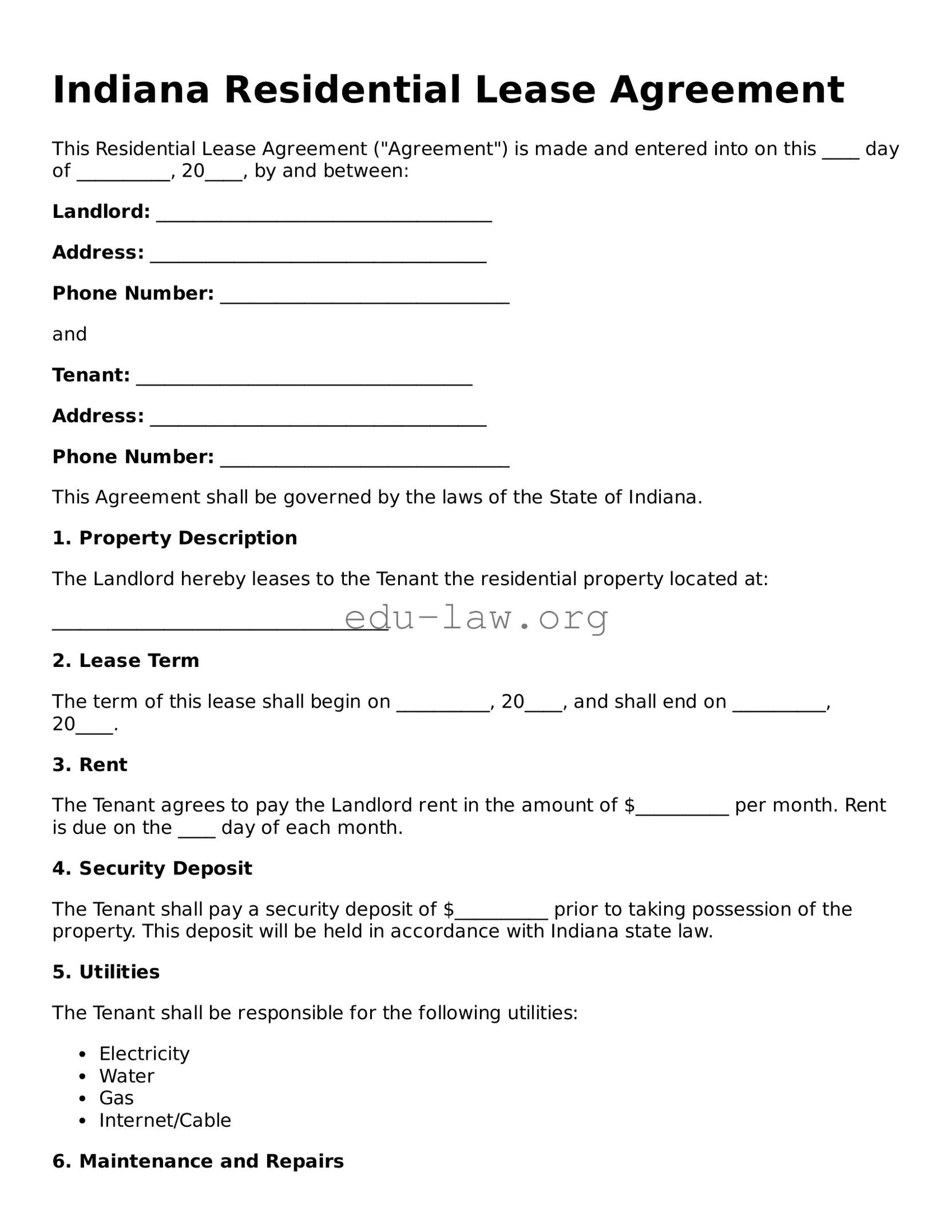
The Indiana Residential Lease Agreement form is a crucial document for both landlords and tenants, serving as the foundation for their rental relationship. This legally binding contract outlines essential terms, including the rental amount, payment due dates, and lease duration. It specifies the rights and responsibilities of both parties, detailing maintenance obligations, rules regarding pets, and procedures for handling disputes. Additionally, the agreement may include clauses about security deposits, late fees, and the process for renewing or terminating the lease. Understanding these key components is vital for ensuring a smooth rental experience and protecting the interests of all involved.
Indiana Residential Lease Agreement
This Residential Lease Agreement ("Agreement") is made and entered into on this ____ day of __________, 20____, by and between:
Landlord: ____________________________________
Address: ____________________________________
Phone Number: _______________________________
and
Tenant: ____________________________________
Address: ____________________________________
Phone Number: _______________________________
This Agreement shall be governed by the laws of the State of Indiana.
1. Property Description
The Landlord hereby leases to the Tenant the residential property located at:
____________________________________
2. Lease Term
The term of this lease shall begin on __________, 20____, and shall end on __________, 20____.
3. Rent
The Tenant agrees to pay the Landlord rent in the amount of $__________ per month. Rent is due on the ____ day of each month.
4. Security Deposit
The Tenant shall pay a security deposit of $__________ prior to taking possession of the property. This deposit will be held in accordance with Indiana state law.
5. Utilities
The Tenant shall be responsible for the following utilities:
6. Maintenance and Repairs
The Tenant agrees to maintain the premises in good condition. The Landlord will be responsible for repairs unless damage is caused by the Tenant's negligence.
7. Termination
Either party may terminate this Agreement by providing written notice at least ____ days prior to the end of the lease term.
8. Governing Law
This Agreement shall be governed by and construed in accordance with the laws of the State of Indiana.
IN WITNESS WHEREOF, the parties have executed this Residential Lease Agreement as of the date first above written.
Landlord Signature: ___________________________
Date: ___________________________
Tenant Signature: ___________________________
Date: ___________________________
| Fact Name | Description |
|---|---|
| Governing Law | The Indiana Residential Lease Agreement is governed by Indiana state law, specifically Indiana Code Title 32, Article 31. |
| Written Requirement | In Indiana, lease agreements for a term longer than one year must be in writing to be enforceable. |
| Security Deposits | Landlords in Indiana can require a security deposit, but it must be returned within 45 days after the tenant vacates the property, minus any deductions for damages. |
| Lease Duration | Residential leases can be for a fixed term, such as one year, or month-to-month, depending on the agreement between the landlord and tenant. |
| Notice Requirements | Indiana law requires landlords to provide a written notice of at least 10 days before terminating a lease for non-payment of rent. |
| Habitability Standards | Landlords must maintain rental properties in a habitable condition, ensuring basic needs like heat, water, and safety are met. |
| Tenant Rights | Tenants have the right to privacy and must be given proper notice before a landlord can enter the rental property, typically 24 hours. |
Filling out the Indiana Residential Lease Agreement form is an important step in establishing a rental relationship between a landlord and a tenant. This document outlines the terms and conditions of the lease, ensuring that both parties understand their rights and responsibilities. Below are the steps to guide you through the process of completing this form.
What is an Indiana Residential Lease Agreement?
An Indiana Residential Lease Agreement is a legally binding contract between a landlord and a tenant. This document outlines the terms and conditions under which a tenant can occupy a rental property. It typically includes details such as the rental amount, duration of the lease, security deposit requirements, and responsibilities of both parties. This agreement protects the rights of both landlords and tenants, ensuring a clear understanding of expectations and obligations.
What should be included in the lease agreement?
Key elements of an Indiana Residential Lease Agreement include the names of the landlord and tenant, the property address, the lease term (whether it's month-to-month or for a specific duration), rent amount and payment due date, security deposit details, and maintenance responsibilities. Additionally, it should outline rules regarding pets, smoking, and any other property-specific regulations. Clarity in these areas helps prevent misunderstandings and disputes down the line.
How long does a lease agreement typically last?
In Indiana, lease agreements can vary widely in duration. They may be set for a fixed term, commonly one year, or they can be month-to-month. A fixed-term lease provides stability for both parties, while a month-to-month lease offers flexibility. Tenants should be aware that lease terms can affect their rights regarding termination and renewal, so understanding the duration is essential before signing.
Can a lease agreement be terminated early?
Yes, a lease agreement can be terminated early, but the process depends on the terms outlined in the contract. Typically, tenants must provide written notice to the landlord, adhering to any notice period specified in the lease. In some cases, landlords may allow early termination for specific reasons, such as job relocation or health issues. However, tenants should be cautious, as breaking a lease without proper agreement can lead to financial penalties or loss of the security deposit.
What happens if a tenant violates the lease agreement?
If a tenant violates the lease agreement, the landlord has several options. Common violations include late rent payments, unauthorized pets, or property damage. The landlord may issue a notice to the tenant, outlining the violation and providing a timeline for correction. If the issue remains unresolved, the landlord may pursue eviction proceedings. It's crucial for tenants to understand their rights and responsibilities to avoid potential conflicts.
Not Providing Accurate Tenant Information: It's essential to include the full legal names of all tenants. Omitting a name or using nicknames can lead to complications later on.
Missing Lease Dates: Clearly state the start and end dates of the lease. Failing to do so can create confusion about when the tenancy begins and ends.
Neglecting to Specify Rent Amount: Always include the exact rent amount and the due date. Without this information, misunderstandings about payments can arise.
Overlooking Security Deposit Details: Clearly outline the amount of the security deposit and the conditions for its return. This helps prevent disputes when the lease ends.
Ignoring Maintenance Responsibilities: Specify who is responsible for maintenance and repairs. This clarity helps both parties understand their obligations and can prevent future disagreements.
When entering into a rental agreement in Indiana, it’s essential to be aware of various forms and documents that complement the Residential Lease Agreement. These documents help clarify responsibilities, protect the rights of both landlords and tenants, and ensure a smooth rental experience. Here’s a list of commonly used forms:
Utilizing these forms not only fosters clear communication between landlords and tenants but also helps protect everyone involved. Understanding these documents is key to a successful rental experience in Indiana.
The Indiana Residential Lease Agreement is similar to the standard Lease Agreement used in many states. Both documents serve the primary purpose of outlining the terms and conditions under which a landlord allows a tenant to occupy a rental property. They typically cover aspects such as rent amount, duration of the lease, security deposits, and responsibilities for maintenance. This standardization helps protect the rights of both parties and ensures that expectations are clear from the start.
Another document akin to the Indiana Residential Lease Agreement is the Month-to-Month Lease Agreement. This type of lease allows for more flexibility than a traditional lease. While it still outlines the basic terms of the rental, it operates on a month-to-month basis. This means that either party can terminate the agreement with proper notice, making it ideal for those who may not want to commit to a long-term lease.
The Sublease Agreement is another related document. This agreement allows a tenant to rent out their leased property to another individual, known as a subtenant. It includes similar terms as the original lease but must also address the relationship between the original tenant and the subtenant. This can create additional layers of responsibility and rights, particularly concerning payment and property upkeep.
The Commercial Lease Agreement is also comparable, although it is tailored for business properties rather than residential ones. Like the Indiana Residential Lease Agreement, it outlines the terms of use, duration, and financial obligations. However, it often includes clauses specific to business operations, such as zoning laws and permitted uses, which are not typically found in residential leases.
A Rental Application is another document that shares similarities. While not a lease itself, it is often used in conjunction with lease agreements. This application collects information about potential tenants, such as employment history and creditworthiness. The information gathered helps landlords make informed decisions about whom to lease their property to, ensuring that they select reliable tenants.
The Lease Renewal Agreement is closely related as well. This document is used when both parties agree to extend the existing lease for an additional term. It often reiterates the original lease terms but may also include updated conditions or changes in rent. This allows both parties to continue their arrangement without starting from scratch.
Lastly, the Lease Termination Agreement is similar in that it formally ends the lease between the landlord and tenant. This document outlines the conditions under which the lease is being terminated, including any final obligations such as cleaning or repairs. It provides a clear end to the rental relationship, ensuring that both parties understand their rights and responsibilities as they part ways.
Filling out the Indiana Residential Lease Agreement form is an important step for both landlords and tenants. It is essential to approach this task with care to ensure that all parties are protected and understand their rights and responsibilities. Below is a list of things you should and shouldn't do when completing this form.
By following these guidelines, both landlords and tenants can foster a positive leasing experience and reduce the likelihood of misunderstandings in the future.
When it comes to the Indiana Residential Lease Agreement form, many people hold misconceptions that can lead to confusion or misunderstandings. Here are seven common misconceptions, along with explanations to clarify the truth:
This is not true. Each lease agreement can differ significantly based on the specific terms negotiated between the landlord and tenant. The Indiana Residential Lease Agreement form is designed to comply with state laws, but it can be customized to fit the needs of both parties.
While verbal agreements can be legally binding, they are often difficult to enforce. A written lease agreement provides clear documentation of the terms and conditions, which can help avoid disputes later on.
Both landlords and tenants have the right to propose changes to the lease agreement. Any modifications should be documented in writing and signed by both parties to ensure clarity and agreement.
This is a misconception. In Indiana, security deposits are typically refundable, provided the tenant meets the conditions outlined in the lease agreement, such as returning the property in good condition.
Not all lease agreements automatically renew. The terms of renewal should be clearly stated in the lease. If there is no mention of renewal, it is important to discuss this with the landlord before the lease expires.
Landlords must provide reasonable notice before entering a tenant's property, except in emergencies. The Indiana Residential Lease Agreement form should specify the notice requirements for non-emergency situations.
This is false. Tenants have the right to request necessary repairs and maintenance. The lease agreement should outline the responsibilities of both the landlord and tenant regarding property upkeep.
Understanding these misconceptions can help both landlords and tenants navigate their rental agreements more effectively. Clear communication and a well-drafted lease can lead to a positive rental experience for everyone involved.
When filling out and using the Indiana Residential Lease Agreement form, it is essential to understand the key elements that will guide both landlords and tenants. Here are some important takeaways to consider:
By keeping these takeaways in mind, both landlords and tenants can navigate the leasing process more effectively, ensuring a clear understanding of their rights and responsibilities.