In the bustling rental market of Indiana, the rental application form serves as a crucial tool for both landlords and prospective tenants. This document typically gathers essential information that helps landlords assess potential renters. Key components of the form often include personal details such as the applicant's name, contact information, and social security number, which allow for background checks and verification of identity. Additionally, financial information, including employment history, income, and previous rental history, plays a vital role in determining a tenant's ability to meet rental obligations. The application may also request references, which can provide insight into the applicant's reliability and character. Understanding the intricacies of this form is imperative for both parties, as it not only facilitates a smooth rental process but also helps mitigate potential disputes down the line. Given the competitive nature of housing in Indiana, completing this form accurately and thoroughly can significantly impact the chances of securing a desired rental property.
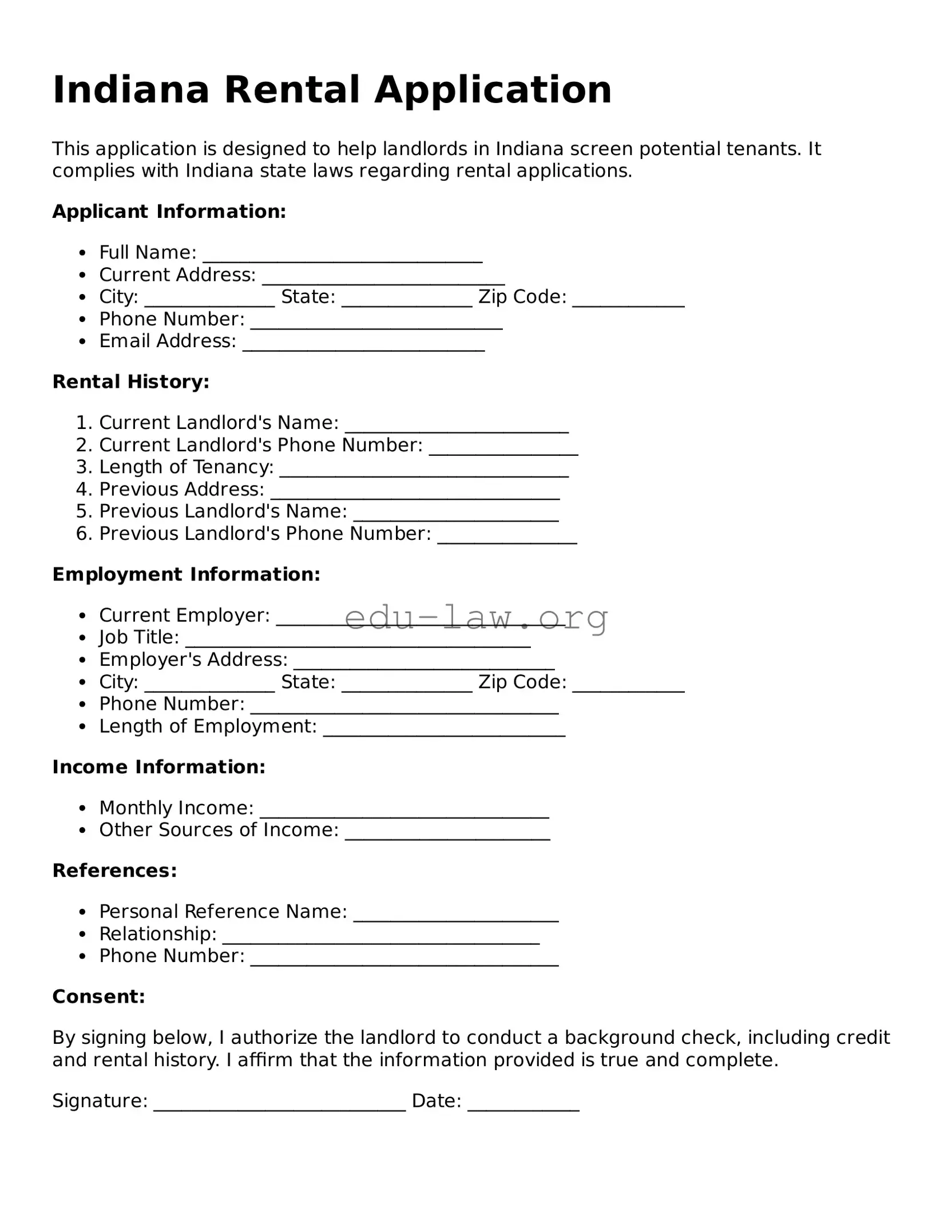
Indiana Rental Application
This application is designed to help landlords in Indiana screen potential tenants. It complies with Indiana state laws regarding rental applications.
Applicant Information:
Rental History:
Employment Information:
Income Information:
References:
Consent:
By signing below, I authorize the landlord to conduct a background check, including credit and rental history. I affirm that the information provided is true and complete.
Signature: ___________________________ Date: ____________
| Fact Name | Description |
|---|---|
| Purpose | The Indiana Rental Application form is used by landlords to screen potential tenants. |
| Required Information | Applicants must provide personal details, employment history, and references. |
| Background Check | Landlords may conduct background checks, including credit history and criminal records. |
| Application Fee | Indiana law allows landlords to charge a non-refundable application fee to cover screening costs. |
| Fair Housing Compliance | Landlords must adhere to federal and state fair housing laws when processing applications. |
| Governing Laws | The Indiana Rental Application is governed by Indiana Code Title 32, Article 31. |
| Equal Treatment | All applicants must be treated equally to prevent discrimination in the rental process. |
Completing the Indiana Rental Application form is an important step in securing your new home. By providing accurate information, you help landlords assess your application effectively. Follow these steps to ensure you fill out the form correctly.
What is the purpose of the Indiana Rental Application form?
The Indiana Rental Application form is designed for prospective tenants to provide essential information to landlords or property managers. This information helps landlords assess the suitability of applicants for rental properties. Key details typically include personal information, rental history, employment status, and references.
What information is typically required on the application?
Applicants are usually asked to provide their full name, contact information, Social Security number, and date of birth. Additionally, the form may require details about current and previous residences, employment history, income, and references. Some applications also request consent for background and credit checks.
Is there a fee associated with the Indiana Rental Application?
Many landlords charge a non-refundable application fee to cover the costs of processing the application, including background and credit checks. The amount of this fee can vary widely depending on the property and the landlord's policies. It's advisable to inquire about the fee before submitting the application.
How long does it take to process a rental application?
The processing time for a rental application can vary. Generally, it takes anywhere from a few hours to several days. Factors influencing this timeframe include the landlord's procedures, the thoroughness of the background checks, and the responsiveness of references. Applicants should ask the landlord for an estimated timeline.
Can a landlord deny an application? If so, why?
Yes, landlords can deny rental applications for various reasons. Common reasons include insufficient income, poor credit history, negative rental references, or a criminal record. Landlords must comply with fair housing laws and cannot discriminate based on race, color, religion, sex, national origin, familial status, or disability.
What should I do if my application is denied?
If an application is denied, the landlord is required to provide a written notice stating the reasons for the denial. Applicants have the right to request this information. If the denial is based on credit issues, they may also request a copy of their credit report. Understanding the reasons for denial can help applicants address any issues before reapplying.
Failing to provide complete personal information. Applicants often skip sections such as their full name, current address, or contact number.
Not disclosing rental history accurately. Some applicants forget to include previous addresses or the names of landlords, which can raise red flags.
Inaccurate income reporting. It’s essential to provide correct figures. Underestimating or overestimating income can lead to application denial.
Missing references. Many applications require personal or professional references. Leaving this section blank can hinder the approval process.
Neglecting to sign and date the application. A signature is often required to validate the information provided. Without it, the application may be considered incomplete.
Not providing consent for background checks. Some applicants forget to check the box allowing landlords to conduct necessary background checks.
Using incorrect or outdated contact information. Providing an old phone number or email can delay communication regarding the application status.
Ignoring application fees. Applicants sometimes overlook the requirement to submit a fee, which can lead to immediate rejection of the application.
When processing a rental application in Indiana, several additional forms and documents may be necessary to ensure a comprehensive evaluation of potential tenants. These documents help landlords gather essential information and protect their interests.
Utilizing these documents alongside the Indiana Rental Application form can streamline the rental process and foster clear communication between landlords and tenants. Ensuring that all necessary paperwork is completed thoroughly can lead to a smoother leasing experience for everyone involved.
The Indiana Rental Application form shares similarities with the standard Lease Agreement. Both documents are essential in establishing a formal relationship between landlords and tenants. While the rental application focuses on gathering personal information and assessing a prospective tenant's suitability, the lease agreement outlines the terms and conditions of the tenancy. This includes the duration of the lease, rent amount, and responsibilities of both parties. Together, these documents create a comprehensive understanding of the rental arrangement.
Another document that parallels the Indiana Rental Application is the Tenant Screening Report. This report typically includes background checks, credit history, and rental history, providing landlords with a deeper insight into a tenant's reliability. While the rental application collects initial information from the tenant, the screening report verifies that information and helps landlords make informed decisions. Both documents aim to protect the interests of landlords while ensuring that tenants are qualified to occupy the property.
The Rental Reference Form is also similar to the Indiana Rental Application. This form is often used to gather feedback from previous landlords or references about a tenant's behavior, payment history, and overall reliability. While the rental application collects self-reported information, the reference form seeks external validation. Together, they create a fuller picture of a tenant's history, which is crucial for landlords in making their selection.
Additionally, the Guarantor Agreement bears resemblance to the Indiana Rental Application. This document is used when a tenant requires a guarantor to co-sign the lease, often due to insufficient credit or rental history. The rental application typically asks for information about potential guarantors, while the guarantor agreement formalizes their commitment to cover the rent if the tenant defaults. Both documents work in tandem to ensure that landlords have a safety net in case of tenant issues.
The Move-In Checklist is another document that aligns with the Indiana Rental Application. This checklist is utilized at the beginning of a tenancy to document the condition of the rental unit. While the rental application assesses a tenant's qualifications, the move-in checklist serves to protect both the landlord and tenant by ensuring that any existing damages are noted before occupancy. This helps prevent disputes over security deposits when the tenant eventually moves out.
Lastly, the Rental Agreement Addendum shares similarities with the Indiana Rental Application. An addendum is often added to the lease to address specific terms or conditions that may not be covered in the main lease document. The rental application, while primarily focused on tenant qualifications, may include specific terms that the landlord wishes to enforce, such as pet policies or smoking restrictions. Both documents are crucial for establishing clear expectations and responsibilities between landlords and tenants.
When filling out the Indiana Rental Application form, it's important to approach the process thoughtfully. Here are some key dos and don'ts to keep in mind:
Following these guidelines can help ensure a smoother application process. Being thorough and honest will work in your favor.
Many people have misunderstandings about the Indiana Rental Application form. Here are some common misconceptions, along with clarifications to help you navigate the process more effectively.
Each rental application can vary by property owner or management company. It’s important to read the specific requirements for each application.
Submitting an application does not guarantee approval. If you apply for multiple properties, you may need to fill out separate applications.
While credit scores are important, landlords also consider income, rental history, and references.
Many landlords charge an application fee to cover background checks and processing. Be sure to ask about any fees upfront.
You can update your application if new information arises, but it’s best to provide complete and accurate details initially.
Current tenants may also need to fill out an application if they wish to renew their lease or transfer to a different unit.
While many landlords aim to respond quickly, there is no legal requirement for a specific response time.
Landlords are required to keep your personal information confidential and secure. Always inquire about their privacy policies.
Approval depends on various factors, including competition from other applicants. Always have a backup plan in case your application is not approved.
Understanding these misconceptions can help you approach the rental application process with more confidence. Always communicate with the landlord or property manager if you have questions or concerns.
Filling out the Indiana Rental Application form can be a straightforward process if you keep a few key points in mind. Here are some essential takeaways to help you navigate the application smoothly.
By keeping these points in mind, you can enhance your chances of securing your desired rental property in Indiana.