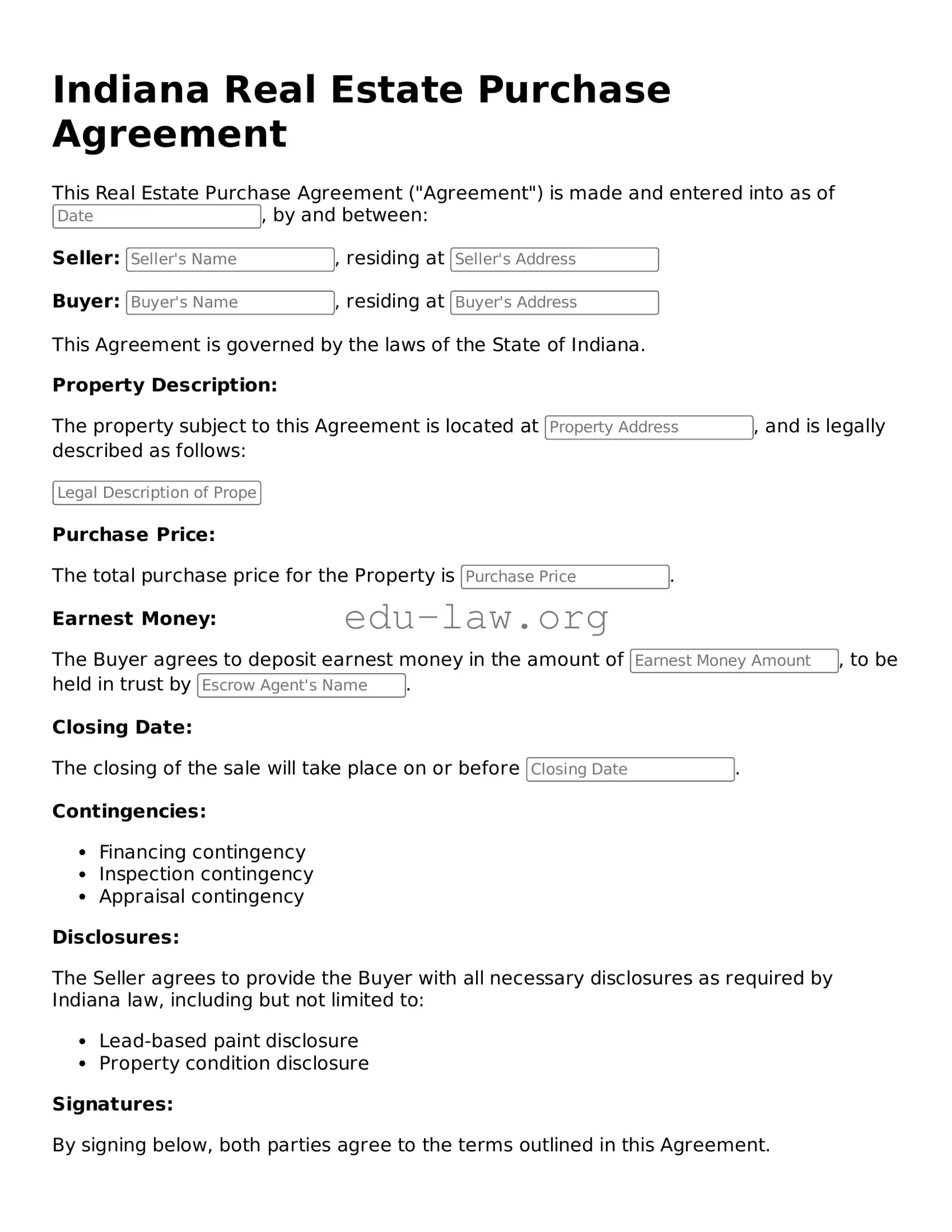
The Indiana Real Estate Purchase Agreement form serves as a crucial document in the process of buying and selling property within the state. This legally binding contract outlines the essential terms of the transaction, including the purchase price, the property description, and the closing date. Additionally, it specifies the responsibilities of both the buyer and the seller, ensuring that each party understands their obligations. Contingencies, such as financing and inspections, are also addressed within the agreement, providing a framework for what must occur before the sale can be finalized. Furthermore, the form includes provisions for earnest money, which demonstrates the buyer's serious intent to purchase. By covering these major aspects, the Indiana Real Estate Purchase Agreement establishes a clear path forward for all parties involved, helping to minimize misunderstandings and disputes throughout the transaction process.
Indiana Real Estate Purchase Agreement
This Real Estate Purchase Agreement ("Agreement") is made and entered into as of , by and between:
Seller: , residing at
Buyer: , residing at
This Agreement is governed by the laws of the State of Indiana.
Property Description:
The property subject to this Agreement is located at , and is legally described as follows:
Purchase Price:
The total purchase price for the Property is .
Earnest Money:
The Buyer agrees to deposit earnest money in the amount of , to be held in trust by .
Closing Date:
The closing of the sale will take place on or before .
Contingencies:
Disclosures:
The Seller agrees to provide the Buyer with all necessary disclosures as required by Indiana law, including but not limited to:
Signatures:
By signing below, both parties agree to the terms outlined in this Agreement.
______________________________
Seller's Signature Date:
______________________________
Buyer's Signature Date:
| Fact Name | Description |
|---|---|
| Governing Law | The Indiana Real Estate Purchase Agreement is governed by Indiana state law. |
| Parties Involved | The agreement typically includes the buyer and seller, both of whom must be clearly identified. |
| Property Description | A detailed description of the property being sold is required, including the address and legal description. |
| Purchase Price | The agreement must specify the purchase price, which is the amount the buyer agrees to pay. |
| Earnest Money | Earnest money is often required as a deposit to show the buyer's commitment to the purchase. |
| Closing Date | The agreement should include a closing date, which is the date when the transaction is finalized. |
| Contingencies | Common contingencies may include financing, inspections, and the sale of the buyer's current home. |
| Disclosures | Sellers are required to provide disclosures about the property's condition and any known issues. |
| Default Consequences | The agreement outlines what happens if either party defaults on the terms, including potential legal remedies. |
| Signatures | Both parties must sign the agreement for it to be legally binding, indicating their acceptance of the terms. |
Once you have the Indiana Real Estate Purchase Agreement form, you will need to fill it out carefully to ensure all necessary information is provided. This document will serve as the foundation for your real estate transaction. Follow these steps to complete the form accurately.
After filling out the form, review it carefully for accuracy. Make sure both parties understand all terms before proceeding with the next steps in the transaction process.
What is the Indiana Real Estate Purchase Agreement?
The Indiana Real Estate Purchase Agreement is a legal document that outlines the terms and conditions under which a buyer agrees to purchase real estate from a seller. This agreement serves as a binding contract once both parties sign it, detailing the rights and obligations of each party throughout the transaction process.
What key elements are included in the agreement?
This agreement typically includes the purchase price, property description, closing date, contingencies, and any special provisions. It also addresses the responsibilities of both the buyer and seller, including disclosures and the handling of earnest money deposits.
Is the Indiana Real Estate Purchase Agreement customizable?
Yes, the agreement can be customized to fit the specific needs of the buyer and seller. Parties may add clauses or modify existing terms as long as both agree to the changes. It is advisable to consult with a real estate professional or attorney to ensure that any modifications are legally sound.
What are contingencies, and why are they important?
Contingencies are conditions that must be met for the sale to proceed. Common contingencies include financing, home inspections, and appraisal. These clauses protect buyers by allowing them to back out of the agreement without penalty if certain conditions are not satisfied.
How is earnest money handled in the agreement?
Earnest money is a deposit made by the buyer to demonstrate their commitment to the purchase. The agreement will specify the amount of earnest money, how it will be held, and under what circumstances it may be forfeited or returned. This deposit typically goes toward the purchase price at closing.
What happens if either party breaches the agreement?
If either the buyer or seller fails to fulfill their obligations under the agreement, it may be considered a breach of contract. The non-breaching party may have several options, including seeking damages, enforcing the contract, or terminating the agreement, depending on the situation.
Do I need an attorney to complete the Indiana Real Estate Purchase Agreement?
While it is not legally required to have an attorney, it is highly recommended. An attorney can help ensure that the agreement is properly drafted, that all necessary disclosures are included, and that your rights are protected throughout the transaction.
How long is the Indiana Real Estate Purchase Agreement valid?
The agreement remains valid until the closing of the sale, unless terminated earlier by mutual consent or due to a breach. It is important for both parties to adhere to the timelines specified in the agreement to avoid complications.
Can the agreement be terminated?
Yes, the agreement can be terminated under certain conditions, such as failure to meet contingencies or mutual agreement between the buyer and seller. It is essential to follow the termination procedures outlined in the agreement to ensure that all parties are aware of their rights and obligations.
Where can I obtain a copy of the Indiana Real Estate Purchase Agreement?
Copies of the Indiana Real Estate Purchase Agreement can typically be obtained from real estate agents, legal professionals, or online legal document services. It is important to use the most current version to ensure compliance with Indiana laws.
Failing to include the correct names of all parties involved in the transaction. Ensure that all buyers and sellers are accurately listed.
Not specifying the purchase price clearly. This should be a specific amount, not a range or vague statement.
Omitting the property description. Include the full address and any legal descriptions necessary for clarity.
Neglecting to indicate the closing date. This is crucial for both parties to know when the transaction will be finalized.
Forgetting to check the financing terms. Clearly outline how the buyer intends to finance the purchase.
Leaving out contingencies. If there are conditions that must be met before the sale can proceed, they should be explicitly stated.
Not including any earnest money deposit details. Specify the amount and terms related to this deposit.
Using vague language regarding inspections. Clearly state what inspections are required and who is responsible for them.
Failing to address disclosures required by law. Sellers must provide certain information about the property.
Not having all parties sign the agreement. Ensure that everyone involved has signed to make the agreement legally binding.
When engaging in a real estate transaction in Indiana, several documents accompany the Real Estate Purchase Agreement. Each of these forms serves a specific purpose, ensuring that both buyers and sellers are protected and informed throughout the process. Understanding these documents can facilitate a smoother transaction.
Each of these documents plays a vital role in the real estate transaction process. Familiarity with them can enhance your confidence and understanding, making the experience more manageable and less stressful. Always consider consulting with a professional to ensure all necessary forms are completed correctly and thoroughly.
The Indiana Real Estate Purchase Agreement is similar to the Residential Purchase Agreement commonly used in many states. Both documents serve as legally binding contracts that outline the terms and conditions under which a buyer agrees to purchase a residential property from a seller. They typically include details such as the purchase price, financing arrangements, and contingencies related to inspections or appraisals. The Residential Purchase Agreement also emphasizes the responsibilities of both parties, ensuring clarity in the transaction process.
Another comparable document is the Commercial Real Estate Purchase Agreement. While both agreements share the fundamental purpose of facilitating a property transaction, the Commercial Real Estate Purchase Agreement is tailored specifically for commercial properties. This document includes additional clauses that address zoning laws, environmental assessments, and potential lease agreements, which are often crucial in commercial transactions. The complexity of commercial properties necessitates a more detailed approach to ensure that all aspects of the deal are adequately covered.
The Lease Agreement is another document that bears similarities to the Indiana Real Estate Purchase Agreement. While primarily focused on the rental of a property rather than its sale, a Lease Agreement outlines the terms under which a tenant can occupy a property. Both documents include essential elements such as duration, payment terms, and responsibilities of each party. The Lease Agreement may also contain clauses regarding maintenance and repairs, which can be crucial for both landlords and tenants in understanding their obligations.
Finally, the Counteroffer form is akin to the Indiana Real Estate Purchase Agreement in that it is part of the negotiation process during a real estate transaction. When a buyer submits an offer, the seller may respond with a Counteroffer, proposing different terms or conditions. This document allows for adjustments to the initial agreement and facilitates communication between the parties involved. Like the Purchase Agreement, it requires clear terms and conditions to ensure that both parties understand the new proposal and its implications.
When filling out the Indiana Real Estate Purchase Agreement form, it is essential to approach the process with care. Here are five things you should and shouldn't do:
By following these guidelines, you can help ensure that your Real Estate Purchase Agreement is filled out correctly and completely.
Understanding the Indiana Real Estate Purchase Agreement form is essential for anyone involved in property transactions in the state. However, several misconceptions can lead to confusion. Here are seven common misconceptions:
By dispelling these misconceptions, individuals can approach the Indiana Real Estate Purchase Agreement with greater confidence and understanding, paving the way for smoother transactions.
When filling out and using the Indiana Real Estate Purchase Agreement form, keep these key takeaways in mind: