When it comes to managing a business in Indiana, having a well-structured Operating Agreement is essential for any Limited Liability Company (LLC). This document serves as the backbone of your LLC, outlining the roles, responsibilities, and rights of its members. It clarifies how the business will be run, detailing everything from profit distribution to decision-making processes. Additionally, the agreement addresses how changes can be made to the LLC, ensuring that all members are on the same page. Importantly, it also provides guidance on what happens if a member leaves or if the company needs to be dissolved. By putting this agreement in place, you not only protect your interests but also foster transparency and trust among members, setting a solid foundation for your business's success.
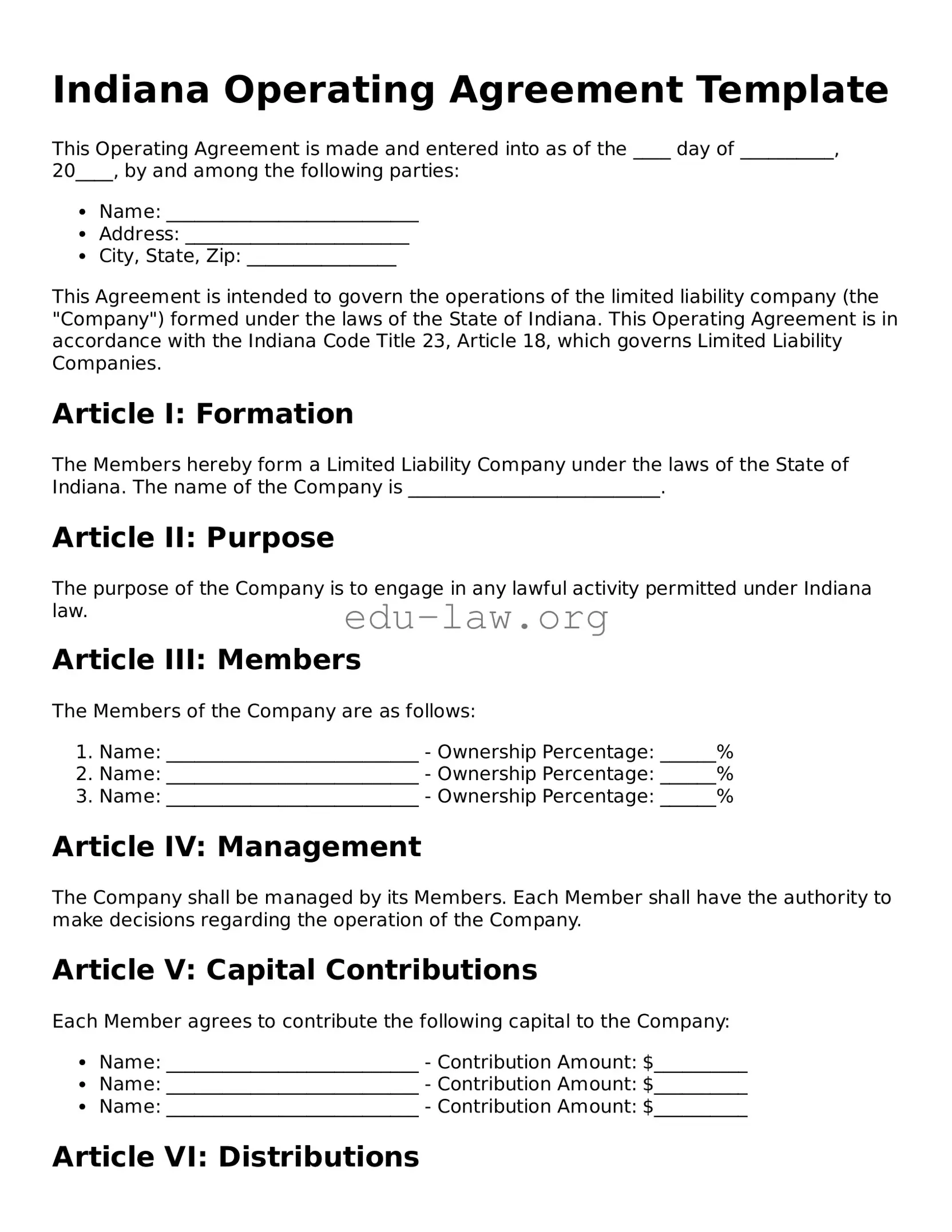
Indiana Operating Agreement Template
This Operating Agreement is made and entered into as of the ____ day of __________, 20____, by and among the following parties:
This Agreement is intended to govern the operations of the limited liability company (the "Company") formed under the laws of the State of Indiana. This Operating Agreement is in accordance with the Indiana Code Title 23, Article 18, which governs Limited Liability Companies.
Article I: Formation
The Members hereby form a Limited Liability Company under the laws of the State of Indiana. The name of the Company is ___________________________.
Article II: Purpose
The purpose of the Company is to engage in any lawful activity permitted under Indiana law.
Article III: Members
The Members of the Company are as follows:
Article IV: Management
The Company shall be managed by its Members. Each Member shall have the authority to make decisions regarding the operation of the Company.
Article V: Capital Contributions
Each Member agrees to contribute the following capital to the Company:
Article VI: Distributions
Distributions of profits and losses shall be allocated to the Members in proportion to their ownership percentages as outlined in Article III.
Article VII: Indemnification
The Company shall indemnify each Member against any and all expenses and liabilities incurred in connection with the Company, to the fullest extent permitted by Indiana law.
Article VIII: Amendments
This Operating Agreement may be amended only by a written agreement signed by all Members.
Article IX: Governing Law
This Agreement shall be governed by and construed in accordance with the laws of the State of Indiana.
IN WITNESS WHEREOF, the Members have executed this Operating Agreement as of the date first above written.
_____________________________ (Member Signature)
_____________________________ (Member Signature)
_____________________________ (Member Signature)
| Fact Name | Description |
|---|---|
| Purpose | The Indiana Operating Agreement outlines the management structure and operating procedures for an LLC in Indiana. |
| Governing Laws | The agreement is governed by Indiana Code Title 23, Article 18, which covers Limited Liability Companies. |
| Flexibility | Members can customize the agreement to suit their specific needs, allowing for various management styles and profit distributions. |
| Legal Requirement | While not legally required, having an Operating Agreement is highly recommended to clarify member roles and responsibilities. |
Once you have the Indiana Operating Agreement form ready, you can begin filling it out. This document is essential for outlining the management structure and operational procedures of your business. Follow the steps below to complete the form accurately.
What is an Indiana Operating Agreement?
An Indiana Operating Agreement is a legal document that outlines the management structure and operating procedures of a limited liability company (LLC) in Indiana. It serves as an internal guideline for the members of the LLC, detailing how the business will be run, how profits and losses will be distributed, and how decisions will be made.
Is an Operating Agreement required in Indiana?
No, an Operating Agreement is not legally required in Indiana. However, having one is highly recommended. It helps clarify the roles and responsibilities of members, reduces misunderstandings, and provides a clear framework for resolving disputes. Additionally, it can help protect your personal assets by reinforcing the limited liability status of your LLC.
Who should create the Operating Agreement?
The members of the LLC should create the Operating Agreement. This includes all owners of the business. It’s important that everyone involved has a say in the agreement to ensure that it reflects their interests and expectations. Consulting with a legal professional during this process can also be beneficial.
What should be included in an Indiana Operating Agreement?
An effective Operating Agreement typically includes several key components. These may consist of the LLC's name, purpose, and duration, the roles and responsibilities of members, the process for adding or removing members, how profits and losses will be allocated, and procedures for decision-making. Additionally, it may outline how disputes will be resolved and how the agreement can be amended in the future.
Can the Operating Agreement be changed after it is created?
Yes, the Operating Agreement can be amended after it is created. Most agreements include a section that outlines the process for making changes. Typically, this requires a majority vote from the members. It’s important to document any amendments in writing to maintain clarity and avoid future disputes.
How does an Operating Agreement affect liability protection?
An Operating Agreement reinforces the limited liability status of an LLC. By clearly outlining the structure and operations of the business, it helps demonstrate that the LLC is a separate legal entity. This distinction is crucial in protecting personal assets from business liabilities. If the agreement is well-drafted and adhered to, it can help shield members from personal liability in case of lawsuits or debts incurred by the LLC.
What happens if there is no Operating Agreement?
If an LLC does not have an Operating Agreement, Indiana’s default laws will govern the business. This can lead to outcomes that may not align with the members' intentions. For example, the state’s default rules regarding profit distribution and decision-making may differ from what the members would prefer. This can create confusion and potential conflicts among members.
Can I use a template for my Operating Agreement?
Yes, using a template for an Operating Agreement can be a helpful starting point. However, it is essential to customize the template to fit the specific needs and circumstances of your LLC. Generic templates may not address unique aspects of your business or the preferences of your members. Therefore, reviewing the agreement with a legal professional is advisable to ensure it meets all legal requirements and effectively protects your interests.
Where can I find a sample Operating Agreement for Indiana?
Sample Operating Agreements can be found online through various legal websites, state government resources, and business formation services. While these samples can provide a useful reference, it’s important to adapt them to your LLC’s specific needs. Consulting with a legal expert can also provide additional insights and ensure compliance with Indiana laws.
Neglecting to Include Essential Information: Individuals often forget to provide key details such as the name of the LLC, the principal office address, and the purpose of the business. This information is crucial for the agreement's validity.
Not Specifying Member Roles: A common oversight is failing to clearly define the roles and responsibilities of each member. Without this clarity, disputes may arise regarding who is responsible for what within the organization.
Ignoring Voting Rights: Some people overlook the importance of outlining voting rights and decision-making processes. This can lead to confusion and conflict when significant decisions need to be made.
Omitting Profit and Loss Distribution: It is a mistake to leave out how profits and losses will be distributed among members. This should be clearly stated to avoid misunderstandings in the future.
Failing to Address Amendments: Many individuals do not include a process for amending the Operating Agreement. This can create challenges if changes are needed as the business evolves.
Not Including a Dissolution Clause: Some agreements lack a clear plan for dissolution. It is important to outline the steps for winding down the business if necessary to protect members’ interests.
Overlooking State-Specific Requirements: Each state has its own regulations regarding Operating Agreements. Failing to comply with Indiana's specific requirements can lead to legal complications.
An Indiana Operating Agreement is a crucial document for LLCs, outlining the management structure and operational procedures. Along with this agreement, several other forms and documents are often utilized to ensure compliance and proper functioning of the business. Below is a list of additional documents that may be relevant.
These documents collectively support the operational integrity and legal standing of an LLC in Indiana. Ensuring that all relevant forms are properly completed and filed is essential for smooth business operations and compliance with state laws.
The Indiana Operating Agreement is akin to a Partnership Agreement, which outlines the roles, responsibilities, and financial arrangements between partners in a business venture. Both documents serve to clarify the expectations of each party, thereby reducing the potential for disputes. In a Partnership Agreement, partners may agree on profit-sharing ratios, decision-making processes, and procedures for adding or removing partners. Similarly, the Indiana Operating Agreement establishes how members of a limited liability company (LLC) will interact, share profits, and govern the business, ensuring that everyone is on the same page from the outset.
Another document that shares similarities with the Indiana Operating Agreement is the Bylaws of a corporation. Bylaws are internal rules that govern the management of a corporation, including the roles of officers and directors. Like the Operating Agreement, Bylaws help to define the structure of the organization and the procedures for making decisions. Both documents aim to provide clarity and guidance, ensuring that all members or stakeholders understand their rights and responsibilities, which is crucial for smooth operations and governance.
The Shareholders Agreement is also comparable to the Indiana Operating Agreement. This document is particularly relevant for corporations and outlines the rights and obligations of shareholders. Similar to the Operating Agreement, a Shareholders Agreement may address issues such as how shares can be transferred, how decisions are made, and what happens if a shareholder wishes to exit the business. Both agreements are designed to protect the interests of the parties involved and to facilitate a clear understanding of how the business will be run.
In addition, the LLC Membership Agreement bears resemblance to the Indiana Operating Agreement. This document specifically outlines the terms of membership within an LLC, detailing the contributions of each member and their respective rights. Much like the Operating Agreement, it covers aspects such as profit distribution, voting rights, and procedures for handling disputes. Both documents serve the purpose of establishing a framework for cooperation and governance among members, ensuring that everyone is aware of their roles and obligations.
Lastly, the Joint Venture Agreement is another document similar to the Indiana Operating Agreement. This type of agreement is used when two or more parties come together for a specific project or business endeavor. Like the Operating Agreement, it outlines the contributions, responsibilities, and profit-sharing arrangements of each party involved. Both documents aim to create a clear understanding of how the venture will operate, helping to prevent misunderstandings and conflicts that could arise during the course of the partnership.
When filling out the Indiana Operating Agreement form, it's important to approach the task with care. Here are some guidelines to help you navigate the process effectively.
Following these guidelines will help ensure a smoother experience when completing the Indiana Operating Agreement form. Take your time, and don’t hesitate to seek help if needed.
Many people have misunderstandings about the Indiana Operating Agreement form. These misconceptions can lead to confusion and mismanagement of business entities. Here are six common misconceptions:
Understanding these misconceptions can lead to better management and operation of LLCs in Indiana. Clear communication and proper documentation are key to success.
When filling out and using the Indiana Operating Agreement form, keep these key takeaways in mind: