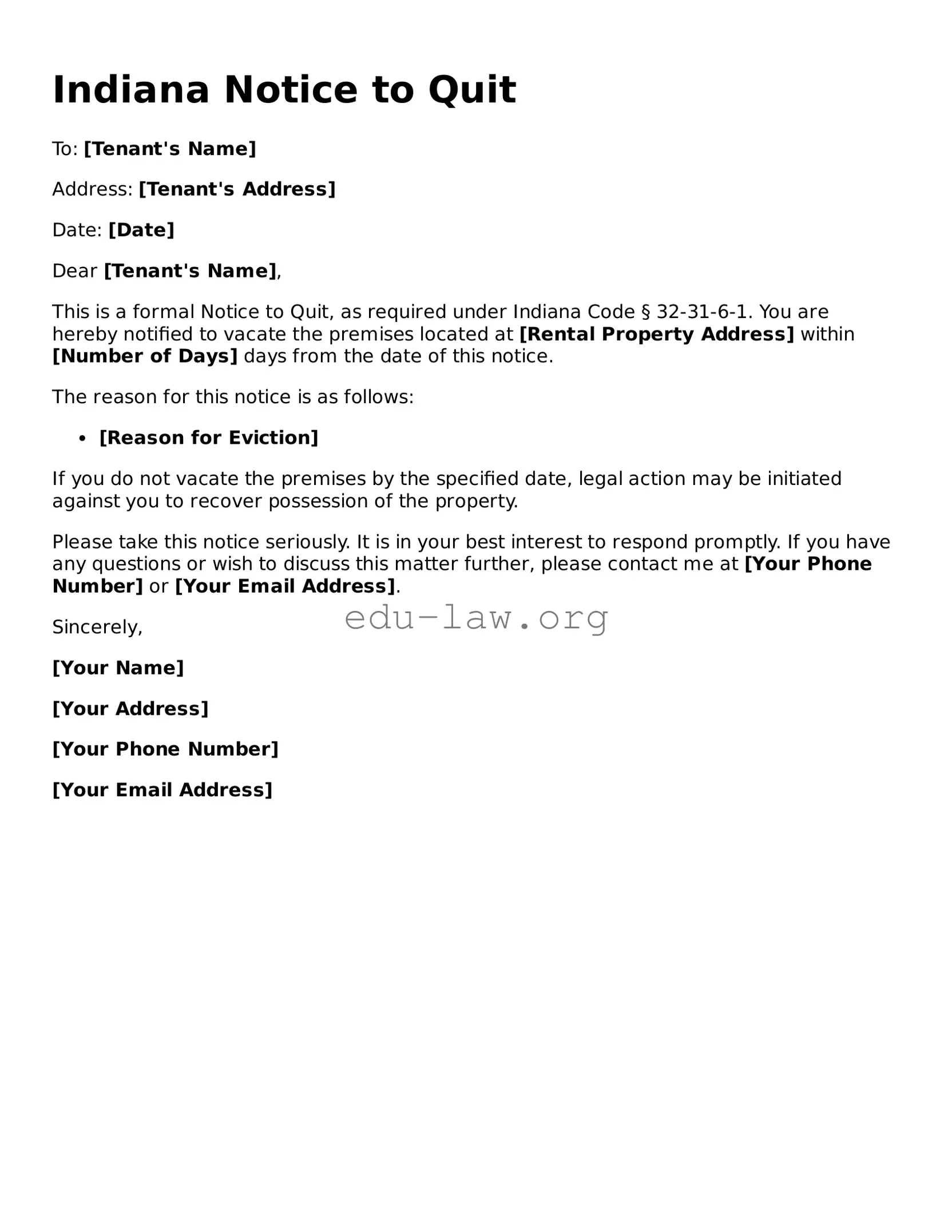
The Indiana Notice to Quit form is a crucial document in the landlord-tenant relationship, serving as a formal request for tenants to vacate a rental property. This form is typically used when a tenant has violated the terms of their lease agreement, such as failing to pay rent or causing damage to the property. It outlines the reasons for the eviction and provides a timeline for when the tenant must leave, which is essential for ensuring compliance with state laws. Landlords must fill out the form accurately, detailing the specific grounds for eviction, and provide it to the tenant in a manner that adheres to Indiana's legal requirements. Understanding the nuances of this form can help both landlords and tenants navigate the often complex eviction process. By clearly communicating the need to vacate, the Notice to Quit aims to protect the rights of both parties and facilitate a smoother transition out of the rental agreement.
Indiana Notice to Quit
To: [Tenant's Name]
Address: [Tenant's Address]
Date: [Date]
Dear [Tenant's Name],
This is a formal Notice to Quit, as required under Indiana Code § 32-31-6-1. You are hereby notified to vacate the premises located at [Rental Property Address] within [Number of Days] days from the date of this notice.
The reason for this notice is as follows:
If you do not vacate the premises by the specified date, legal action may be initiated against you to recover possession of the property.
Please take this notice seriously. It is in your best interest to respond promptly. If you have any questions or wish to discuss this matter further, please contact me at [Your Phone Number] or [Your Email Address].
Sincerely,
[Your Name]
[Your Address]
[Your Phone Number]
[Your Email Address]
| Fact Name | Description |
|---|---|
| Purpose | The Indiana Notice to Quit form is used by landlords to inform tenants of the need to vacate the rental property. |
| Governing Law | This form is governed by Indiana Code § 32-31-6, which outlines the eviction process in the state. |
| Delivery Method | Landlords can deliver the notice in person, by mail, or by posting it on the property. |
| Timeframe | Tenants typically have 10 days to respond to the notice before further legal action can be taken. |
| Required Information | The form must include the tenant's name, address, and the reason for the eviction. |
After completing the Indiana Notice to Quit form, you will need to deliver it to the tenant. This step is crucial as it formally notifies them of the need to vacate the premises. Ensure that you follow the delivery guidelines to maintain compliance with local laws.
What is the Indiana Notice to Quit form?
The Indiana Notice to Quit form is a legal document used by landlords to formally notify tenants that they must vacate the rental property. This notice is typically issued when a tenant has violated the terms of the lease agreement, such as failing to pay rent or engaging in illegal activities. The form serves as a preliminary step before any legal eviction proceedings can take place.
When should a landlord use the Notice to Quit?
A landlord should use the Notice to Quit when they believe a tenant has breached the lease agreement. Common reasons include non-payment of rent, lease violations, or illegal activities on the premises. It is important to note that the specific circumstances and the type of lease agreement may dictate when and how this notice should be issued.
How much notice must be given to the tenant?
In Indiana, the amount of notice required can vary based on the reason for eviction. For non-payment of rent, a landlord must provide a 10-day notice. For lease violations, the notice period is typically 14 days. It’s crucial to follow the correct timeline to ensure the notice is legally valid.
What information must be included in the Notice to Quit?
The Notice to Quit should include essential details such as the tenant's name, the address of the rental property, the specific reason for the notice, and the time frame the tenant has to vacate. Additionally, it should clearly state that failure to leave by the specified date may result in legal action.
Can a tenant respond to a Notice to Quit?
Yes, a tenant can respond to a Notice to Quit. They may choose to comply with the notice by vacating the property or addressing the issues outlined in the notice, such as paying overdue rent. If the tenant disputes the notice, they can communicate with the landlord to negotiate or resolve the matter before it escalates to eviction proceedings.
What happens if the tenant does not leave after receiving the Notice to Quit?
If the tenant does not vacate the property by the deadline specified in the Notice to Quit, the landlord may proceed with filing for eviction in court. This process involves legal action, and the landlord must provide evidence to support their claim for eviction. It’s important for landlords to follow the proper legal procedures to avoid complications.
Is the Notice to Quit the same as an eviction notice?
No, the Notice to Quit is not the same as an eviction notice. The Notice to Quit is a preliminary step that informs the tenant of the need to vacate the premises. If the tenant fails to comply, the landlord may then file for eviction, which is a legal process to remove the tenant from the property. Understanding this distinction is vital for both landlords and tenants.
Failing to include the correct date. It's essential to accurately date the notice to ensure proper timelines are followed.
Not providing the tenant's full name. Use the complete legal name as listed on the lease to avoid confusion.
Omitting the address of the rental property. Clearly state the address to identify the specific location related to the notice.
Using incorrect grounds for eviction. Ensure the reason for the notice aligns with Indiana law to avoid legal challenges.
Not specifying the amount owed if applicable. If the notice is for non-payment, clearly state the total amount due.
Failure to provide a deadline for compliance. Indicate a clear date by which the tenant must respond or vacate.
Not signing the notice. The form must be signed by the landlord or their authorized representative to be valid.
Neglecting to keep a copy of the notice. Always retain a copy for your records in case of future disputes.
Inaccurate delivery method. Ensure the notice is delivered in a manner compliant with Indiana law, such as personal delivery or certified mail.
Ignoring local regulations. Always check for any additional local requirements that may apply to the Notice to Quit process.
When dealing with rental agreements and tenant evictions in Indiana, the Notice to Quit form is just one piece of the puzzle. Several other documents are commonly used in conjunction with this form to ensure that the eviction process is handled correctly and legally. Below is a list of these important forms and documents.
Understanding these documents is essential for both landlords and tenants. Each form plays a significant role in ensuring that the eviction process is conducted fairly and in accordance with Indiana law. Familiarity with these forms can help prevent misunderstandings and facilitate a smoother resolution to rental disputes.
The Indiana Notice to Quit form is similar to the Eviction Notice used in many states across the country. Both documents serve as formal notifications to tenants that they must vacate a rental property. An Eviction Notice typically outlines the reasons for the eviction, such as non-payment of rent or lease violations. In Indiana, the Notice to Quit specifically informs tenants of their obligation to leave the premises, often due to failure to comply with the lease terms. This similarity underscores the importance of clear communication between landlords and tenants regarding their rights and responsibilities.
Another document that resembles the Indiana Notice to Quit is the Pay or Quit Notice. This notice is issued when a tenant has not paid rent by the due date. Like the Notice to Quit, the Pay or Quit Notice gives the tenant a specific timeframe to remedy the situation—usually by paying the overdue rent or vacating the property. Both documents aim to prompt action from the tenant, either by making a payment or by leaving, thus helping landlords enforce their rights while providing tenants with a chance to rectify the issue.
The Three-Day Notice to Vacate is also comparable to the Indiana Notice to Quit. This document is often used in various states to inform tenants that they must leave the property within three days. While the Indiana Notice to Quit may provide a longer timeframe depending on the circumstances, the essence remains the same: it is a formal request for tenants to vacate. This document emphasizes the urgency of the situation and serves as a critical step in the eviction process.
The Lease Termination Notice shares similarities with the Indiana Notice to Quit as well. This document is issued when a landlord intends to terminate a lease agreement for reasons that may or may not involve tenant violations. While the Notice to Quit specifically addresses non-compliance issues, the Lease Termination Notice can be used for other reasons, such as the landlord's decision to sell the property or make significant repairs. Both documents communicate the end of the tenancy, but the Lease Termination Notice may not always require immediate action from the tenant.
The Cure or Quit Notice is another document that parallels the Indiana Notice to Quit. This notice is given to tenants who have violated specific terms of their lease, allowing them the opportunity to correct the issue within a designated timeframe. If the tenant fails to cure the violation, they must vacate the property. The Cure or Quit Notice serves as a warning, similar to the Notice to Quit, by outlining the necessary actions the tenant must take to avoid eviction.
Lastly, the Conditional Quit Notice is akin to the Indiana Notice to Quit. This document is issued when a tenant has committed a lease violation but allows them a chance to remedy the situation. It specifies the conditions under which the tenant may remain in the property, provided they address the violation within a specified period. Like the Indiana Notice to Quit, the Conditional Quit Notice emphasizes the importance of compliance with lease terms and provides a clear path for tenants to rectify their behavior while maintaining their housing stability.
When filling out the Indiana Notice to Quit form, it is essential to approach the process with care and attention to detail. Here are five important considerations to keep in mind:
Misconceptions about the Indiana Notice to Quit form can lead to confusion and missteps in the eviction process. Here are eight common misunderstandings:
Understanding these misconceptions can help both landlords and tenants navigate the eviction process more effectively.
The Indiana Notice to Quit form is an important document in the landlord-tenant relationship. Understanding how to properly fill it out and use it can help avoid potential disputes. Here are some key takeaways:
By following these guidelines, landlords can effectively navigate the eviction process in Indiana.