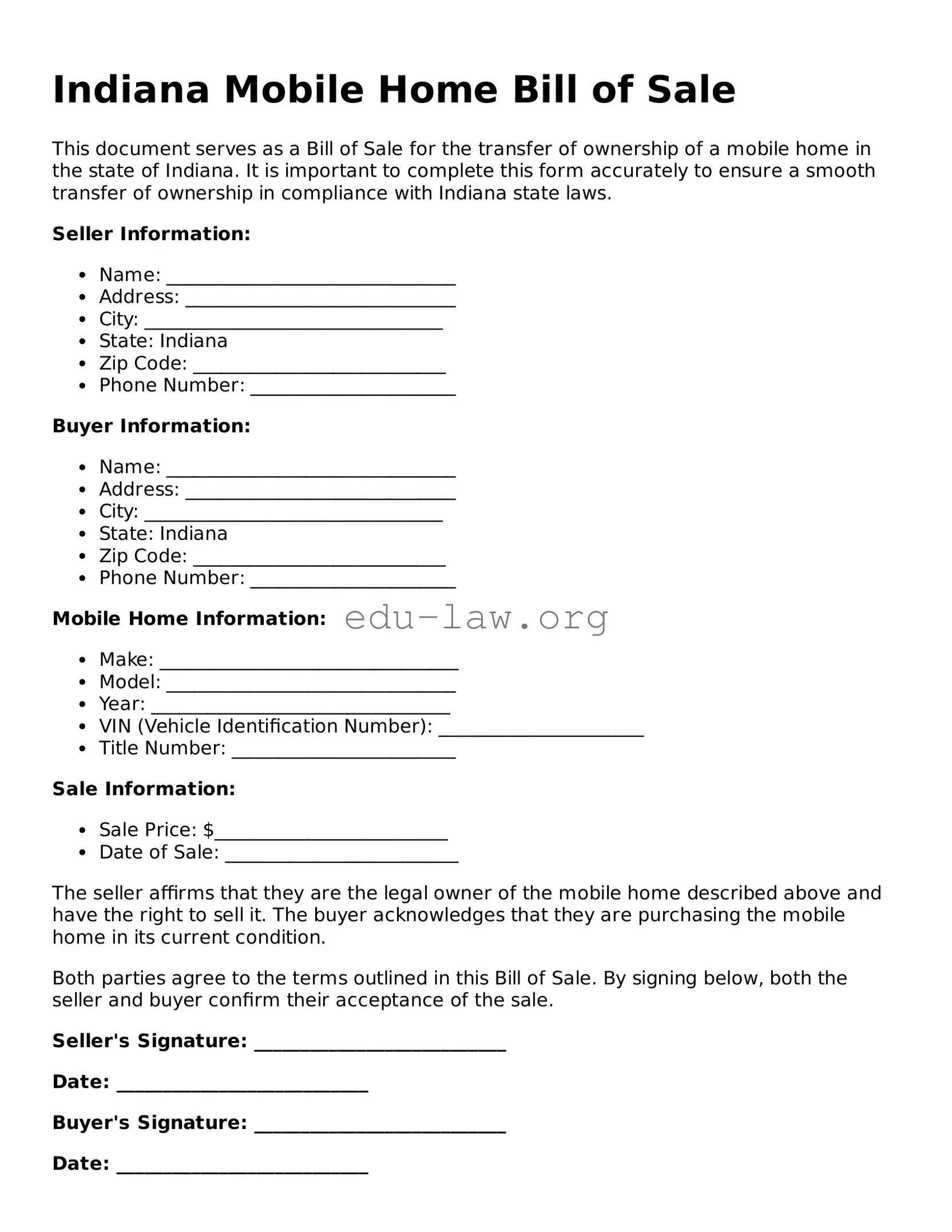
The Indiana Mobile Home Bill of Sale form is an essential document for anyone involved in the buying or selling of a mobile home in the state. This form serves as a legal record of the transaction, ensuring that both parties have a clear understanding of the sale's terms. It typically includes important details such as the names and addresses of the buyer and seller, the mobile home's identification number, and its make and model. Additionally, the form outlines the purchase price and any conditions of the sale, such as whether the mobile home is sold "as is." By documenting the transfer of ownership, this form helps protect the rights of both parties and simplifies the process of registering the mobile home with the state. Understanding the components of this form is crucial for a smooth transaction and can prevent potential disputes down the line.
Indiana Mobile Home Bill of Sale
This document serves as a Bill of Sale for the transfer of ownership of a mobile home in the state of Indiana. It is important to complete this form accurately to ensure a smooth transfer of ownership in compliance with Indiana state laws.
Seller Information:
Buyer Information:
Mobile Home Information:
Sale Information:
The seller affirms that they are the legal owner of the mobile home described above and have the right to sell it. The buyer acknowledges that they are purchasing the mobile home in its current condition.
Both parties agree to the terms outlined in this Bill of Sale. By signing below, both the seller and buyer confirm their acceptance of the sale.
Seller's Signature: ___________________________
Date: ___________________________
Buyer's Signature: ___________________________
Date: ___________________________
This Bill of Sale is governed by the laws of the state of Indiana.
| Fact Name | Description |
|---|---|
| Purpose | The Indiana Mobile Home Bill of Sale form is used to transfer ownership of a mobile home from one party to another. |
| Governing Laws | This form is governed by Indiana Code Title 32, Article 21, which outlines the laws related to the sale and transfer of personal property, including mobile homes. |
| Required Information | Essential details include the names of the buyer and seller, the mobile home's identification number, and the sale price. |
| Signatures | Both the buyer and seller must sign the form to validate the transaction and ensure legal recognition of the transfer. |
Once you have the Indiana Mobile Home Bill of Sale form in hand, you can begin the process of completing it. This form is essential for documenting the sale of a mobile home, ensuring that both the buyer and seller have a clear record of the transaction. Follow the steps below to fill it out accurately.
After completing the form, keep a copy for your records. The buyer will need this document for future reference, especially for registration and titling purposes. Make sure to check local regulations to ensure compliance with any additional requirements.
What is the Indiana Mobile Home Bill of Sale form?
The Indiana Mobile Home Bill of Sale form is a legal document used to transfer ownership of a mobile home from one party to another. This form provides essential details about the mobile home, including its make, model, year, and identification number. It serves as proof of the transaction and protects both the buyer and seller by documenting the sale terms.
Why do I need a Bill of Sale for my mobile home?
A Bill of Sale is crucial for several reasons. First, it provides a clear record of the transaction, which can be important for future reference. It also helps establish ownership, which is particularly important when registering the mobile home or obtaining financing. Additionally, having a formal document can prevent disputes over the sale in the future.
What information should be included in the Bill of Sale?
When filling out the Bill of Sale, include the following information: the names and addresses of both the seller and buyer, the mobile home's details (make, model, year, and VIN), the sale price, and the date of the transaction. It's also wise to include any warranties or conditions of the sale, as well as signatures from both parties to make it official.
Is the Bill of Sale required by law in Indiana?
While a Bill of Sale is not legally required for every mobile home sale in Indiana, it is highly recommended. Without it, proving ownership or the terms of the sale can become complicated. Many buyers and sellers choose to use this document to protect their interests and ensure a smooth transaction.
Can I create my own Bill of Sale?
Yes, you can create your own Bill of Sale as long as it includes all necessary information. However, using a standardized form can simplify the process and ensure that you don’t miss any critical details. There are many templates available online that can guide you in creating a comprehensive document.
Do I need to have the Bill of Sale notarized?
In Indiana, notarization of the Bill of Sale is not required. However, having it notarized can provide an extra layer of security and authenticity. It may also be beneficial if you need to present the document to a financial institution or government agency in the future.
What should I do after completing the Bill of Sale?
Once the Bill of Sale is completed and signed by both parties, the seller should provide a copy to the buyer. The buyer should keep this document safe, as it may be needed for registration or other legal purposes. If applicable, ensure that the mobile home is registered with the Indiana Bureau of Motor Vehicles, as this is an important step in transferring ownership.
Can I use the Bill of Sale for other types of property?
While the Indiana Mobile Home Bill of Sale form is specifically designed for mobile homes, similar forms can be adapted for other types of personal property. Just ensure that the relevant details for the specific property type are included. Always check local laws to ensure compliance with any specific requirements for the type of property being sold.
What if there are issues after the sale?
If issues arise after the sale, such as disputes over ownership or undisclosed problems with the mobile home, the Bill of Sale can serve as a vital piece of evidence. It outlines the terms agreed upon by both parties. If disputes cannot be resolved amicably, it may be necessary to seek legal advice to explore your options for resolution.
Incomplete Information: Failing to fill out all required fields can lead to delays or issues with the sale. Ensure that all sections are completed.
Incorrect Names: Using the wrong names for the buyer or seller can create legal complications. Always double-check spelling and ensure that the names match official documents.
Missing Signatures: Both parties must sign the document. Omitting a signature can invalidate the sale.
Improper Date: Not including the date of the transaction or using an incorrect date can lead to confusion later. Always write the date clearly.
Ignoring Notarization Requirements: In some cases, notarization may be necessary. Failing to have the document notarized when required can cause issues.
Incorrect Mobile Home Information: Providing inaccurate details about the mobile home, such as the VIN or model, can complicate ownership transfer. Verify this information before submission.
Leaving Out Payment Details: Not specifying the sale price or payment terms can lead to misunderstandings. Clearly outline how the payment will be made.
Failure to Include Disclosure Statements: If applicable, not including required disclosures about the condition of the mobile home can result in legal issues down the line.
Not Keeping Copies: After completing the form, failing to keep a copy for personal records can be problematic. Always retain a copy for future reference.
Rushing the Process: Taking the time to carefully review the form before submission can prevent mistakes. Avoid rushing through the process.
When completing a transaction involving a mobile home in Indiana, several forms and documents may be necessary alongside the Mobile Home Bill of Sale. These documents help ensure that the sale is legally binding and that all parties are protected. Below is a list of common forms that are often used in conjunction with the Mobile Home Bill of Sale.
Using these documents in conjunction with the Mobile Home Bill of Sale can help facilitate a smooth transaction and provide clarity for both the buyer and seller. Always ensure that all forms are completed accurately and retained for your records.
The Indiana Mobile Home Bill of Sale form bears resemblance to the standard Vehicle Bill of Sale. Both documents serve as proof of transfer of ownership from one party to another. They typically include essential details such as the buyer's and seller's names, addresses, and signatures, along with a description of the item being sold. Just as with mobile homes, vehicles require clear documentation to ensure that the new owner has legal rights to the property. This similarity helps facilitate smooth transactions and protects both parties involved.
Another document that shares similarities with the Mobile Home Bill of Sale is the Boat Bill of Sale. Like mobile homes, boats are significant investments that require formal documentation when ownership changes hands. The Boat Bill of Sale outlines the details of the transaction, including the boat's make, model, and identification number. This ensures that the buyer receives a clear title to the boat, just as a mobile home buyer would expect to receive a clear title to their new property.
The Real Estate Purchase Agreement is also comparable to the Mobile Home Bill of Sale. While the former is typically used for traditional real estate transactions, both documents serve the same fundamental purpose: to document the sale and transfer of property. They include critical information such as the purchase price, property description, and terms of sale. This similarity highlights the importance of having a written record for any property transfer, regardless of the type.
In addition, the Equipment Bill of Sale shares characteristics with the Mobile Home Bill of Sale. When selling or buying equipment, a formal document is essential to outline the specifics of the transaction. Just like in mobile home sales, the Equipment Bill of Sale provides details about the equipment, including its condition and any warranties. This ensures that both the buyer and seller are clear about what is being exchanged and protects their interests.
The Motorcycle Bill of Sale is another document that mirrors the Mobile Home Bill of Sale in its purpose and structure. Both documents require information about the parties involved and a description of the item sold. They serve as proof of ownership transfer and often include details about the condition of the motorcycle, similar to how a mobile home bill of sale would describe the mobile home. This similarity underscores the need for proper documentation in all vehicle transactions.
Additionally, the Aircraft Bill of Sale is akin to the Mobile Home Bill of Sale. Both documents are essential for transferring ownership of significant assets. The Aircraft Bill of Sale outlines the specifics of the aircraft being sold, including its registration number and details about the seller and buyer. This thorough documentation helps ensure that ownership is legally recognized, just as it does in mobile home transactions.
The Personal Property Bill of Sale is another document that serves a similar function. This type of bill of sale can be used for a variety of personal items, from furniture to electronics. Like the Mobile Home Bill of Sale, it provides a record of the transaction, including the description of the item and the details of the buyer and seller. This helps clarify ownership and serves as a safeguard for both parties involved in the sale.
The Lease Agreement is also comparable, particularly in the context of mobile homes that may be rented rather than sold. While a Lease Agreement outlines the terms for renting property, both documents require clear identification of the parties and the property involved. They establish rights and responsibilities, ensuring that both the landlord and tenant understand their obligations, similar to how a bill of sale clarifies the terms of ownership transfer.
The Warranty Deed is another document that shares some similarities with the Mobile Home Bill of Sale. While it is primarily used for real estate transactions, both documents serve to transfer ownership. A Warranty Deed provides guarantees about the title, ensuring the buyer that the seller has the right to sell the property. This assurance is crucial in both mobile home and real estate transactions, emphasizing the importance of clear ownership records.
Lastly, the Gift Deed can also be likened to the Mobile Home Bill of Sale. While a Gift Deed is used to transfer property without a monetary exchange, it still requires documentation of the transfer. Both documents include details about the parties involved and the property being transferred, ensuring that the new owner has a legal claim to the property. This highlights the importance of formalizing any transfer of ownership, whether through a sale or a gift.
When filling out the Indiana Mobile Home Bill of Sale form, attention to detail is crucial. Here are five things you should and shouldn't do:
By following these guidelines, you can help ensure a smooth transaction when selling or buying a mobile home in Indiana.
When it comes to the Indiana Mobile Home Bill of Sale form, there are several misconceptions that can lead to confusion. Understanding the facts can help ensure a smoother transaction. Here are five common misconceptions:
By addressing these misconceptions, individuals can navigate the process of buying or selling a mobile home in Indiana with greater confidence and clarity.
When filling out and using the Indiana Mobile Home Bill of Sale form, it is essential to consider several key points to ensure a smooth transaction. Here are the takeaways:
Taking these steps will help ensure that the transaction is handled properly and legally. Being thorough can prevent future complications.