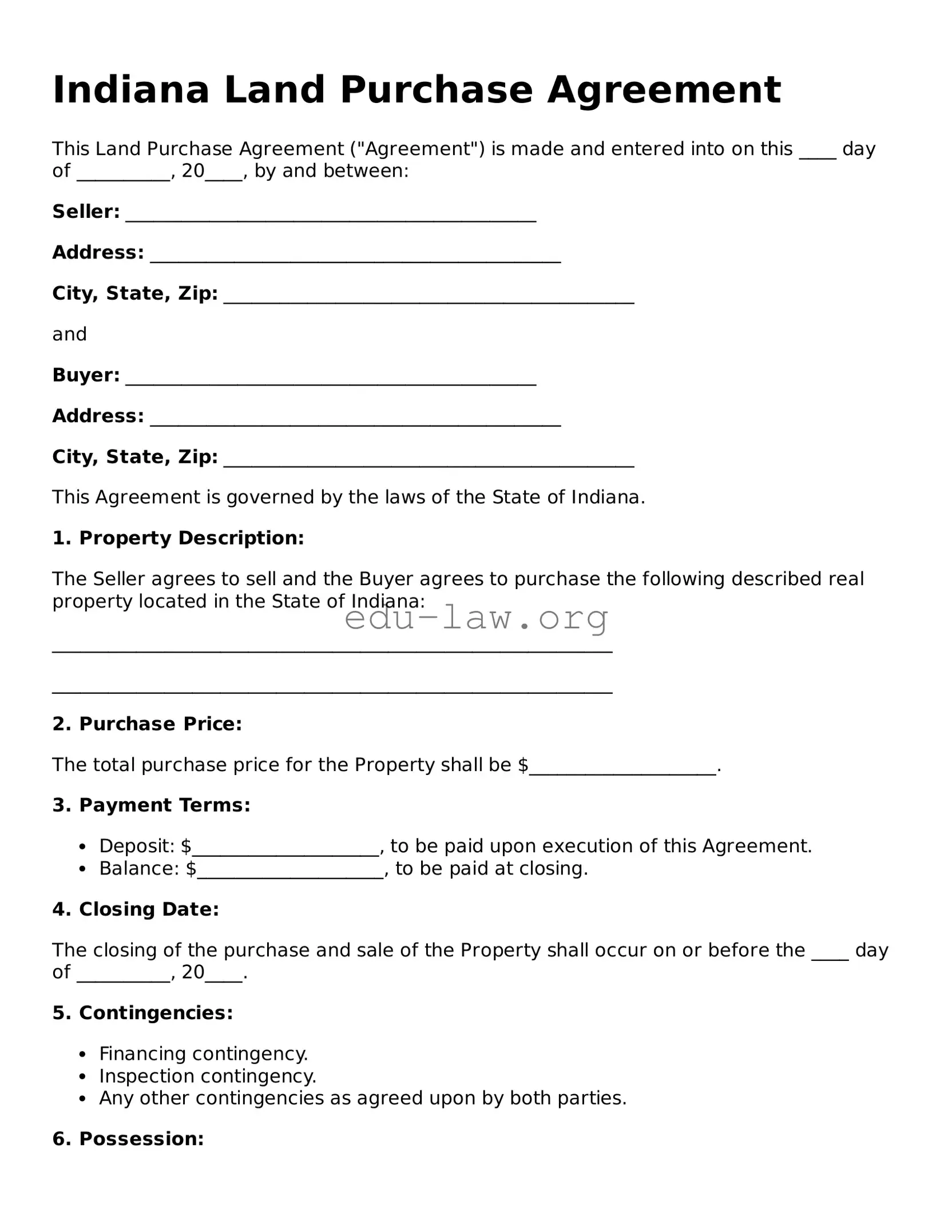
The Indiana Land Purchase Agreement form serves as a crucial document in the real estate transaction process within the state of Indiana. This form outlines the essential terms and conditions under which a buyer agrees to purchase property from a seller. Key elements of the agreement include the identification of the parties involved, a detailed description of the property being sold, and the purchase price. Additionally, the form addresses important contingencies, such as financing and inspection requirements, which protect both the buyer and seller during the transaction. The agreement also stipulates the timeline for closing, the transfer of title, and any applicable disclosures regarding the property’s condition. By clearly delineating the rights and responsibilities of each party, the Indiana Land Purchase Agreement helps to facilitate a smooth transaction and mitigate potential disputes that may arise during the buying and selling process.
Indiana Land Purchase Agreement
This Land Purchase Agreement ("Agreement") is made and entered into on this ____ day of __________, 20____, by and between:
Seller: ____________________________________________
Address: ____________________________________________
City, State, Zip: ____________________________________________
and
Buyer: ____________________________________________
Address: ____________________________________________
City, State, Zip: ____________________________________________
This Agreement is governed by the laws of the State of Indiana.
1. Property Description:
The Seller agrees to sell and the Buyer agrees to purchase the following described real property located in the State of Indiana:
____________________________________________________________
____________________________________________________________
2. Purchase Price:
The total purchase price for the Property shall be $____________________.
3. Payment Terms:
4. Closing Date:
The closing of the purchase and sale of the Property shall occur on or before the ____ day of __________, 20____.
5. Contingencies:
6. Possession:
Possession of the Property shall be delivered to the Buyer on the closing date, unless otherwise agreed in writing.
7. Governing Law:
This Agreement shall be governed by and construed in accordance with the laws of the State of Indiana.
8. Signatures:
IN WITNESS WHEREOF, the parties hereto have executed this Land Purchase Agreement as of the date first above written.
Seller Signature: _______________________________ Date: ____________
Buyer Signature: _______________________________ Date: ____________
| Fact Name | Details |
|---|---|
| Purpose | The Indiana Land Purchase Agreement form is used to outline the terms and conditions under which a buyer agrees to purchase real estate from a seller in Indiana. |
| Governing Laws | This agreement is governed by the laws of the State of Indiana, including applicable real estate statutes and regulations. |
| Key Components | Essential elements of the form include the purchase price, property description, closing date, and any contingencies that may apply. |
| Signature Requirement | Both parties must sign the agreement to make it legally binding, ensuring that all terms are acknowledged and accepted. |
Filling out the Indiana Land Purchase Agreement form is a crucial step in securing a property transaction. Once you complete the form, you will be ready to move forward with the necessary steps for finalizing your purchase.
What is the Indiana Land Purchase Agreement form?
The Indiana Land Purchase Agreement form is a legal document used to outline the terms and conditions under which a buyer agrees to purchase real estate from a seller in Indiana. This agreement serves as a binding contract that protects both parties by detailing the sale price, property description, and other essential terms related to the transaction.
Who needs to use the Indiana Land Purchase Agreement?
Anyone involved in buying or selling land in Indiana should consider using this agreement. Whether you are a first-time homebuyer, an experienced real estate investor, or a seller looking to transfer ownership, this document helps ensure that all parties understand their rights and obligations throughout the transaction process.
What key elements should be included in the agreement?
Several critical elements must be included in the Indiana Land Purchase Agreement. These include the names of the buyer and seller, a detailed description of the property, the purchase price, the closing date, and any contingencies, such as financing or inspections. Additionally, terms regarding earnest money deposits and responsibilities for closing costs should also be clearly outlined.
Is the Indiana Land Purchase Agreement legally binding?
Yes, once both parties sign the Indiana Land Purchase Agreement, it becomes a legally binding contract. This means that both the buyer and seller are obligated to adhere to the terms outlined in the agreement. It is important to read and understand all provisions before signing, as failure to comply could lead to legal consequences.
Can the Indiana Land Purchase Agreement be modified?
Yes, modifications to the Indiana Land Purchase Agreement can be made, but both parties must agree to the changes. Any amendments should be documented in writing and signed by both the buyer and seller to ensure clarity and enforceability. Clear communication is key when discussing any changes to the agreement.
What should I do if I have questions about the agreement?
If you have questions or concerns about the Indiana Land Purchase Agreement, it's advisable to consult with a real estate attorney or a qualified real estate professional. They can provide guidance tailored to your specific situation, ensuring that you fully understand your rights and responsibilities before proceeding with the transaction.
Incomplete Information: Failing to fill in all required fields can lead to delays or even rejection of the agreement. Ensure every section is completed accurately.
Incorrect Property Description: Providing an inaccurate or vague description of the property can cause confusion. Always include the full legal description as it appears on the title.
Missing Signatures: Not signing the agreement can render it void. Both the buyer and seller must sign, and if applicable, witnesses should also provide their signatures.
Improper Dates: Entering the wrong dates for the agreement or closing can lead to misunderstandings. Double-check all dates for accuracy.
Ignoring Contingencies: Not including necessary contingencies can leave one party vulnerable. Clearly outline any conditions that must be met before the sale is finalized.
Failure to Include Earnest Money: Omitting details about the earnest money deposit can create uncertainty. Specify the amount and terms regarding this deposit.
Not Reviewing Terms: Skimming over the terms and conditions can lead to unexpected obligations. Take time to read and understand every clause in the agreement.
Using Outdated Forms: Utilizing an old version of the Land Purchase Agreement can lead to legal issues. Always use the most current form available.
Neglecting Legal Advice: Forgoing professional legal advice can result in significant oversights. Consulting with a real estate attorney is highly recommended for guidance.
When engaging in a land purchase in Indiana, several documents accompany the Land Purchase Agreement to ensure a smooth transaction. Each of these documents serves a specific purpose, helping to clarify the terms of the sale, protect the interests of the parties involved, and comply with state regulations. Below is a list of commonly used forms and documents in conjunction with the Indiana Land Purchase Agreement.
Understanding these documents is crucial for anyone involved in a land purchase in Indiana. Each plays a vital role in ensuring that the transaction is legally sound and that both parties are protected throughout the process. Always consider consulting with a real estate professional or legal expert to navigate these documents effectively.
The Indiana Land Purchase Agreement form is similar to the Purchase and Sale Agreement, which is commonly used in real estate transactions. This document outlines the terms and conditions under which a buyer agrees to purchase a property from a seller. Like the Indiana Land Purchase Agreement, it includes essential details such as the purchase price, property description, and contingencies. Both documents aim to protect the interests of both parties and ensure a smooth transfer of ownership, making them vital in the buying and selling process.
Another document that shares similarities with the Indiana Land Purchase Agreement is the Lease Agreement. While a Lease Agreement typically pertains to renting a property rather than purchasing it, both documents serve to establish clear terms between parties. They outline responsibilities, payment terms, and duration of the agreement. In essence, both agreements aim to provide a framework that governs the relationship between the property owner and the other party, ensuring that expectations are clearly defined.
The Option to Purchase Agreement is also comparable to the Indiana Land Purchase Agreement. This document grants a potential buyer the right to purchase a property at a predetermined price within a specified timeframe. Like the Land Purchase Agreement, it includes critical terms such as the purchase price and conditions under which the option can be exercised. Both documents serve to formalize the intentions of the parties involved and provide a legal basis for the transaction.
A Real Estate Sales Contract is another document that bears similarity to the Indiana Land Purchase Agreement. This contract specifies the terms of sale between a buyer and a seller, detailing the property's condition, financing arrangements, and any contingencies that must be met before the sale can proceed. Both documents serve to facilitate the transfer of property ownership and protect the rights of both parties involved in the transaction.
Lastly, the Joint Venture Agreement can be likened to the Indiana Land Purchase Agreement in the context of real estate development. This document outlines the terms of collaboration between two or more parties who wish to invest in a property together. While the Land Purchase Agreement focuses on the sale of a property, both documents emphasize the importance of clearly defined roles, responsibilities, and financial arrangements to ensure the success of the venture. They both aim to mitigate risks and enhance the potential for a successful outcome.
When completing the Indiana Land Purchase Agreement form, it’s essential to approach the task with care and attention to detail. Here’s a list of six important dos and don’ts to keep in mind:
Following these guidelines will help ensure that your Indiana Land Purchase Agreement is completed correctly and efficiently. Taking the time to double-check your work can save you from potential issues down the line.
The Indiana Land Purchase Agreement form is often misunderstood. Here are five common misconceptions about this form:
When filling out and using the Indiana Land Purchase Agreement form, it's important to keep several key points in mind. Here are some takeaways to consider:
By following these guidelines, the process of completing and using the Indiana Land Purchase Agreement can be smoother and more effective for everyone involved.