In the realm of legal agreements, the Indiana Hold Harmless Agreement form plays a crucial role in protecting individuals and organizations from liability. This form is particularly important in various situations, such as events, construction projects, or any activities where one party may assume responsibility for potential risks or damages. By using this agreement, one party agrees to hold another harmless, meaning they will not hold them responsible for any injuries or damages that may occur during the specified activity. The document outlines the responsibilities of each party, clarifying expectations and minimizing misunderstandings. It is essential for those involved to understand the implications of the agreement, as it can significantly impact liability and insurance coverage. Additionally, this form often includes specific language that addresses the scope of the agreement, ensuring that all parties are aware of their rights and obligations. With a clear understanding of the Indiana Hold Harmless Agreement, individuals and organizations can navigate their activities with greater confidence, knowing they have taken proactive steps to mitigate risk.
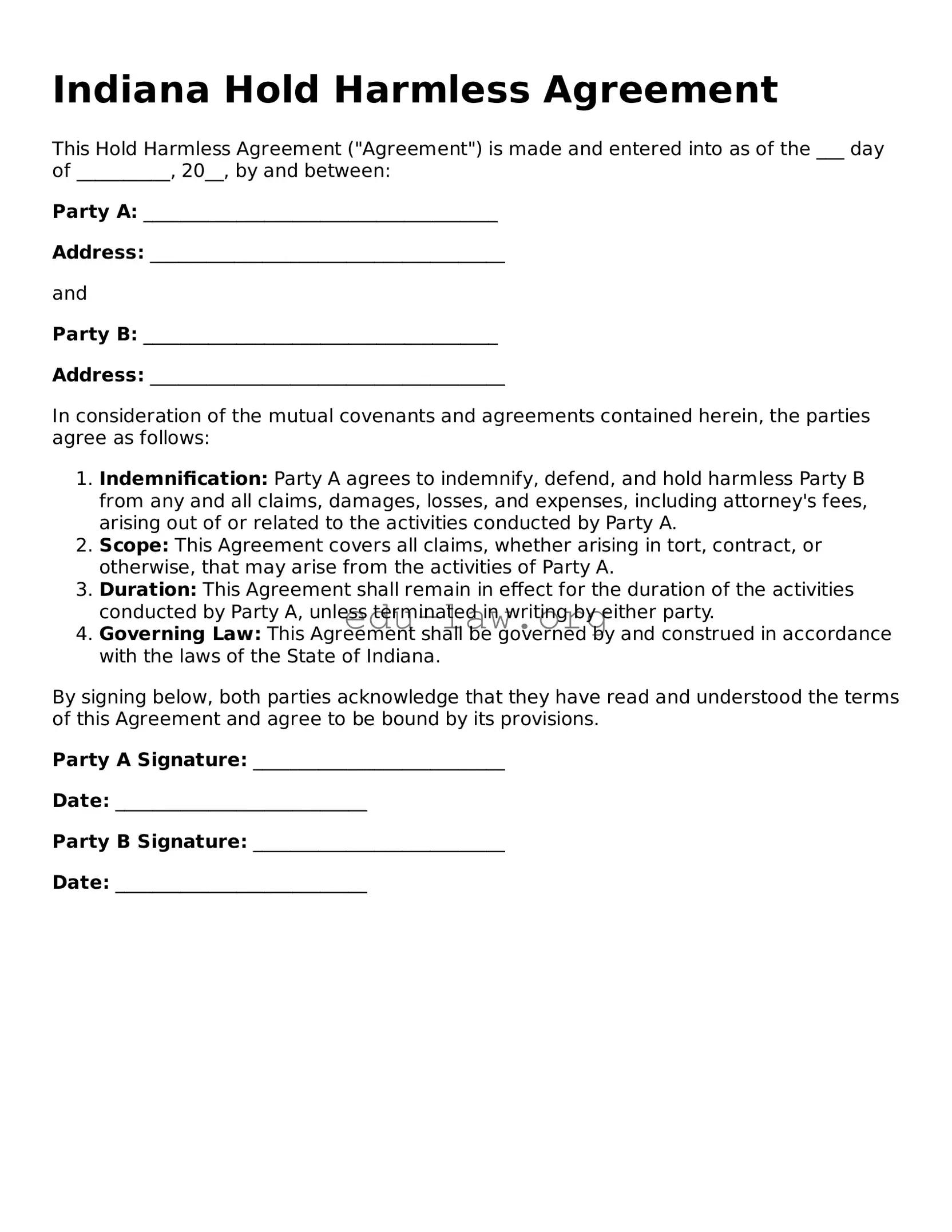
Indiana Hold Harmless Agreement
This Hold Harmless Agreement ("Agreement") is made and entered into as of the ___ day of __________, 20__, by and between:
Party A: ______________________________________
Address: ______________________________________
and
Party B: ______________________________________
Address: ______________________________________
In consideration of the mutual covenants and agreements contained herein, the parties agree as follows:
By signing below, both parties acknowledge that they have read and understood the terms of this Agreement and agree to be bound by its provisions.
Party A Signature: ___________________________
Date: ___________________________
Party B Signature: ___________________________
Date: ___________________________
| Fact Name | Details |
|---|---|
| Purpose | The Indiana Hold Harmless Agreement protects one party from legal liability for damages or injuries that may occur during an activity. |
| Parties Involved | This agreement typically involves two parties: the indemnitor (the one providing protection) and the indemnitee (the one being protected). |
| Governing Law | Indiana state law governs the Hold Harmless Agreement, specifically under Indiana Code Title 34. |
| Usage | Commonly used in various contexts, such as events, construction projects, and recreational activities, to mitigate risk. |
Once you have the Indiana Hold Harmless Agreement form ready, you will need to complete it accurately to ensure it is valid. Follow these steps carefully to fill out the form.
Once the form is completed and signed by both parties, it is ready for submission. Make sure to keep a copy for your records before sending it to the appropriate recipient.
What is an Indiana Hold Harmless Agreement?
An Indiana Hold Harmless Agreement is a legal document that protects one party from liability for damages or injuries that may occur during a specific activity or event. This agreement ensures that if one party is sued or faces claims, the other party agrees to take responsibility for those claims, thereby providing a layer of protection for the first party.
Who typically uses a Hold Harmless Agreement in Indiana?
This agreement is commonly used by businesses, event organizers, property owners, and contractors. For instance, if a contractor is hired to perform work on a property, the property owner may request a Hold Harmless Agreement to protect themselves from any accidents that occur during the contractor's work.
What are the key components of a Hold Harmless Agreement?
A Hold Harmless Agreement typically includes the names of the parties involved, a description of the activity or event, the specific liabilities being addressed, and the signatures of both parties. It should clearly outline the responsibilities of each party and any limitations on liability.
Is a Hold Harmless Agreement legally binding in Indiana?
Yes, a Hold Harmless Agreement can be legally binding in Indiana as long as it is properly drafted and signed by both parties. However, certain clauses may not be enforceable, especially if they attempt to waive liability for gross negligence or intentional misconduct.
Can a Hold Harmless Agreement be modified after it is signed?
Yes, a Hold Harmless Agreement can be modified, but both parties must agree to the changes. Any modifications should be documented in writing and signed by both parties to ensure clarity and enforceability.
Are there any limitations to a Hold Harmless Agreement?
Yes, while a Hold Harmless Agreement provides significant protection, it cannot absolve a party from liability in cases of gross negligence or willful misconduct. Courts may also refuse to enforce overly broad or vague agreements that do not clearly define the scope of liability.
How can I ensure my Hold Harmless Agreement is valid?
To ensure validity, it is important to clearly outline the terms, use straightforward language, and have both parties sign the document. Consulting with a legal professional can also help ensure that the agreement complies with Indiana laws and adequately protects your interests.
Do I need a lawyer to create a Hold Harmless Agreement?
While it is not strictly necessary to hire a lawyer to create a Hold Harmless Agreement, doing so can provide peace of mind. A legal professional can help ensure that the agreement is comprehensive, clear, and enforceable under Indiana law.
Where can I find a template for an Indiana Hold Harmless Agreement?
Templates for Hold Harmless Agreements can be found online through legal document preparation services, legal websites, or local legal aid organizations. It is important to ensure that any template used complies with Indiana laws and is tailored to your specific situation.
Incomplete Information: Many individuals fail to provide all required details, such as names, addresses, or specific dates. This can lead to delays or rejection of the agreement.
Incorrect Dates: Entering the wrong date can create confusion regarding the agreement's validity. Always double-check the date before submitting.
Signature Issues: Some forget to sign the form or may not use the correct signature. Ensure that the signature matches the name provided on the form.
Not Understanding Terms: Failing to read and comprehend the terms can lead to unintentional liabilities. Take the time to understand what you are agreeing to.
Using Outdated Forms: Using an old version of the Hold Harmless Agreement can result in missing important updates or legal requirements. Always check for the most current version.
Missing Witness or Notary: Some agreements require a witness or notary signature. Neglecting this step can invalidate the agreement.
Ambiguous Language: Using vague or unclear language can lead to misunderstandings. Be specific about the terms and conditions outlined in the agreement.
Failing to Keep Copies: After submission, it’s crucial to retain a copy of the signed agreement for your records. This can be important for future reference.
Ignoring State-Specific Requirements: Each state may have unique requirements for Hold Harmless Agreements. Not adhering to Indiana's specific regulations can cause issues.
Assuming Legal Protection: Many mistakenly believe that signing a Hold Harmless Agreement completely protects them from liability. Understand the limitations of such agreements.
When engaging in agreements that involve liability, it’s essential to have various supporting documents to ensure clarity and protection for all parties involved. The Indiana Hold Harmless Agreement is just one piece of the puzzle. Here are five other forms and documents that are commonly used alongside this agreement.
Having these documents in place can greatly enhance the safety and security of all parties involved in an agreement. By understanding their purpose and importance, individuals can make informed decisions and protect themselves from unforeseen liabilities.
The Waiver of Liability form is similar to the Indiana Hold Harmless Agreement in that both documents aim to protect one party from legal claims made by another. In a Waiver of Liability, an individual agrees to relinquish their right to sue for injuries or damages that may occur during a specific activity. This document is often used in recreational settings, such as sports or adventure activities, where participants acknowledge the risks involved and agree not to hold the organizers responsible for any accidents. Like the Hold Harmless Agreement, it emphasizes the importance of informed consent and personal responsibility.
The Indemnity Agreement shares similarities with the Hold Harmless Agreement, as both documents involve one party agreeing to compensate another for certain losses or damages. In an Indemnity Agreement, one party agrees to reimburse the other for any costs incurred due to claims or lawsuits arising from specific actions or events. This document is commonly used in business transactions, where one party may assume liability for the actions of another. Both agreements serve to allocate risk and protect parties from unforeseen legal consequences.
The Consent to Participate form is another document that bears resemblance to the Hold Harmless Agreement. This form is typically used in contexts such as sports or educational programs, where participants must acknowledge the risks associated with their involvement. By signing, individuals provide their consent to engage in the activity while understanding the potential dangers. While the Hold Harmless Agreement primarily protects the organizer from liability, the Consent to Participate emphasizes the participant's awareness and acceptance of risks.
Finally, the Safety Agreement can be compared to the Indiana Hold Harmless Agreement, as both documents address safety concerns and liability issues. A Safety Agreement outlines the safety protocols that must be followed during an activity and often requires participants to acknowledge their understanding of these protocols. While the Hold Harmless Agreement focuses on liability protection, the Safety Agreement emphasizes the importance of adhering to safety measures to prevent accidents. Both documents aim to foster a safer environment for all parties involved.
When filling out the Indiana Hold Harmless Agreement form, it’s important to follow certain guidelines to ensure accuracy and compliance. Here’s a list of things you should and shouldn't do:
Following these guidelines can help ensure that the form is filled out correctly and serves its intended purpose.
The Indiana Hold Harmless Agreement form is often misunderstood. Here are five common misconceptions that can lead to confusion:
Understanding these misconceptions can help individuals and organizations navigate the complexities of liability and risk management more effectively.
Filling out and using the Indiana Hold Harmless Agreement form is an important process for individuals and organizations. Here are key takeaways to consider: