The Indiana General Power of Attorney form is a vital legal document that grants an individual, known as the agent or attorney-in-fact, the authority to make decisions on behalf of another person, referred to as the principal. This form is particularly important for individuals who wish to ensure their financial and legal affairs are managed by someone they trust, especially in situations where they may become incapacitated or unable to communicate their wishes. The powers granted can range from handling financial transactions and managing real estate to making decisions about personal affairs. It is essential for the principal to understand that this document can be tailored to suit specific needs, allowing them to limit or expand the authority given to their agent. Additionally, the Indiana General Power of Attorney form must be signed in the presence of a notary public, ensuring that the document is legally binding and recognized by financial institutions and other entities. By preparing this form, individuals can take proactive steps to safeguard their interests and ensure their affairs are handled according to their preferences, providing peace of mind for both the principal and their loved ones.
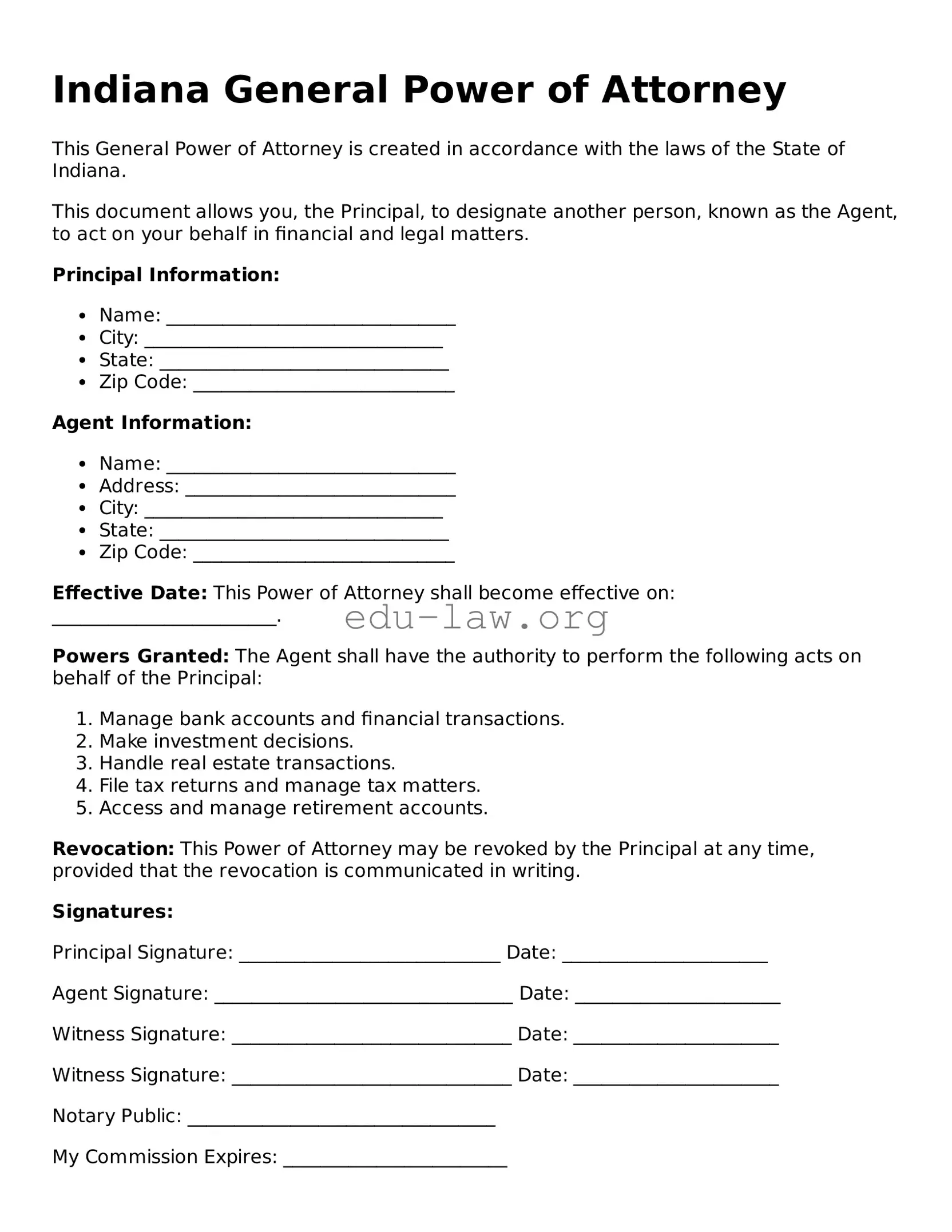
Indiana General Power of Attorney
This General Power of Attorney is created in accordance with the laws of the State of Indiana.
This document allows you, the Principal, to designate another person, known as the Agent, to act on your behalf in financial and legal matters.
Principal Information:
Agent Information:
Effective Date: This Power of Attorney shall become effective on: ________________________.
Powers Granted: The Agent shall have the authority to perform the following acts on behalf of the Principal:
Revocation: This Power of Attorney may be revoked by the Principal at any time, provided that the revocation is communicated in writing.
Signatures:
Principal Signature: ____________________________ Date: ______________________
Agent Signature: ________________________________ Date: ______________________
Witness Signature: ______________________________ Date: ______________________
Witness Signature: ______________________________ Date: ______________________
Notary Public: _________________________________
My Commission Expires: ________________________
| Fact Name | Details |
|---|---|
| Definition | The Indiana General Power of Attorney form allows an individual to designate another person to make decisions on their behalf. |
| Governing Law | This form is governed by Indiana Code § 30-5-1-1 et seq. |
| Principal | The person granting authority is referred to as the principal. |
| Agent | The individual receiving authority is known as the agent or attorney-in-fact. |
| Authority Scope | The agent can manage financial and legal matters, unless limited by the principal. |
| Durability | The power of attorney can be durable, meaning it remains effective even if the principal becomes incapacitated. |
| Revocation | The principal can revoke the power of attorney at any time, as long as they are competent. |
| Notarization | While notarization is not required, having the document notarized can help with its acceptance. |
After you have gathered the necessary information and documents, you are ready to fill out the Indiana General Power of Attorney form. This process involves providing specific details about yourself and the person you are granting authority to. Follow these steps carefully to ensure that the form is completed correctly.
What is a General Power of Attorney in Indiana?
A General Power of Attorney (GPOA) in Indiana is a legal document that allows one person, known as the principal, to appoint another person, called the agent, to act on their behalf. This arrangement grants the agent broad authority to manage financial matters, make decisions regarding property, and handle various affairs as specified in the document. The GPOA is particularly useful when the principal is unable to manage their own affairs due to absence, illness, or incapacity.
What powers can be granted through a General Power of Attorney?
The powers granted through a General Power of Attorney can be extensive. They may include managing bank accounts, paying bills, filing taxes, buying or selling property, and making investment decisions. However, the principal can specify limitations or conditions within the document. It’s essential to clearly outline the scope of authority to ensure that the agent acts in the principal's best interests.
Does a General Power of Attorney need to be notarized in Indiana?
Yes, in Indiana, a General Power of Attorney must be notarized to be legally valid. This means that the principal must sign the document in the presence of a notary public. The notary will then verify the identity of the principal and witness the signing. This step helps prevent fraud and ensures that the document is executed properly.
Can a General Power of Attorney be revoked?
Absolutely. A principal has the right to revoke a General Power of Attorney at any time, as long as they are mentally competent. To do this, the principal should create a written revocation document and notify the agent and any relevant third parties, such as banks or financial institutions, that the power of attorney has been revoked. This helps to avoid any confusion or misuse of authority.
What happens if the principal becomes incapacitated?
In Indiana, a General Power of Attorney typically becomes ineffective if the principal becomes incapacitated unless it is specifically designated as a durable power of attorney. A durable power of attorney remains in effect even if the principal loses the ability to make decisions. If the principal has not created a durable power of attorney, a court may need to appoint a guardian to manage the principal’s affairs.
Is it necessary to have a lawyer to create a General Power of Attorney?
While it is not legally required to have a lawyer assist in creating a General Power of Attorney, it is highly recommended. Legal professionals can provide guidance on the specific powers to include, ensure that the document complies with Indiana laws, and help avoid potential pitfalls. Having a well-drafted document can save time and stress in the future.
Failing to specify the powers granted. It is essential to clearly outline what authority the agent will have. If the powers are too vague, it may lead to confusion or disputes.
Not signing the document in front of a notary. In Indiana, a General Power of Attorney must be notarized to be valid. Without this step, the document may not be legally enforceable.
Choosing an inappropriate agent. Selecting someone who is not trustworthy or lacks the ability to handle financial matters can result in mismanagement of assets.
Neglecting to update the form. Life circumstances change, and it is crucial to revisit and revise the General Power of Attorney regularly to reflect current wishes and situations.
Overlooking the need for witnesses. While Indiana does not require witnesses for a General Power of Attorney, having them can provide additional validation and help prevent future disputes.
Ignoring state-specific requirements. Each state has its own rules regarding powers of attorney. Failing to adhere to Indiana's specific guidelines can lead to complications.
Not discussing the document with the chosen agent. It is vital to communicate with the agent about their responsibilities and ensure they are willing to accept the role before finalizing the form.
When dealing with a General Power of Attorney in Indiana, several other forms and documents may be relevant. Each of these documents serves a specific purpose and can help ensure that your legal and financial affairs are managed according to your wishes.
Understanding these documents can help you make informed decisions about your legal and financial future. Each serves a unique role, and together they can provide a comprehensive approach to managing your affairs.
The Indiana General Power of Attorney (GPOA) form shares similarities with the Durable Power of Attorney (DPOA). Both documents allow individuals to appoint someone to manage their financial and legal affairs. However, the key distinction lies in durability. While the GPOA may become ineffective if the principal becomes incapacitated, the DPOA remains valid even if the principal loses the ability to make decisions. This feature makes the DPOA particularly useful for long-term planning, especially for individuals concerned about potential future health issues.
The Healthcare Power of Attorney (HPOA) is another document that parallels the GPOA in function but focuses specifically on medical decisions. Like the GPOA, the HPOA allows a designated person to make decisions on behalf of the principal. However, the HPOA is activated when the principal is unable to communicate their healthcare preferences. This document is essential for ensuring that an individual's medical care aligns with their wishes, particularly during critical moments when they may not be able to express those wishes themselves.
A Living Will is closely related to the Healthcare Power of Attorney but serves a slightly different purpose. While the HPOA appoints someone to make decisions, a Living Will outlines specific preferences regarding medical treatment in situations where the individual is terminally ill or in a persistent vegetative state. It provides guidance to healthcare providers and loved ones about the type of care the individual desires, ensuring that their wishes are respected even when they cannot advocate for themselves.
The Revocation of Power of Attorney document is essential for individuals who wish to cancel a previously granted power of attorney. Similar to the GPOA, this document serves to formalize the termination of authority given to an agent. It is important for individuals to understand that without a revocation, the agent may continue to act on behalf of the principal, potentially leading to unwanted decisions or actions.
The Financial Power of Attorney is a specific type of GPOA focused solely on financial matters. This document empowers an agent to handle various financial transactions, such as managing bank accounts, paying bills, and making investment decisions. While the GPOA can cover a broad range of powers, the Financial Power of Attorney is tailored for those who want to ensure their financial affairs are managed effectively, especially in the event of their incapacity.
Lastly, the Limited Power of Attorney is similar to the GPOA but restricts the agent's authority to specific tasks or time frames. This document is useful for individuals who need assistance with particular matters, such as selling a property or managing a business transaction, without granting broad powers. By clearly defining the scope of authority, the Limited Power of Attorney allows for targeted assistance while maintaining control over other aspects of one's affairs.
When filling out the Indiana General Power of Attorney form, it is important to follow specific guidelines to ensure the document is valid and effective. Below is a list of things you should and shouldn't do.
Understanding the Indiana General Power of Attorney (GPOA) form can be challenging due to various misconceptions. Here are seven common misunderstandings about this important legal document:
Being informed about these misconceptions can help individuals make better decisions when considering a General Power of Attorney in Indiana. It is always advisable to consult with a legal professional to ensure that your document meets your specific needs and complies with state laws.
Filling out and using the Indiana General Power of Attorney form is an important step in ensuring your financial and legal affairs are managed according to your wishes. Here are some key takeaways to consider: