When it comes to buying or selling firearms in Indiana, having the right documentation is essential to ensure a smooth and legal transaction. One of the most important documents in this process is the Indiana Firearm Bill of Sale form. This form serves as a written record of the sale, detailing key information about the firearm, the buyer, and the seller. It typically includes the make, model, and serial number of the firearm, which helps establish its identity. Additionally, the form requires both parties to provide their names, addresses, and signatures, creating a clear agreement between them. This not only protects the interests of both the buyer and the seller but also serves as proof of ownership. Understanding the components of this bill of sale is crucial for anyone involved in the transfer of firearms, as it helps ensure compliance with state laws and promotes responsible ownership.
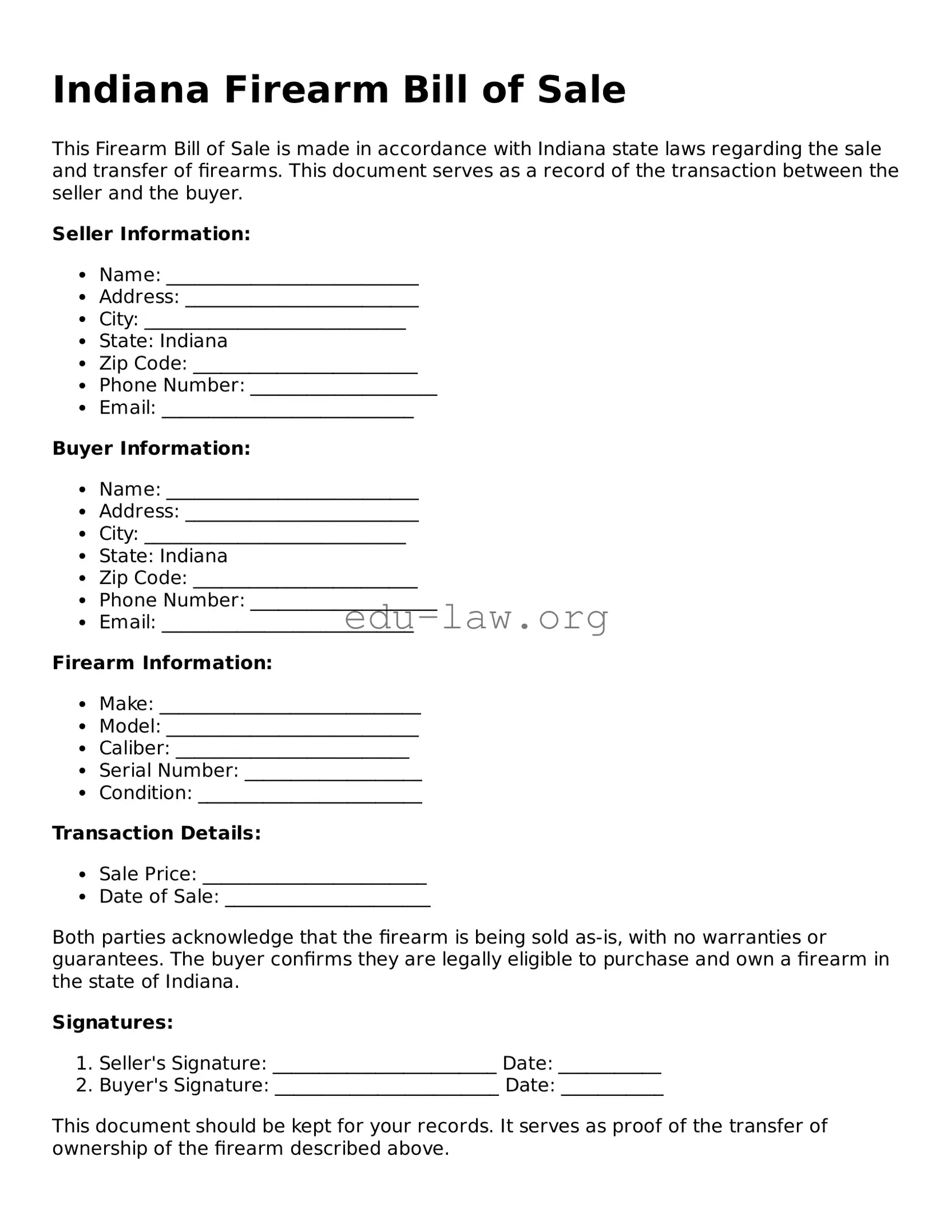
Indiana Firearm Bill of Sale
This Firearm Bill of Sale is made in accordance with Indiana state laws regarding the sale and transfer of firearms. This document serves as a record of the transaction between the seller and the buyer.
Seller Information:
Buyer Information:
Firearm Information:
Transaction Details:
Both parties acknowledge that the firearm is being sold as-is, with no warranties or guarantees. The buyer confirms they are legally eligible to purchase and own a firearm in the state of Indiana.
Signatures:
This document should be kept for your records. It serves as proof of the transfer of ownership of the firearm described above.
| Fact Name | Description |
|---|---|
| Purpose | The Indiana Firearm Bill of Sale form serves as a legal document to record the sale or transfer of a firearm between parties. |
| Governing Law | This form is governed by Indiana Code Title 35, Article 47, which outlines the regulations regarding firearms transactions. |
| Required Information | The form typically requires the names, addresses, and signatures of both the seller and the buyer, along with details of the firearm being sold. |
| Legality | While not mandatory, using a Bill of Sale is highly recommended to provide proof of ownership and protect both parties in the transaction. |
| Record Keeping | It is advisable for both the buyer and seller to keep a copy of the completed Bill of Sale for their records in case of future disputes. |
Once you have the Indiana Firearm Bill of Sale form in front of you, it’s time to fill it out accurately. Make sure you have all necessary information ready to ensure a smooth process.
After completing the form, keep it in a safe place. It serves as proof of the transaction between the seller and buyer.
What is an Indiana Firearm Bill of Sale?
An Indiana Firearm Bill of Sale is a legal document that records the sale or transfer of a firearm between two parties. This document serves as proof of ownership and details the transaction, including the buyer, seller, firearm description, and the date of sale.
Is a Bill of Sale required in Indiana for firearm transactions?
While Indiana law does not require a Bill of Sale for private firearm transactions, it is highly recommended. Having a Bill of Sale can protect both the buyer and seller by providing a record of the transaction and proving ownership if any legal issues arise in the future.
What information should be included in the Bill of Sale?
The Bill of Sale should include the names and addresses of both the buyer and seller, the date of the transaction, a detailed description of the firearm (including make, model, caliber, and serial number), and the purchase price. Both parties should sign the document to make it valid.
Can I create my own Bill of Sale for a firearm?
Yes, you can create your own Bill of Sale for a firearm. Ensure that it includes all necessary information and that both parties sign it. However, using a template or form specifically designed for firearm transactions may help ensure that you don’t miss any important details.
Do I need to have the Bill of Sale notarized?
Notarization is not required for a Bill of Sale in Indiana, but it can add an extra layer of security. Having the document notarized can help verify the identities of the parties involved and confirm that both signed willingly.
What if the firearm is a gift?
If you are giving a firearm as a gift, it is still a good idea to complete a Bill of Sale. This document can state that the firearm is a gift and include the same details about the firearm and the parties involved. This helps establish ownership and can prevent future disputes.
Are there any restrictions on who can buy or sell firearms in Indiana?
Yes, certain individuals are prohibited from buying or selling firearms in Indiana. This includes those with felony convictions, individuals who have been deemed mentally incompetent, and those who are subject to protective orders. It is essential to ensure that both parties are legally allowed to engage in the transaction.
What should I do if I lose my Bill of Sale?
If you lose your Bill of Sale, it may be difficult to prove ownership of the firearm. It is advisable to keep a copy in a safe place. If you cannot locate it, you may need to create a new Bill of Sale with the other party involved, noting that it replaces the lost document.
Can I use a Bill of Sale from another state for a firearm transaction in Indiana?
While you can use a Bill of Sale from another state, it is best to use one that complies with Indiana laws. Each state may have different requirements for what should be included in a Bill of Sale. Using an Indiana-specific form can help ensure that you meet local regulations.
What happens if there is a dispute after the sale?
If a dispute arises after the sale, the Bill of Sale can serve as evidence in resolving the issue. It is important to keep a copy of the document and any related communications. If necessary, legal advice may be sought to address the situation based on the details outlined in the Bill of Sale.
Incomplete Information: One of the most common mistakes is failing to provide all necessary details. Buyers and sellers should ensure they fill out every required field, including names, addresses, and firearm details.
Incorrect Firearm Identification: Mistakes in identifying the firearm can lead to complications. Ensure that the make, model, caliber, and serial number are accurately recorded. Any discrepancies can create legal issues.
Not Including Date of Sale: Omitting the date of the transaction is another frequent error. The date is crucial for establishing the timeline of ownership and any potential legal responsibilities.
Failure to Sign: Both parties must sign the form for it to be valid. Neglecting to obtain the necessary signatures can render the bill of sale ineffective.
Not Keeping Copies: After completing the form, it’s vital to keep copies for both the buyer and seller. Failing to do so can lead to disputes or confusion later on.
Ignoring Local Laws: Different counties or municipalities may have specific regulations regarding firearm sales. Not being aware of these laws can result in non-compliance, which could have serious consequences.
When transferring ownership of a firearm in Indiana, several documents may accompany the Firearm Bill of Sale form to ensure a smooth and legal transaction. Below are some common forms and documents that are often used in conjunction with the bill of sale.
Having these documents prepared and organized can facilitate a more efficient and compliant transaction. It's always advisable to double-check local laws and requirements to ensure all necessary paperwork is completed correctly.
The Indiana Firearm Bill of Sale form shares similarities with a standard Vehicle Bill of Sale. Both documents serve as proof of a transaction, detailing the transfer of ownership from one party to another. In the case of a vehicle, the document typically includes information such as the make, model, year, and Vehicle Identification Number (VIN). Similarly, the Firearm Bill of Sale includes specifics about the firearm, including its make, model, and serial number. Both forms are essential for record-keeping and can be used to establish ownership in the event of a dispute.
Another document akin to the Indiana Firearm Bill of Sale is the Boat Bill of Sale. Like the firearm transaction, the boat bill outlines the details of the sale, including the buyer and seller’s information, the boat’s specifications, and the sale price. Both documents protect the interests of the parties involved by providing a written record of the transfer. Furthermore, they often require signatures from both parties, indicating mutual agreement on the terms of the sale.
The Lease Agreement is another document that shares a functional purpose with the Firearm Bill of Sale. While a lease agreement pertains to the rental of property, both documents formalize an agreement between parties. They specify the terms of the arrangement, such as duration and payment details. Just as a firearm bill of sale confirms ownership transfer, a lease agreement confirms the temporary transfer of possession of property, ensuring both parties understand their rights and responsibilities.
Similarly, a Personal Property Bill of Sale is comparable to the Indiana Firearm Bill of Sale. This document is used for the sale of items other than real estate, such as furniture or electronics. Both bills of sale serve to document the transaction and provide a receipt for the buyer. They typically contain the names of the buyer and seller, a description of the item sold, and the sale price, ensuring that both parties have a clear understanding of the transaction.
The Equipment Bill of Sale is another document that resembles the Indiana Firearm Bill of Sale. This form is used when selling machinery or equipment, often in a business context. Much like the firearm bill, it includes details about the equipment, such as its condition and any warranties. Both documents serve to protect the seller by documenting the sale and providing the buyer with proof of ownership.
In addition, the Mobile Home Bill of Sale shares similarities with the Indiana Firearm Bill of Sale. This document is used to transfer ownership of a mobile home, detailing the specifics of the transaction. Both forms require the identification of the buyer and seller, as well as a description of the item being sold. They provide a legal record of the transfer, which can be crucial for future reference or in case of disputes.
The Gun Transfer Record, often used in conjunction with the Firearm Bill of Sale, is another relevant document. This record is typically required by law to ensure that the transfer of firearms complies with regulations. While the Firearm Bill of Sale documents the sale, the Gun Transfer Record may include additional information about the buyer’s eligibility to own a firearm. Both documents work together to ensure a legal and transparent transfer of ownership.
Lastly, the Warranty Deed, while primarily used in real estate transactions, bears some similarities to the Indiana Firearm Bill of Sale in terms of its purpose to transfer ownership. A warranty deed provides a guarantee that the seller has the right to sell the property and that the property is free of liens. Both documents serve as legal proof of ownership transfer, ensuring that the buyer receives what they are entitled to under the terms of the agreement.
When filling out the Indiana Firearm Bill of Sale form, it’s important to ensure accuracy and compliance with the law. Here’s a list of things you should and shouldn’t do:
Some people believe that a Bill of Sale is optional when buying or selling a firearm privately in Indiana. However, while it's not legally required, having a Bill of Sale provides a record of the transaction and can protect both the buyer and seller in case of future disputes.
Many assume that a Bill of Sale for firearms in Indiana must be notarized to be valid. In reality, notarization is not a requirement. A simple signed agreement between the buyer and seller is sufficient, although notarization can add an extra layer of security.
Some individuals think they must file the Bill of Sale with a state agency after the transaction. This is not true. The Bill of Sale is a private document that should be kept by both parties for their records, but it does not need to be submitted to the government.
People often believe that having a Bill of Sale automatically proves ownership of a firearm. While it serves as evidence of the transaction, it does not guarantee that the seller had the legal right to sell the firearm. Buyers should always ensure that the seller is the rightful owner and that the firearm is not stolen or otherwise encumbered.
When dealing with the Indiana Firearm Bill of Sale form, there are several important aspects to consider to ensure a smooth and legal transaction. Here are key takeaways:
By following these key points, individuals can facilitate a responsible and legally sound firearm sale in Indiana.