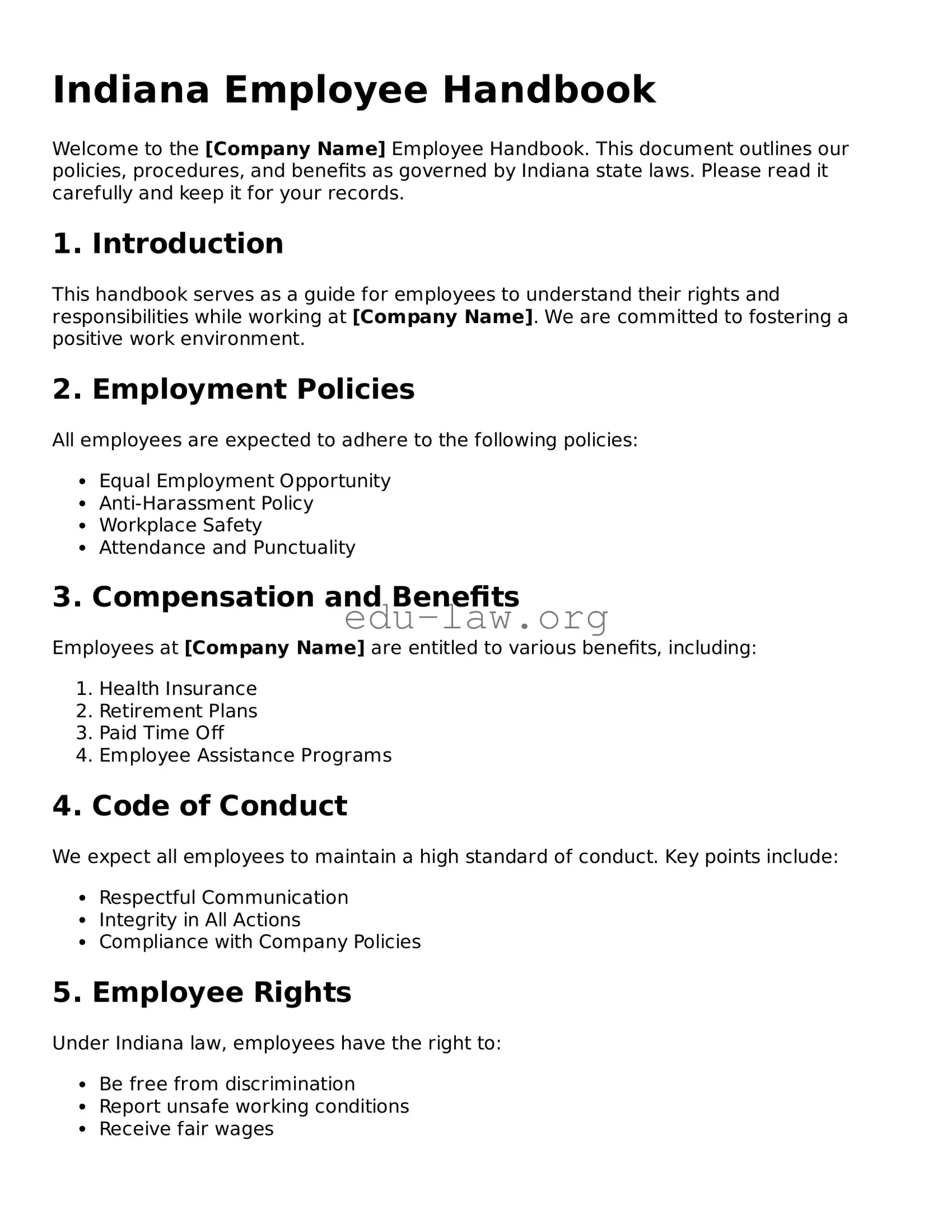
Creating a comprehensive employee handbook is a vital step for any organization, especially in Indiana, where specific regulations and guidelines must be followed. This handbook serves as a roadmap for employees, outlining essential policies, workplace expectations, and employee rights. It typically includes sections on workplace conduct, attendance policies, benefits, and safety procedures, ensuring that everyone is on the same page. Additionally, the handbook can cover topics such as anti-discrimination policies, harassment prevention, and disciplinary procedures, fostering a positive and respectful work environment. By providing clear information, the Indiana Employee Handbook form helps to protect both the employer and the employee, minimizing misunderstandings and promoting a culture of transparency and accountability. Understanding the key components of this form is crucial for employers looking to create an effective and legally compliant handbook that meets the needs of their workforce.
Indiana Employee Handbook
Welcome to the [Company Name] Employee Handbook. This document outlines our policies, procedures, and benefits as governed by Indiana state laws. Please read it carefully and keep it for your records.
1. Introduction
This handbook serves as a guide for employees to understand their rights and responsibilities while working at [Company Name]. We are committed to fostering a positive work environment.
2. Employment Policies
All employees are expected to adhere to the following policies:
3. Compensation and Benefits
Employees at [Company Name] are entitled to various benefits, including:
4. Code of Conduct
We expect all employees to maintain a high standard of conduct. Key points include:
5. Employee Rights
Under Indiana law, employees have the right to:
6. Acknowledgment of Receipt
By signing below, you acknowledge that you have received and read the [Company Name] Employee Handbook.
Employee Name: [Employee Name]
Date: [Date]
7. Contact Information
If you have questions or need further clarification, please contact:
Human Resources Department
Email: [HR Email]
Phone: [HR Phone Number]
Thank you for being a part of [Company Name]. We look forward to a successful journey together!
| Fact Name | Description |
|---|---|
| Purpose | The Indiana Employee Handbook serves as a guide for employees, outlining company policies, procedures, and expectations. |
| Governing Laws | Indiana labor laws and federal employment regulations govern the contents of the employee handbook. |
| Mandatory Policies | Employers in Indiana must include certain policies, such as anti-discrimination and harassment policies, in their handbooks. |
| At-Will Employment | Indiana is an at-will employment state, meaning that employees can be terminated for any lawful reason, and this should be clearly stated in the handbook. |
| Employee Acknowledgment | It is advisable for employers to include an acknowledgment form for employees to sign, indicating they have received and understood the handbook. |
| Updates and Revisions | Employers should regularly update the handbook to reflect changes in laws and company policies, ensuring compliance and clarity. |
| Confidentiality Policies | Handbooks should address confidentiality and data protection, outlining how employee information will be handled and protected. |
| Complaint Procedures | Clear procedures for reporting grievances or complaints should be included to foster a safe and respectful workplace environment. |
| Benefits Information | Details about employee benefits, including health insurance, retirement plans, and leave policies, should be clearly articulated. |
Filling out the Indiana Employee Handbook form is an important step for new employees. This process ensures that you acknowledge the company's policies and understand your rights and responsibilities. Follow these steps carefully to complete the form accurately.
What is the Indiana Employee Handbook form?
The Indiana Employee Handbook form is a document designed to help employers in Indiana create a comprehensive employee handbook. This handbook outlines company policies, employee rights, and responsibilities, ensuring that both employers and employees have a clear understanding of workplace expectations and procedures.
Why is an employee handbook important?
An employee handbook serves multiple purposes. It provides clarity on company policies, helps maintain consistency in how rules are applied, and protects the organization by documenting expectations. Additionally, it can serve as a valuable resource for employees, guiding them through their rights and responsibilities within the workplace.
Who should create the employee handbook?
What should be included in the employee handbook?
A well-rounded employee handbook should include sections on company policies, workplace conduct, benefits, compensation, and procedures for addressing grievances. Additionally, it may cover topics like anti-discrimination policies, safety protocols, and disciplinary actions. Tailoring the content to reflect the company's culture and values is also essential.
How often should the employee handbook be updated?
Regular updates are crucial to keep the handbook relevant. Employers should review the handbook at least annually or whenever significant changes occur, such as new laws, company policies, or organizational changes. This ensures that employees always have access to the most current information.
Do employees need to sign an acknowledgment of receipt?
Yes, it’s a good practice to have employees sign an acknowledgment form stating they have received and understood the handbook. This not only reinforces the importance of the document but also provides the employer with proof that employees are aware of the policies and procedures outlined within.
What if an employee has questions about the handbook?
Employees should feel encouraged to ask questions about any part of the handbook they don’t understand. Employers should provide a clear point of contact, such as a human resources representative, to address these inquiries. Open communication helps ensure that everyone is on the same page regarding policies and expectations.
Can the employee handbook be legally binding?
While an employee handbook can outline policies and procedures, it is generally not considered a legally binding contract. However, certain statements within the handbook may create enforceable rights. To avoid misunderstandings, it’s wise to include a disclaimer stating that the handbook is not a contract and that policies can change at the employer's discretion.
How can I ensure compliance with state and federal laws?
To ensure compliance, it’s important to stay informed about both state and federal employment laws. Consulting with legal professionals or human resources experts can help in crafting policies that meet legal standards. Regular training and updates for management and employees can also aid in maintaining compliance and fostering a fair workplace.
When filling out the Indiana Employee Handbook form, it’s easy to overlook certain details. Here are four common mistakes that individuals often make:
Inaccurate Personal Information: Many people fail to double-check their personal details, such as their name, address, and contact information. A small typo can lead to significant issues later on.
Neglecting to Read the Policies: Some individuals skip over the handbook’s policies, assuming they understand everything. This can result in misunderstandings about company rules and expectations.
Not Signing or Dating the Form: It’s crucial to remember to sign and date the form. Without a signature, the form may be considered incomplete, which could lead to complications.
Failing to Ask Questions: If there’s something unclear, not asking for clarification can be a mistake. Employees should feel empowered to seek help to ensure they fully understand the contents of the handbook.
By being aware of these common pitfalls, individuals can ensure they complete the Indiana Employee Handbook form accurately and effectively. Taking the time to review and ask questions can save a lot of trouble down the road.
When creating an Indiana Employee Handbook, several other forms and documents are often utilized to ensure comprehensive employee management and compliance with state laws. Each of these documents serves a specific purpose and complements the handbook in various ways.
Utilizing these forms alongside the Indiana Employee Handbook helps create a structured and transparent workplace environment. By ensuring that all necessary documents are in place, employers can foster better communication and understanding between management and employees.
The Indiana Employee Handbook form shares similarities with an Employee Manual. Both documents serve as comprehensive guides for employees, outlining company policies, procedures, and expectations. An Employee Manual typically includes sections on workplace conduct, benefits, and disciplinary actions, just like the Indiana Employee Handbook. Both documents aim to ensure that employees understand their rights and responsibilities within the organization, promoting a clear and consistent workplace culture.
Another document akin to the Indiana Employee Handbook is the Orientation Guide. Orientation Guides are often provided to new employees during their onboarding process. They introduce the company’s mission, values, and culture, similar to how the Employee Handbook establishes the framework for employee behavior and company policies. Both documents are designed to help employees acclimate to their new roles and understand the organization’s expectations from the outset.
The Indiana Employee Handbook also resembles a Policy Manual. Policy Manuals outline specific rules and regulations that govern workplace behavior, including safety protocols and anti-discrimination policies. Like the Employee Handbook, a Policy Manual is essential for ensuring compliance with legal standards and organizational norms. Both documents serve as references for employees when they have questions about workplace policies and procedures.
A further comparison can be made with the Code of Conduct. A Code of Conduct outlines the ethical standards and behavioral expectations for employees. It is similar to the Indiana Employee Handbook in that it sets clear guidelines for acceptable behavior and consequences for violations. Both documents emphasize the importance of maintaining a professional and respectful workplace environment.
Lastly, the Indiana Employee Handbook is similar to a Benefits Guide. Benefits Guides detail the various employee benefits offered by the employer, such as health insurance, retirement plans, and paid time off. While the Employee Handbook covers broader policies and procedures, both documents are crucial for informing employees about their entitlements and the resources available to them. Together, they help employees navigate their rights and benefits within the organization.
When filling out the Indiana Employee Handbook form, it's important to approach the task with care and attention. Here are some key dos and don'ts to keep in mind:
Following these guidelines will help ensure that your submission is complete and correct, paving the way for a smooth onboarding experience.
Misconceptions about the Indiana Employee Handbook form can lead to confusion among employers and employees alike. Understanding these misconceptions is essential for creating a clear and effective handbook. Below is a list of ten common misunderstandings.
By addressing these misconceptions, employers can create more effective employee handbooks that serve as valuable resources for both management and staff.
When filling out and using the Indiana Employee Handbook form, keep the following key takeaways in mind: