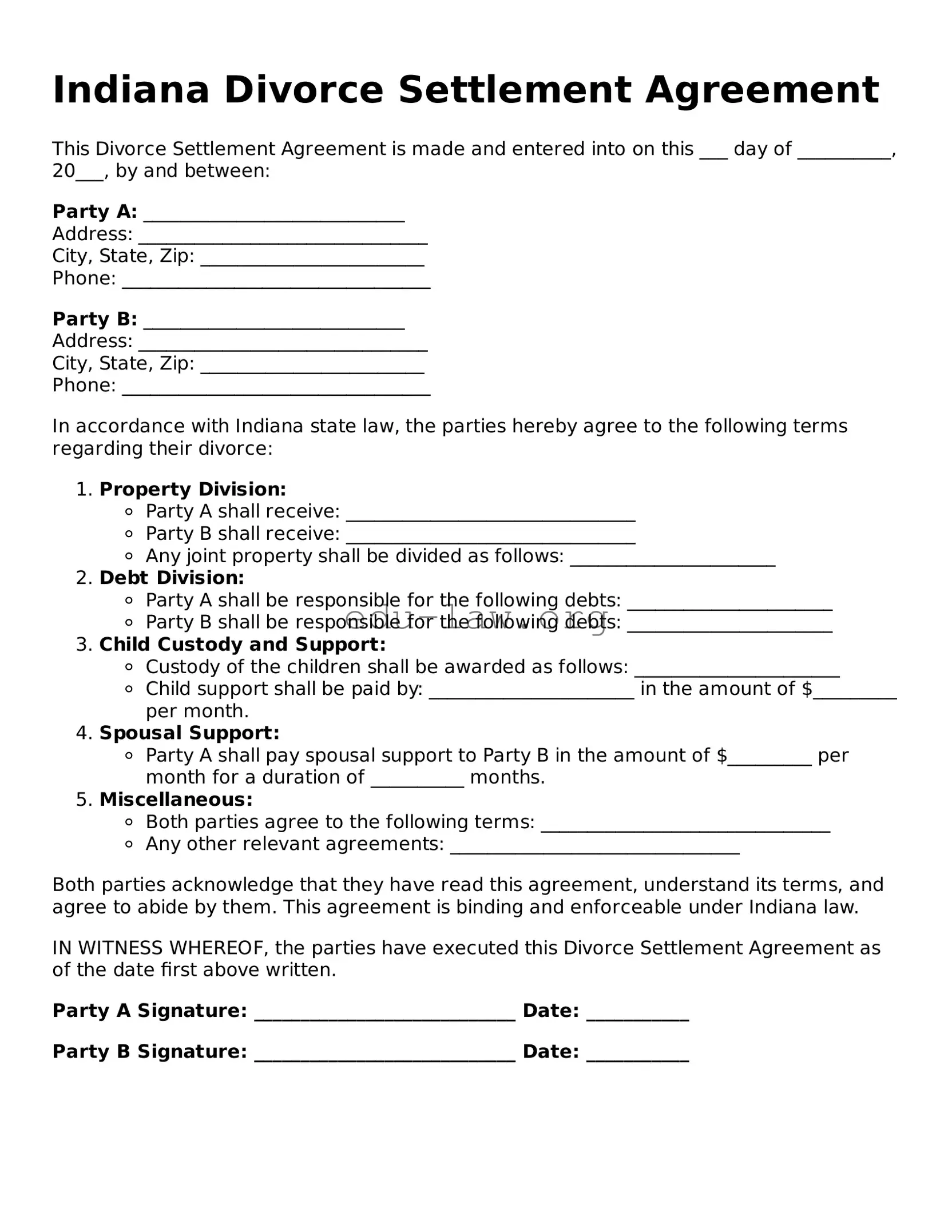
When navigating the emotional and often complex process of divorce, having a clear understanding of the Indiana Divorce Settlement Agreement form is essential. This document serves as a crucial tool for couples to outline the terms of their separation, covering key areas such as property division, child custody, and support obligations. By detailing how assets and debts will be divided, it helps prevent future disputes and provides a roadmap for both parties. Additionally, the form addresses child support and visitation arrangements, ensuring that the needs of any children involved are prioritized. The agreement also includes provisions for spousal support, if applicable, and can help establish a fair financial arrangement moving forward. Overall, this form is designed to facilitate a smoother transition for both individuals as they embark on their new paths, making it a vital component of the divorce process in Indiana.
Indiana Divorce Settlement Agreement
This Divorce Settlement Agreement is made and entered into on this ___ day of __________, 20___, by and between:
Party A: ____________________________
Address: _______________________________
City, State, Zip: ________________________
Phone: _________________________________
Party B: ____________________________
Address: _______________________________
City, State, Zip: ________________________
Phone: _________________________________
In accordance with Indiana state law, the parties hereby agree to the following terms regarding their divorce:
Both parties acknowledge that they have read this agreement, understand its terms, and agree to abide by them. This agreement is binding and enforceable under Indiana law.
IN WITNESS WHEREOF, the parties have executed this Divorce Settlement Agreement as of the date first above written.
Party A Signature: ____________________________ Date: ___________
Party B Signature: ____________________________ Date: ___________
| Fact Name | Description |
|---|---|
| Purpose | The Indiana Divorce Settlement Agreement form outlines the terms agreed upon by both parties regarding asset division, child custody, and support obligations. |
| Governing Law | This form is governed by Indiana state law, specifically the Indiana Code Title 31, which covers family law matters. |
| Filing Requirements | Both parties must sign the agreement, and it must be submitted to the court as part of the divorce proceedings. |
| Modification | The terms of the agreement can be modified in the future if both parties consent and the court approves the changes. |
After obtaining the Indiana Divorce Settlement Agreement form, you will need to complete it accurately to ensure a smooth process. This form is crucial for finalizing the terms of your divorce. Follow these steps carefully to fill it out correctly.
What is an Indiana Divorce Settlement Agreement?
An Indiana Divorce Settlement Agreement is a legal document that outlines the terms of a divorce between two parties. This agreement addresses various aspects of the divorce, including the division of assets, debts, child custody, visitation rights, and spousal support. It serves as a comprehensive plan that both parties agree to follow, ensuring clarity and mutual understanding.
Who should use the Indiana Divorce Settlement Agreement?
This form is suitable for couples who are seeking a divorce and have reached an agreement on the terms of their separation. It is particularly useful for those who want to avoid lengthy court battles and prefer to settle matters amicably. Both parties must be in agreement on all terms for the document to be effective.
What information is required to complete the form?
To complete the Indiana Divorce Settlement Agreement, you will need to provide personal information about both parties, including names, addresses, and contact details. Additionally, you must outline details regarding property division, debts, child custody arrangements, visitation schedules, and any agreed-upon spousal support. Clear and specific information helps avoid misunderstandings later.
Is the Divorce Settlement Agreement legally binding?
Yes, once both parties sign the Indiana Divorce Settlement Agreement and it is submitted to the court, it becomes legally binding. This means that both parties are obligated to adhere to the terms outlined in the agreement. If either party fails to comply, the other party can seek enforcement through the court.
Can the Divorce Settlement Agreement be modified after it is signed?
Yes, modifications can be made to the Divorce Settlement Agreement after it has been signed, but both parties must agree to any changes. It is advisable to document any modifications in writing and, if possible, have them notarized. This ensures that both parties are on the same page and helps prevent future disputes.
What happens if we cannot agree on the terms?
If the parties cannot reach an agreement on the terms of the divorce, they may need to consider mediation or seek court intervention. Mediation involves a neutral third party who helps facilitate discussions and negotiations. If mediation fails, the court will make decisions regarding asset division, custody, and support based on state laws.
Do I need a lawyer to complete the Divorce Settlement Agreement?
While it is not legally required to have a lawyer to complete the Indiana Divorce Settlement Agreement, it is highly recommended. A lawyer can provide valuable guidance, ensure that your rights are protected, and help you navigate any complexities in the agreement. Legal advice can be especially important if there are significant assets or children involved.
Where do I file the Divorce Settlement Agreement?
The completed Indiana Divorce Settlement Agreement should be filed with the local court where the divorce is being processed. This is typically the county court in which either party resides. It is essential to follow the court's specific filing procedures and pay any required fees to ensure the agreement is officially recognized.
What should I do after filing the agreement?
After filing the Indiana Divorce Settlement Agreement, it is important to keep copies for your records. You should also comply with any additional court requirements, such as attending a final hearing if necessary. Once the court approves the agreement, it will issue a final decree of divorce, which formalizes the dissolution of the marriage.
Not including all assets and debts. It’s important to list everything. Forgetting a single item can lead to complications later.
Inaccurate valuations. Ensure that all assets are valued correctly. Overestimating or underestimating can affect the settlement.
Ignoring tax implications. Some assets can have tax consequences. Consider how taxes will impact your settlement.
Failure to specify child support details. Clearly outline the amount and duration of child support. Vague terms can lead to disputes.
Not addressing health insurance. If children are involved, specify who will provide health insurance coverage.
Leaving out spousal support. If applicable, include terms for alimony. This can be a crucial part of the agreement.
Not considering future changes. Life circumstances can change. Include provisions for adjustments to support or custody arrangements.
Skipping signatures. Both parties must sign the agreement. An unsigned document is not valid.
Not keeping a copy. Always retain a copy of the signed agreement for your records. You may need it in the future.
When navigating a divorce in Indiana, several forms and documents may accompany the Divorce Settlement Agreement. Each of these documents serves a specific purpose in the divorce process, ensuring that all aspects are addressed and legally binding. Below is a list of commonly used documents.
Understanding these documents can help simplify the divorce process in Indiana. Each one plays a crucial role in ensuring that all legal requirements are met and that both parties are aware of their rights and responsibilities.
The Indiana Divorce Settlement Agreement form shares similarities with a Separation Agreement. Both documents outline the terms of a couple's separation, detailing issues such as property division, spousal support, and child custody arrangements. While a Separation Agreement is typically used when couples decide to live apart without formally filing for divorce, it serves a similar purpose by establishing clear expectations and responsibilities. This can help prevent future disputes and provide a roadmap for both parties during a challenging transition.
Another document that closely resembles the Indiana Divorce Settlement Agreement is the Child Custody Agreement. This document specifically focuses on the arrangements concerning the care and upbringing of children following a divorce. It addresses custody, visitation rights, and decision-making responsibilities. Like the Divorce Settlement Agreement, the Child Custody Agreement aims to protect the best interests of the child while providing a structured plan that both parents can follow. Clarity in these agreements can significantly reduce conflict and foster a cooperative parenting relationship.
The Marital Settlement Agreement is also comparable to the Indiana Divorce Settlement Agreement. This document is used to settle all aspects of a couple’s divorce, including asset division, debt responsibilities, and alimony. Both agreements emphasize the need for a clear, mutual understanding of how marital assets and obligations will be managed post-divorce. The Marital Settlement Agreement, like the Divorce Settlement Agreement, helps streamline the divorce process by ensuring that both parties are on the same page, ultimately reducing the need for court intervention.
Lastly, the Property Settlement Agreement shares key elements with the Indiana Divorce Settlement Agreement. This document specifically focuses on the division of marital property and debts. It provides a detailed account of how assets will be distributed between the parties, similar to the asset division section of the Divorce Settlement Agreement. Both agreements aim to ensure fairness and transparency in the division process, which can help mitigate potential conflicts and foster a smoother transition into post-divorce life.
When completing the Indiana Divorce Settlement Agreement form, it is essential to follow certain guidelines to ensure accuracy and compliance. Below is a list of things to do and avoid.
Understanding the Indiana Divorce Settlement Agreement form is crucial for anyone going through a divorce. However, several misconceptions can lead to confusion and mistakes. Below is a list of common misunderstandings:
Being aware of these misconceptions can help individuals navigate the divorce process more effectively. Understanding the correct information is essential for ensuring that the Divorce Settlement Agreement meets the needs of both parties involved.
When navigating the Indiana Divorce Settlement Agreement form, it is essential to understand the process and requirements. Here are key takeaways to consider:
Following these guidelines can facilitate a smoother divorce process and help ensure that both parties' interests are represented effectively.