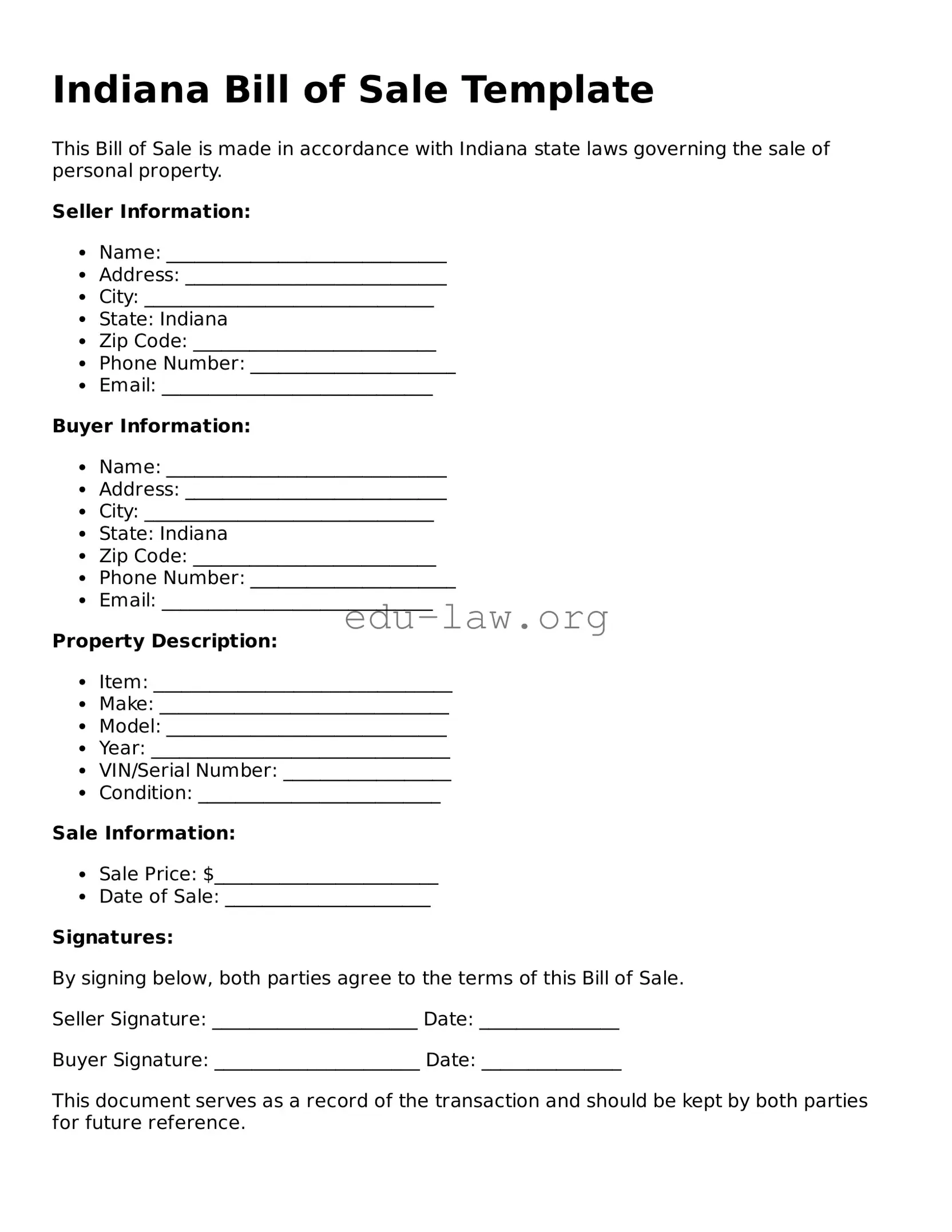
The Indiana Bill of Sale form serves as an essential document for individuals engaged in the transfer of personal property, such as vehicles, boats, or other tangible assets. This form provides a clear record of the transaction, detailing the buyer's and seller's information, the description of the item being sold, and the agreed-upon purchase price. It also includes important elements like the date of the sale and any warranties or representations made by the seller. By capturing these details, the Bill of Sale helps protect both parties involved in the transaction, ensuring that the buyer has proof of ownership and the seller is safeguarded against future claims. Additionally, while the form is not always legally required, having one can simplify the process of transferring title and registering the property, making it a prudent choice for anyone engaging in a sale in Indiana.
Indiana Bill of Sale Template
This Bill of Sale is made in accordance with Indiana state laws governing the sale of personal property.
Seller Information:
Buyer Information:
Property Description:
Sale Information:
Signatures:
By signing below, both parties agree to the terms of this Bill of Sale.
Seller Signature: ______________________ Date: _______________
Buyer Signature: ______________________ Date: _______________
This document serves as a record of the transaction and should be kept by both parties for future reference.
| Fact Name | Description |
|---|---|
| Purpose | The Indiana Bill of Sale form serves as a legal document that records the transfer of ownership of personal property from one party to another. |
| Requirements | While not mandatory, it is recommended to include the names and addresses of both the buyer and seller, a description of the property, and the sale price. |
| Governing Law | The Bill of Sale is governed by Indiana Code Title 26, Article 1, which outlines the laws related to sales and transfers of personal property. |
| Use Cases | This form is commonly used for transactions involving vehicles, boats, and other personal items to provide proof of ownership transfer. |
Filling out the Indiana Bill of Sale form is an important step in the process of transferring ownership of a vehicle or personal property. Once you have completed the form, it is essential to ensure that both the buyer and seller retain a copy for their records. This documentation can serve as proof of the transaction and may be required for registration or title transfer.
What is an Indiana Bill of Sale?
An Indiana Bill of Sale is a legal document that serves as proof of a transaction between a buyer and a seller. It details the sale of personal property, such as vehicles, boats, or equipment. This document includes essential information like the names of both parties, a description of the item being sold, the sale price, and the date of the transaction. Having a Bill of Sale helps protect both parties by providing a record of the agreement and can be particularly useful if any disputes arise in the future.
Is a Bill of Sale required in Indiana?
What information should be included in an Indiana Bill of Sale?
To ensure the Bill of Sale is comprehensive, include the following details: the full names and addresses of both the buyer and seller, a detailed description of the item being sold (including make, model, year, and VIN for vehicles), the sale price, and the date of the transaction. Additionally, both parties should sign the document. Having this information clearly laid out helps prevent misunderstandings and provides a clear record of the sale.
Can I create my own Bill of Sale in Indiana?
Yes, you can create your own Bill of Sale in Indiana. There are no specific forms mandated by the state, so you have the flexibility to draft a document that suits your needs. However, ensure that it includes all necessary information to make it legally binding. You can also find templates online that can serve as a helpful guide. Just remember, clarity and completeness are key to ensuring both parties feel secure in the transaction.
Not including all required information. It's essential to provide complete details about the buyer, seller, and the item being sold. Missing information can lead to disputes later.
Using incorrect dates. Ensure that the date of the transaction is accurate. An incorrect date can complicate the record-keeping process.
Failing to sign the document. Both the buyer and seller must sign the Bill of Sale. Without signatures, the document may not be legally binding.
Not providing a clear description of the item. Be specific about the item being sold, including its make, model, and condition. Vague descriptions can lead to misunderstandings.
Overlooking the payment details. Clearly state the payment amount and method. This information is crucial for both parties to understand the terms of the sale.
Neglecting to keep copies. After filling out the form, both parties should retain a copy for their records. This practice helps protect against future disputes.
The Indiana Bill of Sale form serves as a crucial document for the transfer of ownership of personal property. However, several other forms and documents often accompany it to ensure a smooth and legally compliant transaction. Below is a list of additional documents that may be used in conjunction with the Indiana Bill of Sale.
Incorporating these documents alongside the Indiana Bill of Sale can help facilitate a clear and legally sound transaction. Each document plays a specific role in ensuring that both parties fulfill their obligations and protect their rights during the sale process.
The Indiana Bill of Sale form is similar to the Vehicle Bill of Sale, which is specifically designed for the transfer of ownership of a vehicle. This document includes essential details such as the vehicle's make, model, year, and VIN (Vehicle Identification Number). Both forms serve to legally document the sale and protect the interests of both the buyer and seller, ensuring that the transaction is clear and binding.
Another document akin to the Indiana Bill of Sale is the Personal Property Bill of Sale. This form is used for the sale of personal items like furniture, electronics, or collectibles. It outlines the details of the item being sold, including its condition and any warranties. Just like the Indiana Bill of Sale, this document helps establish ownership and provides a record of the transaction.
The Real Estate Purchase Agreement shares similarities with the Indiana Bill of Sale in that both are used to formalize the transfer of ownership. However, this agreement is specific to real property transactions. It includes terms such as purchase price, contingencies, and closing dates. Both documents aim to protect the parties involved and ensure a smooth transfer of ownership.
The Lease Agreement is another document that resembles the Indiana Bill of Sale in its function of establishing terms between parties. While a bill of sale transfers ownership, a lease agreement outlines the terms under which one party can use another's property for a specified time. Both documents require clear terms to protect the rights and responsibilities of each party.
The Warranty Deed is closely related as it also facilitates the transfer of property ownership. This document provides a guarantee that the seller has the right to sell the property and that it is free from liens or encumbrances. Like the Indiana Bill of Sale, a warranty deed serves as a legal record of ownership transfer, providing peace of mind to the buyer.
In the context of business transactions, the Business Bill of Sale is similar to the Indiana Bill of Sale. This document is used when selling a business or its assets, detailing the items included in the sale, such as equipment, inventory, and goodwill. Both forms protect the interests of the parties involved and ensure that the sale is documented legally.
The Equipment Bill of Sale is another related document, specifically for the sale of equipment or machinery. This form includes details about the equipment, such as make, model, and condition. Similar to the Indiana Bill of Sale, it serves to provide a clear record of the transaction and protect both buyer and seller.
The Boat Bill of Sale is tailored for the sale of boats and watercraft. It includes information about the vessel, such as the hull identification number and registration details. Both this document and the Indiana Bill of Sale aim to formalize the transfer of ownership and provide necessary legal protections for the transaction.
Lastly, the Firearm Bill of Sale is relevant for the sale of firearms. This document outlines the specifics of the firearm being sold, including make, model, and serial number. Just like the Indiana Bill of Sale, it is crucial for ensuring that the transaction is legally documented and complies with applicable laws regarding firearm sales.
When filling out the Indiana Bill of Sale form, it’s important to approach the task with care. This document serves as a legal record of the sale of personal property, and getting it right can save you from future headaches. Here’s a list of seven things you should and shouldn’t do.
By following these guidelines, you can ensure that your Bill of Sale is complete and effective. Taking the time to do it right protects both the buyer and the seller, making for a smooth transaction.
When dealing with the Indiana Bill of Sale form, several misconceptions can arise. Understanding these can help individuals navigate the process more effectively.
By addressing these misconceptions, individuals can approach the Bill of Sale process with greater confidence and clarity.
When engaging in a transaction involving the sale of personal property in Indiana, a Bill of Sale is an essential document. Below are key takeaways to consider when filling out and using the Indiana Bill of Sale form: