In today's dynamic work environment, many businesses and individuals are turning to independent contractors to fulfill specific needs without the complexities of traditional employment. The Independent Contractor Agreement form plays a crucial role in establishing clear expectations between the contractor and the hiring party. This document outlines key elements such as the scope of work, payment terms, and timelines, ensuring that both parties are on the same page. It also addresses important considerations like confidentiality, intellectual property rights, and dispute resolution mechanisms. By detailing these aspects, the agreement helps protect the interests of both the contractor and the client, minimizing potential misunderstandings and legal issues down the line. Understanding the components of this agreement is essential for anyone looking to engage an independent contractor or work as one themselves.
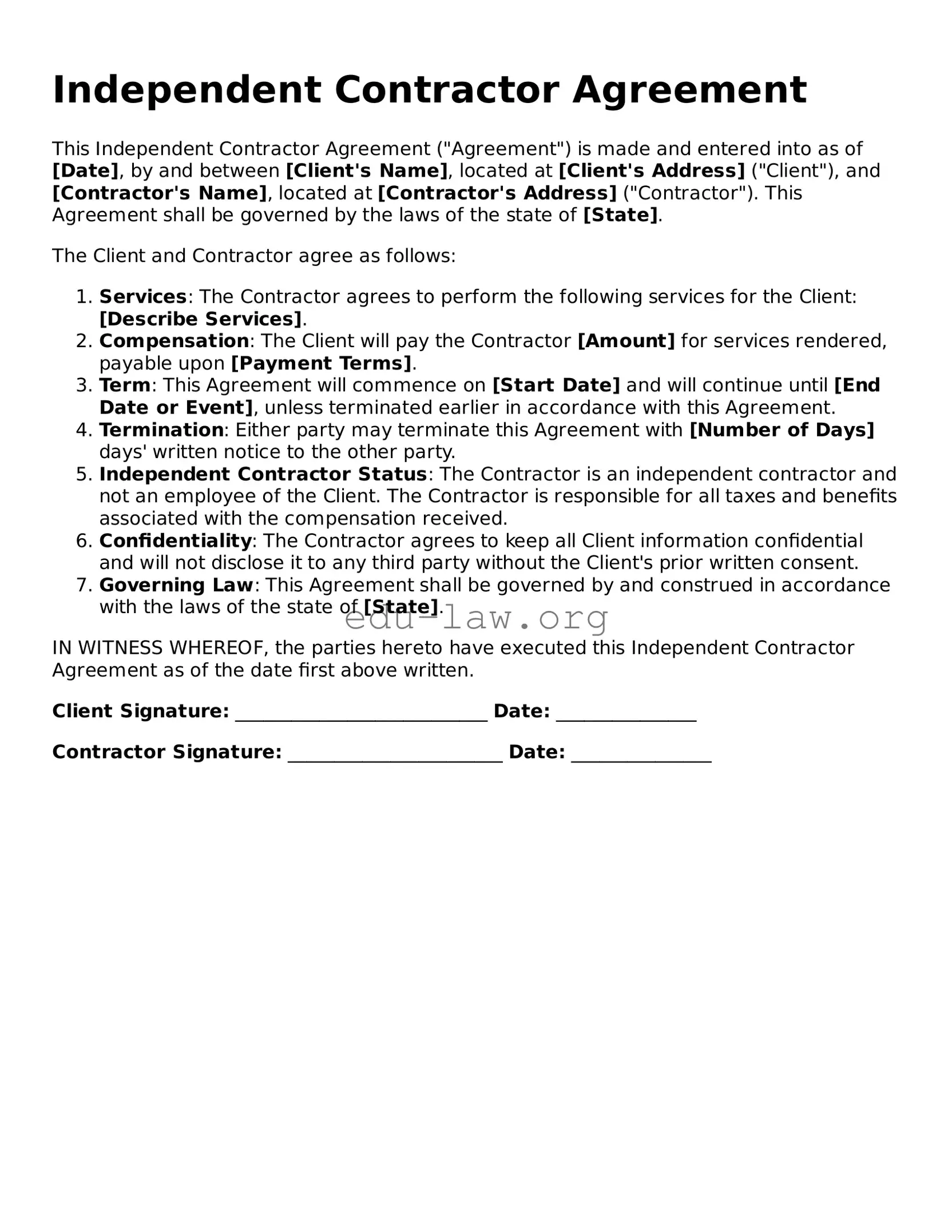
Independent Contractor Agreement
This Independent Contractor Agreement ("Agreement") is made and entered into as of [Date], by and between [Client's Name], located at [Client's Address] ("Client"), and [Contractor's Name], located at [Contractor's Address] ("Contractor"). This Agreement shall be governed by the laws of the state of [State].
The Client and Contractor agree as follows:
IN WITNESS WHEREOF, the parties hereto have executed this Independent Contractor Agreement as of the date first above written.
Client Signature: ___________________________ Date: _______________
Contractor Signature: _______________________ Date: _______________
| Fact Name | Description |
|---|---|
| Definition | An Independent Contractor Agreement outlines the relationship between a contractor and a client, specifying the terms of work. |
| Purpose | This agreement clarifies expectations, responsibilities, and payment terms to avoid misunderstandings. |
| Governing Law | Each state may have specific laws governing independent contractor agreements. For example, California law applies to contracts executed in California. |
| Payment Terms | The agreement should clearly state how and when the contractor will be compensated for their services. |
| Termination Clause | It is essential to include terms that outline how either party can terminate the agreement, including notice requirements. |
| Confidentiality | Many agreements include clauses that protect sensitive information shared during the course of work. |
| Liability | The agreement should address liability issues, ensuring that both parties understand their responsibilities and potential risks. |
Filling out the Independent Contractor Agreement form is an important step in establishing the terms of your working relationship. This document outlines the expectations and responsibilities of both parties involved. Follow the steps below to complete the form accurately.
Once you have completed these steps, ensure that both parties retain a copy of the signed agreement for their records. This will help prevent misunderstandings in the future.
What is an Independent Contractor Agreement?
An Independent Contractor Agreement is a legal document that outlines the terms and conditions between a business and a contractor. This agreement clarifies the nature of the working relationship, specifying the services to be provided, payment terms, and the duration of the contract. It helps protect both parties by ensuring that expectations are clearly defined and understood.
Why is an Independent Contractor Agreement important?
This agreement is crucial for several reasons. First, it establishes the scope of work and responsibilities, reducing the likelihood of misunderstandings. Second, it helps define the payment structure, including rates and payment schedules. Lastly, it can protect both parties from potential legal disputes by providing a clear framework for the relationship.
What should be included in an Independent Contractor Agreement?
An effective Independent Contractor Agreement should include the following key elements: a detailed description of the services to be provided, payment terms, deadlines, confidentiality clauses, and termination conditions. Additionally, it should specify the relationship between the contractor and the business to clarify that the contractor is not an employee.
How does an Independent Contractor Agreement differ from an employment contract?
The primary difference lies in the nature of the relationship. An Independent Contractor Agreement defines a contractor as a self-employed individual who provides services on a contractual basis. In contrast, an employment contract establishes an employer-employee relationship, which includes benefits, taxes, and more extensive legal obligations. Contractors typically have more flexibility in how they perform their work.
Can an Independent Contractor Agreement be modified after signing?
Yes, an Independent Contractor Agreement can be modified after it has been signed. However, any changes should be documented in writing and agreed upon by both parties. This ensures that everyone is on the same page and helps maintain a clear understanding of the terms as they evolve. Verbal agreements may not hold up in legal situations, so written documentation is essential.
Failing to Clearly Define the Scope of Work: One common mistake is not providing a detailed description of the services to be performed. A vague outline can lead to misunderstandings and disputes later on.
Neglecting to Specify Payment Terms: Individuals often overlook the importance of outlining payment methods, schedules, and any conditions tied to compensation. This can create confusion about when and how contractors will be paid.
Ignoring Tax Responsibilities: Many people forget to address tax implications for both the contractor and the hiring party. It is crucial to clarify who is responsible for tax payments to avoid future liabilities.
Omitting Confidentiality Clauses: In some cases, individuals do not include provisions to protect sensitive information. This can lead to the unintended sharing of proprietary data or trade secrets.
Not Including Termination Conditions: Some agreements lack clear terms for how either party can terminate the contract. This oversight can complicate matters if the working relationship needs to end prematurely.
Failing to Address Dispute Resolution: Many people do not outline how disputes will be handled. Without a clear process, conflicts can escalate unnecessarily, leading to costly legal battles.
Neglecting to Review Legal Compliance: Individuals often forget to ensure that the agreement complies with local, state, and federal laws. This oversight can render the contract unenforceable.
An Independent Contractor Agreement is a vital document that outlines the relationship between a business and an independent contractor. However, it is often accompanied by other forms and documents that help clarify responsibilities, protect interests, and ensure compliance with relevant laws. Below is a list of commonly used documents in conjunction with an Independent Contractor Agreement.
Utilizing these documents alongside an Independent Contractor Agreement can enhance clarity and protect the interests of both parties involved. Each document serves a specific purpose, contributing to a well-defined and legally sound working relationship.
The Independent Contractor Agreement is similar to a Consulting Agreement. Both documents outline the relationship between a client and a contractor or consultant. They specify the services to be provided, the payment terms, and the duration of the agreement. Just like an Independent Contractor Agreement, a Consulting Agreement clarifies the expectations of both parties, ensuring that the consultant understands their role and responsibilities. This helps prevent misunderstandings and sets the stage for a successful working relationship.
An Employment Agreement shares some similarities with an Independent Contractor Agreement, although they serve different purposes. While an Employment Agreement typically outlines the terms of employment for an employee, it also includes details about job duties, compensation, and benefits. Both agreements aim to define the relationship between the parties involved, but an Employment Agreement usually implies a more permanent relationship with additional obligations, such as providing benefits and adhering to company policies.
A Non-Disclosure Agreement (NDA) is also similar in that it protects sensitive information shared between parties. While an Independent Contractor Agreement focuses on the relationship and services provided, an NDA ensures that confidential information remains private. Often, an NDA is included as part of the Independent Contractor Agreement to safeguard proprietary information that the contractor may access during their work. This combination helps to protect both the client’s interests and the contractor’s ability to operate without fear of information leaks.
A Partnership Agreement can bear similarities to an Independent Contractor Agreement, especially when it comes to defining roles and responsibilities. While a Partnership Agreement typically involves two or more parties working together as partners, it also outlines how profits and losses will be shared. In contrast, an Independent Contractor Agreement focuses on a one-sided relationship where one party provides services to another. However, both documents emphasize clarity in expectations to foster a productive working relationship.
Finally, a Freelance Agreement is closely related to the Independent Contractor Agreement. Both documents are designed for individuals who provide services on a project basis. A Freelance Agreement typically includes details about the specific project, payment terms, and deadlines. Like the Independent Contractor Agreement, it aims to establish clear communication between the freelancer and the client, ensuring that both parties understand their obligations and the scope of work involved.
When filling out the Independent Contractor Agreement form, it's essential to be careful and thorough. Here are some important dos and don'ts to keep in mind:
There are several misconceptions surrounding the Independent Contractor Agreement form. Understanding these misconceptions can help clarify the purpose and importance of this document.
This is not true. Any business, regardless of size, can benefit from having a written agreement with independent contractors. It helps to define the working relationship clearly.
While some may believe that verbal agreements are sufficient, having a written contract is essential. It protects both parties by outlining expectations, responsibilities, and compensation.
This is incorrect. Many terms within the agreement can be negotiated. Both parties should feel comfortable discussing and agreeing on the terms that work best for them.
While the agreement can limit certain liabilities, it does not eliminate them entirely. Businesses must still adhere to legal standards and regulations regarding their independent contractors.
When filling out and using the Independent Contractor Agreement form, it is essential to keep several key points in mind to ensure clarity and legal compliance.