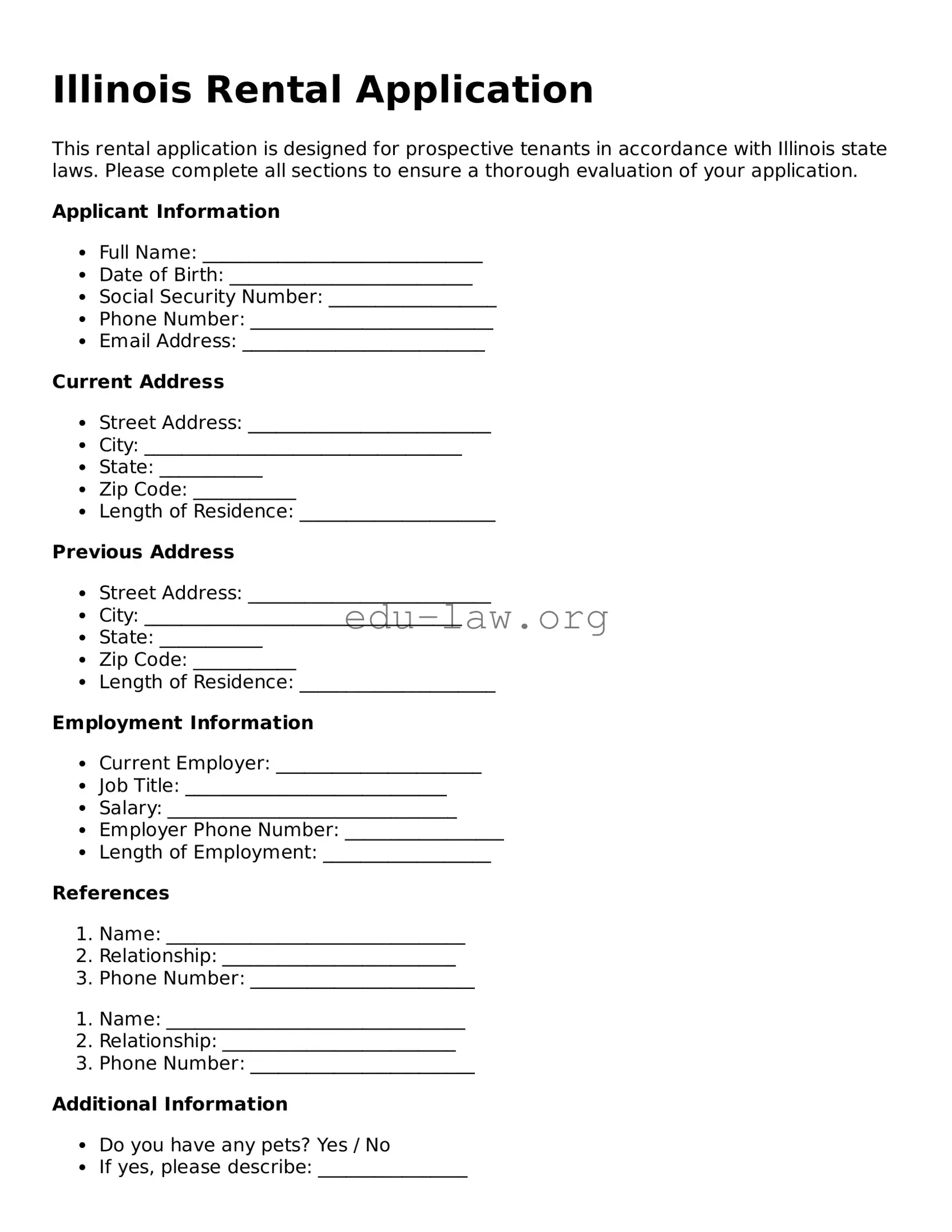
The Illinois Rental Application form is a crucial document for both landlords and prospective tenants, serving as a gateway to the rental process. This form typically includes essential information such as personal details of the applicant, employment history, and rental history. It also often requires references, which can help landlords assess the reliability of the applicant. Financial information, including income and credit history, may be requested to ensure that the applicant can meet rental obligations. Additionally, many landlords use this form to obtain consent for background checks, which can provide insights into the applicant's rental behavior and financial responsibility. Understanding the components of the Illinois Rental Application form can empower tenants to present themselves effectively while helping landlords make informed decisions.
Illinois Rental Application
This rental application is designed for prospective tenants in accordance with Illinois state laws. Please complete all sections to ensure a thorough evaluation of your application.
Applicant Information
Current Address
Previous Address
Employment Information
References
Additional Information
By signing below, you authorize the landlord to conduct a background check and verify the information provided in this application.
Applicant Signature: ________________________
Date: ____________________________________
| Fact Name | Details |
|---|---|
| Purpose | The Illinois Rental Application form is used by landlords to screen potential tenants. It helps gather information about a tenant's rental history, creditworthiness, and employment status. |
| Governing Law | The use of rental applications in Illinois is governed by the Illinois Rental Property Utility Service Act and the Illinois Human Rights Act, which ensure fair housing practices. |
| Required Information | Applicants typically need to provide personal information, including their name, contact details, employment history, and references. This information helps landlords make informed decisions. |
| Application Fee | Landlords in Illinois may charge an application fee to cover the cost of background checks. However, this fee must be reasonable and is subject to state regulations. |
Once you have the Illinois Rental Application form in hand, it's time to fill it out accurately. Completing this form thoroughly is essential to ensure that your application is processed without delays. Follow these steps carefully to provide all the necessary information.
After completing the form, review all your entries for accuracy. Submit the application along with any required fees to the landlord or property management company as soon as possible to expedite the process.
What is an Illinois Rental Application form?
The Illinois Rental Application form is a document used by landlords to collect information from potential tenants. It typically includes personal details, rental history, employment information, and references. This form helps landlords assess the suitability of applicants for their rental properties.
Why do I need to fill out a rental application?
Filling out a rental application is essential for both landlords and tenants. For landlords, it provides a way to evaluate applicants based on their financial stability and rental history. For tenants, completing the application is a necessary step in securing a rental unit. It shows the landlord that you are serious about renting the property.
What information is typically required on the application?
Common information requested on the Illinois Rental Application includes your full name, contact information, Social Security number, employment details, income, rental history, and references. Some applications may also ask for consent to run a background or credit check.
Is there a fee to submit a rental application?
Many landlords charge a non-refundable application fee to cover the costs of background checks and processing. The fee can vary widely, so it’s important to ask the landlord about any costs upfront before submitting your application.
Can a landlord deny my application?
Yes, a landlord can deny your application for various reasons, such as poor credit history, insufficient income, or negative rental references. However, they must comply with fair housing laws and cannot discriminate based on race, gender, religion, or other protected characteristics.
How long does it take to process a rental application?
The processing time for a rental application can vary. Typically, it takes anywhere from a few hours to a few days. Factors that may affect this timeline include the landlord’s policies, the number of applications being processed, and the speed of background checks.
What happens after I submit my application?
After you submit your application, the landlord will review the information provided. They may contact your references and perform background checks. If approved, you will be contacted to discuss the next steps, such as signing a lease and paying the security deposit.
Can I appeal a denied application?
If your application is denied, you can ask the landlord for the reasons behind the decision. While there is no formal appeal process, understanding the reasons may help you address any issues for future applications. You may also request a copy of the report used in the decision-making process.
Not providing complete personal information. Applicants often forget to include their full name, current address, and contact details.
Failing to disclose rental history. Many individuals neglect to list previous addresses or landlords, which can raise red flags for property managers.
Omitting employment details. It's important to include current employment information, including the name of the employer, position, and duration of employment.
Incorrectly reporting income. Some applicants misstate their income, which can lead to issues during the application review process.
Not listing references. Failing to provide personal or professional references can make it difficult for landlords to verify character and reliability.
Leaving out necessary documentation. Applicants sometimes forget to attach required documents, such as pay stubs or identification.
Ignoring the application fee. Some individuals may overlook the need to submit a payment for the application processing fee.
Providing inaccurate or outdated contact information. This can hinder communication between the applicant and the landlord.
Not reading the application thoroughly. Skipping over important sections can lead to incomplete applications and delays.
Failing to sign and date the application. An unsigned application may be considered invalid, resulting in rejection.
When renting a property in Illinois, the rental application form is just one piece of the puzzle. Alongside it, several other documents are often required to ensure a smooth leasing process. These documents help landlords screen potential tenants effectively and protect the interests of both parties. Here’s a look at some commonly used forms and documents that accompany the Illinois Rental Application form.
These documents play a crucial role in the rental process. They help establish clear expectations and ensure that both landlords and tenants are on the same page. By being prepared with these forms, applicants can enhance their chances of securing their desired rental property.
The Illinois Rental Application form is similar to a tenant screening form. Both documents collect essential information about potential renters, such as personal details, rental history, and employment information. The tenant screening form often includes a section for consent to run background checks, which helps landlords assess the reliability of applicants. This ensures that landlords can make informed decisions based on a comprehensive view of the applicant's history and financial stability.
Another document akin to the Illinois Rental Application is the lease agreement. While the rental application focuses on gathering information about the tenant, the lease agreement outlines the terms and conditions of the rental arrangement. Both documents are crucial in the rental process. The lease agreement formalizes the relationship between the landlord and tenant, specifying rent amount, duration of the lease, and responsibilities of both parties.
Lastly, the credit application form is comparable to the Illinois Rental Application. This form specifically focuses on the applicant's financial background, including credit history and current debts. While the rental application may touch on financial aspects, the credit application dives deeper into the applicant's creditworthiness. Both forms help landlords evaluate whether a potential tenant is likely to meet their financial obligations during the rental period.
When completing the Illinois Rental Application form, it is important to adhere to certain guidelines to ensure a smooth process. Below is a list of things you should and shouldn't do.
When dealing with rental applications in Illinois, several misconceptions often arise. Understanding these can help both landlords and tenants navigate the process more smoothly. Here are five common misconceptions:
This is not true. Different landlords and property management companies may have their own specific rental application forms. Each form can vary in terms of the information requested, fees, and screening criteria.
In Illinois, landlords can charge an application fee, but it must be reasonable and related to the costs of processing the application. However, there are regulations that limit the amount they can charge, so it’s important to check local laws.
Submitting a rental application does not guarantee that a tenant will be approved for the rental. Landlords have the right to deny an application based on various factors, including credit history, income verification, and rental history.
Approval of a rental application does not mean a tenant can move in right away. There may be additional steps, such as signing a lease agreement and paying the first month’s rent and security deposit, that must be completed before moving in.
Understanding these misconceptions can help ensure a smoother rental experience for both parties involved. Always read the application carefully and ask questions if anything is unclear.
When filling out and using the Illinois Rental Application form, several important considerations can enhance the experience for both landlords and prospective tenants. Below are key takeaways to keep in mind:
By adhering to these key takeaways, applicants can navigate the rental application process more effectively and increase their chances of securing a rental property.