The Illinois Real Estate Purchase Agreement form serves as a crucial document in the property transaction process, outlining the terms and conditions agreed upon by the buyer and seller. This form typically includes essential details such as the purchase price, property description, and any contingencies that may affect the sale. Additionally, it addresses important timelines, including the closing date and any inspection periods. Both parties can negotiate various terms, such as earnest money deposits and repairs needed prior to closing. By clearly defining the rights and responsibilities of each party, this agreement aims to minimize misunderstandings and provide a structured approach to the sale of real estate in Illinois. Understanding the components of this form is vital for anyone looking to navigate the complexities of real estate transactions effectively.
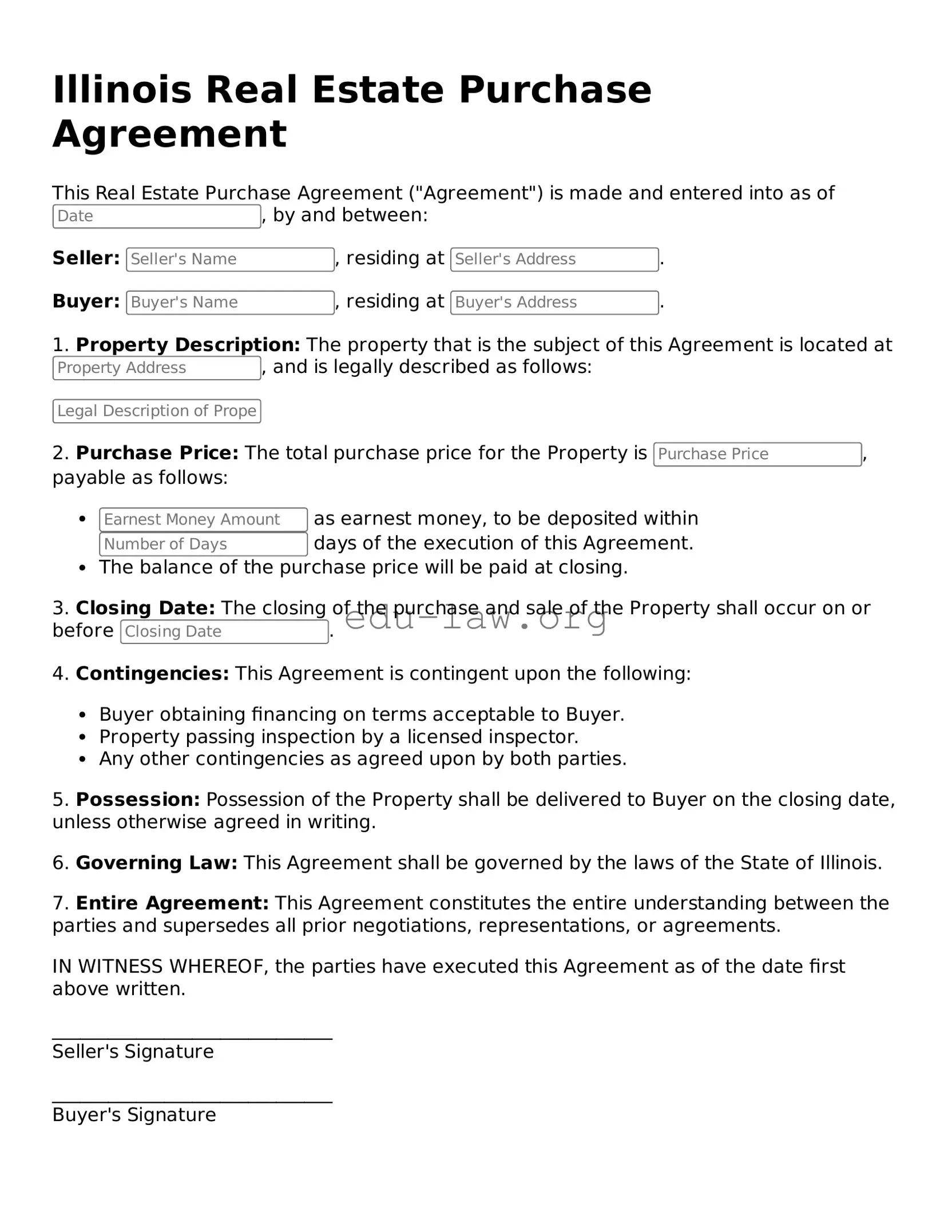
Illinois Real Estate Purchase Agreement
This Real Estate Purchase Agreement ("Agreement") is made and entered into as of , by and between:
Seller: , residing at .
Buyer: , residing at .
1. Property Description: The property that is the subject of this Agreement is located at , and is legally described as follows:
2. Purchase Price: The total purchase price for the Property is , payable as follows:
3. Closing Date: The closing of the purchase and sale of the Property shall occur on or before .
4. Contingencies: This Agreement is contingent upon the following:
5. Possession: Possession of the Property shall be delivered to Buyer on the closing date, unless otherwise agreed in writing.
6. Governing Law: This Agreement shall be governed by the laws of the State of Illinois.
7. Entire Agreement: This Agreement constitutes the entire understanding between the parties and supersedes all prior negotiations, representations, or agreements.
IN WITNESS WHEREOF, the parties have executed this Agreement as of the date first above written.
______________________________
Seller's Signature
______________________________
Buyer's Signature
| Fact Name | Details |
|---|---|
| Governing Law | The Illinois Real Estate Purchase Agreement is governed by the laws of the State of Illinois. |
| Parties Involved | The agreement typically includes a buyer and a seller, both of whom must be identified clearly. |
| Property Description | A detailed description of the property being sold is required, including the address and legal description. |
| Purchase Price | The total purchase price must be specified in the agreement, along with any earnest money deposit. |
| Contingencies | Common contingencies may include financing, inspection, and appraisal conditions. |
| Closing Date | The agreement should specify a closing date, which is the date when ownership is transferred. |
| Disclosures | Sellers are required to provide certain disclosures regarding the property's condition and any known issues. |
| Default Provisions | The agreement outlines the consequences of default by either party, including potential remedies. |
| Signatures | Both parties must sign the agreement for it to be legally binding. |
After gathering the necessary information, you will be ready to fill out the Illinois Real Estate Purchase Agreement form. This document requires specific details about the transaction, including the parties involved and the property being sold. Follow the steps below to ensure accurate completion of the form.
What is the Illinois Real Estate Purchase Agreement form?
The Illinois Real Estate Purchase Agreement form is a legal document used when a buyer and seller agree to the terms of a real estate transaction. This form outlines the essential details of the sale, including the purchase price, property description, and any conditions that must be met before the sale can be finalized. It serves as a binding contract between the parties involved, ensuring that both sides understand their rights and obligations.
Who typically uses the Illinois Real Estate Purchase Agreement?
This form is primarily used by buyers and sellers of residential real estate in Illinois. Real estate agents often assist in preparing and presenting the agreement, ensuring that all necessary details are included. However, individuals can also use the form without an agent, provided they understand the terms and implications of the agreement.
What key information should be included in the agreement?
Several critical pieces of information should be included in the Illinois Real Estate Purchase Agreement. These include the names and contact information of both the buyer and seller, a detailed description of the property being sold, the agreed-upon purchase price, and any contingencies that may apply, such as financing or inspection requirements. Additionally, the agreement should specify the closing date and any items included in the sale, such as appliances or fixtures.
What happens if one party wants to back out of the agreement?
If one party wishes to back out of the agreement, the consequences depend on the terms outlined in the contract. Generally, if a buyer withdraws without a valid reason stated in the agreement, they may forfeit their earnest money deposit. Conversely, if the seller backs out, they may be liable for damages or could face legal action. It's crucial for both parties to understand their rights and obligations before signing the agreement.
Can the Illinois Real Estate Purchase Agreement be modified after it is signed?
Yes, the Illinois Real Estate Purchase Agreement can be modified after it is signed, but both parties must agree to any changes. Modifications should be documented in writing and signed by both the buyer and seller to ensure clarity and avoid disputes. This could include changes to the closing date, purchase price, or any contingencies.
Is it necessary to have a lawyer review the agreement?
While it is not legally required to have a lawyer review the Illinois Real Estate Purchase Agreement, it is highly recommended. A lawyer can help ensure that the terms are fair and that all legal requirements are met. They can also provide valuable advice on any potential issues that may arise during the transaction. Having legal support can offer peace of mind and protect the interests of both the buyer and seller.
Incomplete Information: Failing to fill out all required fields can lead to confusion or disputes later. Ensure every section is completed, including names, addresses, and property details.
Incorrect Property Description: Misidentifying the property can create legal issues. Always double-check the legal description and address to confirm accuracy.
Omitting Contingencies: Not including necessary contingencies, such as financing or inspection, may leave buyers vulnerable. Clearly outline any conditions that must be met before the sale proceeds.
Ignoring Deadlines: Missing deadlines for offers, inspections, or closing can jeopardize the transaction. Pay attention to all timeframes stated in the agreement.
Not Specifying Earnest Money: Failing to state the amount of earnest money can lead to misunderstandings. Clearly define the amount and terms associated with this deposit.
Forgetting Signatures: An unsigned agreement is not legally binding. Ensure all parties sign and date the document to validate the agreement.
Neglecting to Review Terms: Overlooking important terms and conditions can result in unexpected obligations. Take the time to read and understand all provisions before signing.
When engaging in a real estate transaction in Illinois, several documents complement the Illinois Real Estate Purchase Agreement. These forms help clarify terms, protect parties' interests, and ensure compliance with local laws. Understanding these documents can facilitate a smoother transaction process.
Having a clear understanding of these documents can empower both buyers and sellers throughout the real estate process. Each form plays a vital role in ensuring that the transaction is transparent, fair, and legally binding. Being informed helps all parties navigate the complexities of real estate transactions with confidence.
The Illinois Real Estate Purchase Agreement is similar to the Residential Purchase Agreement, which is commonly used across many states. Both documents serve the same primary purpose: to outline the terms and conditions under which a buyer agrees to purchase a property from a seller. They typically include details such as the purchase price, closing date, and contingencies. However, the Residential Purchase Agreement may vary slightly in terms of state-specific disclosures and requirements, reflecting local laws and customs.
Another document that resembles the Illinois Real Estate Purchase Agreement is the Commercial Purchase Agreement. While both agreements establish the terms for a property transaction, the Commercial Purchase Agreement is tailored for commercial properties, such as office buildings or retail spaces. This document often includes additional clauses related to zoning laws, tenant leases, and other commercial considerations that are not typically found in residential agreements.
The Offer to Purchase Real Estate is also similar in function to the Illinois Real Estate Purchase Agreement. This document is usually the first step in the buying process, where a buyer formally expresses interest in a property. It outlines the proposed terms, including price and conditions. If accepted by the seller, it can lead to the creation of a more detailed purchase agreement, like the Illinois form, which will finalize the transaction.
In addition, the Lease Purchase Agreement shares similarities with the Illinois Real Estate Purchase Agreement. This document allows a tenant to lease a property with the option to purchase it at a later date. It includes terms regarding the lease duration, purchase price, and conditions under which the tenant can exercise their option to buy. Both agreements require clear communication of terms to avoid misunderstandings.
The Seller’s Disclosure Statement is another document that complements the Illinois Real Estate Purchase Agreement. While the purchase agreement outlines the transaction terms, the Seller’s Disclosure Statement provides vital information about the property’s condition. It helps buyers make informed decisions by disclosing known issues, such as structural problems or past repairs, which can influence the sale.
Similar to the Illinois Real Estate Purchase Agreement is the Counteroffer document. When a seller or buyer wishes to modify the terms of an initial offer, they can issue a counteroffer. This document outlines the new terms, which can include changes to the price or contingencies. The counteroffer process is a crucial part of negotiations and can lead to a final agreement, akin to the Illinois Purchase Agreement.
The Addendum to Purchase Agreement is also relevant in this context. This document is used to add specific terms or conditions to an existing purchase agreement. For example, it might include contingencies for financing or inspections. The addendum allows for flexibility and customization of the agreement, ensuring that all parties are on the same page regarding additional stipulations.
Lastly, the Title Commitment is a document that, while not a purchase agreement, is closely related to the transaction process. It outlines the legal ownership of the property and any liens or encumbrances that may exist. A clear title is essential for a smooth transaction, and the Title Commitment helps ensure that buyers are aware of any potential issues before finalizing the purchase, aligning with the protective intentions of the Illinois Real Estate Purchase Agreement.
When filling out the Illinois Real Estate Purchase Agreement form, it is essential to approach the task with care and attention to detail. Here are some key actions to consider:
Misconceptions about the Illinois Real Estate Purchase Agreement form can lead to confusion for both buyers and sellers. Understanding these misconceptions is crucial for making informed decisions in real estate transactions. Below are six common misconceptions:
Addressing these misconceptions can empower individuals involved in real estate transactions in Illinois. Knowledge of the Real Estate Purchase Agreement form fosters transparency and trust, ultimately leading to smoother transactions.
When filling out and using the Illinois Real Estate Purchase Agreement form, it’s important to keep several key points in mind. Here are some essential takeaways:
By keeping these points in mind, you can navigate the Illinois Real Estate Purchase Agreement form with confidence and clarity.