In Illinois, the Notice to Quit form serves as a crucial step for landlords seeking to terminate a lease agreement with tenants. This document outlines the landlord's intent to reclaim their property, providing tenants with a clear understanding of the situation. It typically specifies the reason for termination, whether due to non-payment of rent, lease violations, or other grounds permitted by law. Importantly, the form includes a timeline, indicating how much notice the tenant will receive before eviction proceedings may begin. By adhering to the proper procedures and timelines set forth in the Notice to Quit, landlords can help ensure a smoother transition while protecting their legal rights. Tenants, on the other hand, benefit from knowing their rights and responsibilities in response to such notices, allowing them to take appropriate action or seek legal counsel if necessary.
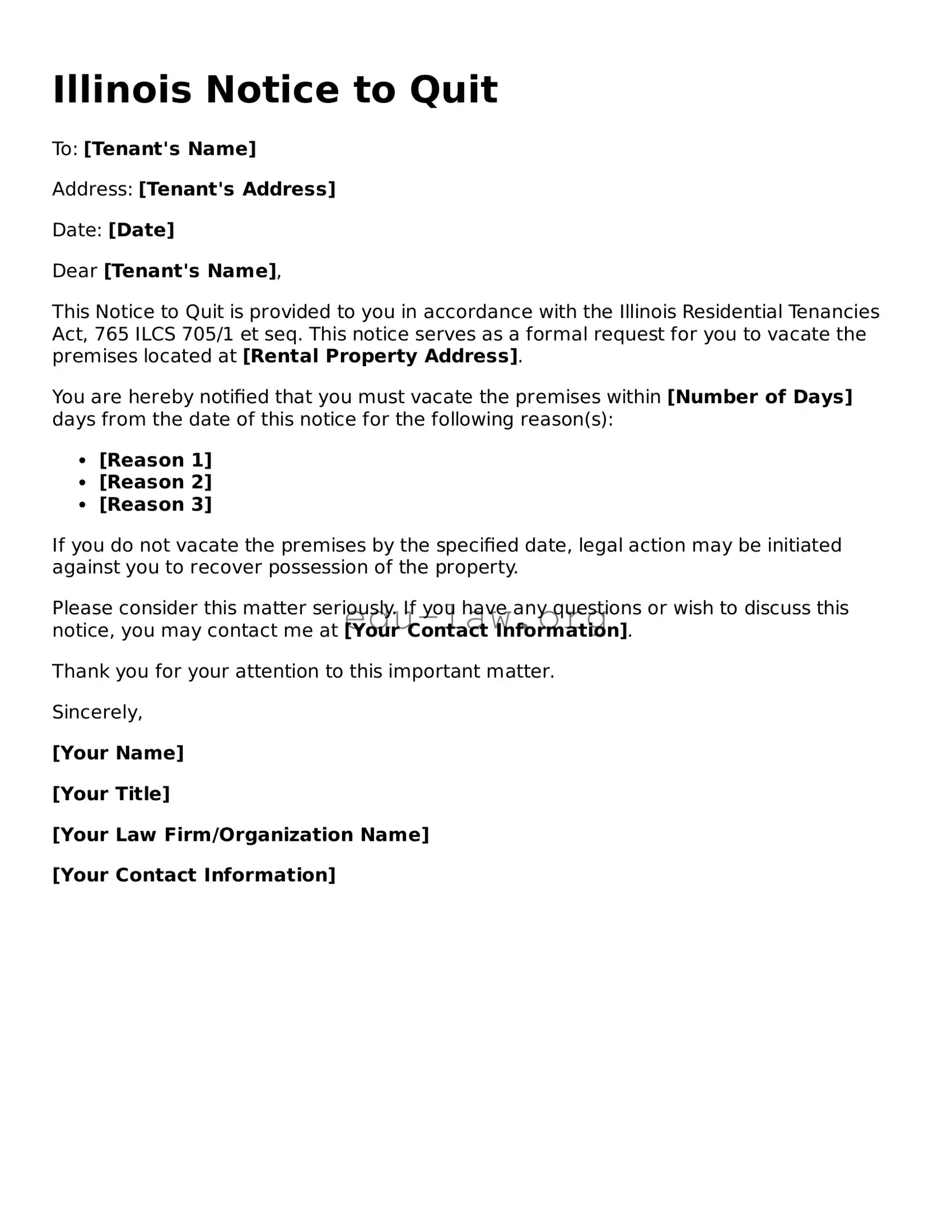
Illinois Notice to Quit
To: [Tenant's Name]
Address: [Tenant's Address]
Date: [Date]
Dear [Tenant's Name],
This Notice to Quit is provided to you in accordance with the Illinois Residential Tenancies Act, 765 ILCS 705/1 et seq. This notice serves as a formal request for you to vacate the premises located at [Rental Property Address].
You are hereby notified that you must vacate the premises within [Number of Days] days from the date of this notice for the following reason(s):
If you do not vacate the premises by the specified date, legal action may be initiated against you to recover possession of the property.
Please consider this matter seriously. If you have any questions or wish to discuss this notice, you may contact me at [Your Contact Information].
Thank you for your attention to this important matter.
Sincerely,
[Your Name]
[Your Title]
[Your Law Firm/Organization Name]
[Your Contact Information]
| Fact Name | Description |
|---|---|
| Purpose | The Illinois Notice to Quit form is used by landlords to inform tenants of their intent to terminate a lease agreement. |
| Governing Law | This form is governed by the Illinois Compiled Statutes, specifically 735 ILCS 5/9-207. |
| Notice Period | Landlords must provide a notice period that varies depending on the reason for termination, typically ranging from 5 to 30 days. |
| Delivery Methods | The notice can be delivered in person, by mail, or by posting it on the property if the tenant cannot be reached. |
| Tenant Response | Tenants have the right to respond to the notice and may contest the eviction in court if they believe it is unjust. |
After completing the Illinois Notice to Quit form, you will need to deliver it to the tenant. This step is essential in initiating the process for addressing any lease violations or unpaid rent. Make sure to keep a copy for your records.
What is the Illinois Notice to Quit form?
The Illinois Notice to Quit form is a legal document used by landlords to notify tenants that they must vacate the rental property. This notice is typically the first step in the eviction process. It informs the tenant of the reason for the eviction and provides a specific timeframe for them to leave the premises.
When should a landlord use the Notice to Quit?
A landlord should use the Notice to Quit when they wish to terminate a lease agreement due to non-payment of rent, lease violations, or if the lease is set to expire and the landlord does not wish to renew it. It's essential to follow the proper legal procedure to ensure the eviction process is valid.
How much notice must a landlord give?
The amount of notice required depends on the reason for the eviction. For non-payment of rent, a landlord must provide a 5-day notice. For lease violations, a 10-day notice is typically required. If the lease is ending, a 30-day notice is usually necessary. Always check local laws for any specific requirements.
Can a tenant contest a Notice to Quit?
Yes, a tenant can contest a Notice to Quit. If they believe the notice is unjust or if they have rectified the issue (like paying overdue rent), they can respond to the landlord. It’s advisable for tenants to seek legal advice to understand their rights and options.
What happens after the Notice to Quit is served?
After the Notice to Quit is served, the tenant has the specified time to vacate the property. If they do not leave, the landlord may file an eviction lawsuit in court. The court will then schedule a hearing to determine if the eviction can proceed.
Is the Notice to Quit the same as an eviction notice?
No, the Notice to Quit is not the same as an eviction notice. The Notice to Quit is a preliminary step that gives the tenant a chance to leave voluntarily. An eviction notice follows if the tenant does not comply with the Notice to Quit and legal proceedings begin.
Can a tenant be evicted immediately after receiving a Notice to Quit?
No, a tenant cannot be evicted immediately. The Notice to Quit provides a grace period for the tenant to vacate the property. If they fail to do so within the specified timeframe, the landlord must then pursue legal action through the court system to evict the tenant.
Where can I find the Illinois Notice to Quit form?
The Illinois Notice to Quit form can typically be found online through legal aid websites, local court websites, or by consulting a local attorney. It’s important to use the correct form that complies with Illinois law to ensure it is valid.
Incorrect Tenant Information: Many people fail to provide accurate details about the tenant, including their full name and current address. This can lead to confusion and delays in the process.
Missing Landlord Information: It's important to include the landlord's full name and contact information. Omitting this can cause issues with communication and legal proceedings.
Failure to Specify the Reason for Termination: The form requires a clear reason for the notice to quit. Not stating this or being vague can result in the notice being deemed invalid.
Incorrect Dates: Ensure that all dates, including the date of the notice and the deadline for the tenant to vacate, are accurate. Mistakes here can affect the enforcement of the notice.
Not Following Proper Delivery Methods: The law specifies how the notice must be delivered to the tenant. Ignoring these requirements can invalidate the notice.
Omitting Signature: The notice must be signed by the landlord or their authorized agent. Failing to sign the form renders it ineffective.
Not Keeping a Copy: After filling out the notice, it's crucial to keep a copy for your records. This can be important for any future legal actions.
Using Outdated Forms: Ensure that you are using the most current version of the Notice to Quit form. Using outdated forms can lead to complications.
Neglecting Local Laws: Each municipality may have specific requirements regarding notices to quit. Not being aware of these can lead to mistakes that affect the eviction process.
When dealing with rental agreements and potential evictions in Illinois, several forms and documents may accompany the Notice to Quit. Each document serves a unique purpose in the process, ensuring that both landlords and tenants understand their rights and responsibilities. Here’s a brief overview of some commonly used forms:
Understanding these documents can help both landlords and tenants navigate the complexities of rental agreements and eviction processes more effectively. Each form plays a critical role in ensuring that the rights of all parties are respected and upheld throughout the process.
The Illinois Notice to Quit form is similar to the Eviction Notice, which is commonly used in many states. An Eviction Notice serves as a formal communication from a landlord to a tenant, indicating that the tenant must vacate the property. Like the Notice to Quit, it outlines the reasons for eviction and specifies a deadline for the tenant to leave. Both documents aim to inform tenants of their rights and responsibilities while also providing a clear timeline for action.
Another document similar to the Illinois Notice to Quit is the Lease Termination Letter. This letter is typically used when a landlord or tenant wishes to end a lease agreement. It provides notice to the other party about the intention to terminate the lease and includes important details such as the effective date of termination. Both documents share the goal of ensuring that all parties are aware of the termination process and the expectations involved.
The 30-Day Notice to Vacate is also comparable to the Illinois Notice to Quit. This notice is often used by landlords to give tenants a month’s notice before they must vacate the rental property. It serves a similar purpose by providing a clear timeline for the tenant to prepare for their move. Both documents emphasize the importance of communication and transparency in the landlord-tenant relationship.
The Notice of Non-Renewal is another related document. This notice is sent by landlords to inform tenants that their lease will not be renewed at the end of the term. Like the Notice to Quit, it provides a clear timeline and reason for the tenant’s need to vacate. Both documents help to set expectations and allow tenants to plan their next steps accordingly.
The Demand for Possession is also similar to the Illinois Notice to Quit. This document is used when a landlord demands that a tenant vacate the premises due to a breach of lease terms. It outlines the reasons for the demand and sets a deadline for the tenant to leave. Both documents serve to formally communicate the landlord's intent and the urgency of the situation.
The Notice of Rent Increase shares similarities with the Notice to Quit as well. While it does not directly ask a tenant to leave, it informs them of a change in rental terms that could lead to a future decision to vacate. Both documents are essential in maintaining clear communication between landlords and tenants regarding changes in rental agreements.
Lastly, the Notice of Lease Violation is akin to the Illinois Notice to Quit. This notice is issued when a tenant fails to comply with lease terms, prompting the landlord to inform them of the violation. It typically includes a request for the tenant to rectify the situation or face potential eviction. Both documents highlight the importance of adhering to lease agreements and outline the consequences of non-compliance.
When filling out the Illinois Notice to Quit form, it is important to follow certain guidelines to ensure the process goes smoothly. Here are some things you should and shouldn't do:
Following these tips will help ensure that your Notice to Quit is properly completed and effective.
Many people have misunderstandings about the Illinois Notice to Quit form. These misconceptions can lead to confusion and potentially costly mistakes. Here are four common misconceptions:
While a Notice to Quit is a step in the eviction process, it is not the same as an eviction notice. It serves as a formal request for a tenant to leave the property, but it does not mean the eviction has already taken place.
Landlords must have a valid reason to issue a Notice to Quit. Common reasons include non-payment of rent or lease violations. Simply wanting a tenant to leave is not sufficient grounds.
This is not true. Tenants still have rights and can respond to the notice. They may have the option to remedy the situation, such as paying overdue rent, before any further action is taken.
While personal delivery is one method, landlords can also send the notice by mail or post it on the property. However, it is important to follow the specific delivery methods outlined in the law to ensure it is legally valid.
When using the Illinois Notice to Quit form, keep these key takeaways in mind: