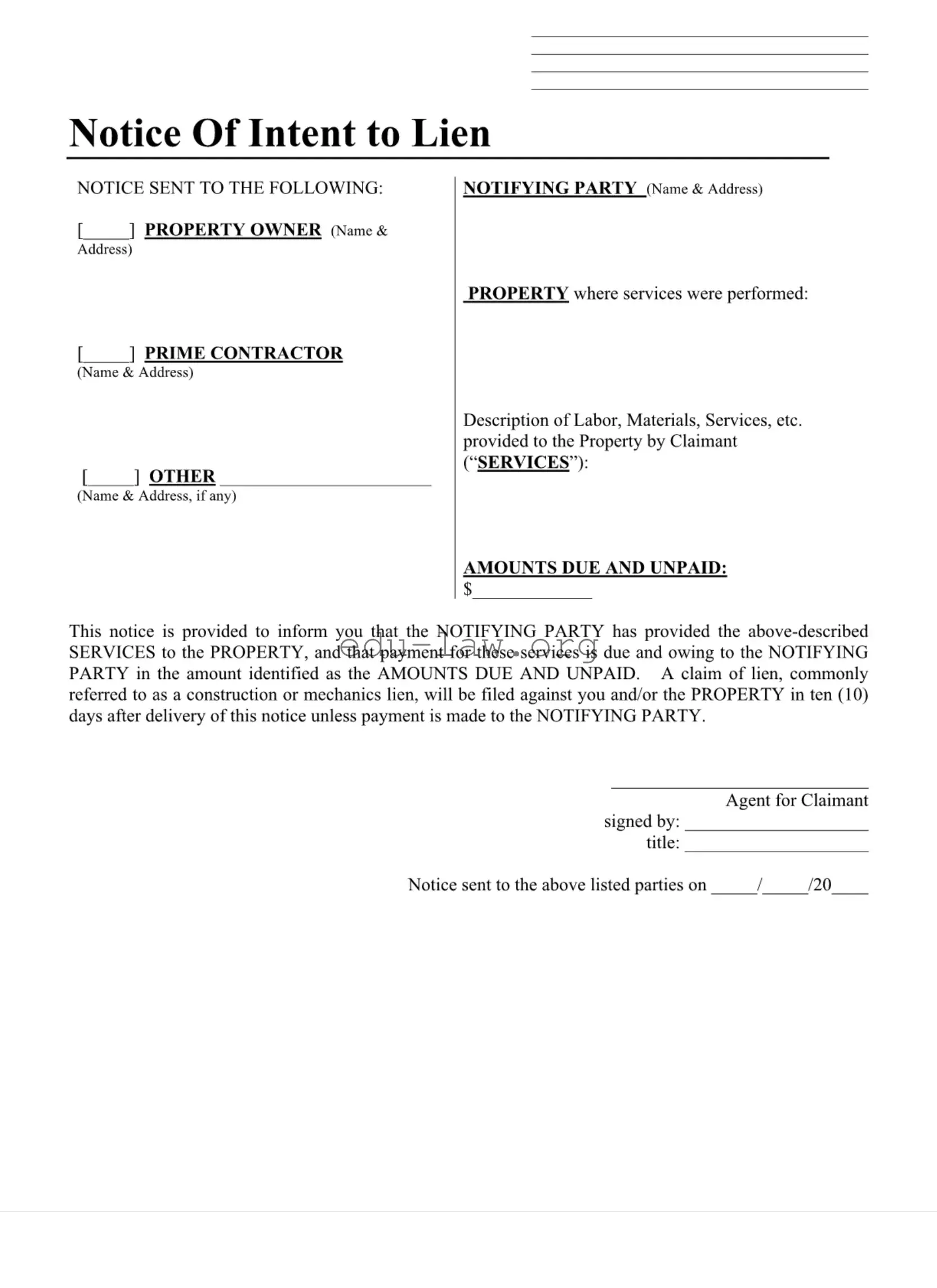
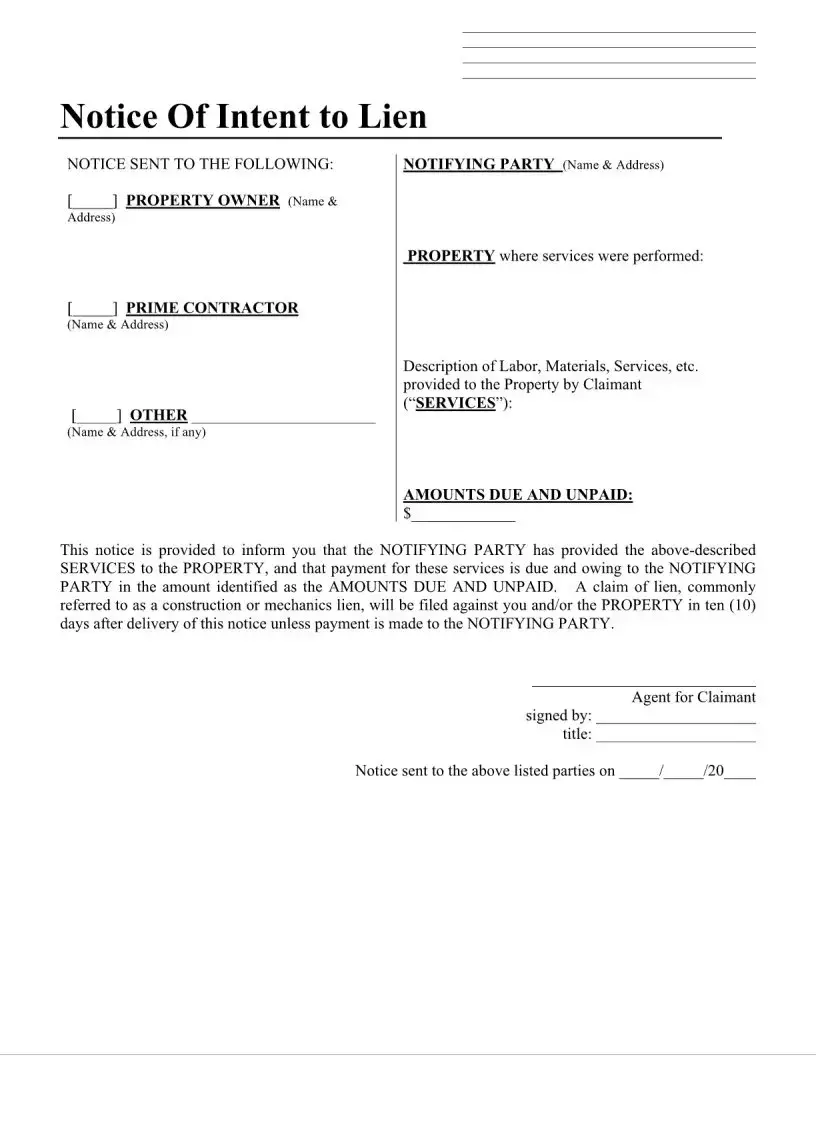
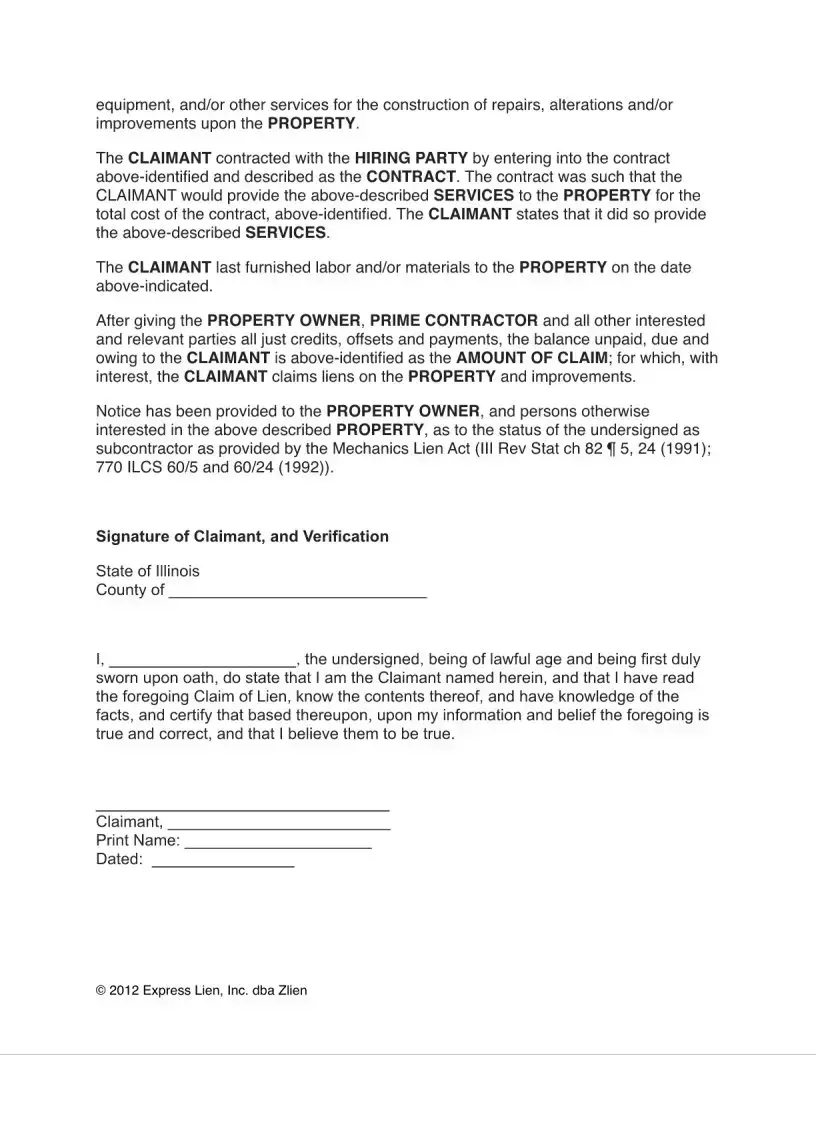
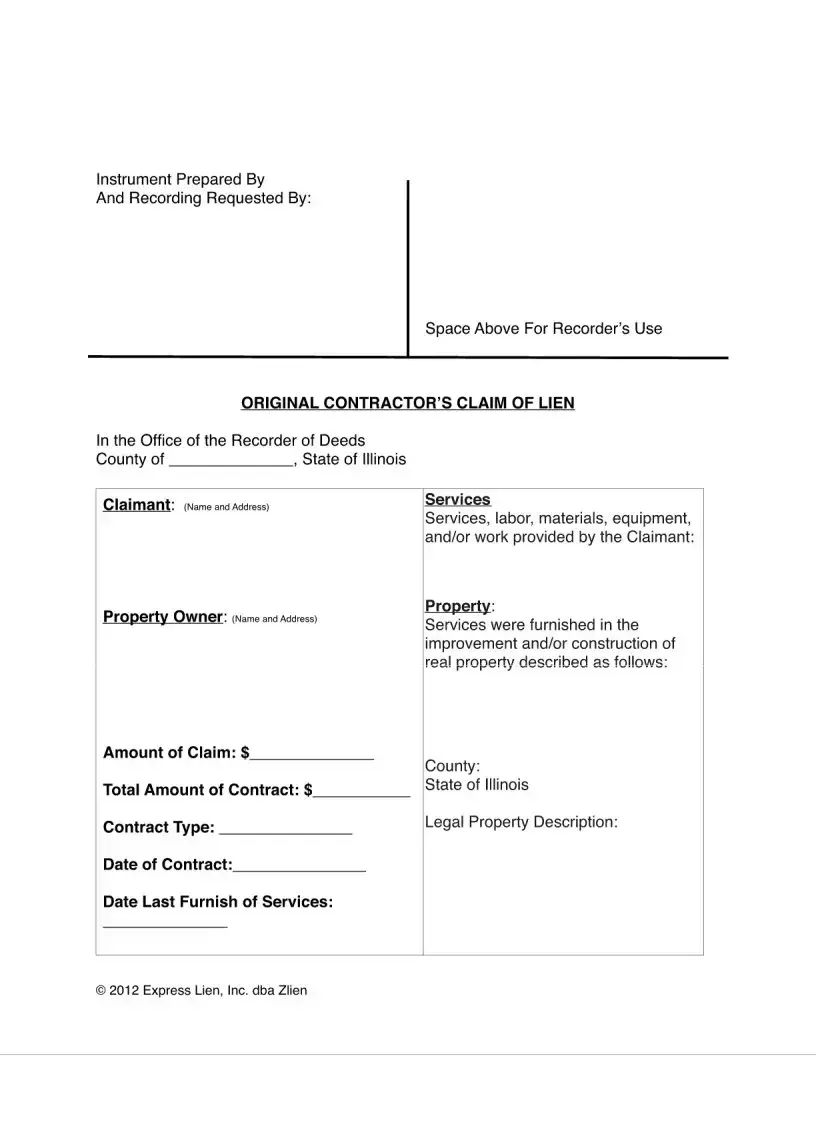
The Illinois Notice Lien form is an essential document for contractors and subcontractors seeking to secure payment for services rendered on a property. This form serves as a formal notification to property owners and prime contractors about unpaid amounts due for labor, materials, or other services provided. It includes vital information such as the names and addresses of the property owner, prime contractor, and notifying party, along with a detailed description of the services performed. The form specifies the total amount due and unpaid, emphasizing the urgency of payment to avoid a lien being filed against the property within ten days. By completing this form, the claimant asserts their rights under the Mechanics Lien Act, ensuring that they have a legal claim to the property in question. Furthermore, the form must be signed and verified by the claimant, confirming the accuracy of the information provided. This process not only protects the interests of the service providers but also ensures transparency in the construction and renovation industry.

| Fact Name | Details |
|---|---|
| Governing Law | The Illinois Mechanics Lien Act (770 ILCS 60) |
| Purpose | This form notifies property owners of unpaid services and the intent to file a lien. |
| Delivery Requirement | Notice must be sent to the property owner and other relevant parties. |
| Timeframe for Action | A lien may be filed 10 days after the notice is delivered if payment is not made. |
| Information Included | The form requires details about the property, services provided, and amounts due. |
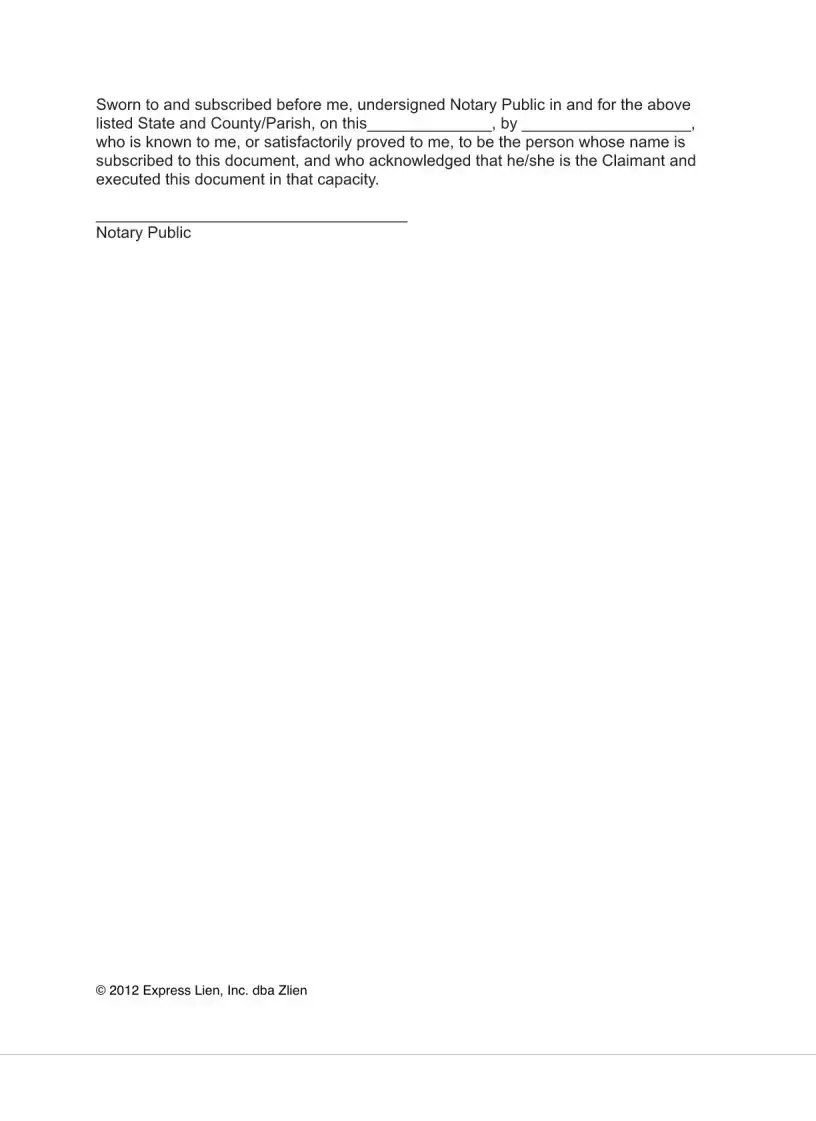
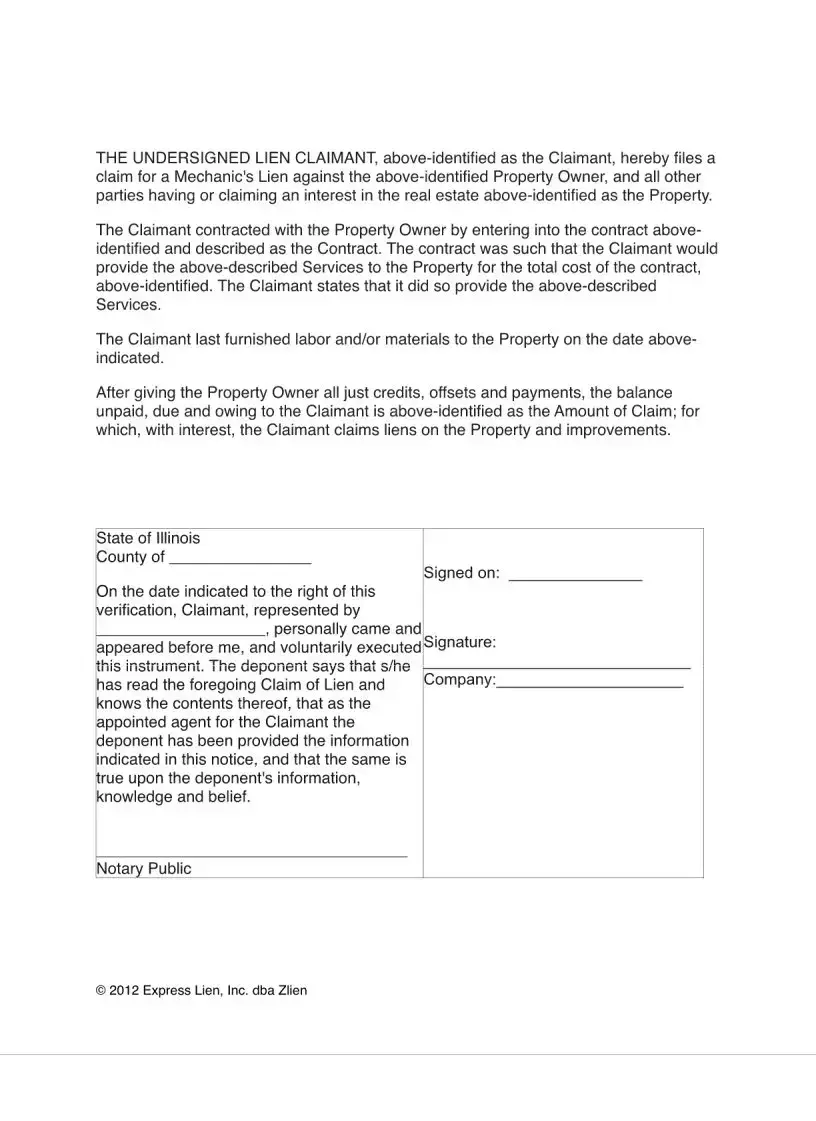
| Signature Requirement | The claimant must sign the form and verify the information provided. |
| Notary Public | The form must be notarized to be valid and enforceable. |
Once the Illinois Notice Lien form is completed, it will need to be submitted to the appropriate parties. This typically includes the property owner, the prime contractor, and any other relevant parties. Ensure that all information is accurate and that the form is signed before submission.
What is the Illinois Notice Lien form?
The Illinois Notice Lien form is a legal document used by contractors, subcontractors, and suppliers to inform property owners and other relevant parties that they have provided services, labor, or materials for a property. This notice serves as a warning that if payment is not made within a specified time frame, a lien may be filed against the property. It is an important step in protecting the rights of those who contribute to construction projects.
Who needs to use the Illinois Notice Lien form?
What information is required on the form?
How does the process work after sending the notice?
What happens if payment is made after the notice is sent?
If the property owner makes payment after receiving the notice, the notifying party should confirm that the payment has been received and that the debt is settled. It is advisable to document this transaction and, if necessary, send a release of lien to the property owner to formally acknowledge that the debt has been cleared.
Can the Illinois Notice Lien form be used for residential and commercial properties?
What are the consequences of not sending a Notice Lien?
Is legal assistance necessary when filing a Notice Lien?
Incomplete Information: Failing to fill out all required fields can lead to delays or rejection of the lien notice. Ensure that all sections, such as names and addresses of the property owner, prime contractor, and notifying party, are fully completed.
Incorrect Amounts: Listing an incorrect amount due can invalidate the claim. Double-check calculations and ensure that the amount reflects the total owed after accounting for any offsets or credits.
Missing Signatures: Not signing the form can result in the notice being considered incomplete. Make sure that the claimant’s signature is included, along with any necessary titles or designations.
Improper Notification: Sending the notice to the wrong parties can undermine the validity of the lien. Verify that the notice is sent to all relevant parties, including the property owner and prime contractor.
Failure to Meet Deadlines: Not adhering to the statutory deadlines for sending the notice can affect the enforceability of the lien. Be aware of the timeline for sending the notice and filing the lien.
Omitting Description of Services: Not providing a clear description of the services rendered can lead to confusion. Clearly outline the labor, materials, and services provided to the property.
Incorrect Legal Descriptions: Using vague or incorrect property descriptions can cause issues. Ensure that the property is accurately described, including any legal descriptions required.
Notarization Issues: Failing to have the document properly notarized can invalidate the claim. Ensure that the notarization is completed correctly, including the date and signature of the notary public.
Ignoring Local Regulations: Not adhering to local regulations regarding lien notices can lead to complications. Familiarize yourself with any specific requirements that may apply in your locality.
When dealing with construction projects in Illinois, the Illinois Notice Lien form is just one of several important documents that may come into play. Understanding these documents can help ensure that all parties involved are protected and informed. Below is a list of other key forms and documents often used alongside the Illinois Notice Lien form.
Each of these documents plays a crucial role in the construction process, helping to clarify obligations and protect the rights of all parties involved. Familiarity with these forms can make a significant difference in managing construction projects and avoiding disputes.
The Illinois Notice Lien form is similar to a Notice of Intent to Lien. Both documents serve to inform property owners and contractors that payment is due for services rendered. The Notice of Intent to Lien typically precedes the actual lien filing, giving the property owner a chance to settle the debt before further action is taken. This proactive approach helps maintain communication between parties and can often lead to resolution without the need for legal proceedings.
Another similar document is the Mechanic's Lien. Like the Illinois Notice Lien, a Mechanic's Lien is filed by contractors or subcontractors who have not received payment for their work. This document legally claims a right to the property until the owed amount is paid. Both documents aim to protect the rights of those who provide labor or materials in construction projects, ensuring they can seek compensation for their services.
The Preliminary Notice is also akin to the Illinois Notice Lien. This document is often sent at the start of a project to inform the property owner and general contractor of the subcontractor's involvement. It serves as a warning that a lien may be filed if payment issues arise. By providing this notice early on, subcontractors can establish their rights and enhance their chances of being paid for their work.
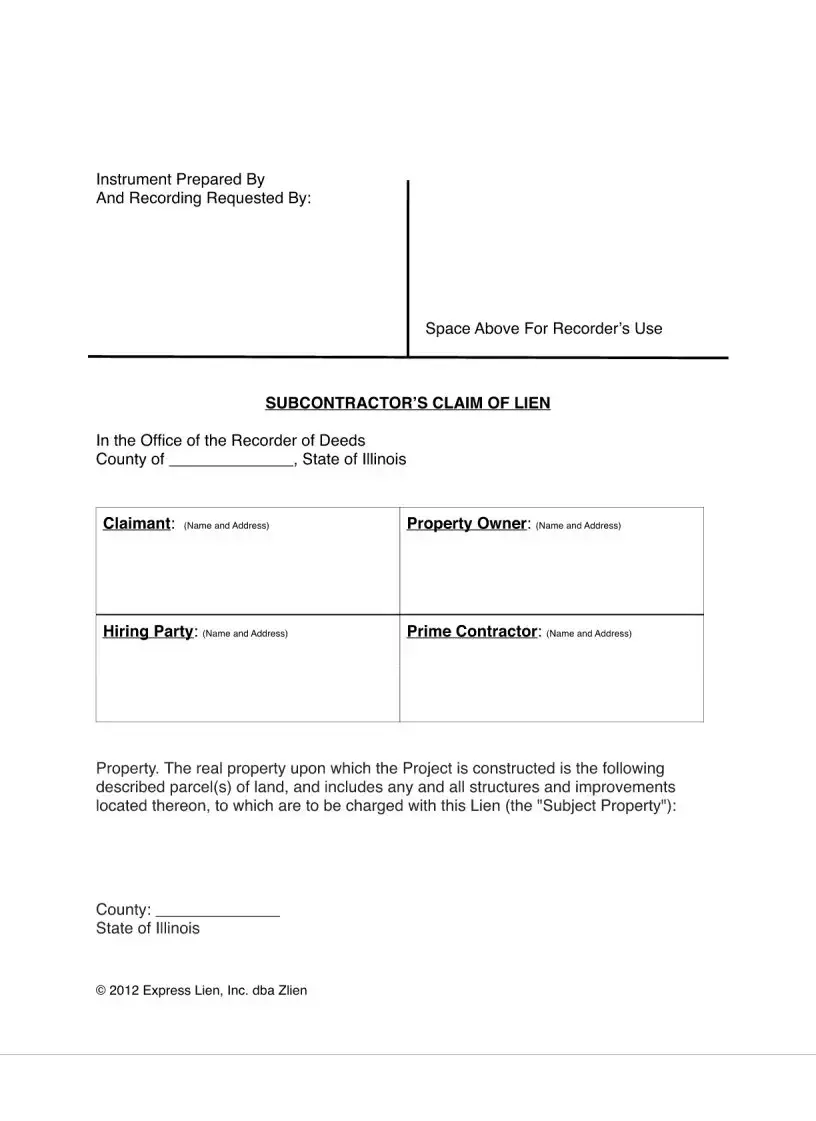
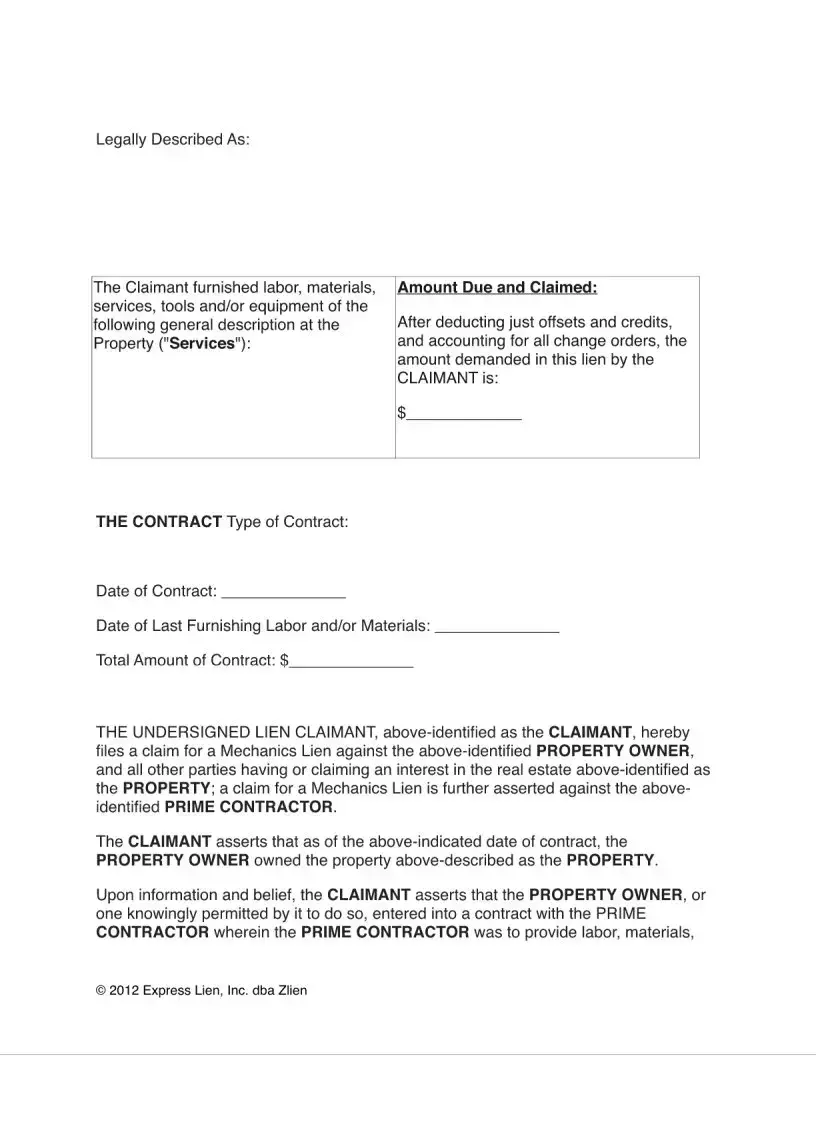
A Claim of Lien is another document that shares similarities with the Illinois Notice Lien. It is a formal declaration filed with the county recorder's office, asserting a claim against the property for unpaid services. Both documents highlight the amount owed and the services provided, making it clear to all parties involved what the basis for the claim is. This clarity helps in resolving disputes regarding payment and can expedite the collection process.
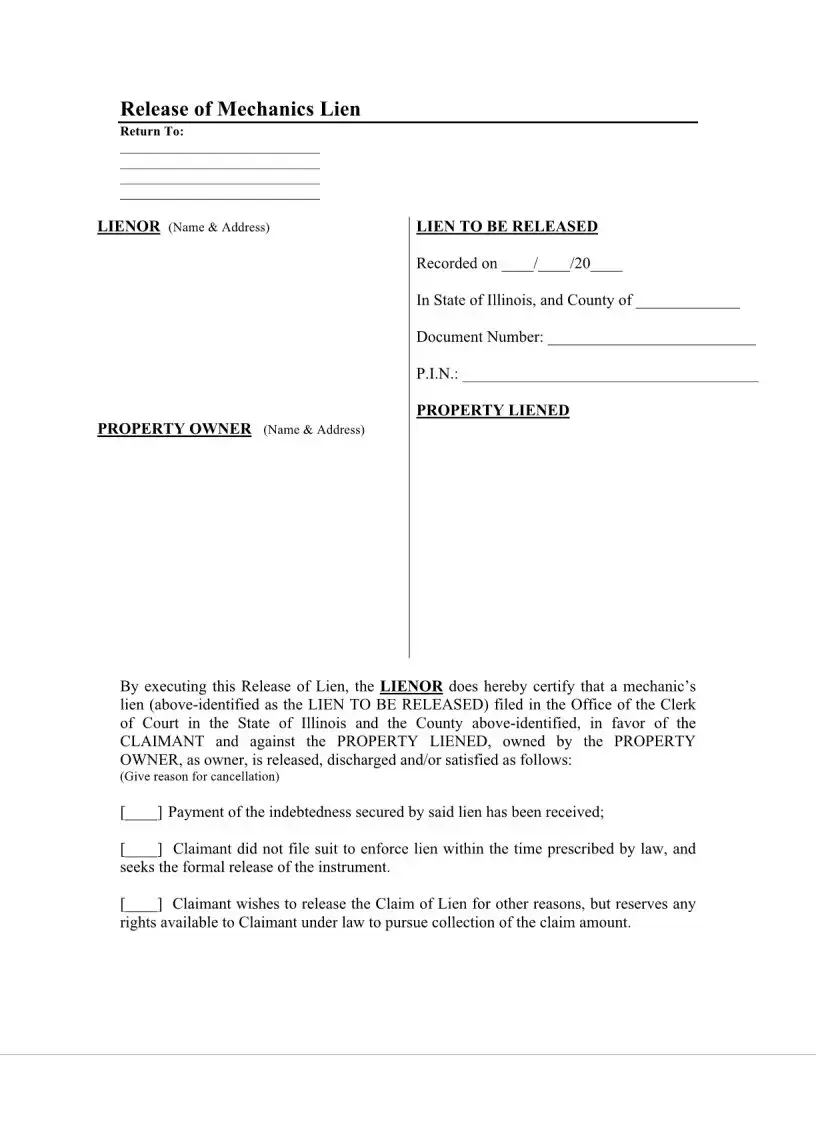
Finally, the Release of Lien is related to the Illinois Notice Lien as it marks the conclusion of a lien claim. Once payment is received, a Release of Lien is filed to remove the claim against the property. This document confirms that the debt has been settled and protects the property owner's interests. Both the Release of Lien and the Illinois Notice Lien are essential components of the lien process, ensuring that all parties understand their rights and obligations throughout the transaction.
When filling out the Illinois Notice Lien form, it's crucial to ensure that all information is accurate and complete. Here are ten important dos and don’ts to keep in mind:
Understanding the Illinois Notice Lien form is crucial for property owners and contractors alike. However, several misconceptions can lead to confusion. Here are seven common misunderstandings:
Being aware of these misconceptions can help parties navigate the lien process more effectively and protect their rights in construction projects.
When filling out and using the Illinois Notice Lien form, consider the following key takeaways: