In the realm of personal and business finance, understanding the intricacies of a loan agreement is crucial for both lenders and borrowers. The Illinois Loan Agreement form serves as a vital tool in this process, outlining the terms and conditions that govern the lending relationship. It typically includes essential elements such as the loan amount, interest rate, repayment schedule, and any collateral required to secure the loan. Additionally, the form addresses the rights and responsibilities of both parties, ensuring that expectations are clear and enforceable. By providing a structured framework for the transaction, this agreement helps mitigate misunderstandings and disputes, fostering a sense of security and trust. It is important for individuals and businesses alike to familiarize themselves with this form, as it not only protects their interests but also promotes responsible borrowing and lending practices within the state of Illinois.
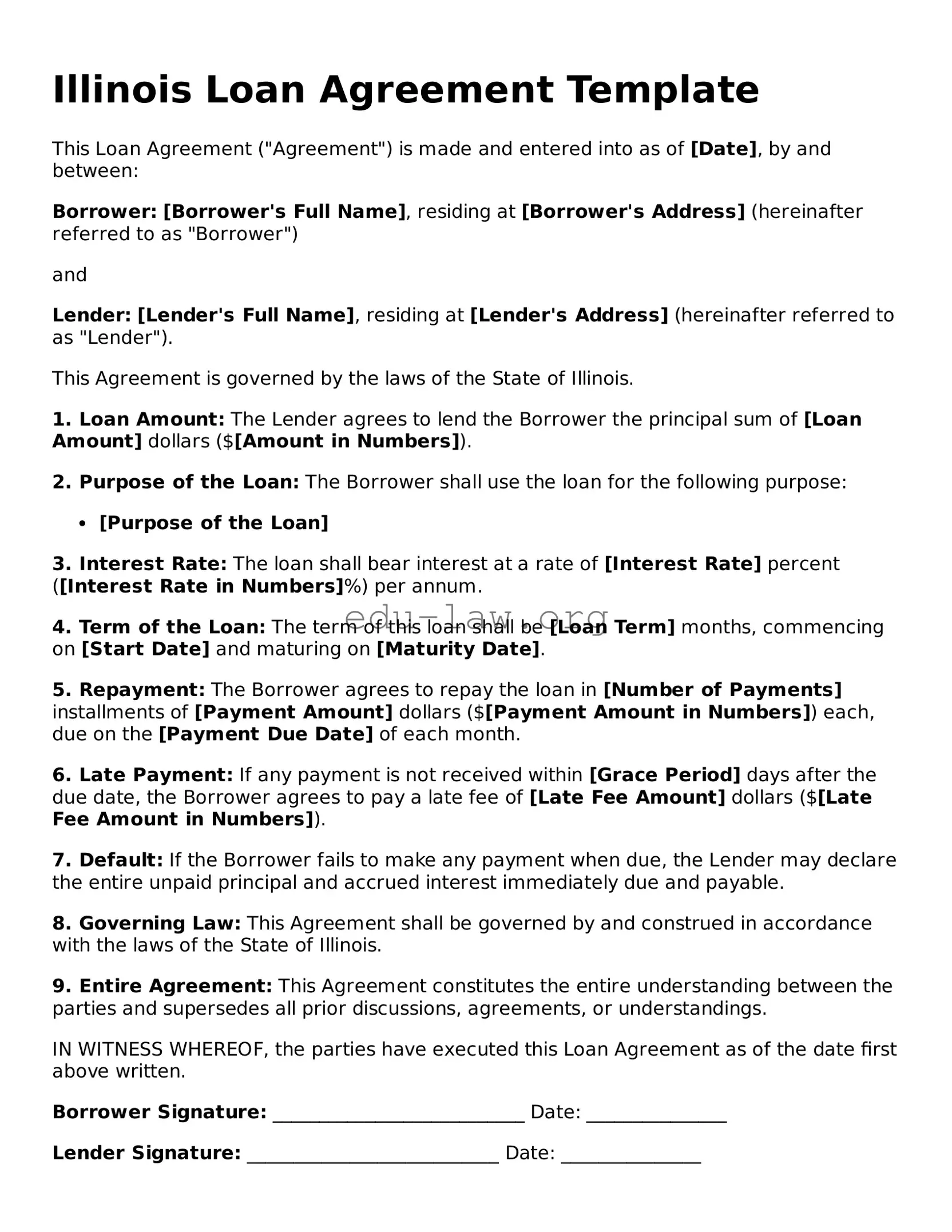
Illinois Loan Agreement Template
This Loan Agreement ("Agreement") is made and entered into as of [Date], by and between:
Borrower: [Borrower's Full Name], residing at [Borrower's Address] (hereinafter referred to as "Borrower")
and
Lender: [Lender's Full Name], residing at [Lender's Address] (hereinafter referred to as "Lender").
This Agreement is governed by the laws of the State of Illinois.
1. Loan Amount: The Lender agrees to lend the Borrower the principal sum of [Loan Amount] dollars ($[Amount in Numbers]).
2. Purpose of the Loan: The Borrower shall use the loan for the following purpose:
3. Interest Rate: The loan shall bear interest at a rate of [Interest Rate] percent ([Interest Rate in Numbers]%) per annum.
4. Term of the Loan: The term of this loan shall be [Loan Term] months, commencing on [Start Date] and maturing on [Maturity Date].
5. Repayment: The Borrower agrees to repay the loan in [Number of Payments] installments of [Payment Amount] dollars ($[Payment Amount in Numbers]) each, due on the [Payment Due Date] of each month.
6. Late Payment: If any payment is not received within [Grace Period] days after the due date, the Borrower agrees to pay a late fee of [Late Fee Amount] dollars ($[Late Fee Amount in Numbers]).
7. Default: If the Borrower fails to make any payment when due, the Lender may declare the entire unpaid principal and accrued interest immediately due and payable.
8. Governing Law: This Agreement shall be governed by and construed in accordance with the laws of the State of Illinois.
9. Entire Agreement: This Agreement constitutes the entire understanding between the parties and supersedes all prior discussions, agreements, or understandings.
IN WITNESS WHEREOF, the parties have executed this Loan Agreement as of the date first above written.
Borrower Signature: ___________________________ Date: _______________
Lender Signature: ___________________________ Date: _______________
| Fact Name | Description |
|---|---|
| Purpose | The Illinois Loan Agreement form is used to outline the terms of a loan between a lender and a borrower. |
| Governing Law | The agreement is governed by the laws of the State of Illinois. |
| Parties Involved | The form includes details about the lender and the borrower, including names and addresses. |
| Loan Amount | The specific amount of money being loaned must be clearly stated in the agreement. |
| Interest Rate | The form should specify the interest rate applied to the loan, whether fixed or variable. |
| Repayment Terms | Details about how and when the borrower will repay the loan are outlined in the agreement. |
| Default Conditions | The agreement includes conditions under which the borrower may be considered in default. |
| Signatures | Both parties must sign the agreement to make it legally binding. |
| Amendments | Any changes to the agreement must be documented and signed by both parties. |
Completing the Illinois Loan Agreement form is an important step in formalizing a loan arrangement. Once the form is filled out correctly, both parties will have a clear understanding of the terms and conditions surrounding the loan. This clarity helps to prevent misunderstandings and ensures that everyone is on the same page moving forward.
What is an Illinois Loan Agreement form?
The Illinois Loan Agreement form is a legal document that outlines the terms and conditions under which one party lends money to another. This agreement serves to protect both the lender and the borrower by clearly stating the amount borrowed, interest rates, repayment schedule, and any collateral involved. It is essential for ensuring that both parties understand their rights and obligations.
Who should use a Loan Agreement form?
Anyone who is lending or borrowing money in Illinois should consider using a Loan Agreement form. This includes individuals, businesses, or organizations. Whether it’s a personal loan between friends or a business loan, having a written agreement helps prevent misunderstandings and provides legal protection for both parties.
What key elements should be included in the Loan Agreement?
A comprehensive Loan Agreement should include several key elements: the names and contact information of both parties, the loan amount, the interest rate, the repayment schedule, any fees or penalties for late payments, and the consequences of default. Additionally, it should specify whether any collateral is required and outline the process for resolving disputes.
Is it necessary to have the Loan Agreement notarized?
While it is not strictly necessary to have a Loan Agreement notarized in Illinois, doing so can provide an extra layer of security. Notarization verifies the identities of the parties involved and confirms that they willingly signed the agreement. This can be particularly helpful if a dispute arises later.
What happens if the borrower fails to repay the loan?
If the borrower fails to repay the loan as outlined in the agreement, the lender has several options. They may pursue legal action to recover the owed amount, which could involve filing a lawsuit. The agreement should specify the steps the lender can take in the event of default, including any fees or penalties that may apply.
Can the terms of the Loan Agreement be changed after it is signed?
Yes, the terms of a Loan Agreement can be changed after it is signed, but both parties must agree to the modifications. It is advisable to document any changes in writing, preferably through an amendment to the original agreement. This ensures that all parties are aware of and consent to the new terms.
What is the typical interest rate for loans in Illinois?
The interest rate for loans in Illinois can vary widely based on the type of loan and the lender. For personal loans, rates may range from 5% to 36%, depending on factors such as the borrower’s creditworthiness and the loan amount. It is crucial for both parties to agree on a fair and reasonable interest rate that complies with state laws.
Are there any legal limits on loan amounts in Illinois?
Illinois does not impose a specific limit on the amount of money that can be loaned between private parties. However, lenders must comply with state usury laws, which regulate the maximum interest rates that can be charged. It is important for lenders to be aware of these laws to avoid legal issues.
Can a Loan Agreement be enforced in court?
Yes, a properly executed Loan Agreement can be enforced in court. If a dispute arises, either party may take the agreement to court to seek resolution. The enforceability of the agreement will depend on its clarity, the consent of both parties, and compliance with relevant laws.
Where can I find a template for an Illinois Loan Agreement?
Templates for Illinois Loan Agreements can be found online through various legal websites or through local legal aid organizations. It is advisable to use a template that is specifically designed for Illinois to ensure compliance with state laws. However, consulting with a legal professional is recommended to tailor the agreement to your specific needs.
Failing to include all parties' names: It’s essential that the names of both the lender and the borrower are clearly stated. Omitting a name can lead to confusion and potential legal issues.
Not specifying the loan amount: Clearly stating the exact amount of the loan helps avoid misunderstandings later. A vague or missing figure can complicate repayment terms.
Ignoring interest rates: The interest rate should be clearly defined. Without it, the agreement may lack enforceability, and the lender could face difficulties in collecting payments.
Overlooking repayment terms: Details about when and how repayments will be made are crucial. Ambiguity here can lead to disputes and missed payments.
Not including default terms: It’s important to outline what happens in the event of a default. This protects both parties and clarifies the consequences of non-payment.
Failing to date the agreement: A date provides a clear reference point for the agreement. Without it, determining the timeline for the loan can become problematic.
Neglecting signatures: Both parties must sign the agreement for it to be valid. A missing signature can render the entire document unenforceable.
Not keeping copies: After signing, each party should retain a copy of the agreement. This ensures that both sides have access to the terms laid out.
Using vague language: Clarity is key. Avoiding ambiguous terms helps ensure that both parties understand their rights and obligations under the agreement.
When entering into a loan agreement in Illinois, several additional documents may be necessary to ensure a smooth transaction. These forms help clarify the terms of the loan and protect the interests of both parties involved. Below is a list of commonly used documents that accompany the Illinois Loan Agreement form.
Having these documents in place can provide clarity and security for both the lender and the borrower. It's important to review each document carefully and ensure that all terms are understood before signing any agreements.
The Illinois Loan Agreement form shares similarities with a Promissory Note. Both documents outline the terms of a loan, including the amount borrowed, interest rate, and repayment schedule. A Promissory Note serves as a written promise to repay the borrowed amount, while the Loan Agreement provides a more detailed framework, often including additional clauses about defaults, collateral, and other conditions. Essentially, the Promissory Note is a simpler version focused on the borrower's commitment, whereas the Loan Agreement covers the broader aspects of the lending relationship.
Another document comparable to the Illinois Loan Agreement is the Security Agreement. This document is used when a loan is secured by collateral. Like the Loan Agreement, it specifies the terms of the loan but also details the collateral being used to secure it. The Security Agreement outlines the lender's rights in case of default, ensuring that they can claim the collateral to recover their losses. Both documents work together to protect the lender’s interests while providing the borrower with clear expectations regarding their obligations.
The Illinois Loan Agreement is also similar to a Lease Agreement, particularly when it involves financing for property or equipment. A Lease Agreement outlines the terms under which one party rents property from another, often including payment terms and duration. While a Lease Agreement does not typically involve a lump-sum payment like a loan, both documents establish a financial relationship based on agreed-upon terms. Each document protects the rights of both parties, ensuring clarity in the financial obligations involved.
Lastly, the Illinois Loan Agreement can be compared to a Credit Agreement. This document outlines the terms of a line of credit, which allows borrowers to access funds up to a specified limit. Like the Loan Agreement, it includes details on interest rates, repayment terms, and fees. However, a Credit Agreement often provides more flexibility, allowing borrowers to draw funds as needed rather than receiving a lump sum. Both agreements aim to clarify the terms of borrowing and establish the expectations for repayment, though they cater to different types of financial arrangements.
When filling out the Illinois Loan Agreement form, it’s important to be careful and thorough. Here are some key points to consider:
Understanding the Illinois Loan Agreement form is essential for anyone involved in lending or borrowing money. However, several misconceptions can lead to confusion. Here are ten common misconceptions about this form:
While it is highly recommended to have a written agreement, some verbal agreements can be legally binding, depending on the circumstances.
This form can be used for loans of any size, not just significant amounts. Small personal loans also benefit from clear documentation.
Individuals and private lenders can also use this form to formalize their loan agreements.
Loan agreements can be modified if both parties agree to the changes and document them properly.
No loan agreement can guarantee repayment. It outlines the terms, but the borrower’s ability to repay depends on their financial situation.
Interest rates can be fixed or variable, depending on what the parties agree upon. The form allows for flexibility in this area.
Both the lender and the borrower must sign the agreement for it to be enforceable.
While related, a loan agreement is more comprehensive, detailing the terms of the loan, while a promissory note is a simpler document that outlines the borrower's promise to repay.
Business loans also require a formal agreement to protect both parties and clarify the terms of the loan.
The Illinois Loan Agreement form is straightforward and can be easily filled out with clear terms and conditions.
By addressing these misconceptions, individuals can better navigate the process of lending and borrowing in Illinois.
Filling out and using the Illinois Loan Agreement form requires attention to detail and an understanding of the key components involved. Here are some essential takeaways: