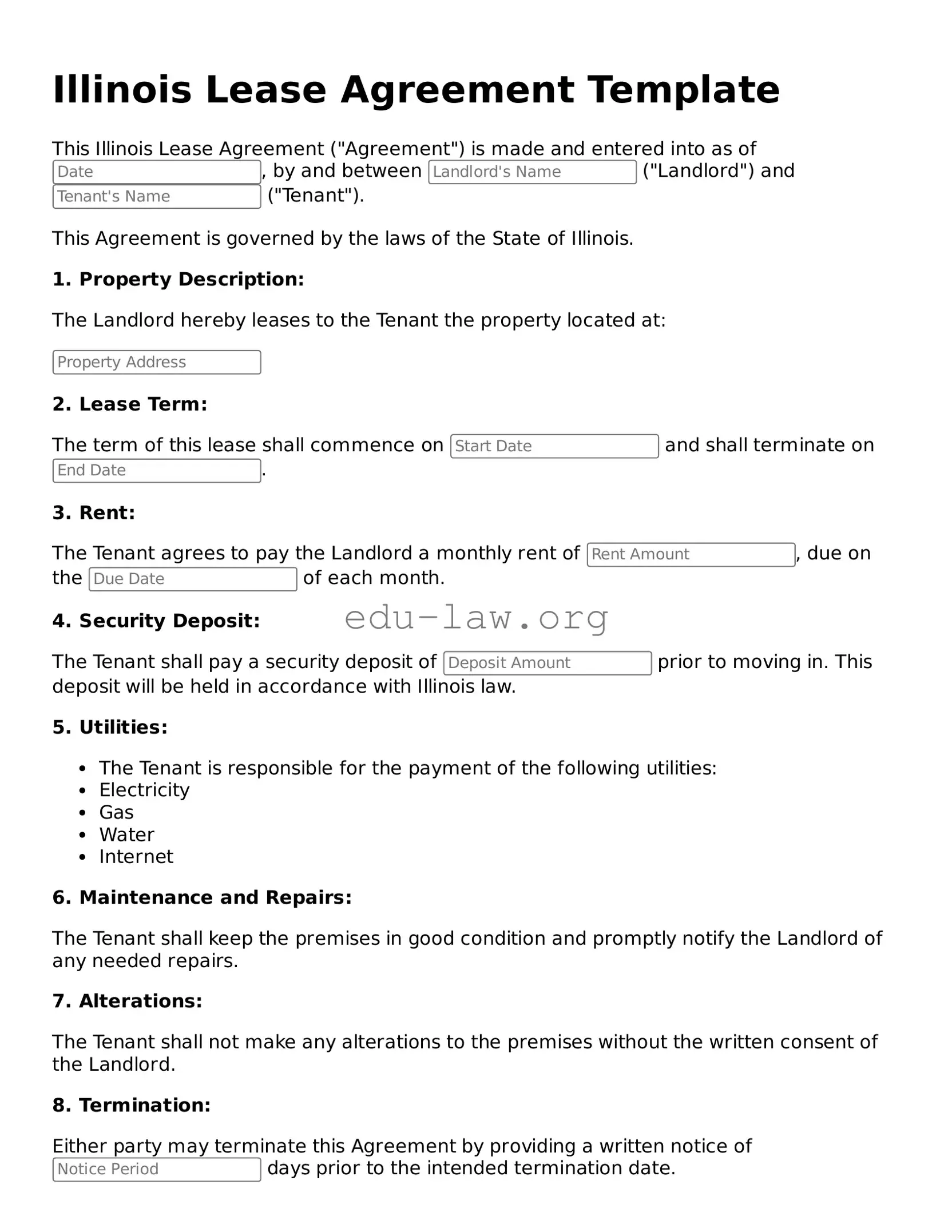
When renting a property in Illinois, having a solid lease agreement is essential for both landlords and tenants. This legal document outlines the terms of the rental arrangement, ensuring that everyone understands their rights and responsibilities. Key aspects of the Illinois Lease Agreement include the rental amount, payment due dates, and the duration of the lease. It also specifies rules regarding security deposits, maintenance responsibilities, and the process for terminating the lease. Furthermore, the agreement addresses important issues like pet policies, utilities, and any restrictions on property use. By clearly defining these elements, the lease helps prevent misunderstandings and disputes, creating a smoother rental experience for all parties involved.
Illinois Lease Agreement Template
This Illinois Lease Agreement ("Agreement") is made and entered into as of , by and between ("Landlord") and ("Tenant").
This Agreement is governed by the laws of the State of Illinois.
1. Property Description:
The Landlord hereby leases to the Tenant the property located at:
2. Lease Term:
The term of this lease shall commence on and shall terminate on .
3. Rent:
The Tenant agrees to pay the Landlord a monthly rent of , due on the of each month.
4. Security Deposit:
The Tenant shall pay a security deposit of prior to moving in. This deposit will be held in accordance with Illinois law.
5. Utilities:
6. Maintenance and Repairs:
The Tenant shall keep the premises in good condition and promptly notify the Landlord of any needed repairs.
7. Alterations:
The Tenant shall not make any alterations to the premises without the written consent of the Landlord.
8. Termination:
Either party may terminate this Agreement by providing a written notice of days prior to the intended termination date.
9. Governing Law:
This Agreement shall be governed by the laws of the State of Illinois.
10. Signatures:
By signing below, both parties agree to the terms of this Lease Agreement.
Landlord Signature: _______________________ Date: _______________
Tenant Signature: ________________________ Date: _______________
| Fact Name | Description |
|---|---|
| Governing Law | The Illinois Lease Agreement is governed by the Illinois Compiled Statutes. |
| Parties Involved | The lease agreement is between a landlord and a tenant. |
| Duration | The lease can be for a fixed term or month-to-month. |
| Security Deposit | Illinois law limits security deposits to one and a half months' rent. |
| Disclosure Requirements | Landlords must disclose the presence of lead paint in properties built before 1978. |
| Rent Payment | The lease should specify the due date and method of rent payment. |
| Termination Notice | For month-to-month leases, a 30-day notice is typically required for termination. |
| Utilities Responsibility | The lease should clarify which party is responsible for utilities. |
| Maintenance Obligations | Landlords are generally responsible for maintaining the property in a habitable condition. |
To complete the Illinois Lease Agreement form, gather all necessary information about the rental property, the landlord, and the tenant. Ensure that all details are accurate to prevent any issues during the lease term.
What is an Illinois Lease Agreement?
An Illinois Lease Agreement is a legal document that outlines the terms and conditions under which a tenant rents property from a landlord. This agreement includes details such as the rental amount, duration of the lease, and responsibilities of both parties.
Who needs to sign the Lease Agreement?
Both the landlord and the tenant must sign the Lease Agreement. This ensures that both parties agree to the terms laid out in the document. Any additional tenants or co-signers may also need to sign, depending on the agreement's stipulations.
What should be included in the Lease Agreement?
The Lease Agreement should include the following: names of the parties involved, property address, rental amount, payment due dates, lease term, security deposit details, maintenance responsibilities, and any rules or regulations specific to the property.
Can the Lease Agreement be modified?
Yes, the Lease Agreement can be modified if both the landlord and tenant agree to the changes. It is advisable to document any modifications in writing and have both parties sign the amended agreement.
What happens if the Lease Agreement is broken?
If either party breaks the Lease Agreement, they may face legal consequences. This could include losing the security deposit, being responsible for unpaid rent, or facing eviction. It's important to review the terms for breaking the lease outlined in the agreement.
Is a security deposit required?
A security deposit is typically required by landlords to cover potential damages or unpaid rent. In Illinois, there are specific laws governing the amount that can be charged and how it must be handled.
How long does a Lease Agreement last?
The duration of a Lease Agreement can vary. It may be a fixed term, such as one year, or a month-to-month agreement. The length should be clearly stated in the document.
What is the process for renewing a Lease Agreement?
Renewing a Lease Agreement usually involves discussing the terms with the landlord. If both parties agree, a new lease can be signed, or the existing lease can be extended under the same terms.
What should a tenant do if they want to terminate the Lease Agreement early?
If a tenant wishes to terminate the Lease Agreement early, they should refer to the lease terms regarding early termination. It may require providing notice to the landlord and possibly paying a fee or fulfilling other obligations.
Where can I find a template for an Illinois Lease Agreement?
Templates for Illinois Lease Agreements can be found online through various legal websites, real estate agencies, or local government resources. Ensure that any template used complies with Illinois state laws.
Failing to include all tenant names. It is essential to list every individual who will be living in the rental unit. Omitting a tenant can lead to confusion and potential legal issues later.
Not specifying the lease term. The agreement should clearly state the duration of the lease, whether it is a month-to-month arrangement or a fixed-term lease. This detail helps both parties understand their rights and responsibilities.
Ignoring the security deposit details. The lease should outline the amount of the security deposit, the conditions for its return, and any deductions that may be taken. Clarity on this matter can prevent disputes at the end of the lease.
Overlooking maintenance responsibilities. It is important to specify who is responsible for repairs and maintenance. This section can help avoid misunderstandings about what is expected from both the landlord and the tenant.
When entering into a lease agreement in Illinois, several additional forms and documents may be necessary to ensure a smooth rental process. These documents help clarify responsibilities, protect rights, and outline expectations for both landlords and tenants.
These documents play an essential role in the leasing process. They provide clarity and protection for both parties involved, helping to create a positive rental experience.
The Illinois Lease Agreement form is similar to a Rental Agreement, which outlines the terms under which a landlord allows a tenant to occupy a property. Both documents specify the duration of the tenancy, rental payments, and responsibilities of both parties. However, a Rental Agreement may be more flexible, often used for shorter-term arrangements, while a Lease Agreement typically covers a longer duration, often a year or more.
Another document that shares similarities is the Month-to-Month Lease Agreement. This type of agreement allows tenants to occupy a rental property on a month-to-month basis, providing flexibility for both landlords and tenants. Like the Illinois Lease Agreement, it includes terms about rent, maintenance, and notice periods, but it can be terminated with shorter notice, typically 30 days.
The Sublease Agreement is also comparable, as it allows a tenant to rent out their leased space to another individual. This document includes terms similar to the original lease, including rent amount and duration. However, it typically requires the landlord's consent and may have additional stipulations regarding the responsibilities of the original tenant and the subtenant.
A Commercial Lease Agreement is another related document, specifically designed for businesses renting commercial properties. While it shares key elements with residential leases, such as duration and payment terms, it often includes additional clauses tailored to business operations, such as zoning laws and use of the premises.
The Lease Purchase Agreement combines elements of a lease and a purchase agreement. It allows tenants to rent a property with the option to buy it later. This document outlines the rental terms and specifies how a portion of the rent may be credited towards the purchase price, making it distinct from a standard lease agreement.
The Roommate Agreement is similar in that it addresses the living arrangements among multiple tenants sharing a rental property. It outlines responsibilities, rent contributions, and rules for shared spaces. While it may not be a formal lease, it serves to clarify expectations among roommates, similar to how a lease clarifies terms between a landlord and tenant.
The Assignment of Lease document allows a tenant to transfer their lease obligations to another party. It requires the landlord's approval and ensures that the new tenant assumes all responsibilities outlined in the original lease. This document mirrors the Illinois Lease Agreement in that it maintains the original terms while changing the party responsible for them.
The Rent-to-Own Agreement is akin to a Lease Purchase Agreement but may involve different terms regarding the purchase process. It allows tenants to rent a property with the intention of buying it after a set period. Like the Illinois Lease Agreement, it outlines payment terms and responsibilities but emphasizes the future purchase aspect.
Lastly, the Lease Extension Agreement is similar as it modifies an existing lease to extend the rental period. It maintains the original terms while allowing tenants to continue occupying the property beyond the initial lease term. This document ensures continuity and clarity for both landlords and tenants, similar to the original lease agreement.
When filling out the Illinois Lease Agreement form, it's important to be careful and thorough. Here are five things you should and shouldn't do:
When it comes to the Illinois Lease Agreement form, many people hold misconceptions that can lead to confusion or even legal issues. Here’s a breakdown of some common misunderstandings:
Understanding these misconceptions can help both landlords and tenants navigate their agreements more effectively. Clear communication and a well-drafted lease can lead to a smoother rental experience for everyone involved.
Filling out and using the Illinois Lease Agreement form can be straightforward if you keep a few key points in mind. Understanding these essentials will help ensure a smooth rental experience for both landlords and tenants.
By paying attention to these key aspects, both landlords and tenants can foster a respectful and clear rental relationship.